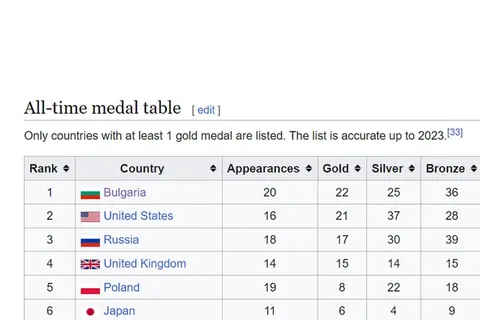
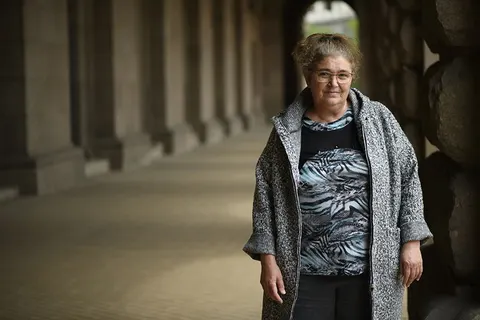
A Bulgarian woman is the most intelligent woman in the world! Two decades ago the news went around the planet, from the biggest Western media to Japan. Daniela Simidchieva, who according to the Mensa test has an IQ of 192, draws the media's attention to her resounding success again every few years. The emphasis often falls on the fact that her IQ is higher than Einstein's or Stephen Hawking's.
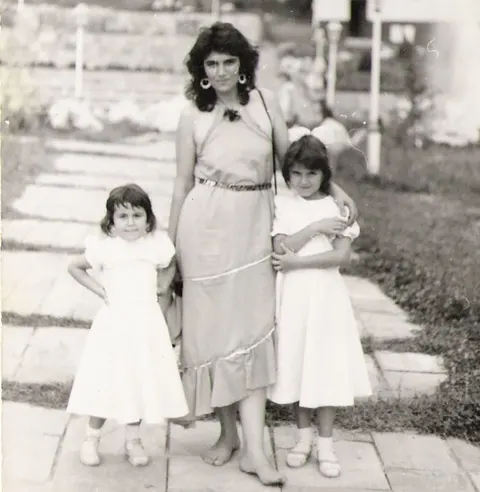
Her story, however, is far more interesting, and there is much more worth telling. She has studied for five university degrees and completed three of them. When she sat the test, she had just been through a painful divorce and had moved to Sofia with her three daughters. The four of them lived in… a 12-square-meter rented room, and to make ends meet she sometimes even had to clean apartment building stairwells.
For many years “the most intelligent woman in the world” was unemployed, before finding a safe harbor as an education expert at the Bulgarian Industrial Association. In 2011 she ran for vice president.
What remarkable twists (and miracles!) has Daniela Simidchieva's path taken? Is there room for intelligent people at the head of the state? How heavy is the title “the smartest woman”? Does it open more doors than it closes?
– Forgive me for starting with a question you've heard hundreds of times, but why did you decide to go and take the Mensa test?
– My colleague and friend from my student days, Galya Bozhanova, who chaired Mensa for a long time, had taken the test in 1995. And even back then she told me, “I know you, this test was made for you.” We shared a room in the student dorm, and she really does know me quite well. She planted the idea in my head even then, but I didn't feel like traveling from Blagoevgrad to Sofia just to take a test.
In 2002 I got divorced and moved to Sofia. Before the divorce my ex-husband used to say, “Do you feel how dumb you've been getting lately?” Because he knew it was one of the things I care about—that a person should look after their own essence.
Feeling there was no way out, one day I really did decide to see exactly how dumb I'd become. I was in a desperate situation,
I literally counted my coins, and there was barely enough to pay for the test.
I hadn't even got the timing right; I arrived an hour early and got a bit nervous while I waited.
– What happened when you learned the result?
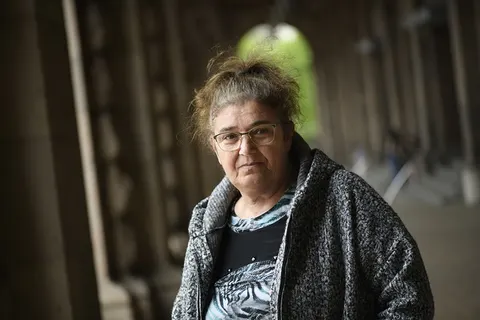
– When I came out—I'll never forget it—I called that 12-square-meter room from a pay phone on the street to tell the kids I had passed the test and could become a member of Mensa. I didn't know anything about the score. I had reached my goal; I had proven to myself that I wasn't quite as worthless as I felt at the time—my self-esteem was extremely low. Older people generally find it harder to take this test, because deep down they're afraid of shattering their own expectations. Whereas
my opinion of myself was so low that there was no way to shatter it any further,
so I went. But the most important thing is that it gave my children courage too.
– So it only became clear later that you had scored a record result, is that right? As far as I know, it was when the son of the man who created the Mensa tests visited Bulgaria.
– The founder of Mensa in Bulgaria, Rosi Aleksieva, may she rest in peace, had invited John Raven to Bulgaria. His main goal was to meet with representatives of the Ministry of Education, but that meeting never took place. He wanted to share his concern that
with the mass introduction of standardized testing, the level of education drops dramatically,
and later we saw that this is exactly what happened.
I was unemployed, my eldest daughter was in the hospital and I had to go and see her often—the healthcare system had already reached that level.
Rosi called to ask whether I could help with writing up the invoices for the seminar participants, and I agreed. That's how I ended up at the meeting with John Raven. Rosi was giving interviews outside the hall, and the guest began the conversation by asking everyone present to introduce themselves. When he got to me, I explained that I was in the room because I was helping Rosi with the technical work. At that very moment she walked in, evidently having heard my last words, and added, “Besides, she has a score of 192 and is currently unemployed…”
– It's important to say here that an IQ of 192, on a test with a maximum of 200 points, really has not been documented for anyone else in the world. And it won't be, because a few years ago Mensa decided to introduce a “ceiling,” and all higher results are now reported as “156+.” So how did the guest react?
– The moment Rosi told him that, in a very English way—he had been standing and engaging with the audience—he sank into his chair and said, “No, I'm too shy to speak in front of this audience.” That reaction of his was very theatrical; it impressed the journalists at the meeting, and they started pushing for an interview.
The buzz started from one of our newspapers. Imagine—the lives of my daughter and my granddaughter were in danger; interviews were the last thing on my mind. But I still agreed to talk to a young guy who worked for a newspaper in the capital, Sofia, and who turned out to be from Yambol. My father is from that region and I have a soft spot for it; that was one of the reasons I agreed. From there a real avalanche began.
– I read that very soon you had to give interviews in a whisper in that tiny room, switching languages, because media from all over the world were calling.
– That's right. I myself was outside the flow of information, but
you can't exercise control over something uncontrollable.
Ananova had picked up the English version of one of the Bulgarian newspapers, they spread the news, then the Daily Telegraph and who knows who else. After a lull, two years later a big wave of interest in me started again, and to this day it comes in waves somehow. But the most interesting thing is that I probably have some little guardian angel. The wave usually starts at moments when I feel depressed and weak.
– So this interest brings you some satisfaction in a way?
– Yes,
a bit of peace and self-confidence. But I haven't let it go to my head.
As a member of Mensa yourself, you know the test isn't so decisive that you can say, “Hey, wow, I'm the greatest!” You'd have to be an idiot to believe something like that, and after all we're not among the dumbest. If you passed the test, you're evidently not.
But labels like that… to tell the truth, I would never put such a label on myself. Or compare myself to certain geniuses, as I've read, including in international publications. Yes, it's flattering, but… my God, I'm a speck of dust compared to them.
The fact that things came easily to me as a child made me rather lazy when it came to studying. Otherwise I might have been more persistent in pursuing my goals, read more literature that would enrich me. But I've always read for pleasure, and I still do.
– What are your favorite books?
– Right now I'm reading Bolnitsa za bezsmartni sazdania (Hospital for Immortal Creatures), a book written by my goddaughter Aleksandrina Krusharska, and it's in the genre that excites me: fantasy. That's the genre I love; science fiction somehow doesn't grab me. What matters is that something truly unusual happens, something that is both on Earth and not quite.
I'm a lover of magic, of miracles happening.
One of my daughters had given me a little sign that I loved very much and hung in my kitchen: “Believe in miracles, count on them.” If we don't believe in miracles, our lives will be much more boring.
– What are the biggest miracles that have happened to you?
– At 20 I was diagnosed with cancer. But my desire to have children was so great. I had met the father of my children; we were both just kids, and we decided it was more important for me to have a baby than to get treatment. They had opened a file on me at the oncology hospital. And we, in all our wisdom, changed dorms, moved, just so they couldn't find me.
It looks like a completely irresponsible thing to do. I think the psychological attitude,
the emotion of having a child, probably saved me.
To me that was a miracle. For 40 years since then, God has given me and blessed me with so much…
Then a second time, six years ago. I'm lying in the hospital and for 36 hours they can't diagnose me. At the last moment they found out it was peritonitis. The associate professor said that if they had delayed even a little longer, that would have been the end of me. By then I had two grandchildren; in the next six years four more were born. God once again gave me something I'm extremely grateful for.
For me these are the two biggest miracles: that I managed to have my children and lived to see my grandchildren. I hope I live to see great-grandchildren too—my eldest granddaughter is already 17.
– I take it you're a believer?
– I say “God” very often, but I'm not that religious. Rather, I believe there is a higher power we have to reckon with. To me the Ten Commandments are a rule everyone should live by.
I'm not a believer, but I try to keep those commandments much more than some of those who go to church.
– Has the famous label “the most intelligent woman” ever weighed on you?
– Oh, many times.
People with complexes, hearing something like that, start doing you direct and indirect harm
to prove they're more than you. They try to put you in an uncomfortable, awkward position, they get in your way, including by pouring out groundless spite.
For a long time I couldn't find a job because of it. But I was lucky enough to meet Bozhidar Danev, with whom I worked for eight years. He was a man of a different cut; he knew his own worth very well. With him I didn't feel a second of insecurity—on the contrary, he was very glad we were working together.
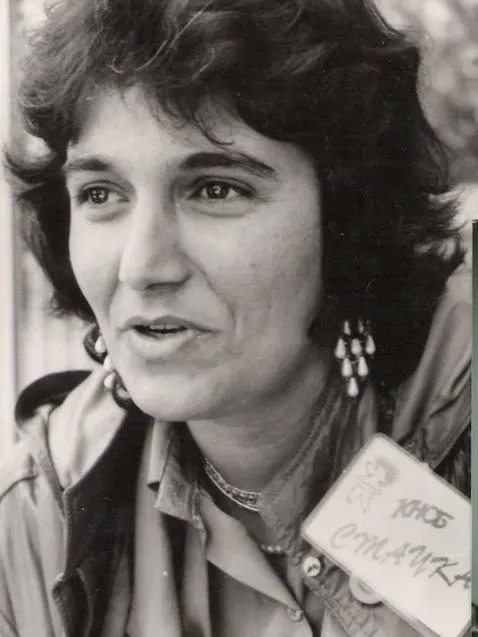
– I'm really curious: why did you agree to run for vice president?
– When they offered it to me, I thought they were joking. A PR agency we worked with called and invited me to a meeting. I thought it was about work and went. “We have a proposal for you to run for vice president.” My first reaction was, “If you tell me it's on Yolo Denev's ticket, the joke will be complete.” Yolo Denev being the eccentric Bulgarian humorist who made a habit of running for president. I took it as a joke; at first I didn't realize at all that it was serious.
I come from Blagoevgrad, and the cause that VMRO, a nationalist party rooted in the Macedonian liberation movement, has championed for years is not at all foreign to me, although I've never been a member. When I worked as a trade unionist in the 1990s, we organized lots of strikes. We'd set off on buses to occupy the Ministry of Economy, and when the guards saw us, they'd shout:
“Hey, the Macedonian woman's coming with her rebel band again.”
I said I couldn't answer right away. The first people I told were, of course, my daughters. One of them was in a hurry to get somewhere, and I told her, “They're asking me to run for vice president.” “With whom?” “Krasi Karakachanov.” “With him, sure.” And off she went.
He was one of the politicians my children saw in a positive light; I don't know what they think of him now, we haven't talked about it.
On a purely human level, maybe there was a certain itch to touch high politics and find out what it's all about. And I found out. That's not my place. It was very important for me to understand that; otherwise I could have spent my whole life regretting not having tried.
– What else did you learn from that experience?
– I experienced one of my great disappointments—not because people didn't vote for me, but because the people close to me didn't. People I know support me, love me, people I've helped a great deal. They were guided by what the media keep hammering into our heads—that if you vote for a small party, you waste your vote.
At my polling station people lied to me en masse. “I voted for you, why didn't they elect you?” If everyone who assured me had actually voted, I would have had at least 100 votes, but there were only 6. Two of them were mine and my daughter's.
In my opinion, this pattern that's been drilled into people's heads is extremely harmful.
Voting for a party, regardless of who is in it.
Ever since the first elections there's been a saying: “They could put a donkey on the ballot and we'd still elect it.” It's still that way today.
– Why do you think there are so few Mensa people in leadership positions, and not just in Bulgaria? I've never heard of a president or prime minister who's a member…
– Who knows. In Bulgaria I understand it, because we have a saying that puts it very clearly: “Don't give me brains, I've got my own—give me money.” Whereas abroad the saying is exactly the opposite: “Don't give me money, give me brains, and I'll earn the money myself.”
Supposedly brains are valued much more abroad. And yet, when they started writing about me and I was still unemployed, I came across a study from Poland. It turned out that about 20 percent of Mensa members were unemployed.
I explain it first by the fact that the people around them don't value intelligence enough. Because I believe a person with high intellectual potential could also be put to work making money.
In Mensa I met both the best and the worst people. And it seems to me that
intelligence works on them in exactly that way. It makes the good even better, and the bad even worse.

– Even if that's so, neither the good nor the bad are in high positions…
– We won't talk about the bad people; we don't want them getting into power. But the good ones don't get in precisely because they're good. They don't know what it's like to elbow their way past others, to play dirty behind people's backs. Because
when morality is nourished by intellect, it ought to be stable and genuine.
Whereas in politics, to succeed, in my view, you have to have a certain deficit of morality. I don't know if it's like that everywhere, but it is here.
There's one incident that was among the factors that definitively put me off politics. At a campaign meeting an old woman of at least 80 stood in front of me. She had propped herself up with crutches under her arms so she could take my hand with both of hers. And with tears in her eyes she said to me, “My child, I wanted so much to see you. Grandpa wanted to come too, but he's bedridden. Our pensions are so low, my child.”
At that moment I felt everything inside me tearing apart. Because that little old woman had made the effort to come in the hope that I could help her a little with her pension. And even if they elected me vice president, I couldn't make it a single lev higher. That shook me terribly, and when we got in the car, I burst into tears. Fates like that touch me deeply, and when you realize you can't help… why go into politics at all?
– Do you think Mensa makes any sense at all—is there any logic in uniting people on the basis of their intelligence? In ours, for example, there have been lots of scandals in recent years, and I haven't heard of anything large-scale and meaningful coming out of it. They're always fighting over something, and what is there to divide anyway…
– It could work, but somehow it doesn't, because everyone there wants to lead their own little army… For a long time I was in the thick of what was going on, and in the same way I didn't understand what they were fighting over. There were certain elements who started insinuating that the Board was abusing its power, as if millions were changing hands. Membership fees are symbolic and are the only source of funds. But this thirst to prove that you're more than the others… I think it gets in the way enormously.
Otherwise, in the ideal scenario, the organization does make sense. Mensa meetups are very interesting.
When you find the right company, miracles happen.
We play very interesting games, always involving some kind of brain teasers. But even when we sit down to talk, we do a kind of brainstorming. If you have some problem in your life, you gather around you people who can all think but are experts in other fields.
This could happen with business too. If a businessman has a problem, nothing stops him from putting it to a group like that. Very interesting solutions could be born in Mensa, and the people there would feel useful. Because
they haven't proven anything else except that they can think and are observant.
The ability to work under pressure, observation, and logically connecting things that aren't so obvious.
– Which, in the end, is also the nature of many of life's most important tasks. And of the core work in many professions.
– Exactly. That side of intelligence could be put to very full use. But it doesn't guarantee that other types of intelligence are also at a high level in you. Emotional intelligence, say. In Mensa we had a very fierce argument among ourselves over whether emotional intelligence is linked to the other kind. Well, no, it isn't.
– It's often inversely proportional.
– Not quite. I talked about this with a psychiatrist, and he told me, “The difference is that one you get from nature, and the other you make yourself.” Emotional intelligence isn't like the other kind, which is inherited; you acquire it through experience and deliberate effort. The same goes for the other types of intelligence, which shouldn't be neglected: motor, physical, verbal.
Unfortunately, it's precisely people with higher intellect who in their early years often feel like lone wolves—isolated, not accepted enough, considered strange. And this leads to a lack of good communication with others. But if they make an effort later on, they can change themselves. That's what the psychiatrist told me:
“Be grateful that you received what depends on nature. The rest you can make yourself.”