What is a tattooed American doing aboard a 40-year-old Lada, the boxy Soviet-era car, bound for yet another Bulgarian village? And what exactly goes into a cocktail called “Computer”? Why would a citizen of Washington State choose to hunt for old Bulgarian recipes in remote villages, where “Baba” lives—Grandma, the collective, the eternal in an endless, universal figure who touches all of us?
Rory Miller is rediscovering, here and now, the magic of the Bulgarian village. The thing we abandon, though it holds so much of the meaning.
A construction worker, an olive picker and an English teacher, Rory stopped in Bulgaria about 15 years ago, and his two children were born here. He caught people's eye on “Masterchef,” then went on his way through the remote Bulgarian villages. That is how the remarkable book Na oko (By Eye) was born, a surreal travelogue where you won't find precise recipes—for dishes or for the future, everything is “by eye,” both a unit of measurement and a way of life. But you will find the village itself, and its dishes, and the grandmothers, and the spirit, and well-measured spices.
The American's next step is to bring the book out in English through a crowdfunding campaign. I will personally support him, because I think he has captured the priceless spirit of the Bulgarian village today. Which is different from that of Elin Pelin, the classic chronicler of Bulgarian peasant life, and Ivan Vazov, the patriarch of Bulgarian literature. Which, I believe, will overturn the misguided fashion that life is in the big city. The world of technology lets us break stereotypes like never before. Colorful Rory's book reminds us of that too, and he has plenty to tell us in the lines that follow.
– Your book filled my soul. What made you so determined to write it?
– A few years ago I took part in a project organized by the Baba Residency, in which a few people, mostly from Bulgaria's bigger cities, went to a village, helped with whatever was needed and spent some time with the older people there.
I ended up with a family in Negovanovtsi, north of Vidin. I lived there with a grandma and grandpa for about three weeks. I got to know their daily routine and
helped around the house… mainly with the cooking, the talking and, of course, the drinking.
I met a lot of people from the area and saw many things I would never have seen if I hadn't left the city. I learned a great deal, and Negovanovtsi became the first village in my book. The idea for the book came from my stay there.
I realized that
these people have so much to tell and to teach us from their lives, and sadly no one has ever listened to them.
I've always loved cooking and eating, so the natural way for me to gather material was to cook with them. It was the one thing they truly loved doing, and it let them relax and tell me about their lives and their philosophy. I saw that not only did they always cook without exact measurements, they lived in a similar way too. I understood there was one common expression that could explain not only their cooking but their way of life. “Na oko.” By eye.
What moved me most was
the simplicity of village life and the enormous amount of joy and contentment people manage to draw from it.
I witnessed extraordinary and constant grief in the life of every person who told me about their hardships, yet they never focused on it… never dwelled on the bad more than necessary. Joy always won out over sadness; however great their sorrow, it never controlled them for too long and always gave way to happiness.
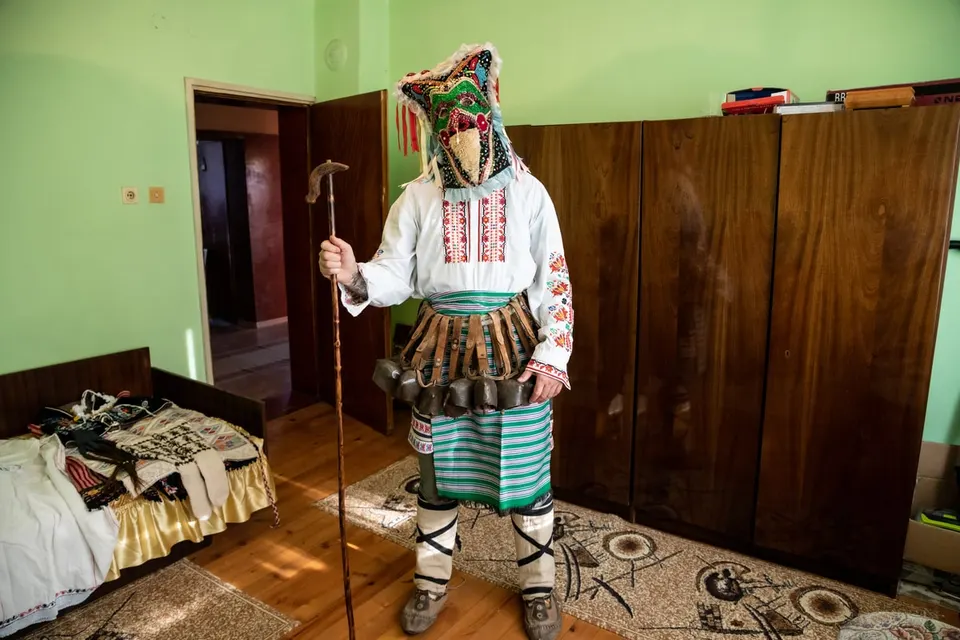
“This dish is the favorite of the lady of the house, and of her husband, who is a great devotee of cooking, but since his health began to decline it has become almost impossible for him to stay on his feet for long. So Baba Daniela has taken the kitchen duties entirely upon herself. She does it with understanding, and with pleasure too.
Meanwhile, alongside his usual reading, the old man has grown more and more interested in a new hobby—woodcarving. A few years ago he turned part of his long-abandoned barn into a true Mecca of carving. That is where he often slips off to work on his favorite thing to carve—decorated wooden cooking spoons. The barn resembles a damp, half-dark cave, but that is how he loves it, and as soon as he steps inside he comes alive at once. He disappears for hours, until he emerges triumphantly with his new creation.
Not far from his carving workshop, in the dimly lit interior of the same barn, Baba Daniela's soap-making corner has found shelter. There she makes bars of homemade soap for the locals. They usually pay her with their own produce or handicrafts—from fresh hen's eggs and homemade wine to knitted socks. I still keep two of her soaps in a plastic bag under the bathroom sink. Three ingredients, all told: pork lard, lye and a little water.”
Excerpt from By Eye by Rory Miller
– Do you have any interesting stories about how villagers use technology? Or about its absence?
– You don't come across much technology in the villages. Sometimes one of the children or grandchildren passes an old desktop computer on to their grandparents, but that's it… most of these people encountered modern technology for the first time after the age of 50, and they simply have no interest in it. Besides,
it isn't easy to make sense of all these devices and of our often lazy excuses that we can't live without them.
You reach a point in life when you simply don't need to use such things. And learning how to do it just seems pointless. These people have lived full, meaningful lives and they don't need it.
Many of them are curious about what's happening outside the village and would like to play with modern gadgets. But only for a little while, and not seriously.
Technology is important, it should be there and exist to help these people, but expecting them to use it and understand it is impossible.
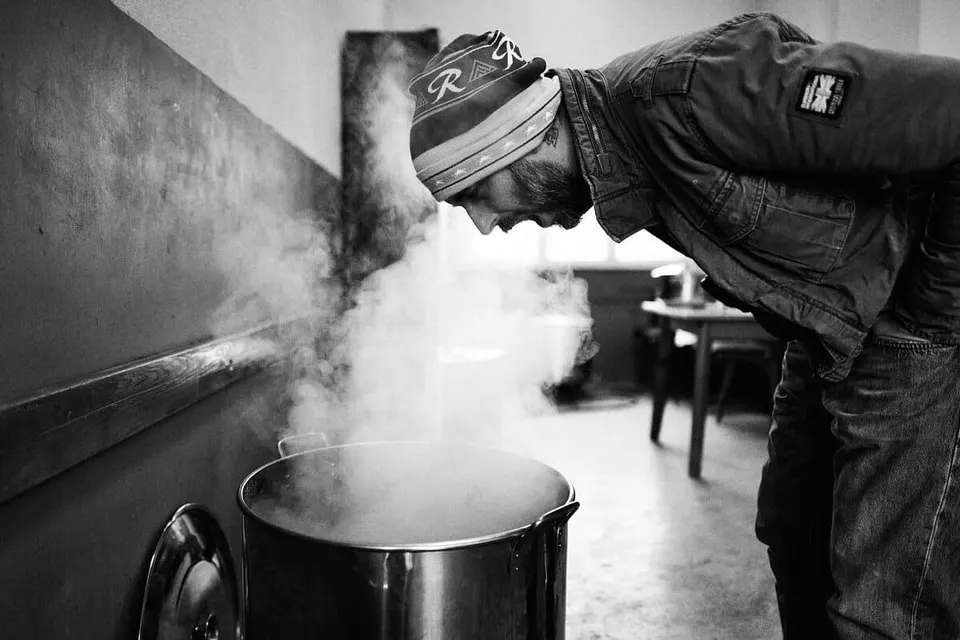
– Do people in the villages know what artificial intelligence is? And should they?
– It's a topic that doesn't interest them at all and won't interest them anytime soon. Of course they'll learn that it exists, but it has no place in their lives, or at least none they can see.
Say “artificial intelligence” to them and they'll take it for an evil robot or something like that… which, as it turns out, isn't too far from the truth.
“By ‘computer’ they mean a simple drink of rakia and Coca-Cola. To this day I have no idea why they call it that. It isn't entirely bad, and I have to admit I drink it mainly for its terrific nickname… or at least that's my official excuse.
We go back, and in the meantime the peppers have recovered enough and the last potato has vanished—I don't even ask about it. Baba has crushed a few cloves of garlic with a pinch of salt in a wooden bowl and is cutting the fresh onion into pieces with her small, sharp kitchen knife. Once again she refuses to use a cutting board and instead chops the onion between her fingers—it's simply faster that way, she explains.
She repeats the same with a full handful of fresh dill. Everything goes into the same bowl and is mashed with the pestle from the mortar. A few pickled hot peppers from the jars in the cellar are added, along with a teaspoon or a little more of the brine.”
Excerpt from By Eye by Rory Miller
– Can “Baba” give us back the calm of life? Does it run through the “by eye” measure, as a counterweight to the endless rushing, competing, record-breaking?
– Their way of life, their approach to life's problems and dilemmas, can teach us something. When tragedy strikes them, it doesn't depress them, they don't start drinking or taking drugs, they don't rush to the kitchen to console themselves by overeating.
They expect tragedy. They know it will come. Without it nothing would be beautiful.
So it isn't about Baba, it's about how they deal with things. We have to understand that life isn't based on quantity, or even on the quantity of quality… it's based on existence. The quality of existence can't be quantified, it's fleeting. So never think about how much or how often—
think about the miracle and the happiness of simply having and being.
– I read that you've tried the “computer” cocktail. Can you tell us what it is?
– My first “computer” was poured for me in Chelopek, by Grandpa Vasko. He set a short glass in front of me and filled it halfway with rakia from an old, repurposed wine bottle. Once the rakia was in, he slowly reached under the table and pulled out a bottle of cola. He filled my glass to the brim with it. “Computer!” he announced.
He told me that whenever he and Grandma had nothing to do at home, they would pour themselves some computer, then go inside and watch “Walker, Texas Ranger”…

“But she invited me in, and before I could even fold my leg under me, she set a small glass in front of me and poured me white wine. It was time.
Over the next hour we talked about many things. Baba always came alive when she told me about her family. She stressed how her daughter had been the greatest joy of her life until her granddaughter came along, and since then the daughter has been in second place. She told me about the times her grandchildren stay with them, and the adventures they set off on together, and it was obvious how vital they were to her soul and being. It was hard to get her to talk about anything else!
She also shared her passion for singing traditional Bulgarian folk songs, which seems to be a common pastime among all the grandmothers in every village. While in the city most people strive to forget their shared history and embrace or imitate other cultures, here in the villages the grandmothers and grandfathers do what they can to preserve their history until eventually (let's hope) it becomes interesting to the rest of the population locked up in the bigger cities.”
Excerpt from By Eye by Rory Miller
– Tell us a story you heard in the Bulgarian villages that we really ought to tell ChatGPT as well.
– During my travels, that hadn't reached the village yet. Artificial intelligence was known more or less, but mainly from science fiction novels.
I don't think it's relevant for the people over 50 in the village… Not yet, anyway.
– Give us a recipe that wouldn't have been possible before the age of technology!
– Every recipe is possible without any electronic help.
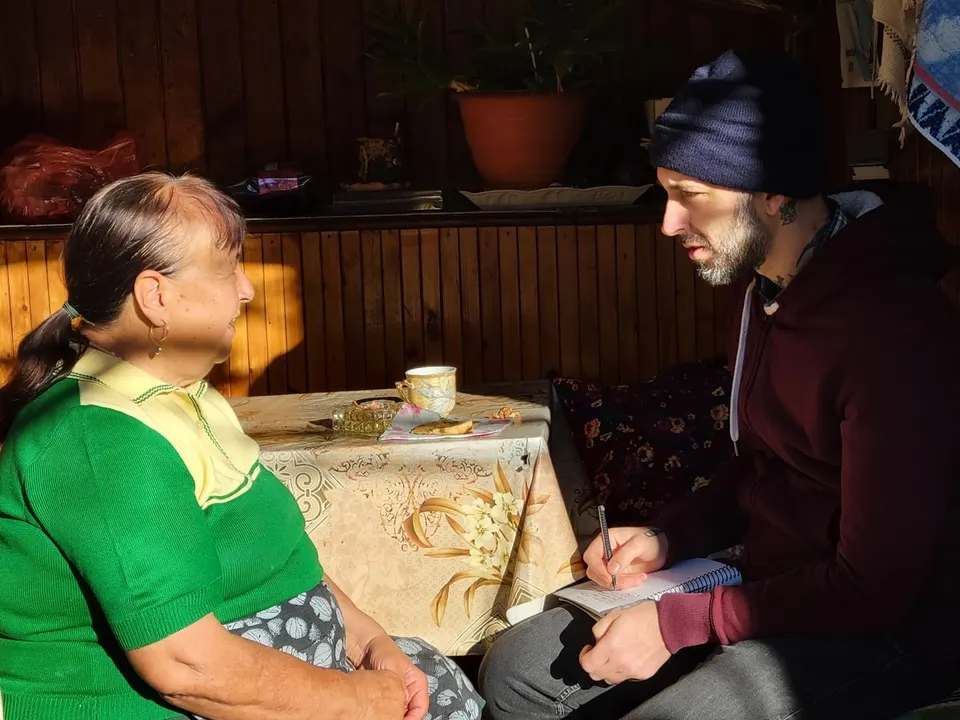
– Why are we Bulgarians good programmers? Could that reverse the trend of emptying villages?
– I really don't see a connection. Still, since programmers can work from home, I hope from now on to see more of them turning up in the villages!
“They asked a 90-year-old grandmother from a village what the secret of her long life was. ‘I've never done anything bad to anyone. I'm warm-hearted. I've never slammed my door on a single traveler, I just ask them whether they're hungry and want something to eat. I have no enemies, I don't go to the doctor. I don't hate anyone, I don't hate this world.’ On the subject of longevity, I grasped the connection between food and virtue.
I spent a lot of time going from family to family. I listened to their stories, laughed, ate a little and drank a little. People invited me into their kitchens to help them and to watch them cook with all their pride, love and passion—just like a painter wholly devoted to his work.
What absorbs me is cooking that awakens conversation and inspires love. When it is a reason for people to gather and enjoy the food and the vital moments of being together at the table with their peers, family, loved ones, and even those they don't much care for.
That is where I discovered the beauty and captivating uniqueness of cooking—the recipe becomes yours. Through improvisation and tasting you discover your own style and contribution, just as you can discover your own character in life.
Cooking is born of romance and love, not of contemplating molecules. That is why I try to preach cooking without exact measurements. By eye.
This is not a scientific experiment; nothing happens twice the same way. Cooking is like a one-man circus act. You juggle specific ingredients and circumstances to get your delicious result. You rely on relative or indirect measures—a pinch of this, a handful of that, three seconds of that liquid, a drop of the other, and so on. It all depends on tasting, smelling, touching, and listening too…
It's all by eye.”
Excerpt from By Eye by Rory Miller
– Are you optimistic about Bulgaria? We have so many thoughtful people, and yet something is missing…
– How do I put it… Yes and no.
So many things need to change, but sadly that change demands considerable effort and sacrifice. It won't come from lying on your mother's couch, complaining, dreaming, not paying rent and so on.
It will take action, not words. And of course things can change. But would you be ready to sacrifice yourself to secure a better future for your child, or for other people's children?
If not, then the matter is closed, and it's best to just try to be a little quieter while you, and everything, and the thoughts you once had, quickly crumble into the past.