Who is the author when a picture is created by AI? Where will the masters come from if the beginners disappear? Can artificial intelligence make us more original, the way photography once pushed painters toward Impressionism?
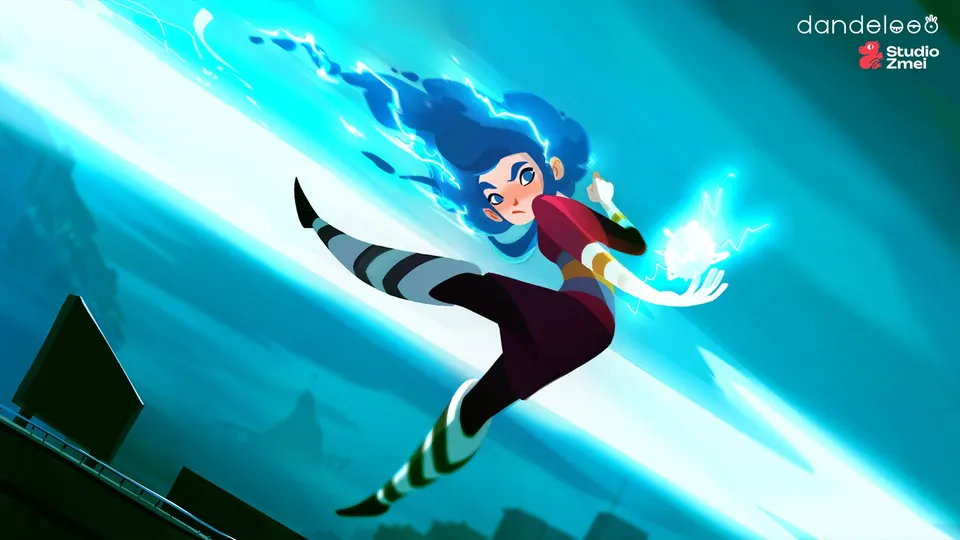
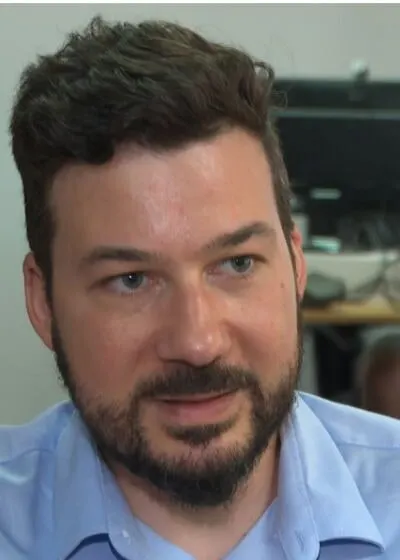
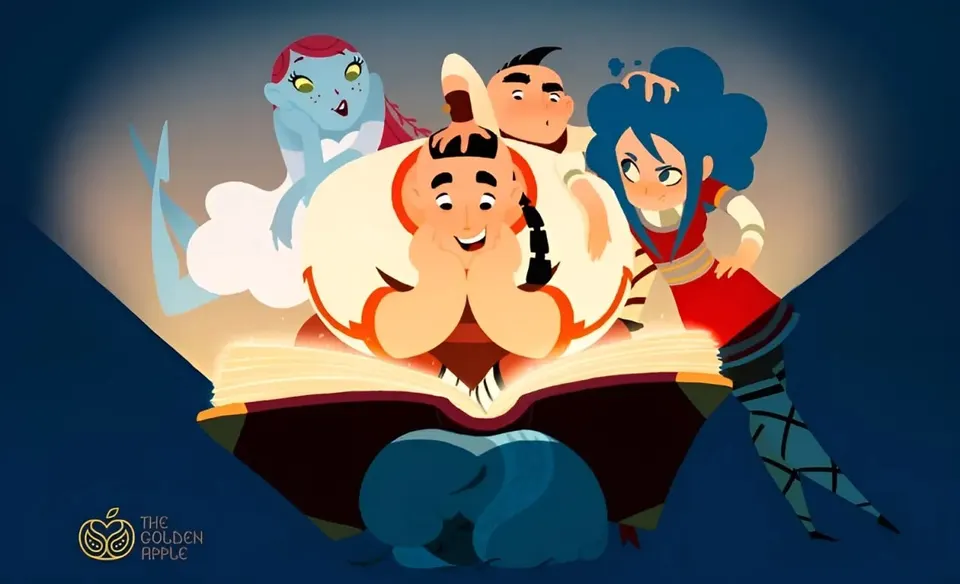
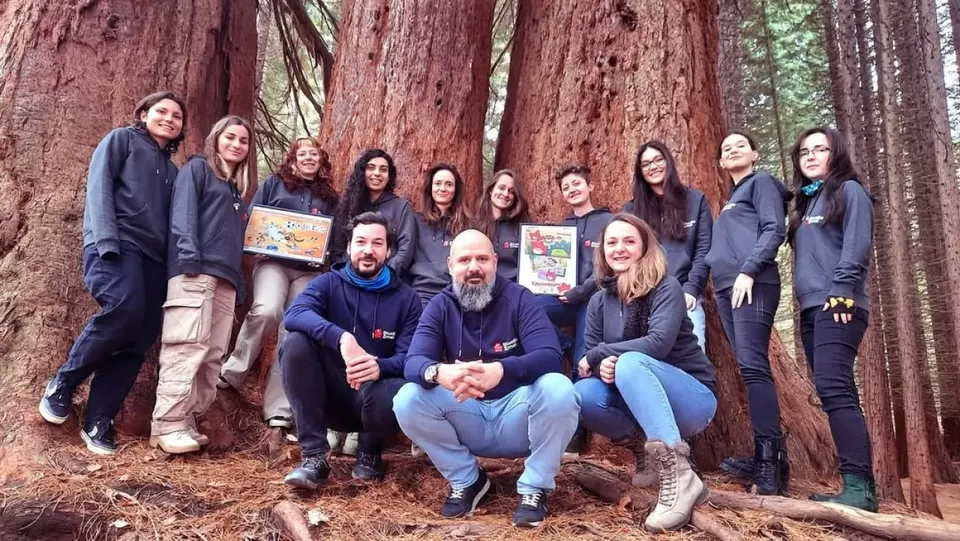
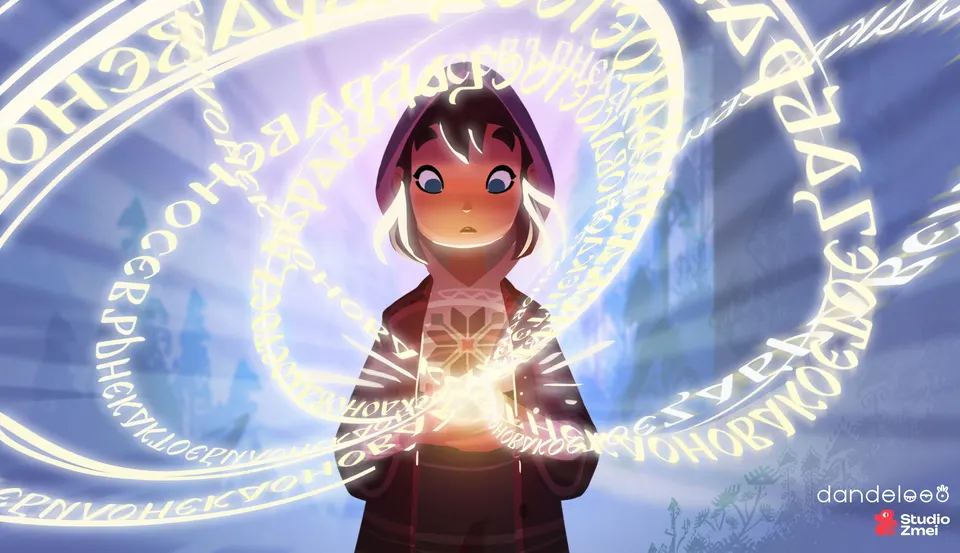
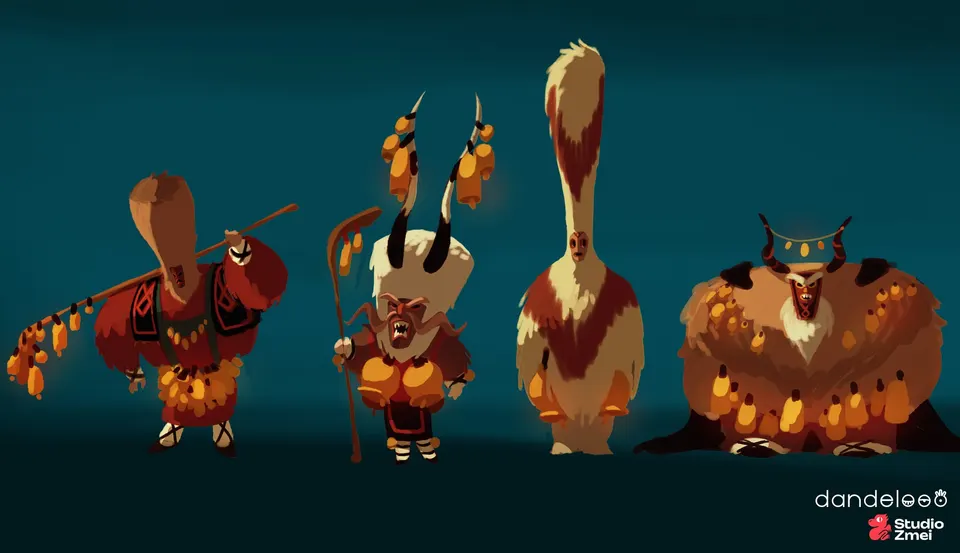
Dimitar Petrov is the founder and art director of Studio Zmey, named after the zmey, the dragon of Bulgarian folklore. He studied animation in London, worked at Cartoon Network on The Amazing World of Gumball, and created The Golden Apple, the first animated series based on Bulgarian folklore.
He recently wrote that in making animation he does not use, and never will use, AI. We met to talk about why. About authorship and theft. About likeness and originality.
– I really like the animation you make, and when I read your post saying that at Studio Zmey you don't use AI in your work and won't, I simply had to invite you to talk about it. To be honest, I believe AI has a place in everyone's work, to help with routine, repetitive tasks, but also with creative ones. Why and how did you arrive at this decision?
– Our studio works mainly with clients abroad. At the beginning we did a bit of work here, and we saw that the systems for funding animation are badly underdeveloped, because elsewhere the whole industry relies on systematic state support and subsidies. So we had to look for another way. When you work with clients abroad, you sell your labor and possibly your copyright. Very early on we ran into exactly that system—how copyright is sold and what exactly it means. In fact, proving authorship of an animated project, a film or a stage play is quite similar. I had to learn very fast back then, because we went into negotiations with a very large company and had to protect our rights.
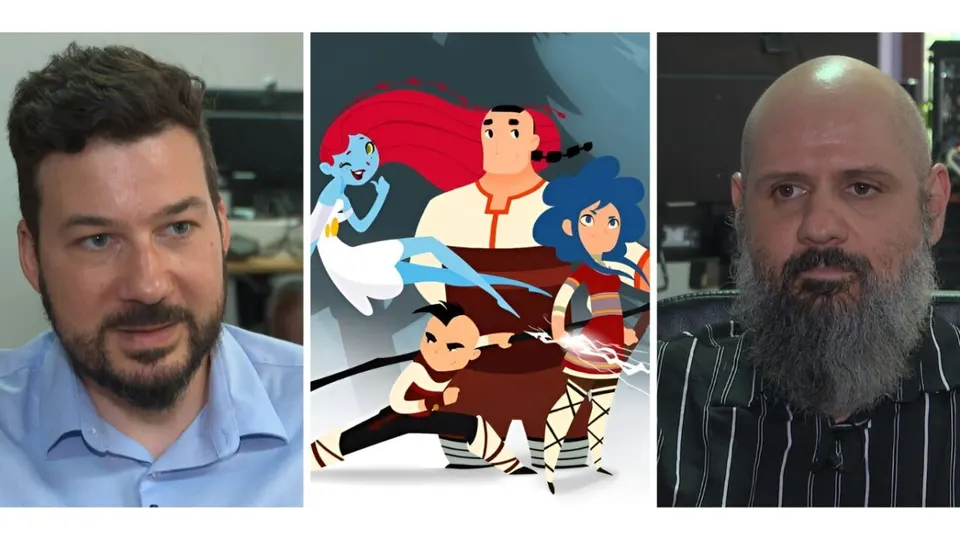
It was in France, and I found a very good lawyer, a lecturer at the Sorbonne who specializes in these things. From her I learned that authorship is proven with very specific documents, and that there is a very specific definition of what it means to be the author of a given production or project. For example, besides being paid to make a film, the authors also receive a small sum every time it is broadcast. When a television channel airs a film, it is obliged to set aside certain sums for the authors with each broadcast, even after it has already paid once to buy the film itself. For animated films these are the art director, the director, the screenwriter and the composer. Bulgarian National Television (BNT), for example, currently sets aside one lev (about 55 cents) for every minute of animation it airs, split among the four of them.
It doesn't sound like much, but the authors of The Simpsons, for instance, with everything accumulated from all the countries where the show runs, could have retired 20 years ago. There are big international organizations that make sure these sums are set aside and distributed, and all of this was before AI had even arrived.
– But hasn't AI changed things fundamentally, if we can't clearly prove who the person in any of these roles is?
– When AI started coming in, we already knew how things work. Either we are hired for the right to use copyrighted works, or to do a specific job. At one point we started getting requests to finish something that had obviously been generated with AI, and we were supposed to make it look better. At first we didn't even refuse on principle, because we didn't know it was AI. We quoted market rates for such jobs, because on our side real people do the work. We never heard back, and later it turned out that not a single one of those projects was ever made.
That was when we made the decision not to use AI in our work.
There are purely legal aspects, but let's start with the fact that you can't ask for the same pay for something that cost you $5 to generate when someone else spent months or years on a similar task. The ethical question began to emerge, because it started becoming clear that
AI models are trained on copyrighted content, and the people that content belongs to get no credit or royalties whatsoever.
The resemblances started to surface—things being generated that look very much like other, copyrighted things. And gradually, in the end, we realized it makes absolutely no sense. A number of lawsuits are underway right now precisely because of the lack of credit and royalties.
On top of that, in our industry it isn't even practical. It's much easier for us to work with our own artists and have them draw or animate something that's ready after one or two rounds of corrections than to go through some model that takes a huge amount of time to bring up to production-ready level. Even if we assume there's no ethical problem—and in this case it is enormous. There are colossal lawsuits going on, and the big companies are now very careful about whether to use AI this way at all. What's more, I think viewers themselves react quite negatively to things that are entirely AI.
– As long as they can tell, which is already an illusion…
– Using an AI model,
it's hard to generate a truly original visual story. Simply because it always stands on something else.
Of course, this may be something people experiment with in the future. I'm not saying we will, I rather suspect the big companies will go in that direction, because they have huge collections of material. Purely technically, a small team like Studio Zmey, which is only 11 years old, most likely
doesn't have a large enough body of work to train the model so that it's useful to us. And it would still be more efficient and meaningful to do the work ourselves.
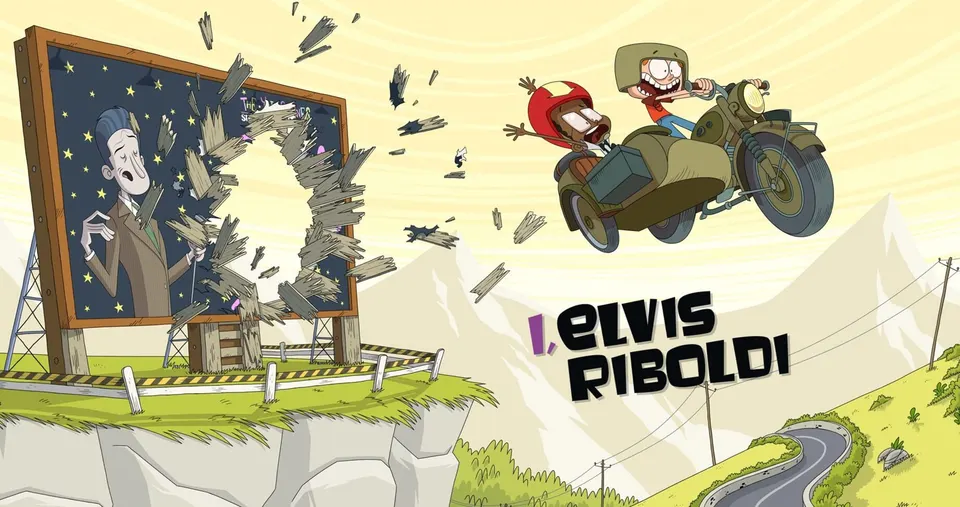
Yes, AI today is a combined, very pleasant search engine that can be fun. For example, we ran an experiment generating a Bulgarian comedy. Several times, and in the end it was always about dividing up an apartment or an old property.
The comedy was heartbreaking every single time—some friends come to the apartment of one of them, who wants to get it ready for sale because he inherited it, and there they run into some typical dramas… It says a lot about the state of Bulgarian cinema, because it was an amalgam of all the Bulgarian films you can find online.
But can you create an original story, one that Bulgarian cinema has never had before? That gets much harder. And there's another problem, which I think is already visible in the IT sector—that it's getting harder and harder for young specialists without experience to get hired.
– Definitely. And if they disappear, where will the next specialists come from?
– I can see the same thing happening in design and in animation. How do you start, how do you sustain the creation of new knowledge, of development? Animation is, to some extent, a craft. There are many talented people, but you have to build up experience to know what you're doing, to have some sense of aesthetics, of what works and what doesn't. Then you start building on it, and at the very highest level you begin thinking about new ways of doing things.
If the beginner level disappears because AI does their tasks, the people who reach the middle and top levels won't have the foundation and knowledge to keep going.
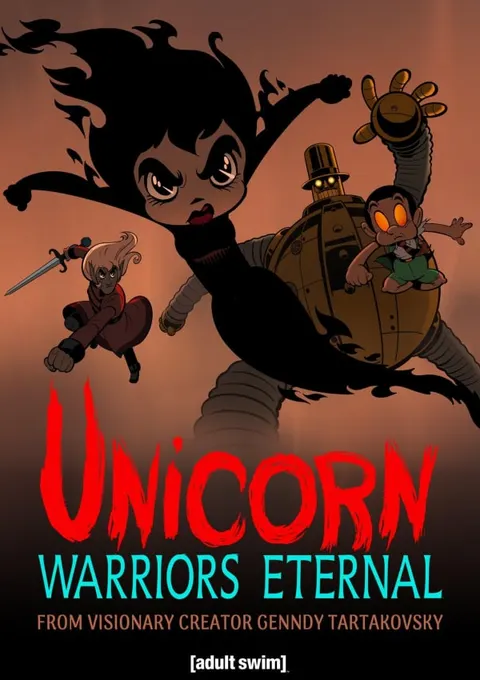
Here I also have the counterargument that these models are currently being sold far below their real cost. And I'm willing to bet something not too big that within 5 years the price of tokens and of using public AI models will shoot up dramatically. Most likely they won't be usable the way they are now, for generating memes. Realistically, if you don't have access to generate what Mladost, a sprawling Sofia housing estate, would look like as a Studio Ghibli film, you won't do it. Nobody will invest money to generate that.
– I agree, I'd take that bet, and I'm writing it down for 5 years from now—may we all be alive and well, both us and AI. Because the chips are evolving too, the models get more efficient every week, and I don't think accessibility will change sharply. But look, you and I are talking perfectly calmly and looking for arguments in two opposite directions, which seems to me an increasingly difficult and rare thing.
– I think so too. It's like that everywhere now, but
in Bulgaria it's getting harder and harder to have a normal, respectful conversation with people who hold a different opinion.
Without assuming that it makes the person across from you terrible, that they hate you. In the end, people should be able to talk respectfully even when they disagree.
Once, when I was telling someone about our views, he said: “Right, so you hate AI.” He said it with entirely good intentions. I don't hate the technology in any way, that's absurd. But once you frame your judgment like that, you're already starting from an antagonistic position.
A lot of things are like that. We can't be bothered to dig deeper, we look for very quick, superficial solutions. Especially on social media. We made a media literacy series, a short animated miniseries called Mila and Marko on Screens. As part of the research for it I got myself TikTok. I don't know if you have TikTok, but it's... I have no words, it's horrifying what young people amuse themselves with online.
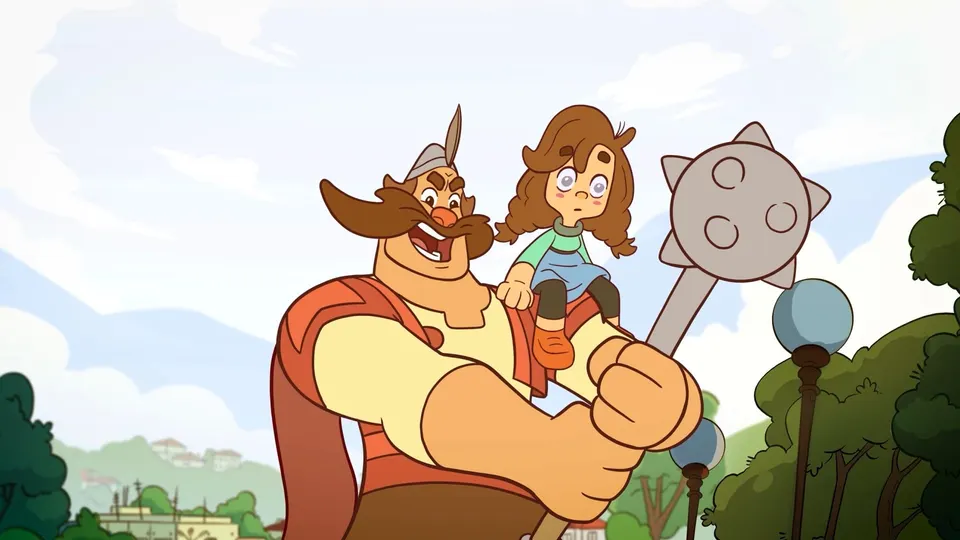
We look for quick answers and quick solutions, we find it very hard to dig deeper, and we rarely have discussions with differing opinions.
– And that carries over into our attitude toward AI. For most people it's entertainment—generating a picture in whatever style is in fashion, whether the world of the '80s or Studio Ghibli. Instead of starting the important conversation about this technology, which has sweeping potential.
– Definitely, by now every new trend like that leaves me in shock. I also read the terms of use of the models I tested. I think very few people do, it takes time, but I think it's very important. There are certainly things in there a person should be aware of. Especially if they upload their own photos or materials. That way they enrich these models with all sorts of information, at their own expense, and I think in Bulgaria this is happening on a mass scale. I think that's a huge problem too.
At some point the people who have used it often this way will start seeing themselves in all kinds of places, in ads or other images that may not be pleasant at all.
It will be a very unpleasant side effect, and many people will be surprised. In the end, we need some basic level of online literacy.
– Alas, I don't think it's possible to escape that today. If you're a public figure, for example, your image has long been in the models. If you've been using social media for years—same thing.
– Yes, but that way you're handing it over yourself, giving your explicit consent. To me that's a huge difference. Yes, most likely one way or another you'll end up in the data, but not by expressly agreeing that it can be used for anything.
I suspect that at some point we'll have digital passports that will somehow gather this data and give us some kind of protection. There's a lot of debate there too—is it a form of control or a guarantee of security? It's very interesting and strange to think how things will develop. At the European level they're trying to introduce regulations right now, but won't that slow down European models? There will hardly be similar regulations in China, for example.
So what exactly are we striving to be? Maybe that's the most important question.
In China, AI is now being used to create very large-scale media products that bring in huge revenues. But there it is literally state policy. They aren't at all interested in the problems and dilemmas we have here. To some extent, maybe, they can afford it with the level of control they have.
Maybe the takeaway is that we need to learn to talk to each other more, as a society, and to dig deeper into the important topics.
– I don't think we're there yet, but do you think that in the foreseeable future, indistinguishable generated animation, for example, will be possible?
– I'm not sure, to be honest. On the one hand, visual content requires a lot of resources. But you're right that as technology develops it may become completely accessible.
There are specifics that would be much harder to generate. We see it now with ads, for example, with static images.
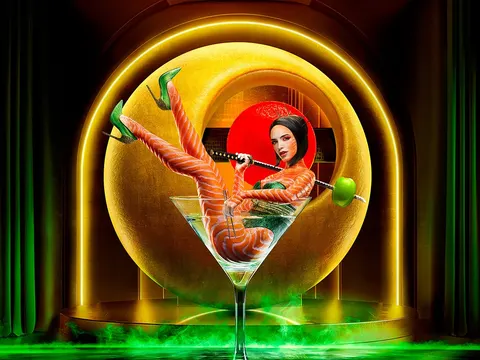
Yes, today you can generate things that look really very good. Only, once again, very often these things are the lowest common denominator of something.
That is, very often they're pure remixing.
And the other thing is that if you generate something, I can generate almost the same thing. Even if you use something unique, like your prompts, at some point someone else may use the same or very similar ones and get a very close result.
And this is also one of the main problems with mass use. I'm not talking about the big American companies that are 100+ years old and have huge archives of material they guard very jealously. I mean from the point of view of the ordinary user. On Facebook I came across two ads for totally different things that looked as if they were one and the same. They're no longer advertising, but exactly the opposite. And I see it in many mass-market products, in shops, notebooks, all kinds of quick products that are generally not expensive.
I suspect that the better this model gets, the better these images become, the more fed up people will get with seeing them everywhere.
– Allow me to disagree—I tried it with a poetry contest too. With a creative approach, originality, additional content and real effort, you can always get new, beautiful, interesting, meaningful results. The problem, to me, is that people approach it formulaically, and that's why their results look alike.
– Still, I think at some point original images, original style, something created by a real person, will have greater value, simply because
we'll return to more original styles, to things that look different.
Again, it's a question of the share of use, and also of where the mass consumer goes. There are certainly people, a small percentage, who use it very creatively, and there will be interesting results.
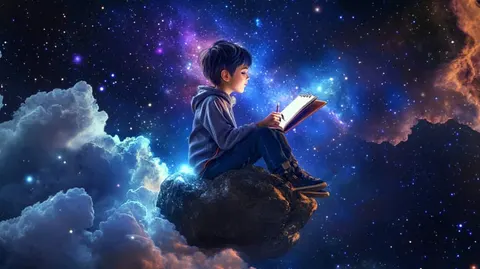
But I generated a fairy tale with AI, and since I teach, my students and I analyzed the result. Well, it actually wasn't a story at all, it wasn't a fairy tale. There was no plot, no moral, no characters, no action, none of the things you need to be able to say this is a story and recognize it as one in any way. On the surface it looks as if it works, but as soon as you analyze it, you see how broken it actually is.
If you keep it running and start giving it iterations, maybe at some point it will get there. But it seems a bit strange to me—if you spend 3 days on it, why not just write the fairy tale instead?
Maybe I'm wrong, because I'm more optimistic than most people.
I don't think AI will take the whole world's jobs; rather, it will cover the Fiverr orders.
There's a site where cheap orders for just about anything get done, most often for $5. That's exactly it—the mass-market stuff, I think, will go to AI.
– Here I'm on the other side again, maybe because I see the extremely successful examples, including AI writing indistinguishably from me, even though that's the skill I've been developing all my life.
– We have students who come from France every year; we present our projects to them and give them a task—to make something based on them. Until recently they were quite original, they shot video, did all sorts of things. Last year they generated a new AI character, without asking us, of course.
It was very unpleasant, because the character looked pretty good. It looked like something we would make.
Afterward I explained to them why we must never do that, and why we couldn't sell it afterward.
I admit, if I see AI generating animation indistinguishably and well, I won't like it. I'll check whether someone is using it to make money. But that can happen without AI too. Even before, people would take your design and put it on a book cover in Brazil. Plagiarism isn't a new problem, the tool would just be new.
I think AI offers endless potential for memes and satire, which is great—satire should be accessible. But I hope it will push us to become more original and to seek out more difference. Just as
when photography appeared, the visual arts didn't disappear; instead Impressionism and other visual styles developed that deliberately don't look photographic or realistic.
You deliberately go in a direction that this thing can't do. And that, in turn, stimulates the creation of new means of expression, new software, stories, programs. Will it happen that way? We'll see. I remain an optimist.