Have you ever read an interview… in which a writer gets the chance to put questions to a character from his own novel?
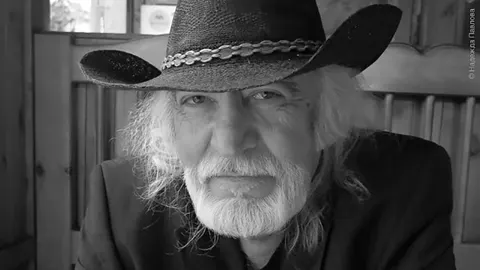
We will be talking about images, as bold and colorful as those in his photographs and as the man himself. Garo Keshishian is one of the best-known names in Bulgarian photography. His mastery is well known abroad, too. In the 1990s he showed his singular work in Houston, Tokyo, Geneva… At that time he was a close friend of the photographer Yordan Yordanov (Yuri), whose story is told in my novel I dodeto... (And Until...). Garo, in all his color, also appears on the pages of the book.
Recently he has become the author of a book, too, put together with the help of his friend Krasimir Mashev. In Ot upor (Point Blank), Garo gathered some of his vivid memories and memorable photographs. The way his camera “shoots.” And now, point blank, he takes our questions about the photography of today and of the past.
The interview was made possible with the help of Nadezhda Pavlova, Dobrin Kashavelov and Nikola Mihov. It is part of the material the three of them are gathering for a film about Garo Keshishian. I am sure that you, like me, can't wait to see the many points of view the team has collected in the production, made with the support of Fotosintezis.
– Is photography lonely work?
– When you're alone with your subject and there's no audience at all, do you know how hard that is? The person starts mistaking you for a friend. They don't accept that it's work, since there's no money in it here anyway, but let's call it that. And afterward there's no getting rid of the models, of the people, and on top of everything they take offense when you're busy.
Photography is strange work! But back then it wasn't so outrageously abused.
Now everyone lifts a phone and snaps away.
And once they've shot their kebapcheta, Bulgaria's grilled mince sausages, they think they've taken a photograph, because it's in focus. Is that so? Well, fine.
– How long does a photograph live?
– Physically, for now, 200 years at most. But times change. You see how a person has reached the edge of what can be endured at a given time. Say, photographs of wars, of human tragedies. A person learns from many things.
People have always asked me why I constantly carry a camera when I'm not shooting. I always have the feeling that something is going to happen, and then it doesn't. And even if it did, I'm not interested. I'm waiting for the other thing, whatever that will be…
How long does a photograph live? I don't know. For as long as someone is around to like it. Secret or not, but
pressing the shutter really is death. One man kills a rabbit, another kills a lion.
– You've piled up quite a few interesting stories over these decades of shooting and countless projects.
– What stories haven't I got. A friend of mine, an Italian, his father is 90 now, he has a vineyard at the edge of town and lives there. There's a white dove that sits on his shoulder all the time, and I tell my friend, “I'm going to photograph your father with this white dove.” Now, he'd been in the French Foreign Legion, he would come home, get his wife pregnant and go off somewhere again. When the children reached nine, she couldn't take it anymore, left him and became a nun. And I say to him, “This dove is as if your mother were on his shoulder, now that he's old and alone.” “Yes, yes,” my friend replies, “he often thinks so too. But I have to tell you, every now and then he eats them, with rice.”
What madness! Supposedly the spirit of his wife, and in the end he cooks the dove with rice and gets another one. The things that happen in this world! Go and write novels, like Márquez.
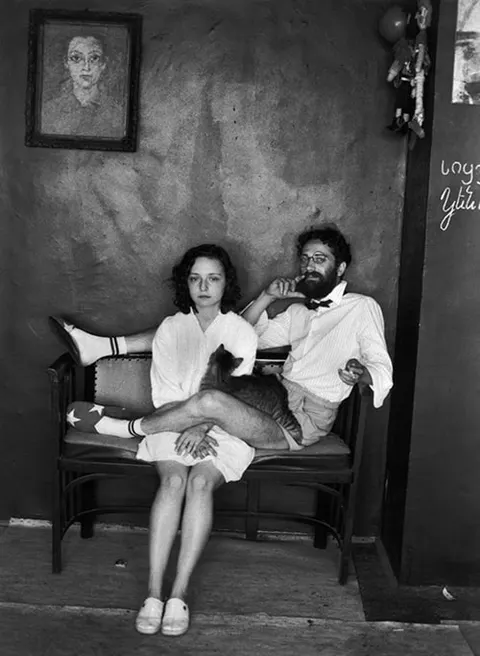
– Since you mention Márquez, he writes: “José Arcadio Buendía had truly been frightened on that translucent December morning when they made his daguerreotype, because he believed that as the image passed onto the metal plate, people wore away little by little…” Is he right?
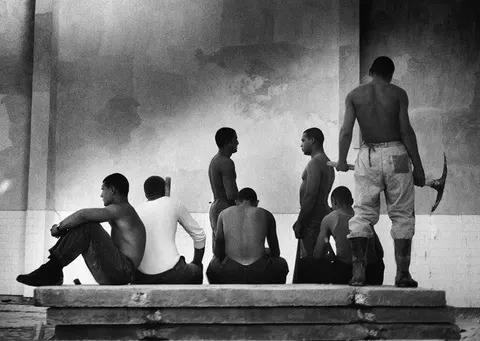
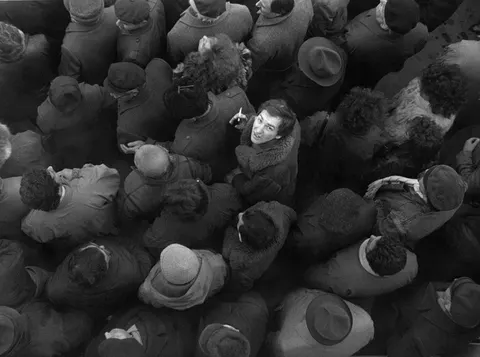
– My photograph, the group shot of the labor conscripts from behind, is one of the most frequently printed in Eastern Europe, it's been shown maybe more than 120 times, I don't count, but newspapers, magazines, if you go through Switzerland, the States. That doesn't matter in the slightest. What matters is what we tell today's young lads who have bought themselves a camera. What do they want to do? What?
For us it was easy. With a certain risk. We photographed things the authorities didn't want known, and we thought it was a rapier in our hand. But now?
Now everything is permitted, supposedly.
All right, then what are you showing now? Sunsets and sunrises in the Rhodope Mountains, is that it? And some guy leading his donkey along. And if by chance there's no dog, you add one in Photoshop and it becomes terrrifying! Terrifying for whom, I don't know, I've been to the Rhodopes too. True, sometimes I've seen something staggeringly beautiful, but seeing it every single time is a bit much for me.
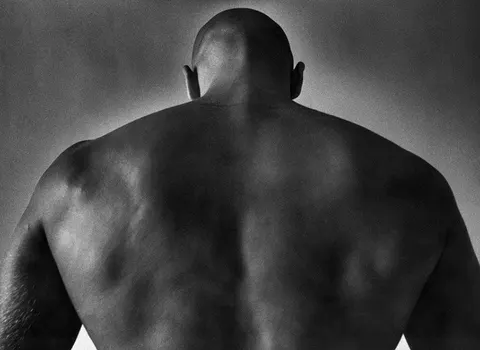
– So you think young photographers are trying to repeat things, and in a rather kitschy way at that?
– I don't just think it, it's a fact. There are things that are interesting for the time in which they happened. Not in general. Now, when there's that enormous back in my photograph… well, there were no mutri yet, the thick-necked gangsters of Bulgaria's 1990s! So it's a premonition of something that's going to happen. As Gogo Lozanov put it, only with him it's more complicated: “If August Sander made a premonition of what was to come, Garo Keshishian's photographs are a premonition of something that has already gone.”
After a while they become a sign of the times, but that can't last forever. Although, if you look at Cartier-Bresson's work, things are so pared down, so human, that they outlast the time in which they were made. How can you think about some particular time, it isn't there…
I can't stand the photographer who took the picture of a little child at his father's funeral, holding the clothes. I don't know if I could shoot at a moment like that. I'd go over and hug the child.
– How do you manage to find common ground with such different people—both the general and the opera singer?
– Hm. That's very easy. And with death-row prisoners in their cells, too. You don't lie to the person. You can behave respectfully, but you don't lie to them. If you start flattering them, they'll see through it immediately. They know who they are. That's why you have to be very nimble.
A photographer's life is filled with lots of things. Most of them avoid contact with people, or they shoot, but there's a kind of alienation. Say a man is leading his donkey, Bai Radan with his best friend. You shoot, fine. The man stands there, he doesn't feel any unease, because that's how he lives. In fact, the bigger hero in the photograph is your subject himself. The photographer is not the hero, he's a, how shall I put it, slightly unpleasant character.
Photography is theft, for sure. Theft of pieces of truth.
If you're a good pickpocket, though… And it's still not clear to me why people get annoyed when someone photographs them.
People have always felt free in front of me. And I think that's exactly how I won them over. But I've grown old now, and what use is my creaky old freedom to them…
– What do you find interesting to photograph today?
– Well, almost nothing anymore…
– Sometimes the literal and the strange meet easily. Is it true that you made your most extravagant portraits in a studio where you take passport photos?
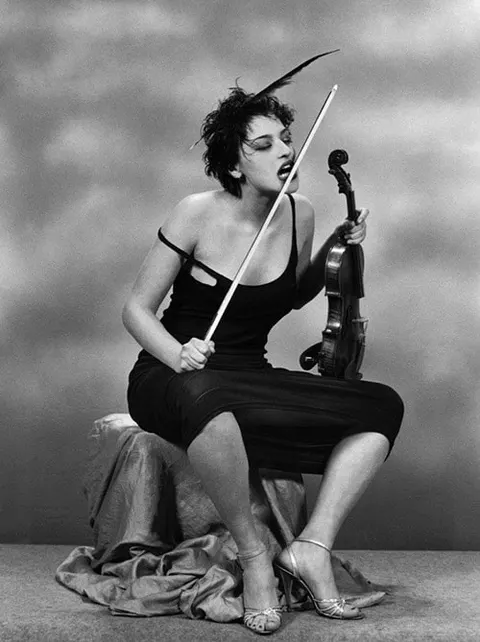
– Yes. People come in for passport photos, and once I cast my spell on them, these portraits come out. But originally, when I set up the studio, there were only dull state-run passport studios. Blank background, one ear showing, and off you go, bye. With me it became something completely different. Word spread little by little, and people started coming with their idea of the photographs they'd seen in the older studios. Here something else happens, they become terrifying heroes of a completely different story. And if you ask me now how I manipulated them, I can't tell you.
You have to manipulate the person until they calm down and turn into Plasticine. But don't touch them when they're not in the mood. It doesn't work. People are usually vain, they want something to happen, but they feel awkward, and they don't know how.
But the word “manipulation” isn't quite right. To me it's a kind of psychological undressing. Which isn't easy at all.
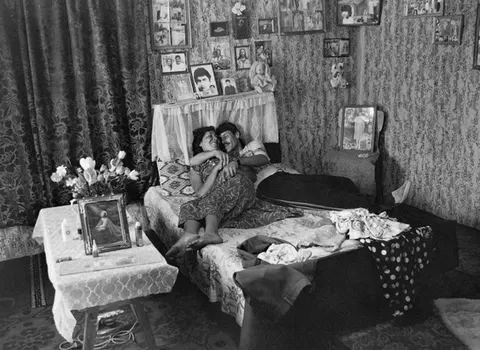
The secret sometimes is to get into their homes, for them to let you in, which is absolutely impossible now. “That's it, he's coming, he'll make an inventory of our belongings, we'll be robbed.” In the old days you could, especially in the Roma homes.
Some time ago journalists came from Sofia and asked me how I had photographed in the Roma neighborhood. Fine, let's go. We walk into a house, an old Roma woman is sitting there. “God, we have no money,” all right. And I say, “Fine, you have no money, let's pray to the Lord to help a little.” She starts saying a prayer in a language I can't make out, is she Christian, is she Muslim, is she Chinese. But she goes on and on… I say, “Which Lord are you praying to, madam? I don't hear ‘Jesus,’ ‘Allah,’ I don't hear anything.” And she says, “Oh, I don't know who he is either, but…”
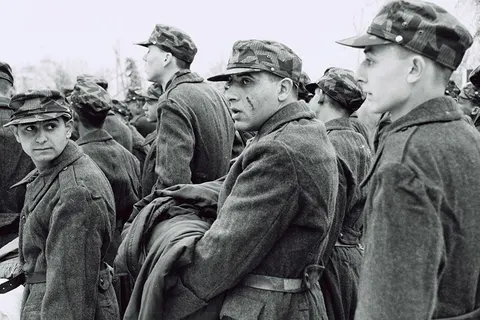
– The Construction Troops, the army's labor corps, are an emblematic subject for you. You photographed them for decades, right up to the end of the institution in '97. Tell us a bit more about them?
– Things changed over time, and I changed too. I started with the prisoners, it happened by chance. They'd come to work on the expansion of the factory where I was slaving away as an engineer. The officer in charge of them turned out to be a classmate of mine from the Mechanical and Electrical Engineering Institute, and I asked him, “Go to the toilet, leave me to take my pictures.”
Little by little things got more complicated. More and more incidents hooked onto one another. We live in apartment blocks near the unit, and when all the soldiers came to eat, they'd sit in the mud on the grass. Then I got to the point of photographing the soldiers' oath-taking ceremonies, of getting inside the unit. I was lucky with one officer who saw the pictures and said, “God, I walk around here all day and I don't notice these things. What have you done, Kesh? I'm leaving soon anyway, so I'll protect you. All my life I've written denunciations, now you'll be my indulgence.”
They'd sent some young soldiers to help on some construction sites near Burgas. But they forgot about them, they had no idea when they'd sent them or who had. And we find them gone feral, for three years they don't know whether they're in the army, whether they're on duty, like mujahideen, with beards like this, living in the trees, they'd built themselves stilt houses. And they slave away all day, because when they go to the canteen, they get fed.
In the end, when we did the exhibition at Varna Municipality, television and radio came. And the officers look at it and cry. Whenever the soldiers were discharged, they always felt very sad.
General Peshleevski even gave me a gold medal, and there I am in a black T-shirt, he's wondering where to pin the thing. And I ask him, “General, sir, let's stage a little coup… Because we're in a sort of middle position, look what's happened. But I want it to be a Construction Troops coup. Then all those mutri, once they grab the picks and shovels, you know what they'll do? Bulgaria will become a garden.”
– Another of your signature projects is “Armenians,” and in the book you talk a lot about your Armenian roots…
– There was an anniversary of my parents' passing. Something came over me then, a kind of blood tax. I decided to invite more people, to photograph them in close-up. For them to recall something about their own parents, and for it to stand as text underneath. People started coming, I gathered them at the Armenian church on Sundays.
The most interesting thing for me was that for this series they gave me the Varna Prize, the first time ever for a photographer. Then the exhibition made it to Italy, it was shown at the MART museum of modern art in Rovereto, and in the next room was a Joan Miró exhibition.
Ashot Papazyan, a photographer and a good friend, wrote the magnificent thing his father had told him: “Look! If pilaf could be made from words and a sea of butter, I'd order some.”
One man came, his name is Mardik, which in Armenian means “fighter, warrior.” And he's a very gentle man, smiling, and he says, “I don't remember anything about my parents…” “Well, all right, tell me what to write under your photograph?” “Look, there are three things I don't want anyone to touch, because then I'll turn into a real warrior and things will get ugly. God, homeland and family.”
– For an Armenian in Bulgaria, which is the homeland?
– The homeland is here, and the fatherland is Armenia. For you those two words are one and the same, but for emigrants they're not. I don't know my fatherland, I've never seen it and I never will, but my homeland is Bulgaria.
– And what does your name mean?
– Garabed in Armenian comes from John the Forerunner, the Baptist, the first Christian, it means “first.”
What I like best are oxymorons in names. I had a friend, Vihren Zapryanov—“Whirlwind Halted.” What kind of halted whirlwinds are those? Or the actor who played Vasil Levski, Bulgaria's national hero, Veselin Plachkov—“Merry Weeper.” How can you be merry and crying at the same time?
I love oxymorons in photography even more; such things often need to find their justification, but in visual form.
– You're also known for not keeping many of your photographs. Isn't that a little strange, isn't the role of photography precisely to preserve?
– Boredom makes me behave like that. For example, I read this book between seven and ten times, and I can say once and for all that I've never read a dumber book. I wrote it, but I don't like it, man. The more you reread something, either you don't like yourself or you don't like the book. It's roughly like with sex.
I used to marvel at one of the greatest Varna writers, the prose writer Nasko Lipchev: “Nasko, how can you write such fat books? When I write two pages, I reread them three times and tear them up right away.” “Garich,” he says, “you don't understand what it means to be a prose writer. You never read what you write!” I really liked that. “How many times do you think Tolstoy read War and Peace? Impossible, a person can't reread it even once.” And he told me how he once went and killed off his hero in some accident. But he forgot, and after a while the guy shows up again. Huh! Didn't he die? So it's good to remember, too…
– But if you don't keep your photographs, aren't you sorry that nothing might remain?
– Well, nothing does remain. What's done is done. What can we do? What's left in the very end? Nothing.
Between two explosions of the Universe, nothing crosses over to the other side.
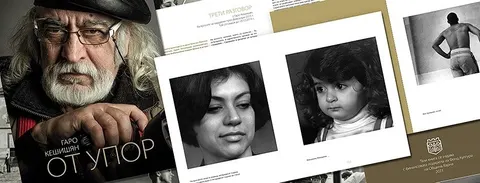
– We mentioned your book. It's called Point Blank, a downright fearsome title. Isn't it rather different whether you've pointed a barrel or a lens at someone?
– It's called that, first of all, because Krasimir Mashev is a policeman, a militiaman, a writer, a satirist, everything you can think of. The two of us are complete opposites: he's a terrible Russophile, I'm a terrible Russophobe. But we love each other, because either of us will jump in and help the other for 1,500 reasons. When Krasimir started questioning me, we told each other we'd come up with the title later. And somehow Point Blank came naturally.
In some languages “to make a photo” isn't “take a photo” but “shooting.” To shoot with the lens. Since I'm up against the wall, I have to say what I know.
There was a problem over whether it should be „в упор“ (v upor) or „от упор“ (ot upor), both meaning “point blank.” Both forms are acceptable, but then the book would start with a consonant. We Bulgarians shout “Eeeey,” you open your mouth so the sound comes out. With Romanians, for example, it's “Măi.” Well, why close your mouth when you're about to shout, for heaven's sake!
– Who are the most important teachers in life?
– To learn something from a teacher—what does that mean? That he doesn't want to change you, but to preserve the little flame you carry. That's how I've struggled with my own little rascals who come to my courses. One little girl, Stela, can take very beautiful pictures of animals. They love her and come to her on their own, she has huge green eyes, long hair, she's terribly beautiful. Nobody can photograph animals the way she does. Well, what am I supposed to tell her: “Drop that, you'll shoot sunrises”? Utter nonsense.
Once a journalist I know came to the lessons and asked, “What does Garo Keshishian teach you, jokes?” One of the girls thought about it and said, “He teaches us that a person can never take two identical photographs.” “Of course they can! Right now, in the studio, if we put a bowl of apples here and the camera on a tripod, we come back tomorrow night and take new pictures.” And Stela, the one with the animals, answered her: “That's not true. We'll have grown older by one night, and that's why the photographs won't be the same. Because we're not the same.”
It strikes me as very strange today how few people, instead of fussing over apertures, shutter speeds and lenses, talk about themselves.
About the fact that something is happening to you all the time. And to others, too, but about them you know less.
– Are you satisfied with what you've achieved?
– Yes, I'm satisfied with my life for one very important reason. Everything I dreamed of came true. And since I never dreamed of money… that didn't happen. I'm a happy man. I have more friends than enemies. How could you not like Garo Kesh? Tell me, how could you not like him?!
– Are you afraid of anything?
– Yes. Of it hurting when I die, only that. Because I don't like pain. Physical pain. The other kind… I've gotten used to it, but physical pain… who likes it? Even the lowliest microbe doesn't. But without pain, there's no information about anything. Pain is the measure of human knowledge.