“The past is theory, the present is practice, the future is the result. In that sense the future is a moving concept; it can change, and change many times over,” says today’s guest. She admits that she keeps away from social media, because the atmosphere there is fundamentally at odds with her values.
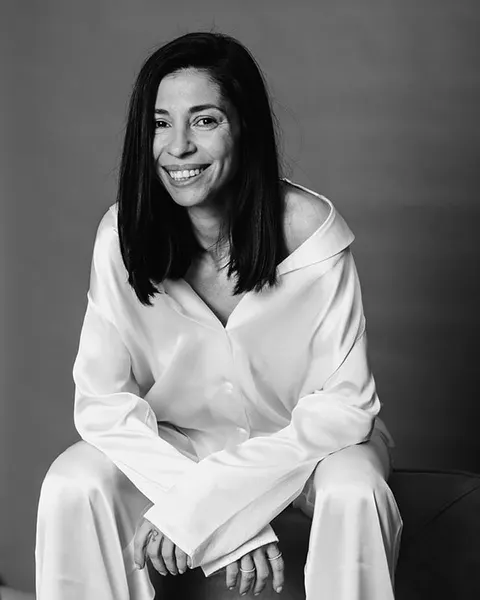
Kamelia Kucher is a young writer, but her novels hold an unexpected maturity. They capture the patina of the past along the thread of a powerful story. And in depth, research and emotion, in my view, they are a match for titles that have succeeded around the world.
She traveled the world for a long time, living in Russia, Spain, Switzerland and France, before deciding with her family to return to Bulgaria. Her three novels—Nosht (Night), San (Dream) and Dom (Home)—are books that, I believe, deserve to reach far more people.
Can a novel be told in a newsfeed, and is it worth it? Why is Kamelia drawn to periods like the Second World War, and why is it vital for all of us to remember them and make sense of them precisely today? What is it like to write your first novel when you are already a mother of three? Does that change the way you look at the past and the future?
We sit down over a cup of virtual tea to talk with the writer who so skillfully paints bygone, magical times in her books today…
– You say you don’t use Facebook. Why?
– When my first novel came out, I created social media profiles on my publisher’s advice—I am a responsible person, and the work on a book doesn’t end with its publication, however much we authors might wish it did. You have to stand beside your novel and put your face to it, to support it. I took that task seriously and did my best to be there for my books.
But it couldn’t go on forever,
the atmosphere on Facebook is fundamentally at odds with my views
about how a person ought to communicate, what to show of oneself and how. Virtual reality frees people from responsibility for their words and actions. And, sadly, it turns out that very often a person is weak, has no self-control, and doesn’t know how to set and respect their own boundaries or those of others.
What I see on social media is infantilism: anything goes, and if somewhere I do get punished for something, then I’ll know it’s not allowed.

– And then, of course, comes the natural next step—hate…
– Virtual reality lets you present yourself not according to your qualities, but in a kind of complete free-for-all.
What you get is a sort of moral debauchery—you play the know-it-all without the life experience for it, you insult people without ever having to stand face to face
with the target of your aggression. Usually the people who do this on social media don’t have the courage to lift their eyes from the ground in real life—and that creates a huge dissonance between reality and the perception of it.
Hygiene is very important to me when it comes to the information I fill my mind with
—everything that happens on social media, all the opinions, the arguments like in a town square, I don’t need any of it; it gives me nothing. On the contrary—it does harm, and it leaves no room for meaningful information.
Nothing compares to talking face to face with people with whom you truly have something to say, from whom you have something to learn, with whom you share moral values. That is the joy of human connection; the rest is vanity, chaos and simply drifting with the current. In fact, social media could serve wonderful, important purposes—they connect us, they widen our horizons—but right now they are infected with base passions. That is how I see it.
– Topics like these are exactly why the Digital Stories site exists. Perhaps that is also one of the reasons why, in your books, you keep looking to the past—is that right? And does the future frighten you?
– You know, this is how I think about it: the past is theory, the present is practice, the future is the result. In that sense
the future is a moving concept; it can change, and change many times over.
My own future doesn’t frighten me. I try not to be at the mercy of circumstances, to look for everything within myself first. When a person takes full responsibility, they stop being afraid of various hypotheticals—you simply walk your path with everything it brings.
As for the future of humanity—no one can say what it will be, but as someone who loves to dwell on the past, I have found this answer for myself: circumstances, times and customs change, but people, their essential nature, do not. There will always be a mass of people moving somewhere as one—whether toward a war of annihilation like the Second World War, or toward a struggle for rights and freedoms with all the cruelty and sacrifice that so often brings, or toward some other idea of well-being, equality and happiness. Meanwhile,
a handful of people will not see the world so one-dimensionally; they will understand it at its core,
and they will look at the world with love and disgust, with inspiration and sorrow, all at once.
– You reach for themes and periods I know from Remarque, a writer I love. And yet you find a fresh and convincing perspective. What draws you there?
– The history of humanity matters a great deal to me—through it I better understand the connections between the phenomena that lead to the present. Not only in a political and economic sense, but in a social and individual one. Humanity follows some path, but each individual also has a path of their own—how they are intertwined, how they influence, help or hinder each other—has always fascinated me.
Night is set during the Second World War, which has moved me for a long time—I love Remarque too—and I wanted to see that era not as a reader, but to live through it by recreating it. As a human being, that mattered to me. Because what makes this war terrifying is not so much its scale, but
the sudden dehumanization at a time when all the classic books had already been written,
all the classic symphonies already composed.
It is a frightening thought that even the solid foundation of what makes us human turns out not to be enough to keep our human face. And yet my novels are always centered on the person, no matter where and when they take place—on the individual human path, on the inner world we all carry.

– How do you manage to immerse yourself so deeply in distant times and places? Isn’t the present too tempting?
– Not for me at all. I feel no affinity whatsoever for the present. I say this fully aware that, as a woman, I live in a time when I have rights over my own self. Today, in one part of the world, people have rights and freedoms, free access to education, a healthcare system, social policy, the chance to grow, to fulfill themselves and to determine their own path in life.
My fascination with the modern world ends there.
The modern world gallops far too fast, and that clashes with my inner world.
People today live in a constant chase after something, and in that chase they lose themselves. Even our memory and our ability to concentrate have become fragmented—one slide replaces another, nothing stays long enough to sow something great and meaningful.
I am speaking mostly about a person’s inner world; the rest follows from it. We are rushing headlong somewhere, but in fact no one can say where. And the modern world is supposedly individualistic, but it is exactly the opposite—society is the living body, the heavy mass. Many of
the people who proclaim their thoughts across social platforms don’t realize that those thoughts are not actually theirs.
– And that changes and shapes society too…
– We are starting to lose the ability to reason individually, separately, independently. Some thoughts need to happen slowly—the thought about oneself, for instance. We have to know how to stop the passage of time, to think slowly, to contemplate; only then do meaningful things come. Reading classic literature, for example, or classical music—these things slow time down.
Social media and reality shows do the opposite; they speed it up, and a person loses themselves, loses their meaning.
I haven’t watched television or listened to the radio—at all—for more than seven years, and it is one of the most meaningful decisions of my life. You can be informed, or you can be well informed; I choose the latter.
I go back to the past not because everything was wonderful there, but because by going back I slow down my thoughts and perceptions, and I can look at the individual as something separate from society and portray them honestly, truthfully. And the amazing thing is that readers identify with these characters very strongly, they find themselves in them—which means that we all need to slow time down, to listen to ourselves, to remember certain forgotten things.

– You are drawn to dramatic periods of war, dictatorship and persecution. And suddenly we have found ourselves in similar times in the 21st century. Is that a surprise?
– I was surprised that the war in Ukraine caught me unprepared. It was hard for me to accept that this could happen today, in Europe. That it could happen in the place where my roots are, my family history. For a long time I felt an inner anger I hadn’t experienced since my teenage years. But the surprise and the refusal to accept it came from the personal element. Otherwise, the world has never stopped being a turbulent place; there are wars and dictatorships in many places around the globe.
My philosophy has long been this:
I don’t believe in humanity, but I believe in the human being.
That sentence appears in my first novel, Home. Even the story of Jesus contains it—the individual against the crowd. The strength lies in the individual, not in humanity, strange as that may sound. And perhaps that is where hope lies too.
– Is war inevitable?
– In the world as it is today, yes.
War is ignorance, inadequacy, dissatisfaction, weakness.
A person who is happy, fulfilled, content with their daily life, who feels good inside themselves and in their surroundings, who knows how to give and receive love, who has taken responsibility for the happiness and hardships in their life, will not get up, abandon their life and set off to attack another country, kill people and destroy cities. War is a manifestation of the lower frequencies of the mind, of consciousness, of the emotions.
– Can a novel be told in a newsfeed?
– I am a traditionalist;
I love paper, I love the beautiful, filigree structure of a novel,
and for me these are important rituals. But I can’t say no, because I would be lying. It can. It can be told in a newsfeed, it can be told in a podcast, it can even be written on napkins, on fabric, on the walls at home. What matters is the motive: you do it to be different, to be interesting—in other words, you are serving your ego. Or you do it because you can’t imagine it any other way, because your story can only be told like that, because it breathes together with the wall it is scrawled on.

– Artificial intelligence is advancing impressively. Are there stories it will never be able to tell?
– It will never be able to tell a human story, simply because it will never be human. The stories that have stayed with us through the centuries contain things that are read between the lines, and that is where their true value lies. Take The Idiot, for example—the plot is a crime story, but can we say it is a crime novel?
The Idiot is not only not a crime novel; it is an incredibly deep and perceptive dissection of human nature.
In that sense, artificial intelligence can write a good, even moving plot. But what lies between the lines, the fine fabric of a novel, the lived experience—that can only be created by someone who carries it inside. The Master and Margarita is another wonderful example.
– If you met an artificial intelligence that had reached human-level intelligence, what story would you tell it?
– I don’t know… Perhaps the story of Jesus, who sacrificed himself to save humanity.
– And what would you ask it?
– What it thinks of that story.
– You became a writer after having three children. How did that come about?
– Writing has been part of my life for many years, for as long as I can remember. With Home, my debut novel, I simply felt ready—to step into the world with it, to take it beyond my personal boundaries, to share it. My novels are part of my inner development, so things happened naturally; there was nothing forced in the process of publishing my novels, no struggle, no endless attempts, trials, hesitations. I believe there is a right moment for things; I simply managed to sense when mine had come.
– What is the most important thing your experience has taught you about children’s first encounters with technology?
– Our children live in a reality very different from the one of our childhood. As a parent, I find it hard to find my way in this highly technological world. My values are different: what matters to me is real contact, real life, nature, silence, contemplation, the slowness of existence. Today, technology speeds up every process, makes the world very noisy and creates a great deal of inner noise.
My experience with children and technology so far has shown me one thing:
the right approach is not to restrict them with rules, such as how much time a day they may spend on a device, but to give them an alternative
—to show them real life, to take them outdoors into nature, to bring them along when you meet friends and their children, to take them to the theater, the ballet and other cultural events, to enroll them in classes that require mental or physical activity… To draw them into life beyond their devices. That broadens their horizons, teaches them to communicate and makes them active. Simply imposing restrictions works, but only for a while. Because when they grow a little older, if they aren’t truly active in real life, if they haven’t developed interests of their own and a real circle of their own, they will sink into the virtual world.
– Can we protect our children from anything? Or does it only seem that way to us?
– That is a philosophical question, but I’ll try to answer on the surface:
we can’t protect them, but we can teach them to protect themselves.
How? By teaching them to love themselves, in the deepest sense of the word. To accept themselves, to take care of themselves, to take responsibility for their inner world. But we can’t teach them that if we don’t know how to do it ourselves.
Parenthood is, above all, growing up yourself. It is like writing: you can’t write about something you don’t carry inside, something you don’t feel, something you can’t experience from within.