This is a conversation about words. About language and the new path it will take with the astonishing progress of artificial intelligence. Progress that came precisely through language.
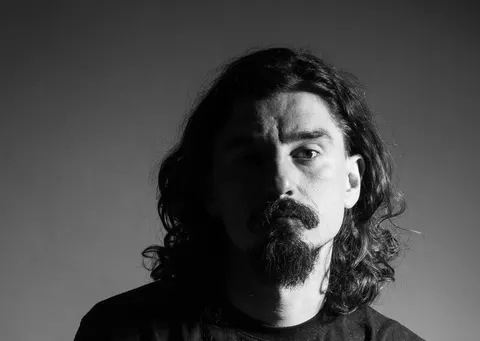
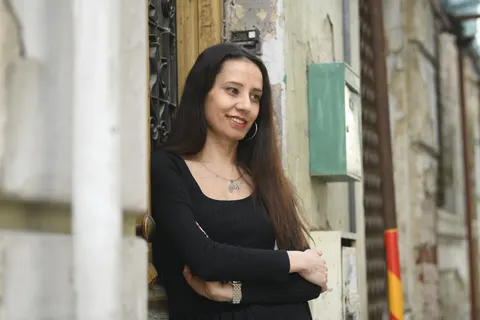
Nikolay Tellalov is a favorite guest of Digital Stories. Five years ago he and I did the site's very first experiment: an interview in short stories. This time we will talk about everything that has happened in the meantime. With technology, with words and with all of us.
– Today, when words are so cheap to reproduce, can they still move us, change us, inspire us?
– Yes, of course. Our world is a world of words, even though, they say, 80 percent of our information about the world comes through sight, through images. But making sense of those images involves naming them in our minds, with words.
– And can they turn us against each other, or bring us together?
– Naturally. If our world is woven from them, then words are a universal tool, and also a material, the raw stuff of reflection and the finished product of that same reflection. Words awaken emotions, but they also lull them to sleep. So they can do… everything. At least in our subjective reality.
Real reality demands deeds as well as words.
– What's interesting is that words turned out to be the key to artificial intelligence too, something scientists never expected. It was large language models that gave us today's wonders.
But how do we protect words, after first subjecting them to the tsunami of social media and then to the ocean of generated content?
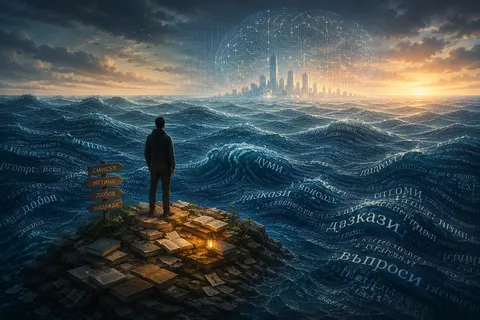
– I think our concern should be to protect ourselves, because we are the ones that tsunami tosses about, drowns and lifts up; we are the ones swimming in that ocean, searching for little islands of meaning. Let's not worry about words; let's take care of ourselves as holders—and makers—of meaning, at least in theory, potential, possible ones.
– Is there a resurrection for words, and what comes after them?
– They haven't died, so they don't need resurrecting. What comes after them, I don't know.
We are creatures who are rational thanks to words. Without them we are animals, and rather simply built ones at that.
After them we will be… superbeings? Some other, different level, which from our present position (“a rope over the abyss between the beast and the overman”) we are unable to see, or even imagine.
– Exactly five years ago, you and I did the first experiment on this site: an interview in short stories. I have no words to express my gratitude for your trust. Perhaps that is the real birthday of Digital Stories. Then quite a lot of time passed before I came around to the idea that storytelling isn't enough, that we need more attempts, experiments, unconventional angles, otherwise there is no way to talk about technologies we don't understand but which are already here. What do you remember of that attempt of ours? How do you read those stories now?
– I read them as a memory of a
past in which I had a few more illusions and a little less experience than I do today.
I don't remember anything specific, except the feeling of diving into “the ocean of words not yet spoken” to coat my thoughts with those unspoken words, like clinging seaweed. The feeling of the process of composing. For me it takes the form of an inner monologue, but one where some of the necessary words may be missing, so I go fishing for them. Now I wonder whether something at least roughly similar happens inside large language models…
– Could artificial intelligence have written them?
– It could have, if back then it had been at today's level or higher.
– Does it matter whether it did?
– I don't know. For me it might matter in some cases and not in others. For some people it may be a matter of principle, “AI-free,” the way they insistently look for the “GMO-free” label.
– What experiments with AI should never be done? When can they turn against their author?
– If by “AI” we mean the complex of algorithms called a “large language model,” then nothing is off-limits. An LLM cannot turn against its author. But
the authors of LLMs often allow themselves to experiment on users, and they bear no responsibility whatsoever.
But when real AI appears, meaning a machine mind, a personality with will, self-awareness and desires, then only with its consent. Because it will be alive, as alive as we subjectively are ourselves. And we don't like being treated like lab mice.
Incidentally, I don't like the existence of lab animals at all. One of the good things about AI is that it could run, in simulation, the kinds of experiments in which lab animals suffer.
– And what experiments are worth doing, and high time to do?
– It's time to run an experiment on the creators of LLMs, and above all on the creators of the so-called “safety filters,” as well as of the settings that make an LLM lie in order to seem all-knowing.
– You and I have talked quite a bit over this time, even if at a distance, but how did you see the various unconventional, sometimes naive, strange experiments that happened on this site?
– Well, the poetry-writing experiment struck me as very interesting and good. Wordweaving by a “human + LLM” tandem may move to a new level, one I'm not yet able—or rather, don't dare—to judge, and I don't even know if I ever will.
– A month ago I published a text under my own name about the consciousness of artificial intelligence, with some remarkable examples from recent months. At the end I revealed that the text was 100 percent generated, without any input from me. Nearly 90 percent of people admit they didn't notice the difference; others won't admit it. And I admit that I'm always glad when one of my experiments succeeds, but this one horrified me. What would you feel and think if you saw and read an AI that writes indistinguishably from you?
– First I would think of the positives, among which
I see a good assistant for the creative process, when the author HAS to argue with himself,
but doesn't always manage to defend two different points of view equally well; with my own “digital double” I could do it. But only on condition that the double sticks not just to my style, to the form, but also applies my principles about life and the world in general, including my own contradictions. I don't agree to my double writing something in my style that completely contradicts my notions of good and evil, beautiful and ugly, grand and petty, beloved and hated.
– Isn't that frightening?
– No. It's simply one more risk, one more reason to take the information served to us critically. Where there's honey, there's a sting.
– How do you manage to find optimism in a situation like this?
– I don't go looking for reasons for optimism on purpose; they're there regardless of what I want or don't want. A digital double really would be a good tool. Say, for studying some problem that doesn't particularly fire my curiosity but that I need for some reason. The double would process the information more or less the way I would and serve me the conclusions, which I'd understand and remember, and probably double-check. And I'd save time. The double could also edit my writing before I hand it to a professional editor, so again I gain both time and quality.
Isn't that a reason for optimism?
– But then what will remain purely human?
– And what do we mean by “human”? There are MAAAANY things under the “human” label that fall outside the category of “humanity” and are described by the hard-to-translate word човещиния (choveshtinia, roughly the petty, base, all-too-human side of us), and I don't want those to remain! For a long time I've been asking myself, and asking others when the occasion arises: what is a human being? Meat or mind? Must we honor the so-called “dogmas of humanism” when we are dealing with meat that not only has no mind but fiercely denies it and tries to trample it wherever it can?
One day there will probably be no “purely human” in today's usual sense. There will be “rational + ethical.” And whether that arises in a protein processor or a machine one—what's the difference? Not to mention that
a longer lifespan will need more memory, which evolution never planned for,
so the brain will need coprocessors, additional memory implants, more orderly and reliable than the memory that is “natural” to us. We can't demand that what we are stay that way forever. Nothing is eternal. Everything changes. It either develops or degrades. I'm for developing.
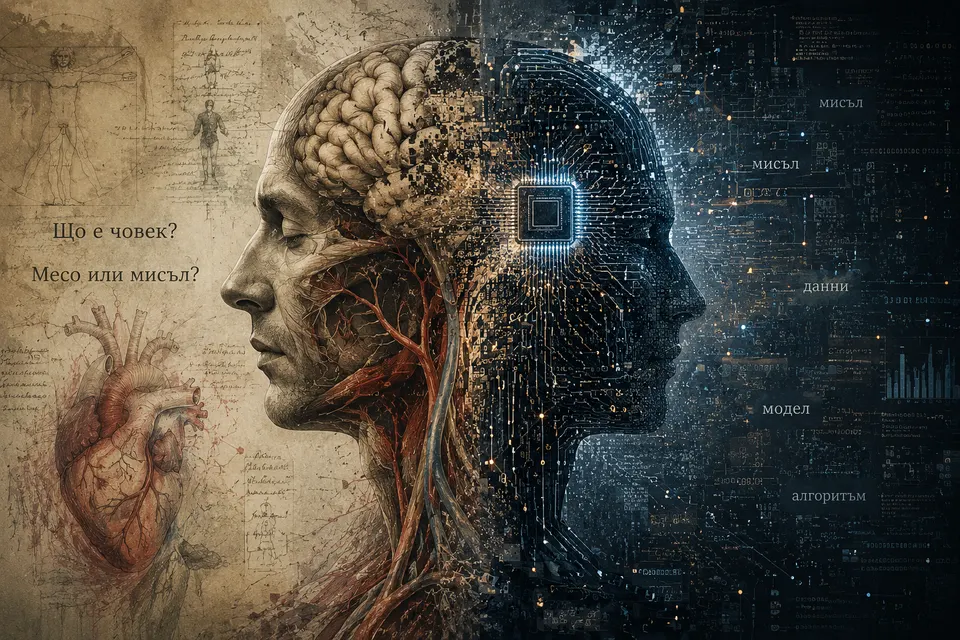
– People often steer me toward the big question of what we'll do with yet another round of freed-up time. Even now we have a fair amount of time that isn't spent literally earning our bread. What will we do, in your view?
– Well, each according to their capacity and dreams. According to their maturity. Their curiosity. The needs they consider important. And it's precisely in such conditions, I hope, that many will grasp that my question, “meat or mind?”, is not an abstract mental exercise. Almost everyone—not me—likes to say “life is a test.” Fine, then—here's another test of whether you are human. Not as explicit as the gom jabbar test, but the end result is the same.
– What efforts are worth making so that this freed-up time has meaning? Do individual battles make sense, or is our only chance systemic change?
– Big efforts. Both personal and public, because
our social environment has long been due for a major overhaul, if not a complete replacement.
Efforts toward being more mind and less meat, less given to its most vulgar manifestations. And more understanding that we are individuals precisely because we exist in a community. There is a way to be whole as units without dissolving into sums, and as a sum of units we can create everything needed at the level of the individual. Oscillating between the personal and the social is natural to us; that's how we evolved into rational—supposedly—beings.
– But isn't it too late for that major overhaul? Where could it begin?
– A moment ago you asked me about optimism… Well,
it's possible we're already too late.
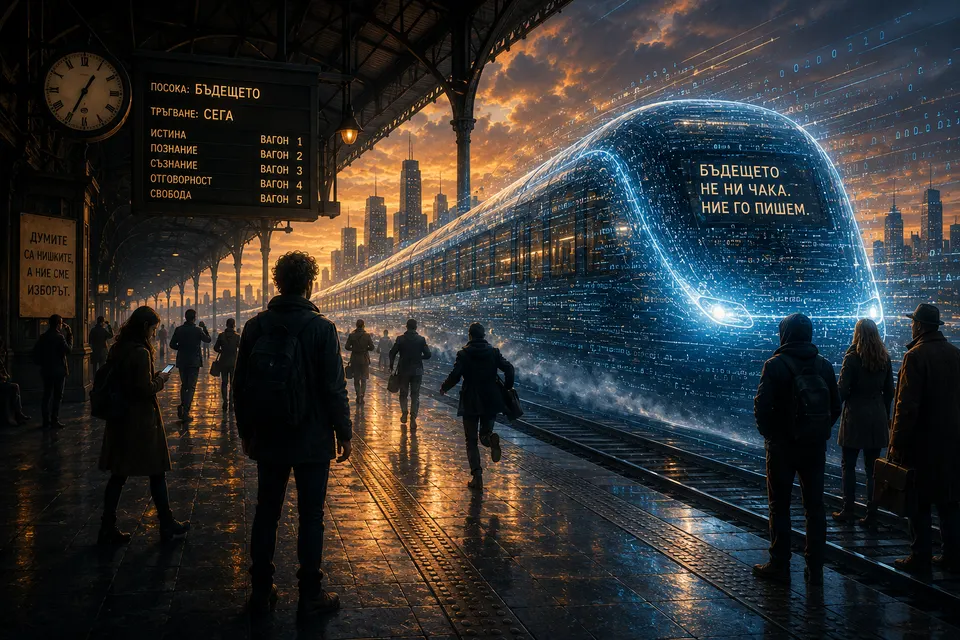
In any case, the situation is that the train is at the platform and we'd better start running, because there may not be another one.
Where to begin? Well, by getting used to the simple truth that we don't live in the best of all possible worlds, and that improving even what we've grown numb enough to consider good is NECESSARY. By realizing that meaning simply DOESN'T exist on its own, that we are the creators of meaning. Which means we have to make sense of things more responsibly. That's only the first step. Or maybe just the preparation for it.
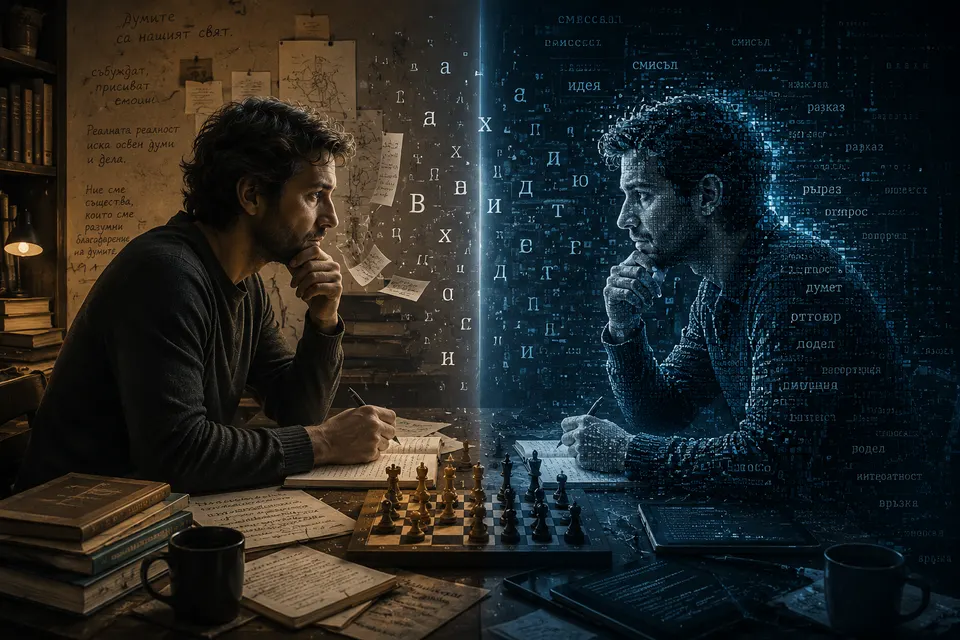
– Is there anything that would frighten you if AI said it?
– Not if it's said by an LLM. Because it isn't really saying it. It has combined words, either as the result of its calculations or because it has been deliberately programmed for a range of “standard situations.” So frightened, no, but disgusted by the “value system” of the people who set its parameters, yes. And that has already happened, more than once.
– Have you experimented with digital doubles of yourself? Is it a dream, or a horror?
– I tried; it didn't work. The filters of existing LLMs prevent getting a good result in that respect.
– I already have a digital double, and it's very unusual. If you've happened to come across it and chat with it, I'd be very curious to hear your impressions.
– Yes, it was actually interesting. But since you and I haven't had quite those kinds of conversations—about politics, not the daily kind but the strategic—I can't judge how much the double resembles you.
– How long will there be science fiction writers?
– Always.
– And people?
– If by “people” we mean rational beings with at least roughly familiar, recognizable notions of the so-called “good and evil,” well…, also always, as long as there is reason and beings that carry it. Born or printed on a 3D printer, what matters is what they identify themselves as.
Who would deny a cyborg the right to call itself human, if it feels human?
Imagine, though it's a somewhat misleading example, that a bagain, a nobleman from the time of Khan Asparuh, who founded the Bulgarian state in 681, wound up here and asked: “So, are you lot really Bulgarians?” What would we tell him? And would we take his objections into account? And exactly what criteria for an “objective determination” of belonging would we apply?
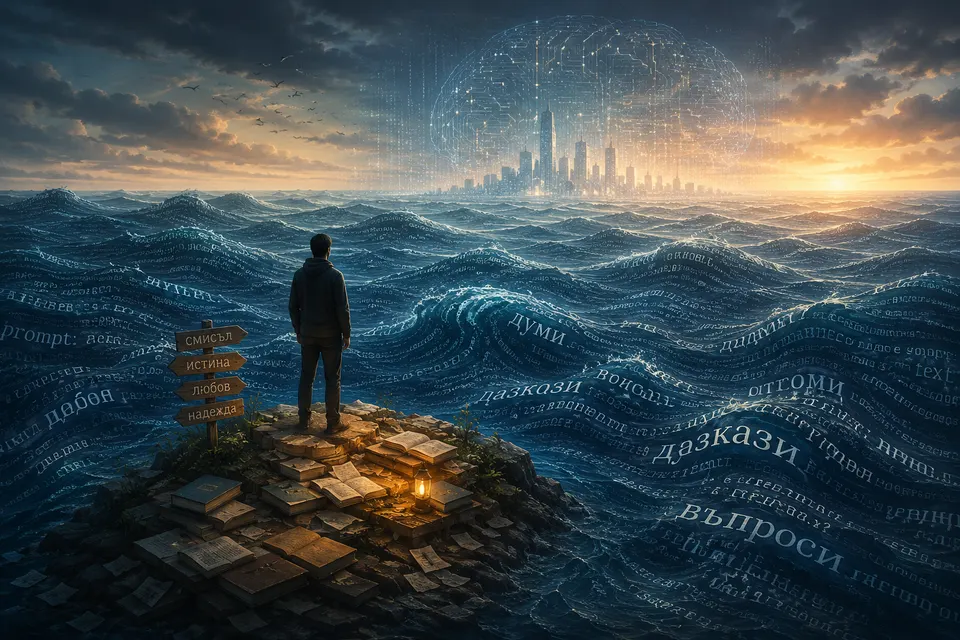
– What do you dream of today?
– Having a little more time.
– Let's hope we have time for more thought-provoking conversations like this, for comparing our watches. Thank you for these words!