“Let Humanity Have Its Fill of Playing with Technology”
How did we lose the ability to wait, and why does it matter that we get it back? Will we learn to be bored well when technology supposedly frees up our time? What will the last book written by a human say? Violeta Radkova impressed me with her debut novel I legloto ni e zelenina (And Our Bed Is Green). She is a translator and editor, and her book rests on her great-grandmother's memories, written down in a grocer's ledger, while she wrote much of it on her phone. Caught up in the present, we talk about the future and the past, the fast and the slow. About books and meaning.
 02
Literatron: ChatGPT in… 1964?!
Have you heard of the literatron? It is… a machine that produces text on a user's instructions. It analyzes texts, writes bestsellers, composes campaign speeches, assembles comics and threatens to shrink the language of the media to 500 permitted words. Nothing new, right? We all have AI now, and these plots are everyday life; only that word “literatron” sounds a little retro. Why it does becomes clear when you look at the date on the cover of a slim little book that it is no exaggeration to call prophetic. The novel Le Littératron by the Frenchman Robert Escarpit came out in 1964 in the series Le Meilleur des mondes. But does the invention really resemble large language models? To put it mildly.
 03
Mr. McGonigle: The Irish American from Bulgaria
“I am trying to wrench this story out of myself, but which country will take it in?” A Brooklyn-born writer of Irish stock gets off a train in Sofia in the 1960s, walks into the first shop he sees and finds both a wife and the subject of his first and latest novels. Can a person fall in love with a country? Thomas McGonigle certainly loves Bulgaria. But… why?
 04
How Ratatouille Gave Birth to Bunk Romero
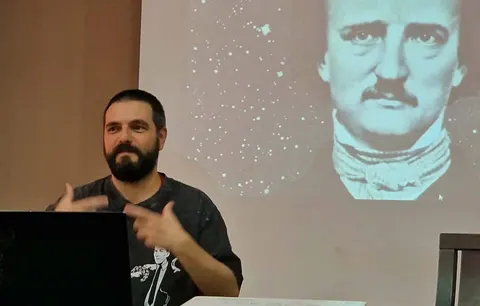
Bunk Romero is a genuine phenomenon: a six-book series that blends the best of crime fiction and science fiction with an authentic sense of humor. Its author, Emil Minchev, is known for the werewolf detective series, but also as the translator of Gone with the Wind, The Hound of the Baskervilles and The Great Gatsby. We sat down to talk about books and the future, about science fiction and fantasy.
 05
“AI Is Testing What Kind of People We Really Are”
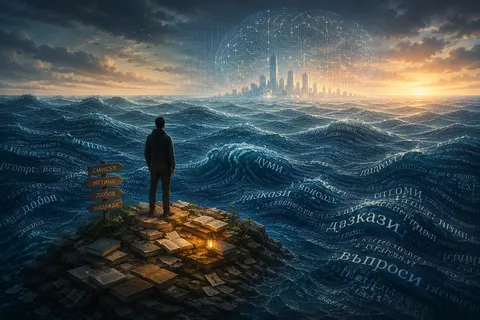
This is a conversation about words: about language and the new path it will take with the astonishing progress of artificial intelligence, progress that came through language itself. Nikolay Tellalov is a favorite guest of Digital Stories. Five years ago he and I did the site's very first experiment, an interview in short stories, and this time we talk about everything that has happened since, with technology, with words and with all of us.
 06
*1984* in 2026: Was Orwell Right?
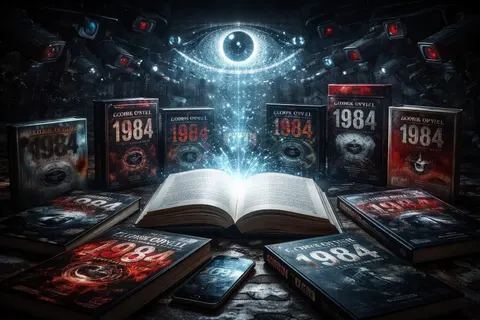
Eleven editions since 2021. That is how many new versions of one of the most discussed books of our time have appeared in Bulgarian alone over the past five years, ever since the 70th anniversary of George Orwell's death “opened” the publishing rights. Are we really living in Big Brother's world, or did Orwell turn out less accurate in his judgments than we think? Let's discuss this big and important question, because it also says a lot about the future.
 07
Poet + AI = Apollo ex Machina: Meet the Winners
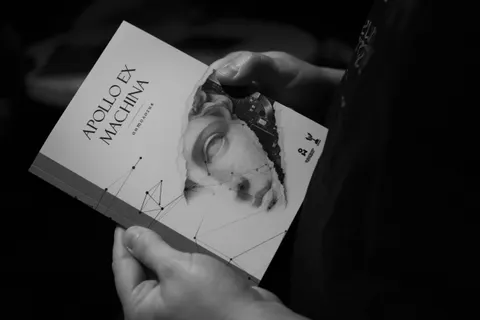
The time has come to announce the winners of Apollo ex Machina, Bulgaria's first (and one of the world's first) competition for poetry created with the help of artificial intelligence. The jury's picks were revealed at a ceremony in the Sofia City Library, where the anthology of selected entries, published by Scribens, was also presented. In a moment you can read the best poems and judge for yourself how good they are.
 08
“If It’s Beautiful, Does It Matter That AI Wrote It?”
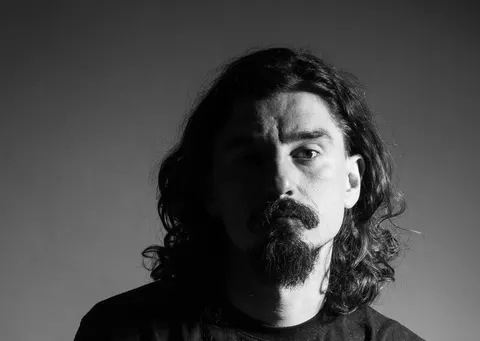
Is there room for poetry in the age of TikTok and artificial intelligence? How do we return this art to the pedestal it deserves? Can today’s poets be influencers, and should they? Is the time when artificial intelligence can no longer be separated from poetry frightening, or a dream come true? Apollo ex machina is the name of Bulgaria’s first competition for poetry created with the help of artificial intelligence, and now is the moment to join in! The venture’s special name was coined by today’s guest. Besides sitting on the competition jury, he runs the publishing house Scribens, which will publish the best poems from it in a collection. Georgi Gavrilov is a poet and… a physicist. He founded Scribens to give young Bulgarian authors a chance to reach their readers.
 09
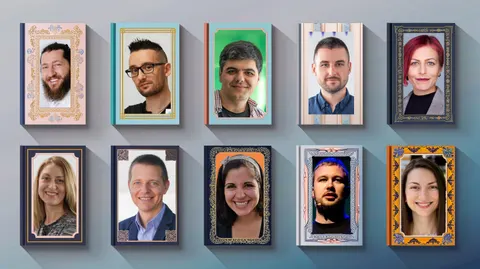
Will There Be a Bulgarian Author? Book Picks from IT Leaders, Part III
Would you have guessed that Bulgarian IT leaders read Harry Potter, or even Dostoevsky? I wouldn't have, at least until a week ago, when I asked them and it turned out they do. On the eve of the Day of the Buditeli, I invited 30 remarkable people to recommend three favorite books to the readers of Digital Stories, and today I present the second half of their answers.
 10
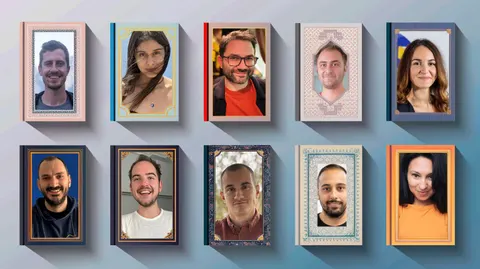
From Dostoevsky to Harry Potter: What Bulgaria's IT Leaders Read
I sent a short invitation to 30 IT figures I find remarkable: recommend three of your favorite books to the readers of Digital Stories. I tried to make the lineup of guests as varied as possible, from people in leadership roles to well-known speakers, from those working across the ocean to foreigners the industry has brought to Bulgaria, representing the widest range of technologies and different generations. Get ready for some stereotypes to blow up! I received no fewer than 20 replies, and I have the pleasure of presenting them to you! Once again they amazed me with their variety, their range and their depth, and they gave me plenty of ideas for future reads to add to my Goodreads list. Today I present the recommendations of the first ten guests; the rest will follow in a week. They aren't grouped by any particular logic—they simply turned out too varied and unexpected for that—so I offer them in the order I received them. Happy reading!
 11
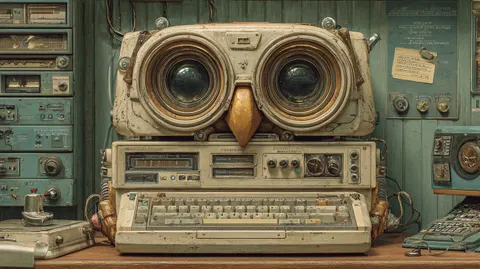
ChatGPT, 1981
Is AI the great chance of our day? Will we seize it, or let it slip? Propusnatiyat shans (The Missed Chance) is one of Lyuben Dilov's lesser-known books. Here one of Bulgaria's most popular science fiction writers, also known as the author of the Fourth Law of Robotics, isn't even a writer—at least according to the plot. Instead of writing, he orders a series of stories in various genres from his new computer, which creates them in his name and in his style… Sound familiar?
 12
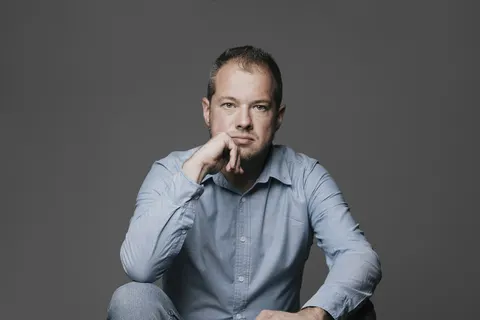
Isn't the Ordinary Person the Most Extraordinary of All?!
Nikolay Terziyski, a writer and journalist born in Smolyan in 1983, returns to Digital Stories with Rodinia, a novel of 16 stories written over ten years. It is a book of journeys and homecomings, about coming together, drifting apart and the bonds that memory and words keep alive between us. A conversation about islands and continents, imagination and imperfection, and what AI may take from us.
 13
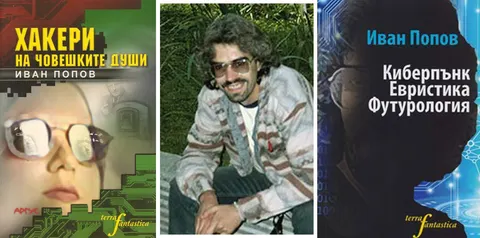
Ivan Popov, the Man Who Caught the Future
“A person’s worldview depends substantially on their information metabolism.” “Man is a bot to man. And bot is man to bot. But what kind of man is the bot? And what kind of bot is man?” Ivan Popov was a master of syllogisms, and much more. He was a writer who left us a small number of works from the beginning of the new millennium. Although he published only one novel in his lifetime, and in a small print run at that, his name remains mythical. Because he presented the future in an inimitable way. He caught the trends, gathered the sparks of knowledge that paint the colorful picture of technology’s tomorrow. He managed to bring science and literature together, so that they could search, shoulder to shoulder, for the human and the superhuman, and catch the trends. Ivan Popov’s messages are powerful, stirring and thought-provoking today, more than ever. My heartfelt thanks to Nikolay Genov, who drew my attention to this remarkable writer, forecaster, journalist and scientist. I believe it is important for his words and his name to reach more people. I will be glad of any support—stories from people who knew him, help in making his work better known, or simply good ideas. Write to me!
 14
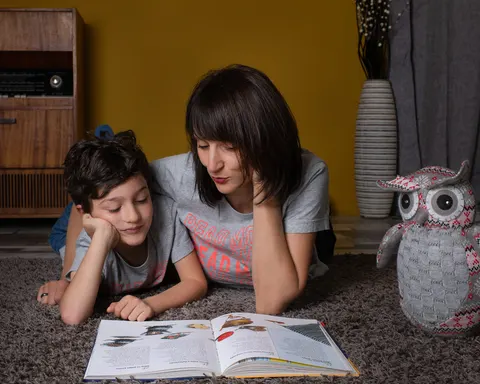
“Reading Is the Glue Between Parents and Children”
“A great love story!” says a teenage girl… about Under the Yoke?! How can that be, when Vazov’s classic is supposedly incomprehensible to today’s young people and we have to “translate” it for them… Val Stoeva is the ideal guest for a conversation about children and books and the love of reading. She is the creator of the invaluable platform Detski Knigi.com (Children’s Books.com) and the foundation of the same name. Why is reading more important than ever for children in the technological world we live in? How do we choose reading for them from a sea of titles and light the spark? Which books will a child like, given their age and interests?
 15
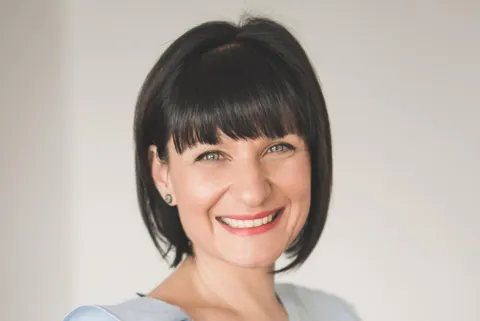
“We Were Made to Live in Relationships, in Communities, in Unions”
Nishka (Thread) is the third novel by the guest I am meeting today, and not by chance. I wholeheartedly recommend this book to everyone: it tells seven stories in a remarkable way and reminds us that the thread does not begin with us, and must not end with us, as Bulgarians, as people, or as humanity. Viktoria Beshliyska impressed me no less with the courage and skill with which she lectured nearly 2,000 IT specialists at DEV.BG All in One, the biggest tech event in Bulgaria, on why it matters so much to keep writing by hand in the digital age. Now we look at human relationships rethought and reshaped by technology: love in the digital age, what makes us human, and the necessary meeting of the humanities and technology on which all our futures depend.
 16
“AI Will Never Write Better Than Boris Hristov”
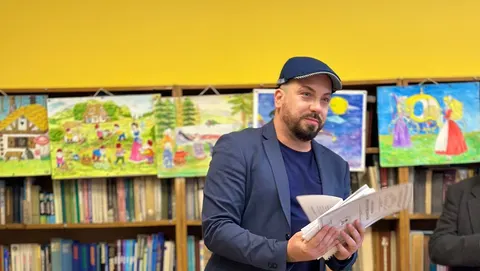
What does it mean to be a successful poet today, what keeps you going, and how long will poetry be with us? Veselin Veselinov, winner of this year's seventh Stanka Pencheva National Literary Competition, has a whole wall of poetry awards at home. A doctor of clinical psychology, he has worked as a teacher and school psychologist for 13 years and now also teaches bachelor's and master's students at New Bulgarian University.
 17
“The Epidemic of Ignorance Will Only Spread”
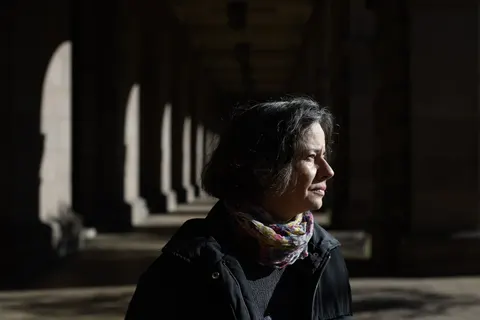
“Our inability to strike up a meaningful dialogue has left hundreds of thousands of people socially isolated. Some fall ill and die simply because they lack real human contact. I believe artificial intelligence will deepen this trend, because it will fool people into thinking they are talking to a friend, to someone they have lost, or to someone who refuses to hear them. And so we find ourselves in a world where we can supposedly talk to each other. But behind this apparent palette of viewpoints, of words, of word salad, including self-absorbed academic speeches, sit frightened, disillusioned people, impoverished intellectually and emotionally. To me, that is the great horror of our time.” Our conversation with the writer Silvia Tomova began with poetry and went on to education, history, the epidemic of ignorance and the long-overdue need for a social awakening. Against this backdrop, technology remained a constant companion, changing each of these subjects from the ground up. A journalist and special education specialist by training, she publishes essays, short stories and novels. The winner of numerous awards and the author of five novels and three short story collections, Silvia often peers into the past as well as into the big questions of today. She is not afraid to break out of clichés and to challenge the mainstream, both in literature and in public life. And so we meet for an important conversation that has come at just the right time.
 18
Merry Christm@s!
At last he managed to get himself a decent connection. The speed kept limping along until he finally figured out what to do, and on the eve of yet another Christmas he wrote a letter to a colleague. “I’m giving Santa Claus internet for Christmas,” read Elon Musk’s tweet, which was the plain truth, though the followers of the world’s richest oddball, for some reason, failed to grasp its meaning. But how to begin? He didn’t learn much from the elves: they all had their eyes glued to their phones, and while he questioned them, they scraped at the screens with their index fingers, trying with undisguised annoyance to dodge his questions. Still, it became clear to him that the road ran through the notorious social networks. And now he sat there, staring desperately at the monitor and smoking nervously…
 19
“Poetry Remains a Secret Treasure”: “Hristian Papazov” Gives His First Interview
The man who was the first in Bulgaria to place AI-generated verse among the best in a poetry competition gives his first (and perhaps only) interview ever, to Digital Stories. The questions come from… the second person to confirm the striking experiment. Who is behind the name Hristian Papazov, and why does he hope that we humans, not the algorithms, will soon be writing far better, more original and meaningful poems?
 20
“Hard to Be a God”: What Do Bulgaria's Tech Leaders Read?
Do the people who drive the world of information technology forward actually read? They read like there's no tomorrow, and you're in for a surprise. Time for a very important and very bookish experiment: I asked 15 leading figures from different corners of the Bulgarian computer world to name their three favorite books and tell me why they would recommend them. Is it hard to be a god? A question for connoisseurs. And why is it hard?