What is worth freeing ourselves from as a nation? Does unity still make strength? Does the age give birth to striking personalities, or do they create their age?
Even when we talk about our undisputed heroes, the past divides us more than it unites us. That is why it matters that we never stop making sense of it through the prism of the present, especially on days like today.
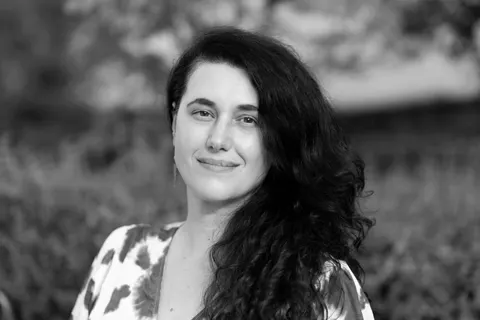
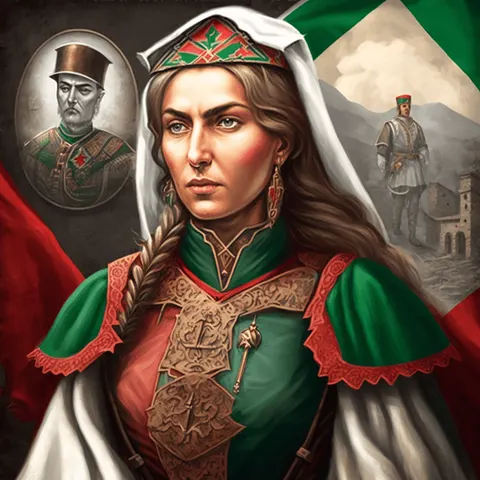
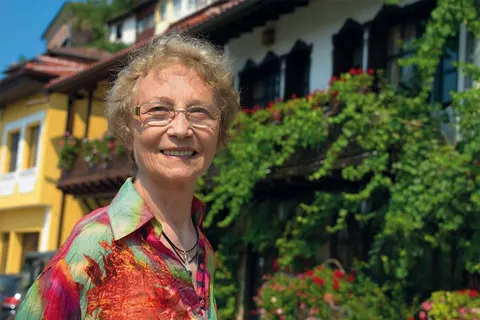
Neda Antonova is a writer who has chosen historical themes as her field. She knows how to present the past so that it moves us. She is not afraid to turn to figures like Vasil Levski, the revolutionary Bulgarians revere as the Apostle of Freedom, or Hristo Botev, the poet-rebel who died fighting the Ottomans, and to portray them in a contemporary yet full-blooded way—telling captivating stories about the love in their lives and showing them in an unexpected, thrilling light. She has written 24 books—novels, novellas and plays—and is among the most widely read authors of historical fiction.
We meet her today to talk about history. About what we do and do not owe to the greatest figures of the Bulgarian past. We will speculate about what the Apostle would be doing if he had been born in our time. And we will look for the cooler, wiser view of history that we so often lose while bickering online.
– Why is it worth remembering and honoring the past?
– Because it is the only thing that truly belongs to us. Even when you think you have nothing, you have what not even death can take from you: your past, as a person and as a people.
– And what from the past would we do best to forget?
– Nothing from our past should be forgotten, neglected or belittled, because you never know when you will need its example or the lesson it teaches you.
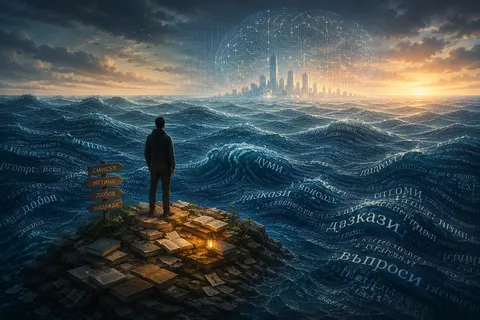
– Speaking of lessons—which lessons from history might be useful to us in a future ruled by artificial intelligence?
– Since it is customs and mores that give rise to events, and through them shape history, we can only speculate, with a rough measure of probability, about the mores that artificial intelligence will instill. But I believe that what will happen is whatever the moment demands, though I am not sure it will necessarily be good. Perhaps it will be the only possible good.
– What’s more, in the age of the internet history is more vulnerable, because anyone can tamper with it and speculate with it. How do we protect it?
– Yes. The history of every nation turns out to be the most malleable of all metals.
With equal success it can be forged into a shield or a sword, a cross or a bullet.
Flexible, adaptable, always within arm’s reach of ideology and equally accessible to all. We use it according to our needs—mostly political ones. A sword blunted by abuse!
– Why did you turn to historical themes?
– In the years when my generation had to choose which god to bow to, and in literature what to sing the praises of and what to keep silent about, there was only one more or less safe refuge that protected the spirit from corruption: the past and its history. A hiding place. That is what historical themes were for me—and still are.
– Are strong, interesting personalities born that way, or does the age make them so?
– I have said it on another occasion:
every age arrives bringing its own heroes, so that afterwards it has someone to kill.
All the qualities that define a personality exist in embryo in each of us from creation. Afterwards, circumstances and our personal choices merely develop them. You cannot be born a Dimitar Obshti—the comrade whose confessions under interrogation helped bring Levski to the gallows—and end your life as the Apostle Levski. Not even the Creator’s imagination would allow itself such a lack of consistency.
– What is worth freeing ourselves from today? As people and as a nation…
– From everything that holds us back, demeans us, belittles what is good and bright in our national character… I have never heard a foreigner revile his own people and spit on the traditions and history of the tribe through which he came into the world. Yet more and more often I hear a Bulgarian casting himself as someone standing above his people, observing its history and its present sorry state from the height of his own parochial bell tower. Disparaging even the nature God gave us with the withering line: “Oh, forget it—typical Bulgarian job!”
– Should we imagine our heroes—like Levski or Botev—as saints? Or, on the contrary, as people equal to us?
– History is made by real, three-dimensional individuals. Saints and gods are characters from mythology. The rest of us are all more or less human. And only people like us, only a few individuals out of the multitude, have the power and the gift to command the common spirit, to inspire ideas and lead the way to their fulfillment. We could never grasp their difference, their gifts or their touch of grace if we did not view their lives through the prism of our own banal existence.
They are all human beings first, and only then thinkers, strategists and tacticians of the common cause!
And the more they resemble the thousands of us, the more the popular imagination will exalt and deify them.
– What would the two of them do for a living if they lived today?
– I think today’s society would not tolerate them. In our time
those who are different—who come with their thoughts from the future and prophesy it—are marked for destruction as a threat to the status quo.
People tend to regard as dangerous everything they don’t understand. And to destroy it.
– What don’t we know about them that is worth knowing?
– We know it, but we find it hard to believe: that no community—of people or of animals—can exist without leaders, and that leaders always surpass the multitude in mind, in morals and in their ability to sense those driving forces of life that the future confronts us with.
– You have popularized the thesis that the Apostle was officially convicted of a crime he did not commit. Why had no one taken up this subject before?
– Your reproach is unfair. Every historian has noticed and pointed out this injustice. But they explained the events by the demands of the time and from the position of historical leniency.
– And why is it important to rehabilitate him today?
– Not just important. Necessary. I think of the peoples of France, Italy and the Czech Republic, who in our own time organized judicial counter-trials and, standing against the suggestions of history, cleared their national heroes Joan of Arc, Galileo and Jan Hus.
To exonerate the unjustly accused Levski—what more divine task could a generation have!
– Are our heroes without sin?
– Alive and without sin—even the Bible allows for that possibility only very cautiously.
– When is violence justified?
– Different times define violence differently. But one thing holds true: violence is permissible and justified when it is committed in the name of the primordial good, something important and necessary for the individual and the nation.
– What could make today’s kids take an interest in a historical figure?
– The unusual, the risky, the violence and brutality in the hero’s life and image.
– Did a war have to come so close for us to remember that wars still exist?
– Before inventing bread and music, humans invented war—an evil not even God himself dared to foretell. And
where there is war, there are no innocents. Except the peoples,
who do not know the truth, yet fight for it and die.
– “If a genius is ever born in Bulgaria, it will be the genius of envy,” said Elin Pelin, one of the classics of Bulgarian literature. What is the Bulgarian genius, in your view?
– Only the unfulfilled person serves envy, destroying himself in the process—the ambitious one who lacks the qualities to achieve his ambition. The ingenious strength of the Bulgarian, through which he has survived for thirteen and a half centuries, is his ability to endure under any circumstances, and in spite of them. Our tribal vitality and resilience.
– Bulgarian fiction has always leaned heavily toward history, even in recent decades. Is that a trait of ours?
– To our people, the present has always seemed more unbearable than the past. The example of our ancestors has encouraged our contemporaries. But even courage should not be overdone.
– The internet has blurred the line between author and reader; today everyone writes. Is that a good thing?
– Writing, being a form of expressing one’s essence, makes a person feel relevant, embedded in society, and marks them as an individual. Every text has its readers. Then time comes along with its precise sieve and separates the wheat from the chaff.
– In what ways is our life harder than our ancestors’?
– There is no easy life! And if old people speak lovingly of their youth and embellish it with nostalgia, that is only a badge of distinction for those who lived through the events and were rewarded with the chance to remember them.
– You explore quite a few female historical figures. Yet to this day, in our politics for example, the share of women is extremely small. Why is that?
– This is retribution for the time when, instead of talking about equality of the sexes before the law, what was proclaimed was the equality of the sexes themselves before the provocations of life. Fragile women became tractor drivers and crane operators, while monumental men sold ribbons in state haberdashery stores.
But women are finally, gradually beginning to take the place in the fabric of society where they will be most useful through their capacity for empathy and for protecting the life they create.
– Your novels stand out for their strong heroines from so many different eras. If we look for what they have in common, what is it? What is the strongest trait of the Bulgarian woman?
– Her ability to overcome the hardships of her time—to harness herself to the plow beside the cow the army didn’t requisition, and to pull the furrow while her husband is dying at Slivnitsa, the decisive battle of the 1885 Serbo-Bulgarian War. As the saying goes: “If you want something done, let the man think it up and the woman do it!” The applied force of life!
– What frightens you about today’s technologies, and what gives you hope?
– Every age has its own contagions and invents the cures for them.
I stand on the bank and watch the river flow—too late for me to doubt, too early for me to judge.
– Does unity still make strength?
– It depends on which forces unite, and against what.
– It seems that what keeps us from moving forward together with a shared ideal today are the fault lines of the 20th century. What could fill them?
– We have filled the fault lines with our suffering as people and as a nation. The scars remain. Some of them still look like wounds.
– You say writers and poets should stay away from current events, but most of them in our society don’t. What do they lose by doing so?
– They lose themselves, and what was given to them so that they could feel like poets and writers. Without that loss bringing any gain to society.
– What is the greatest love story in Bulgarian literature?
– The ballad of the nineteenth century: the love of Botev and Veneta, the young woman who became his wife.
– How long will love in its romantic form survive?
– Forty days after life dies out and the planet is deserted, love will go on existing, like the soul of an immortal departed.
– How does our attitude toward love change with age?
– Only its outward forms change. And the fashions. If it is love, it is the same through all times. If it is a semblance of love, it follows the direction of the wind.
– Should we teach love to the artificial intelligence that will come to resemble us?
– It already knows. Never mind that its knowing differs from ours the way plastic differs from silk.
But that’s how it is: as the society, so its love…