Could spirituality, rather than technology, turn out to be the path to the next step in our evolution? Has the moment come for each of us to draw out of ourselves the superpower that religions call God? To discover that polarity is temporary, that evil does not exist, that it is merely undeveloped good…
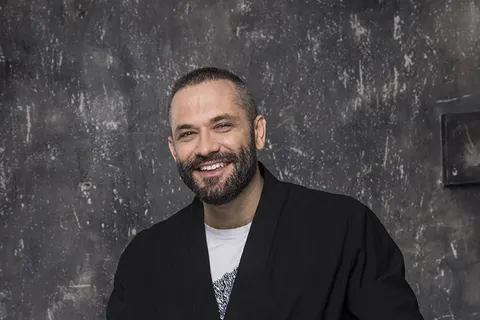
Nikolay Vasilev is a remarkable director. In 10 minutes he managed to capture everything that matters most to me, as part of the series “Little Stories” (here).
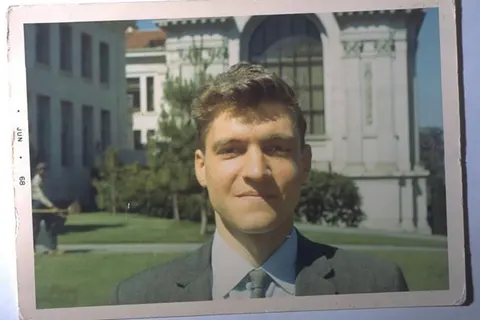
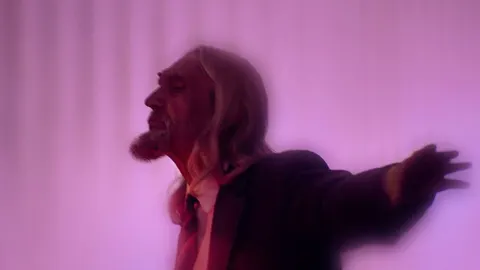
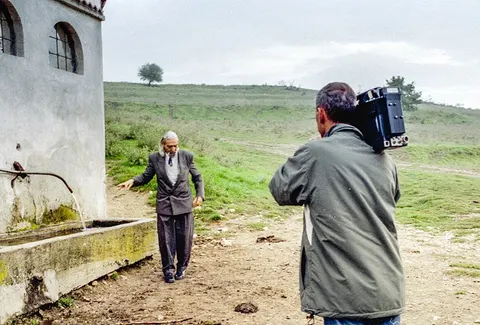
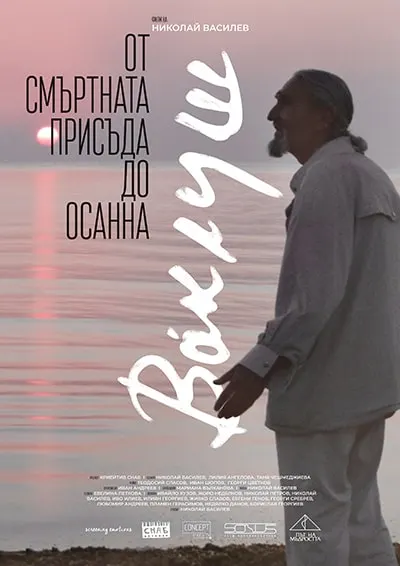
On Sunday, March 19, at 6 p.m., in the Lumière Hall of the National Palace of Culture (NDK), Sofia's largest congress and arts venue, he will present his feature film Vaklush, which he has been preparing for more than 20 years! It tells the story of the spiritual teacher Vaklush Tolev, who changed his life and worldview to a great extent. The next screenings are in Sofia—March 20 at Cinema G8 and March 25 at the Lumière cinema—and in Varna on April 8 at the Festival and Congress Center.
On this site I gather so many different points of view on digital transformation. Until today one of them was missing. It is the most distant and incomprehensible to me, yet it is sought after, topical and has its advocates. Spiritual, mystical knowledge… It is there in abundance in the stories and messages of Vaklush Tolev and Nikolay Vasilev. “The battle for man is over; the battle for drawing God out of man begins!”
When will man the creator become an engineer of living structures as well? What is the looming transition that so many religions and teachings speak of? What could give us wings to fly out of the labyrinth of technology in which we feel hopelessly lost today?
– Perhaps your best-known film so far is about the physics teacher Teodosiy Teodosiev—Teo. Now you turn to Vaklush Tolev, who is a spiritual teacher. To me these are two separate worlds that never meet in any way. Is that so?
– It looks that way, but only at first glance. Spirit and matter are in constant contact, even though they seem incompatible. That is why mystical knowledge speaks of “spirit-matter.” I first met Teo at one of Vaklush's lectures in Kazanlak. I know some of Teo's students who work with laser technology and who were also part of Vaklush's school.
Teo teaches physics, and Vaklush taught metaphysics. One explains the physical world and its laws. While the other
speaks of the supraphysical worlds, which are spiritual substance and which are the reason physics was born at all.
Teo teaches the law of gravity, while Vaklush teaches us how to “unearth” ourselves.
Physics, like it or not, is the younger sister of metaphysics, even if it neither realizes nor admits it. Physics works only with objective facts and experiment.
Science, Vaklush says, is the poor sister of truth. She is a sister, and her weight should not be denied, but she is poor… compared with insight, which sees above logic.
Science is part of the matrix; it still touches the great truths in the dark. Vaklush is something of an exception, because he freed his consciousness and stepped outside three-dimensionality. His ideas are beyond thought, not in the linear thinking we are used to. When he speaks, he creates a fractal, multidimensional space of ideas.
– How did he feel about technology?
– Vaklush has a famous idea: that “matter should not be denied, it should be spiritualized.” He did not reject material civilization, but he defined it as a stage we have yet to live through, one that will steal a great deal of our energy. To the English saying that time is money he opposed: “Save energy, not time.” In that sense it is great when technology and civilization save time, but it is not good when they start stealing the energy we need to develop the inner person. Alas, that is exactly what we are living through right now.
Technology has even “stolen” our consciousness.
We are living through the period of Pygmalion. He is the skilled creator of myth, a hater and a misogynist, the symbol of the arrogance and cold-bloodedness of the mind. He creates beautiful sculptures, but falls in love with one of them. The mind loves to become intoxicated with its own creations. We have made ourselves a Galatea and we like her so much, we are so absorbed in her, that with the help of Aphrodite, the goddess of love, we are ready even to believe our creation is alive. That is what is happening to us. We have created something outside ourselves and we are so in love with it, while it is not an essence, only a projection of what was put into us. We are ready for marriage, ready to imagine our future with technology for all eternity.
– What made you make a film like this?
– It is rare to meet a teacher of such stature. When we met I was 21, and the only teacher I had ever heard of was Yoda. And it turned out they were alike—both command the Force. Except that with Vaklush there is no battle between good and evil forces. He claims that evil does not exist, that it is what has not yet evolved in us. And the fact that some religions use it as a scarecrow is part of the eternal attempt to control people. If we accept that there is no evil, then we accept that everyone bears personal responsibility for their actions, and we look for a way to make a conscious shift toward more evolved patterns of emotion, thought and behavior.
It may sound too abstract, but that is exactly why I wanted to make a film about him—all the messages he carries rarely reach the everyday person. But
anyone who has somehow awakened and is dissatisfied with the answers the world offers could find them in him,
because he creates a different kind of valence toward everything.
– Why did the film take you more than 20 years?
– It was very complicated. First I had to understand what kind of person he was. I was drawn to his charisma, but somehow subconsciously, irrationally. I saw in him a figure who was wonderful for a film. A man who carries a dramatic plot—he spent 12 years as a political prisoner. He lived as if in hell in Belene, the notorious communist-era labor camp on a Danube island, yet on coming out he claimed that for him suffering does not exist, that it is development… super strange! He awakened the force within himself and
began awakening every person he touched in some form.
I have seen Vaklush demolish every stereotype and prejudice. Even the fact that some people reject him is still part of the awakening. No one remains indifferent after meeting this man.
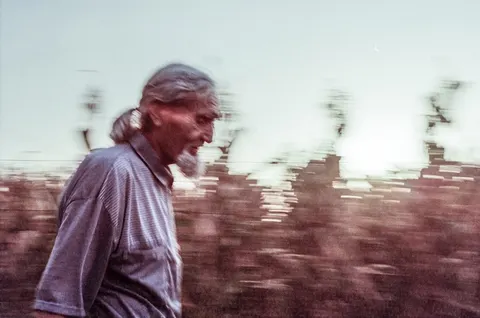
First I had to understand his messages, to take them in. I was also accumulating material, because for cinema he is a bit boring. He meets people, and all he does is help them, very delicately, to realize certain things—an absolutely invisible process. A huge amount of material piled up, around 40 terabytes of video archive—lectures, talks, conversations, interviews. The whole time I was sifting through it I kept thinking: all right,
if I had met Hermes, Krishna, Buddha or Jesus, what is the most important thing I would want to say about them in an hour and a half?
It weighed on me, because it put me under a kind of super-responsibility that a film can hardly bear. He himself says: “I have no biography; for me the Spirit is more real than all realities.”
So then what? How do you tell the story of the spirit with a camera?
– In your view, what makes Vaklush Tolev so interesting today?
– Humanity has always stood before its fords; every era brings changes, trends. Right now, I think, we face a new choice, but it is no longer a civilizational one; it is rather a spiritual one.
Vaklush is a person who somehow holds the key. For me he is that “chief engineer” who rewrites the code.
It may sound strange, but the great, world-scale changes have always been made by individuals. Whether they were spiritual teachers, rebels, philosophers or pharaohs, individual “super-people” set the new parameters.
I believe humanity has yet to rewrite its code. Life on this planet is entering a situation that calls for a new attitude.
We need a new attitude of a person toward themselves, toward others and toward the world around them.
In that sense, I think, Vaklush formulates the future, however provocative and pretentious that may sound. In my film he speaks a password: “The battle for man is over. The battle for drawing God out of man begins.”
To me the symbol of the future is the human-god. Not as a temptation of the ego, but as the path of our fulfillment. Because we live in a physical world, it is much easier for us to imagine that people will be dehumanized, fitted with chips, replaced by artificial intelligence. Yes, those are possibilities before us, and they are part of the mind's development. But that is not existence—existence is awakening our inner force, which Vaklush says we carry and which is simply dormant. It sleeps, and no one has noticed it is there. But once we wake it, it will become our nuclear power plant.
– For someone like me, who struggles to imagine such abstract things, what does this force look like?
– These are subjects that can very easily be cheapened and filed under “aliens and esoterica.” This is parallel knowledge that was strictly guarded as far back as Egypt, where there was an institution of initiation. Everyone who sought more than the laws of physics passed through it. Pythagoras was in the pyramids of knowledge, and Orpheus, and Plato… They knew that within a person there is a superpower that makes them an evolving god, and different spiritual cultures gave it their own names.
The Proto-Bulgarians, the Turkic-speaking ancestors of today's Bulgarians, called it “orenda,” Native Americans “mana,” Indians “kundalini” or “serpent fire,” and for Christianity it is “the breath of God.”
In other words, we are a physical machine with a super-energy built into it, but we must evolve in order to activate it. It is what feeds the machine, feeds consciousness, emotions, thought. The thing is, it isn't activated enough for the machine to start running at higher frequencies or greater capacity. Right now we function at the level of owning a nuclear power plant and using its fire to toast bread.
Vaklush awakened this superpower in himself; he lived this spirituality and managed to see the world outside the Matrix. Civilization is part of the Matrix, but awakened spirituality can take human consciousness outside of it. The idea is no longer to be more humane; that period is behind us. Not that we have fully achieved it, but a new parameter has already been set on the evolutionary coordinate system—
we must become divine. And then the robot won't displace us,
because its energy is finite, while ours is infinite, since it is not of the three-dimensional world.
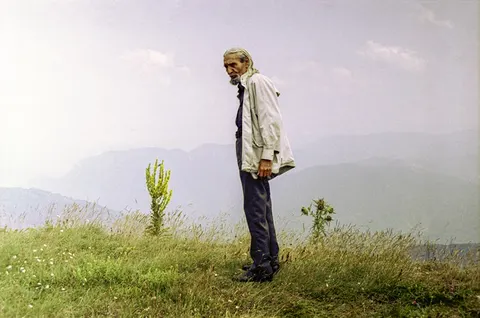
Vaklush has another thought that fills me with optimism—that evolution's task is not to create prosperity, but gods. That renders meaningless the whole straining of consumer consciousness to own more and more gadgets that bring it temporary doses of pleasure.
Religions, in my opinion, are in debt to human spiritual development, because they demand virtue and faith from people, not knowledge and insight. They hold the thesis of the chosen one, and they ascribe it to only a few. The idea is no longer to be the Chosen One, as in Dune, for example. Everyone carries chosenness within, only at a different level of fulfillment. What one must do is never stop becoming self-aware.
The worst thing is instilling stress through the idea of sinfulness, which sickens rather than enlightens. Every modern psychologist knows you cannot heal someone while instilling guilt and a sense of unworthiness. That is why my protagonist claims that the person who knows is greater than the sinless one, and that there are no sinners, only people who are developing.
– So where does technology fit in here?
– I laughed so hard when I learned the story of Albertus Magnus, who practiced science in the dark times of the Middle Ages. People called him an alchemist, but the man had a talent for engineering and invented some sort of prototype machines. Unfortunately, in walked Thomas Aquinas, one of the most authoritative scholastic philosophers of Catholicism. And when he saw something moving in the laboratory, he thought it was the devil and smashed everything.
Ignorance can hold clerical ranks and even academic titles. Most likely, unless the world is grasped in its wholeness and continuity, matter and spirituality will be set against each other. Technology is a fruit of the mind, but beyond the mind there are further levels of programming. The civilization of technology still works with the energies of making. People are able to give birth, but only with our awakened divinity can we create true art, for which we will no longer need to use external energies. The cyborg-human is a crisis of materialism, while the human-god is the new version being born, one that will have no need of the prostheses of technology.
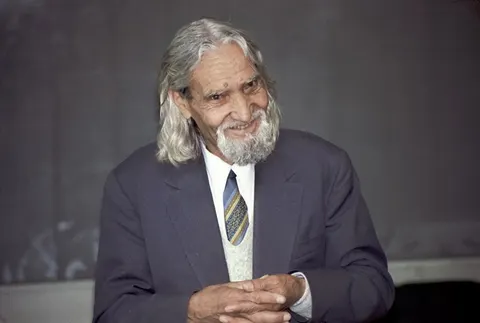
– But technology increasingly resembles us—it can already create images and texts indistinguishable from those made by humans.
– That's true, they are becoming harder to tell apart, but they don't carry true creativity. Technology is imitative, a reflection of what we have put into it. Without a power cable it is an ordinary object. We are the perpetuum mobile, and there is no power cord, because it is infinite energy itself. The distant aim of our evolution is to become colleagues of the higher engineering that, with difficulty, helped us get this far, and that out of respect has been called God.
Everything that may frighten us right now is part of our learning process. One untamed emotion of the animal inside us can be far more destructive than becoming a victim of artificial intelligence.
We will overcome this by awakening our powers beyond thought. Then artificial intelligence won't be able to reach us, because it only goes as far as thought. It belongs to the sphere of material evolution.
My protagonist's call is to make the transition from material evolution to spiritual evolution without rejecting the former. We must spiritualize it.
Most spiritual teachers and religions reject the material world and material evolution, but it is a testing ground where we must learn to work with matter. Because what is presented as the highest mastery of working with matter is the idea of mastering it so completely that we can scatter it and gather it back.
The idea of resurrection was given as far back as Egypt, but there it was accomplished by external forces—Osiris is resurrected by his wife Isis. Two thousand years ago one of the “chief engineers,” Jesus, demonstrated how resurrection can be done with inner force—or, to put it another way, by having mastered the code of matter and made it subject to your will.
– In a way you're saying that technology frees our hands so we can do more meaningful things.
– In ancient times knowledge was passed on orally—people memorized everything, the way the Quran is learned today. Because the hard drive filled up, and because creative powers had to develop, memory was freed and writing arrived. Meaning was condensed into a symbol. Thought developed from reflective to abstract.
We have yet to free our consciousness for the next stage.
We live beside enormous arrays of memory that are not creativity. They once were creativity, but they have turned into solidified lava.
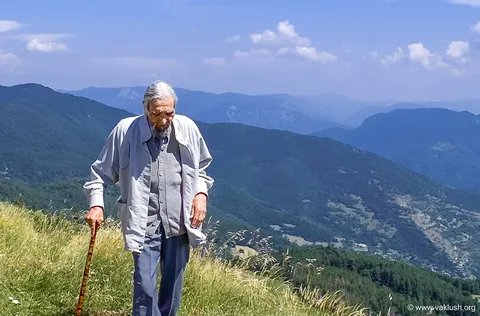
We can use them, and we do, but it is time for the next transition—from the past, which is memory, to the future, which is insight.
What we call “creativity” today, in whatever form you can think of, is rather imitation and the combining of things already known. True creativity is something else.
I dream, for example, of the moment when we will create a living flower.
Yes, it sounds like science fiction, but I am convinced that the person of the future will be an engineer of living structures, and we're not talking about GMOs. Only we, in the entire planetary hierarchy, carry creativity within us as a possibility—this God inside us.
– How did your protagonist arrive at these ideas?
– The most precious thing is the path he walked. He was a political prisoner for 12 years, just as the spirit is a prisoner of matter, of our body. At 21 he ended up in the prison in Kardzhali—he went in a man and came out a god. But he doesn't complain. By complaining we only waste our energy—instead of developing and moving on to the next stage.
Vaklush says: “For me suffering does not exist; it is development.” That is when he understood that the world need not be dual—good and evil—that there may be no suffering, which is part of the dual world. The idea is for consciousness to move to the next stage, where it sees unity—how things are projected, how nothing contradicts anything else, but rather they complement and build on one another.
I believe each of us must go through such an inner transformation, drawing out this inner superpower, this superpotential. To break out of prison, to free the captive. Like Prometheus—we are all chained Prometheuses, and each of us must find our own way to break free.
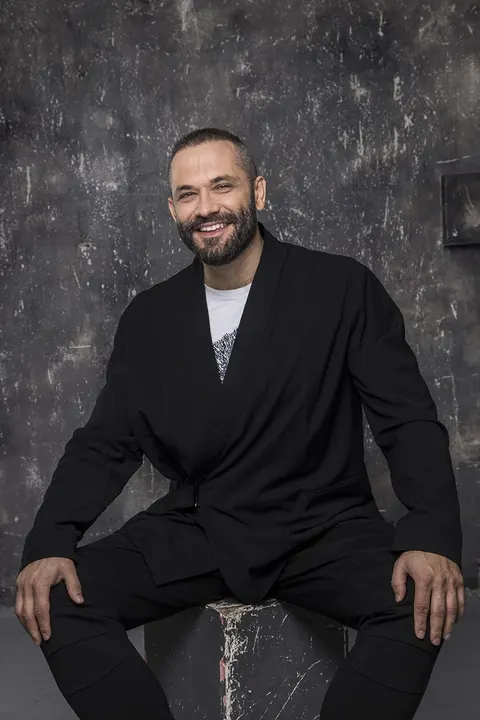
Kostadin Krastev (Koko)
– Do the digital and spiritual worlds live together?
– In fact they are relatives, but one lives only in three-dimensionality, while the other is unlimited. The digital world is the training machine in which the mind learns to be a small god. But by awakening in the spiritual world, a person can transform the limited god into an unlimited Creator.
This stage, too, will pass.
Right now we are in a labyrinth, and everywhere we look we see what we ourselves have built.
What we need, though, is a Daedalus to conceive the idea of wings, so we can fly out of the labyrinth that has no exit. Those wings are the higher spiritual force we carry within us, which no artificial intelligence can possess or control. This is the god inside us, true creativity.
If we complete this transition, we will see that there is in fact no death; it is a passage to other spaces and part of our learning process.
Death is the greatest service our evolution does us, because we come back again, recharge and upgrade the system.
Until at some point we develop enough to bear the full spectrum of superhuman knowledge. Death is part of the metamorphosis; it frees a person from the old codes, puts them into upgrade mode, and the next time they come with one more valence. This includes the idea of reincarnation and the many cycles—like falling asleep and waking up.
– I've always envied people who believe there is something above, something beyond; it's a lot easier for you than for us atheists… But then again, as with every other subject, I think the most valuable thing is to seek out different points of view, even if you don't understand them and they don't fit into your current worldview.
Thank you, I'm looking forward to seeing the film!
The premiere of Vaklush is on Sunday, March 19, at 6 p.m. in the Lumière Hall of the National Palace of Culture.
The next screenings are in Sofia—March 20 at Cinema G8 and March 25 at the Lumière cinema—and in Varna on April 8 at the Festival and Congress Center.