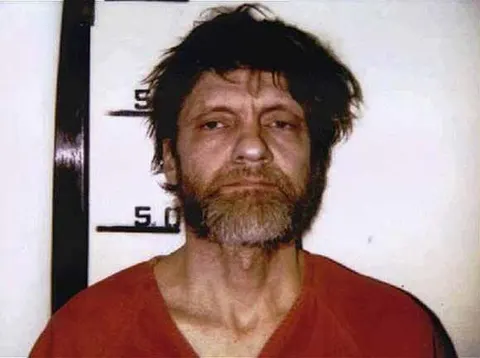
Last Sunday, in the hospital of a federal prison, while serving the first of his eight life sentences, a man who began life as an exceptionally promising scientist passed away. Ted Kaczynski, known as the Unabomber.
A child prodigy, at just 25 he became the youngest faculty member in Berkeley's history, and a dazzling career was predicted for him. Then he suddenly decided to withdraw to an ascetic shack in the middle of the woods. For a full 17 years he carried out terrorist attacks on scientists and people connected with the computer world. He became the FBI's most expensive target. Meticulous, elusive! He was recognized and turned in by his own brother, from words in his manifesto, which is sure to be much discussed in the years to come.
“As society and the problems that face it become more and more complex and machines become more and more intelligent, people will let machines make more of their decisions for them, simply because machine-made decisions will bring better results than man-made ones.”*
* The quotes are from the Unabomber's manifesto in this translation.
“He might not be wrong,” Elon Musk wrote, sharing the news that Kaczynski had died.
The Unabomber was a terrorist who took the lives of innocent people. And at the same time a scientist who predicted the dangers that come with technology. Obsessed with the risks it carries, yet incredibly perceptive in the way he looked at them.
Una Bomba Grande
Should we listen to what villains have to say? To the bad guys, the brutal killers? Is there any reason to remember their stories, or is it better to pretend they never came into this world at all?
“Eventually a stage may be reached at which the decisions necessary to keep the system running will be so complex that human beings will be incapable of making them intelligently. At that stage the machines will be in effective control. People won't be able to just turn the machines off, because they will be so dependent on them that turning them off would amount to suicide.”
Yes, we should listen to them, even in times like ours, because words and ideas are bigger than people. Because ideals have driven even the greatest figures, those history remembers as saints, to wound, to kill, to do deeds incompatible with everyday human morality.
Again, Musk has said that one of his great worries in life is that his many children will have it too easy, and this won't make them strong enough. Ted Kaczynski's story has a lot to add on that subject too.
When Lightning Strikes
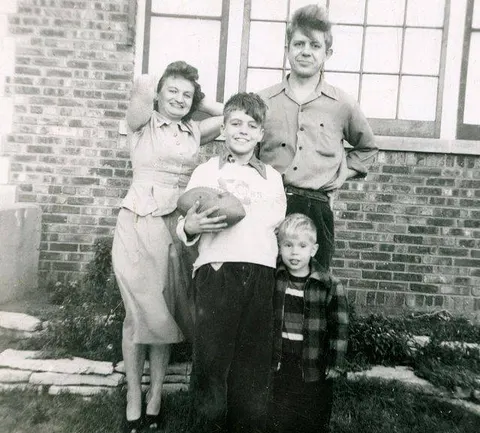
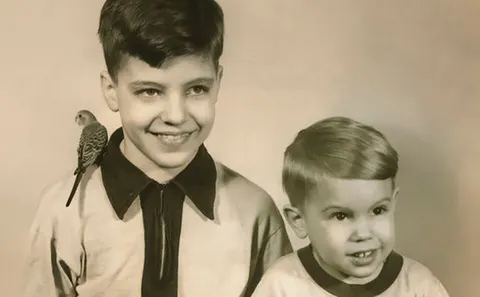
His parents were descendants of Polish immigrants; his father, also named Theodore, looked after the family business, a butcher's shop called Kaczynski's Sausages. Born in 1942, Ted was noticed by his teachers early on as an exceptionally bright kid. After he took an intelligence test and scored an incredible 167, his parents decided there was no point in him wasting time. He crammed several years into one, finished high school at just 15 and was admitted to Harvard!
Years later he would blame his parents for their excessive ambition. For surrounding him with older classmates with whom he never managed to find common ground.
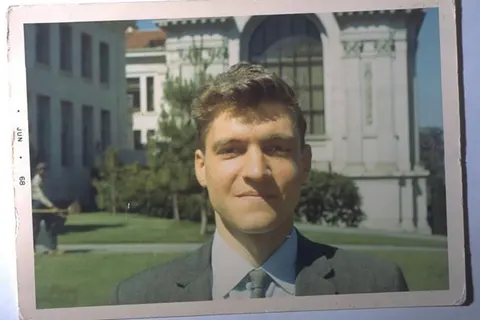
Either way, at 25 he was already the youngest professor in the history of the University of California, Berkeley. His colleagues predicted a remarkable future for him; he published impressive research in various fields of mathematics. The only ones not impressed were his students, with whom Ted never managed to find common ground either.
After just two years of teaching, he quit. For a while he lived with his parents, before moving in 1969 to the home where his soul would live for the remaining seven life sentences (apparently the jurors feared he was even more immortal than a cat).
The Wild Northwest
A forerunner of Greta Thunberg of sorts (by different means), or perhaps… an heir to the Hesychasts, the hermit monks of the Orthodox East, he decided to withdraw from the world to the most remote place possible.
He chose the mountains of Montana—not the Montana in Bulgaria's colorful Northwest, a town of the same name, but the equally wild and equally northwestern American state. It's no accident that both names come from the word for “mountain.” In the middle of the woods, not yet 30, the former future great scientist bought an ascetic cabin with no electricity or running water and cut himself off from the world.
In the early years his only close companion was his younger brother, David. The young man was also bright and intelligent, but nobody ever called him a genius. He went through a stormy romance but was left heartbroken when his beloved, Linda, married someone else. The brothers split the costs of the cabin, and David also retreated to a hermit's nest. Until, a few years later, that same Linda decided he was the great love of her life, got divorced and brought the young man back down from the mountain.
This drove the two brothers apart. In their last conversation, Ted said he would open a letter from David only if it was so important that he had drawn a line under the stamp. He received one only when their father was on his deathbed. He opened it and even sent a reply, which said only that his brother had done well, because this was something truly worth reporting.
You Smell of Youth
Ted lived happily in the mountains, far from the world, from ambition, from mathematics. He delighted in nature, in his natural life, and sought nothing more. He learned to survive on as little as possible and came to know the laws of nature that were dear to his heart. Until one day he saw his favorite landscape—a plateau ending in a waterfall—hidden by an asphalt road cut right through its heart. This made him think about the way humans and technology were destroying nature more and more.
“You just can't imagine how upset I was,” he said later. “It was from that point on I decided that, rather than trying to acquire further wilderness skills, I would work on getting back at the system. Revenge.”
He tried to stop the construction around him with small acts of “mischief.” Then he realized that wouldn't help; he needed to attract more attention. That the only way to put his philosophy into practice and change the system was through serious acts of violence.

Too Clever for His Own Good
And so the Unabomber was born. Ted began his battle against what he called “the evil of technology.” Unexpectedly and forever (or at least for another seven lifetimes), the scientist turned into a killer. For a full 17 years he would send his deadly homemade bombs to various corners of the country, remaining out of reach of the authorities. To this day the hunt for him is considered the most expensive in FBI history, with more than $50 million spent! At its peak, 150 federal employees were working on the investigation. But perhaps Ted would still be living happily in his beloved ascetic cabin today, if not for one small coincidence…
UNABOMB—Ted owes this not particularly euphonious nickname to the FBI agents who used it for the unknown criminal sending his bombs to universities and airlines. Let's be lenient toward the agents' unoriginal marketing decision; it did become popular enough after all, and apparently will stay that way.
In the early years of his “work,” the “bomber” attacked scientists, airlines and technology-related businesses, with the idea of trying to stop the excessive industrialization of society and the destruction of nature. Later he would be called a primitivist, an anarchist, even a Luddite. But he was simply following his personal philosophy, as would become clear at the denouement.
“You can't eat your cake and have it too. To gain one thing you have to sacrifice another,” Ted said later in an interview.
Chaos Theory
On May 25, 1978, the first explosive device was received by a professor at Northwestern University, who, however, sensed the danger and called the police, who detonated the letter in a controlled explosion with almost no damage.
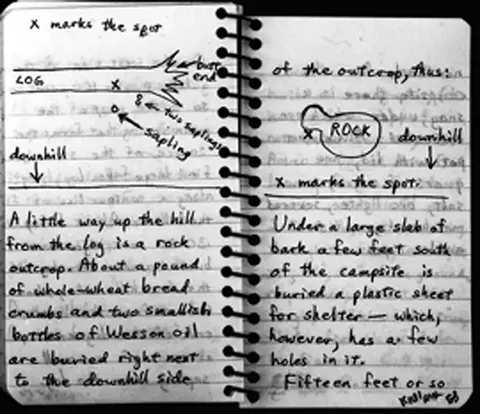
As we've seen, Ted was intelligent and a quick learner. He read a great deal; his only contact with people was at the nearest library, where he picked out all kinds of books, including originals in German and Spanish. He built the bombs with his own hands from materials at hand, which helped him stay elusive. The retired mathematician cast the metal parts himself, also using aluminum, and made all his purchases far from the cabin.
The whole time he used the mail. The FBI first picked up his trail in '79, when the Unabomber managed to get a bomb into the cargo hold of a passenger plane. Again he failed, but he was in no hurry.
“On the other hand it is possible that human control over the machines may be retained. In that case the average man may have control over certain private machines of his own, such as his car or his personal computer, but control over large systems of machines will be in the hands of a tiny elite—just as it is today, but with two differences. Due to improved techniques the elite will have greater control over the masses; and because human work will no longer be necessary the masses will be superfluous, a useless burden on the system.”
The Mad Bomber
Unfortunately, Ted kept learning—not fast, but carefully. In 1985 the Unabomber became a killer; his victim was John Hauser, the owner of a computer store in Sacramento. He decided to open the deadly letter and died, struck by the shrapnel.
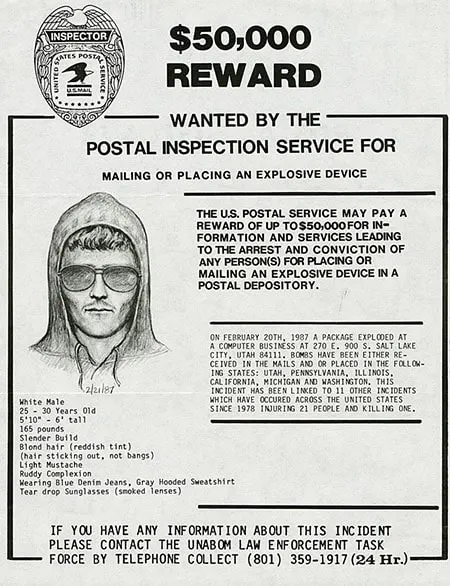
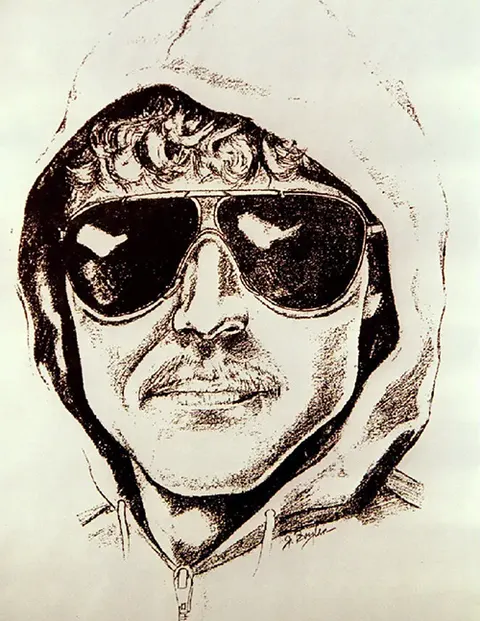
However out of place humor may be here, it's rather a good thing that these days we communicate more by email. In 1987 Ted left a bomb at a computer store in Salt Lake City. One of the customers noticed the strange man who had left the package that exploded, and later helped draw his portrait: he had a mustache and wore sunglasses and a hooded sweatshirt.
A full six years passed before the next attacks. In 1993 he carried out two in just one week, and in the years that followed he was quite “active.”
The Unabomber's victims numbered three dead and 23 injured, some of them seriously. Over 17 years he sent a total of 16 deadly packages. The last act before the climax was the bomb that killed Gilbert Brent Murray, who worked in the timber industry.
Explosive Emotions
In 1995 America's biggest media outlets received the Unabomber's manifesto, titled “Industrial Society and Its Future.” A sprawling work of 35,000 words, the length of a mid-sized novel. In it he set out his views on life. He came out against the consequences of the Industrial Revolution, which had torn people away from their natural environment, and proposed his own solution. He called for a revolution of the people against the technologies taking over their lives and, in a way, for a return to primitive life.
Among his accusations against humanity, against the modern left and against progress in general, his words about technology, which you are reading here, stand out.
The manifesto was typed on a typewriter; to emphasize important words he didn't use italics but typed them in capital letters. He used the plural, calling himself “we” or “FC,” short for “Freedom Club.”
The sender said he would stop the attacks if the leading media published his manifesto. America's biggest newspapers refused to legitimize the criminal; only the erotic magazine Penthouse agreed. They offered him that compromise, and the Unabomber accepted, but… on the condition that, since the magazine wasn't reputable enough, he would send just one more bomb.
Evil Genius
This is where the investigator leading his case at the FBI stepped in. It was at his insistence that the manifesto was published in The Washington Post, going down in history as “the most unusual manuscript in the history of newspapers.” An enormous text conveying the views of a serial killer…
“If the elite is ruthless they may simply decide to exterminate the mass of humanity. If they are humane they may use propaganda or other psychological or biological techniques to reduce the birth rate until the mass of humanity becomes extinct, leaving the world to the elite. Or, if the elite consists of soft-hearted liberals, they may decide to play the role of good shepherds to the rest of the human race. They will see to it that everyone's physical needs are satisfied, that all children are raised under psychologically hygienic conditions, that everyone has a wholesome hobby to keep him busy, and that anyone who may become dissatisfied undergoes ‘treatment’ to cure his ‘problem.’”
What the investigator hoped for was exactly what happened. A reward had already been announced for the Unabomber: anyone who helped catch him would receive $1 million! A small sum next to the millions spent over the years in fruitless pursuit… And so, after long and fruitless labor, the FBI managed to do its job. Partly by chance.
Am I My Brother's Keeper?
While fierce debates raged in the media over whether it was right to publish the text, it landed in the hands of Linda Patrik, a philosophy professor who had gone on a long-awaited vacation in Paris. She read excerpts to her husband, joking that they sounded like the words of his brother, with whom he had long ago lost touch…
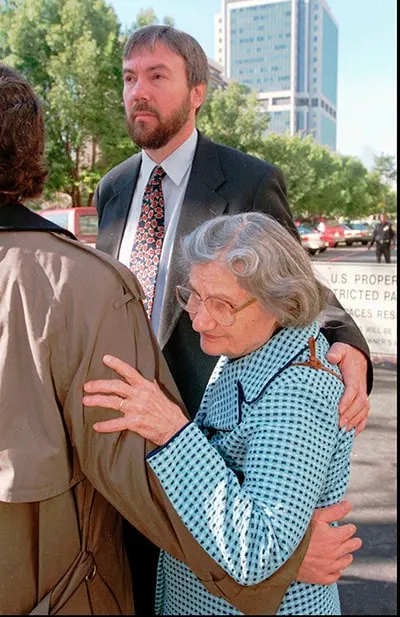
Then her husband began reading carefully. He didn't think long before contacting the American authorities.
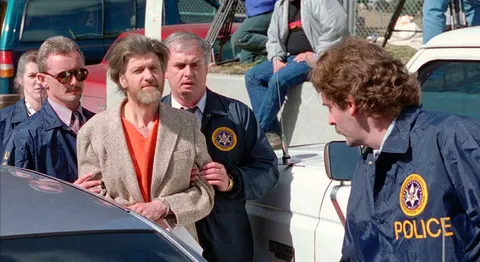
For a long time the investigators didn't believe David Kaczynski's claim that the Unabomber, the fearsome killer who had eluded the all-powerful agencies, was his crazy brother, a former professor living in an isolated house in the mountains of Montana.
The agents argued at length over whether it made sense to follow the lead, but decided they had nothing to lose. Many teams were sent to watch the area for a full 18 days. The place was so wild that one of the agents even saw a mountain lion kill a deer…
Finally the FBI raided the cabin, 3 by 4 meters, with high windows. A bed, two chairs, suitcases for luggage, a gas canister and many, many books.
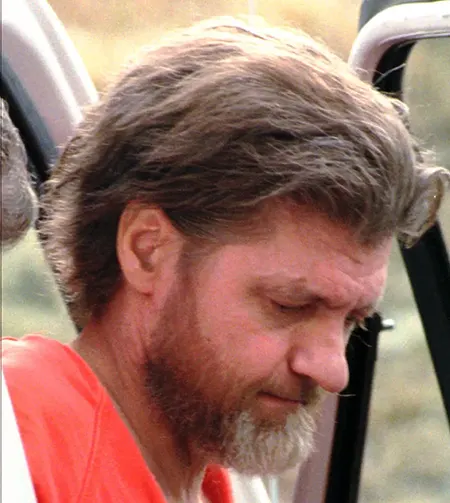
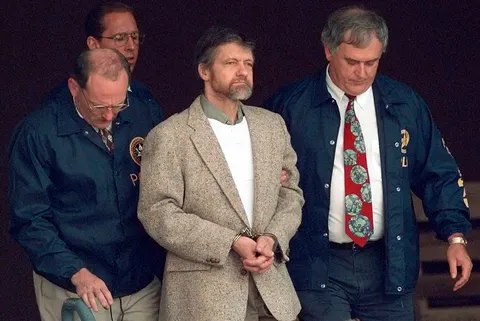
Also full of tons of explosive components and several finished bombs. And a skinny, aged man who quickly confessed to everything.

The FBI's Headaches
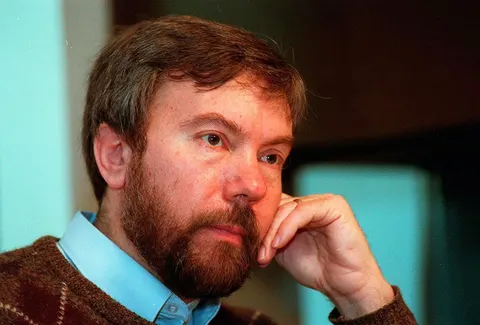
At his trial, Ted admitted his guilt. All the experts brought in said there were grounds to plead insanity; most were of the opinion that he suffered from paranoid schizophrenia, which could have earned him treatment instead of a death sentence.
He, however, insisted on his guilt. He escaped the death penalty in exchange for the aforementioned (just) eight life sentences. The Unabomber spent the following years in America's strictest prisons, until 2020, when, due to health problems, he was moved to a prison medical center. It was there that he was found dead last week, having taken his own life at the age of 81.
The authorities initially planned to demolish his cabin but then handed it over to the Newseum, the journalism museum in Washington. His belongings and papers were sold at auction… except for those describing how to make a bomb.
Why did he need to kill? The answer is given by our… hmm, it's hard to say “hero,” in the manifesto itself.
“The media produce so much content that people's heads are literally overflowing with information. Not everyone can express their opinion, since it will be buried in the flood of new information. To get your ideas across to the public, you have to come up with something extraordinary. Something that makes an impression! That is why we have been forced to kill people.”
Critique of Pure Reason
Over these years his name became a legend, painted in many vivid positive and negative colors. Netflix devoted a series to him, and the biggest celebrities often quote him.
Kaczynski's words ended up at the epicenter of the famous debate between Bill Joy and Ray Kurzweil about our future with technology. Should we control it, or deify it? And above all: why do we need to treat it carefully, with measure and awareness?
“I am no apologist for Kaczynski,” Bill Joy writes. “His bombs killed three people during a 17-year terror campaign and wounded many others. One of his bombs gravely injured my friend David Gelernter, one of the most brilliant and visionary computer scientists of our time. Like many of my colleagues, I felt that I could easily have been the Unabomber's next target. The 21st-century technologies—genetics, nanotechnology, and robotics—are so powerful that they can spawn whole new classes of accidents and abuses. Most dangerously, for the first time, these accidents and abuses are widely within the reach of individuals or small groups. They will not require large facilities or rare raw materials. Knowledge alone will enable the use of them.”
Then came the assessment of people like Musk; he was also quoted by the fashionable journalist Tucker Carlson. Many speculate that Ted was the notorious Zodiac, the killer who was never identified. Even if you're skeptical about the FBI's skills, in this case there's reason to agree that this is a stretch.
At the same time, his manifesto became a banner for other crimes too—parts of it were literally copied by Anders Breivik, who shot 77 people in Norway in 2011.
Cherchez la femme
“Of course, life will be so purposeless that people will have to be biologically or psychologically engineered either to remove their need for the power process or to make them ‘sublimate’ their drive for power into some harmless hobby. These engineered human beings may be happy in such a society, but they most certainly will not be free. They will have been reduced to the status of domestic animals.”
“For my brother I'd have been a hero for what I did, if he hadn't gone back to Linda,” Ted used to say.
David and his wife donated the $1 million reward to a fund for the victims of the bombings, to campaigns against the death penalty and to various Buddhist schools.
Could the manifesto really have put an end to the bombs, letting the wise wanderer live out his life as a hermit?
Should his words have been published?
It's often said there's no point in talking in the conditional past; history doesn't remember stories that never happened. But this one certainly tells us a lot about the traits of genius, which sometimes needs other people too in order to fulfill itself.
And amid the vast text of the manifesto, despite all its hatred, despite the traces of deep wounds, there is a voice worth hearing.