Will artificial intelligence soon put programmers out of work? Is the end coming for the huge demand for specialists, the hunger for talent, the good conditions in this industry? Is an algorithm on the horizon that will outstrip human intelligence? How is technology leading to the end of liberal democracy?
We hear the view of someone from the heart of the software world.
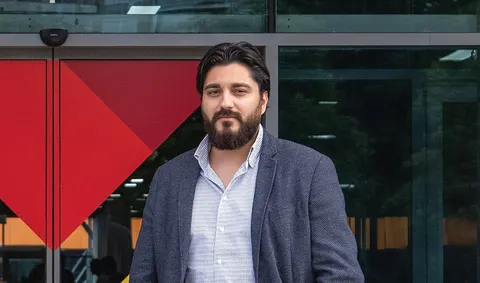
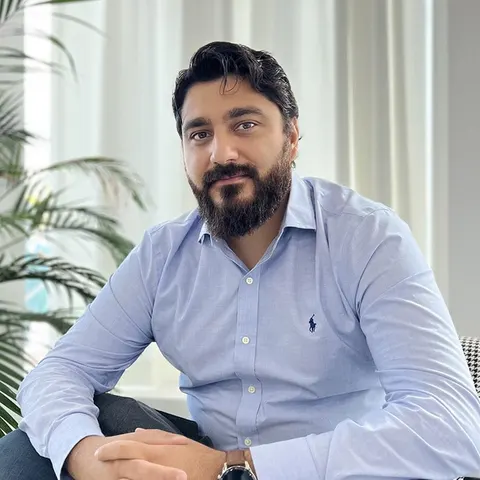
Mihail Panayotov has long and colorful experience in information technology. He is the co-founder and chief technology officer (CTO) of TechPods. The Bulgarian-British software company champions the co-sourcing model—a form of outsourcing in which long-term teams of software engineers are built together with the clients. The company was launched in 2018 and has more than 70 employees.
Our guest has been programming since he was 14, started his first business at 15, and has never stopped doing either. He has more than 18 years of experience in a range of roles, from programmer and software architect to chief technology officer and entrepreneur. Add to that his interest in politics and his intriguing view on why it is time for more and more people from the software world to enter it.
– As a programmer, and above all as someone with a company in the IT sector… forgive me for what has lately become a banal question, but is it worth fearing for our jobs?
– No, I don't think so. Artificial intelligence is still far from achieving human creativity. Tools like ChatGPT and GitHub Copilot are
powerful assistants that multiply a software engineer's productivity.
But they haven't come up with a new algorithm on their own, they haven't written a new library that never existed before, they haven't created a new concept, a new paradigm. They haven't created anything that doesn't already exist as computer code written by someone.
If we type into Midjourney “generate a painting in the style of Van Gogh in which Chewbacca from Star Wars fights Spock from Star Trek,” the result will be an impressive mishmash, but absolutely nothing creative will happen. Van Gogh's style is the style of Van Gogh the human being, Chewbacca is a character invented by George Lucas the human being, Star Trek was created by other people.
Yes, ChatGPT writes code. But
a software engineer's job is first and foremost to solve problems by applying a serious dose of creativity. Coding is simply the means
by which they implement the solutions. So we now have very powerful assistants for implementing solutions in our hands, but nothing more. At least for now.
– Isn't this the natural evolution of the field? If we look at programming languages, for example—the first ones were incomprehensible, today we practically “speak” to computers in English, and the next step is simply to describe to them what we want?
– I agree completely. These are abstractions. Underneath, machine code made of zeros and ones is still being executed. Using instructions—prompts—to create software is just one more abstraction on top.
– Do you think these technologies have a chance of ending the talent shortage in our field and, with it, the good working conditions?
– The talent shortage is enormous, and I personally
am skeptical that AI will solve this problem in the next ten years. Beyond that, I won't venture to say anything.
Our physical world is going through a process of digitalization. Everything around us uses software products and services in one form or another. Absolutely everything! And the trend will only grow stronger with the ever more pronounced arrival of Industry 4.0.
This process requires armies of software developers!
AI will undoubtedly ease the industry's long-overheated labor market and will certainly free up resources, but the market will need more and more software engineers to keep driving the digitalization process.
We will continue to have a huge need for thinking people who solve non-trivial problems through creativity.

– The field of artificial intelligence is advancing at breakneck speed, but it seems people at large only realized this once the notorious ChatGPT appeared. What made it so successful?
– Until very recently these technologies weren't that accessible to ordinary users. Yes, we've had Siri in our phones for a long time, I've been using Amazon Echo to run my smart home for eight years now, and practically every newer mobile phone relies on AI to take better photos. But the big advances were happening in the research centers of tech companies, startups and universities, which every now and then released scientific papers or closed demo projects with invitations for enthusiasts. In other words, it took above-average technical literacy and effort to play around with the latest in the field.
Last year we saw a crack opening toward mass accessibility with projects like DALL·E 2 and Midjourney, which also started out as closed, invitation-only demos. Midjourney still uses a not very convenient user interface through Discord.
ChatGPT is a truly impressive generative language model, but I think the real “culprit” behind its enormous popularity lies in precisely this rather prosaic reason—it has an easy interface that is accessible to the ordinary user. The barrier is now very low: anyone who has ever used a chat app will have no trouble handling ChatGPT.
– Is it time for more serious regulation in this area?
– Yes. At some point, probably sooner than we thought, artificial intelligence will be the most intelligent “life form” on the planet. For the first time in its history
Homo sapiens will coexist with something that has more intellectual power than itself.
And at that moment it will be crucial for the survival of our species that this “something” treats us well. That it doesn't decide, for instance, that we are standing in its way and preventing it from carrying out its tasks as efficiently as possible.
We need to create global frameworks and tools that are flexible enough not to hinder technological progress, but also restrictive enough not to allow us to create the most powerful weapon in human history.
We will have the far from easy task of teaching a non-biological life form, very alien to us, the values we have embraced as societies.
In this vein, I'm genuinely glad that it is precisely the societies governed as liberal democracies that have the best chance of being the first to reach artificial general intelligence comparable to human intelligence. This matters because two hours later it will probably already be a superintelligence, with intellectual capabilities greater than a human's. Who gets there first will be of enormous importance, because there may not be a second.
– The singularity and the creation of general AI are topics that split us into extremes—most people, and quite a few scientists, are convinced they will never be possible. But you, as I understand it, hold the opposite view?
– Yes, there are no fundamental technical obstacles that would make general AI unattainable. Many experts in the field, including Ray Kurzweil, believed until recently that it would become possible around 2050. But today they are revising their expectations to sooner. Without being an expert in the field, and watching the development of AI as well as the breakthroughs in quantum machines, I'm inclined to agree.
– What will be the next “big thing” after artificial intelligence? It seems it won't be blockchain and decentralization, which were the main candidates…
– Any guess made today will end up looking ridiculous and certainly very far from the truth.
It is quite likely that the world “after AI” will have very little in common with today's.
The problem comes from the fact that our imagination lets us simulate reality, a projection into the future based on a familiar past and present, standing on the basket of facts we have at our disposal.
But that basket is missing much of what will happen in the next five, ten, fifteen years. Hypothetical scenarios will be just as ridiculous as a film from the 1970s depicting today's reality.
Take Back to the Future Part II, which came out in 1989. The screenwriters tried to simulate the reality of 2015 in a domestic scene of a family around the dinner table. We see virtual reality glasses and all sorts of smart household appliances. Wonderful. But the blunder comes when the phone rings. It rings in the virtual reality glasses of every family member, they look and say, “Dad, it's for you.” The scene transplanted the landline telephone directly, just as it existed then—nobody managed to foresee the boom in mobile technology and the concepts, even at the level of social habits, that changed because of it.
So, to answer the question honestly—I don't have the faintest idea what the next big thing will be. Nobody does.
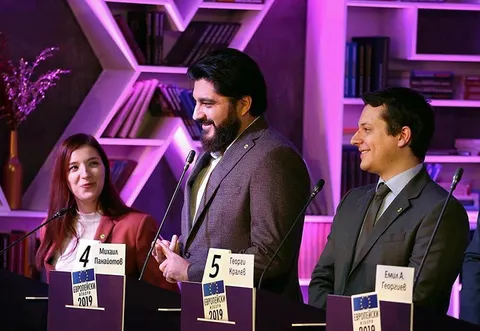
– You have an interest in politics. Why do people in our industry generally avoid it? In my view, given the demands of our work, programmers ought to make successful politicians. Yet around the world, too, there seem to be few examples…
– Technological progress and politics are the two factors with the greatest significance and weight in shaping the environment we live in.
That's why to me it's perfectly natural to be interested above all in these two topics. It is simply the effort to try to make sense of and rationalize the mechanics of the world around you. To be adequate.
People generally avoid politics because, let's not kid ourselves, it's a dirty game.
And in our industry we have an extra incentive not to care—we live well.
But the wise Pericles said: “Just because you do not take an interest in politics doesn't mean politics won't take an interest in you.” Sooner or later some political decision will affect you very directly—you, your family, your business plans, your wallet.
Let's not forget that we live together in a society with many different segments, which hold conflicting and even mutually incompatible ideas about what our environment should look like.
When a segment of society is not an active participant in political life, it cannot expect its ideas to win.
In the end, democracy is simply the dictatorship of the majority, and because of political passivity you have ended up as a minority shoved into a dark corner of society.
I want to see more people from our industry who are not just interested in politics but are active participants in it.
We desperately need politicians with rational thinking and an analytical approach
to solving problems—valuable qualities that are abundant in the IT industry but in huge deficit in politics.

– Is there a place for AI in politics, in government?
– Yes. For policies to be as successful as possible, they need to rest on objective data analysis. Decisions should always be based on data.
AI can be exactly that powerful tool for analysis and even simulations
of the possible options and the social effect of applying each of them. Of course, this holds only if we somehow defeat the demagogues and populists in politics.
But I'd like to put more emphasis on the dangers here. Let's reason along two lines.
The first is the one everyone imagines and we've seen many times in films—an artificial intelligence that runs literally every process, makes the governing decisions, while humans have turned into obedient, well-fattened vegetables. The scenario is trivial: at some point things go wrong and the AI decides to use humans as batteries or something similar. Utopia turns into dystopia very quickly. This scenario, however, is unlikely. I believe societies will be very reluctant to give up democratic institutions and tools, voluntarily surrendering the levers of power to a single, all-powerful and unaccountable ruler, let alone a non-biological one. Psychologically speaking, that sounds terrifying.
The second line, however, which deserves attention, is very real—liberal democracy is dying today without our even realizing it. Let me explain.
We live in a time of dizzyingly fast technological development. The world is changing faster than people can make sense of it. We are flooded by streams of information and volumes of data that we are physically incapable of processing, of sifting fact from fiction. And so
our ability to make sense of events, processes and ideas at a fundamental level has been called into question.

– This is also one of the big themes of Digital Stories—we never fully grasp what is perhaps the most important thing: the way we receive information today.
– Democracy is built precisely on the presumption that the individual and society understand themselves best, rationalize their surroundings, know what is good for them and, accordingly, can make decisions on that basis. But if at some point we have algorithms that begin to understand our feelings and emotions better than we do ourselves, at the individual level, then democracy easily turns into a mere puppet show. Where we are the puppets, and the puppeteer is anyone who can afford access to enough data and computing power.
Whoever controls the emotions, fears and ideas in democratic societies controls the democratic societies themselves. In 2016 Steve Bannon grasped the power of big data, targeted messages on social networks and their influence on democratic processes. And we got Trump and Brexit.
The truth is that humanity was caught with its pants down. We weren't prepared for something to analyze and rationalize us better than we do ourselves, to know us better than our mothers do. To predict which article headline will strike a nerve and make us react in the desired way. Alas, we already live in that reality…