Dr. Petko Fiziev is a specialist in bioinformatics—the field that promises, in the years ahead, to teach us more about how our genes work and how many of our health problems are caused by heredity. Great hopes rest on advances in gene therapy to defeat a whole range of diseases.
Our guest works in the heart of Silicon Valley, at Illumina, the company that dominates the world market for genetic research equipment. He leads a team developing artificial intelligence applications that should help us get to know our own DNA.
“The combination of genetics and artificial intelligence is extremely powerful, and I expect big news in the coming years,” says Dr. Fiziev.
Why is it so hard to work out which of our genes are to blame for a given problem? What are the benefits of the fact that today anyone can read their own genome? Have we overestimated heredity as the main factor in whether we are healthy? And what does the future of gene manipulation and “designer babies” look like?
– How did you end up in bioinformatics?
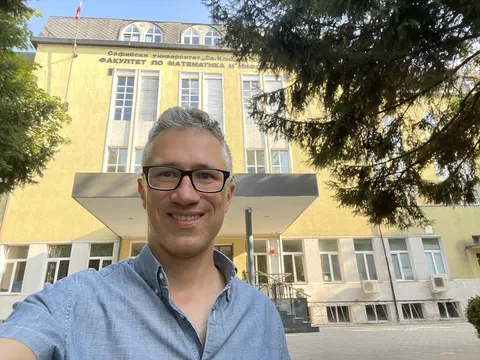
– I started 20 years ago. I was a first-year computer science student at Sofia University, wondering which direction to take. Around that time the first draft of the sequenced human genome came out, and it was all over the news. I read about it, found it fascinating, and started digging deeper into the connections between molecular genetics and computer science.
The human genome is one big text, a sequence, a string about 3 billion characters long.
If we want to study it, we have to apply computer algorithms—there's no way to do it by hand. The field grabbed me very quickly.
– What exactly are you working on right now?
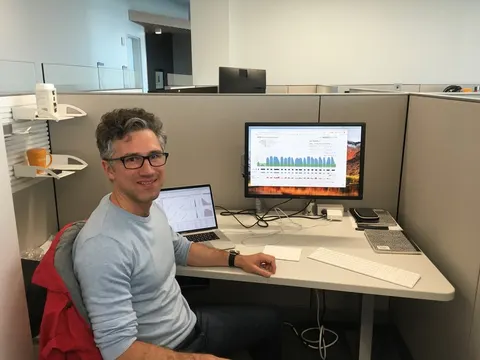
– Illumina makes almost all the machines used when someone wants their genome sequenced, or for any kind of DNA-related research. My team is part of the company's artificial intelligence department, where we develop methods for interpreting this data. When someone's genome is sequenced, you see the differences—the mutations between it and the reference genome—and you need to figure out what they mean.
On average, each of us has about 4 million mutations. Most of them have no effect whatsoever on our health or appearance.
With the algorithms we develop, we try to find out which ones are the others and how they affect our health.
– What are the applications?
– Very roughly, there are three: predicting genetic risk, diagnostics and pharmaceuticals.
The first is predicting from someone's DNA whether they will develop a particular medical problem. This area is growing enormously; there are models that predict the risk of cardiovascular disease and various types of cancer. There are genes like BRCA-1 and 2 where a mutation gives a woman a more than 50 percent risk of developing breast cancer. If she knows about such a risk, she can take precautions in advance.
The second application is making an accurate diagnosis when there is a problem. There are 6,000 to 7,000 rare genetic diseases, and for only about 1,000 of them do we know which mutation causes them. For most, nobody knows, so the DNA is sequenced, all the mutations are examined and ranked to find the most likely culprit. Right now this is done by specialized genetics experts, and the average success rate of these diagnoses is just 20 to 30 percent.
The third application is pharmaceuticals. The goal is to find new drugs that treat diseases more effectively and with fewer side effects. Large datasets of sequenced genomes are used and matched against information from medical records.
– Today it's affordable to have your genome sequenced. But when does it make sense if there's no medical reason?
– I can speak from personal experience—I've had my own genome sequenced twice. The accuracy of these tests is incredibly high: both times I got exactly the same set of mutations. The detection technologies themselves are precise. The question is
what a person can actually do with that information, and in reality… there isn't much.
If you're relatively healthy, we still don't know enough about how to predict the risks for most medical problems. But that's expected to change quite soon, and we're working actively in this area.
There are websites where you can send your data and get some kind of analysis. But looking at my reports, I wouldn't say there was anything meaningful. One of them, for example, returns a list: this mutation raises your risk of prostate cancer by 0.5 percent, that one lowers it by 1 percent, a long list. But there's nothing meaningful I can do with that information. I showed it to my family doctor. One of the things that came up for me was an elevated risk of iron overload in the body. I asked the doctor to test me. She said there was no indication for it, but agreed, we did it, and the result was normal. After quite a bit of reading, I found out that the mutation I have raises the risk only in the presence of a second mutation, which my genome doesn't have.
– Then again, once you have such data, there are platforms that notify you when new scientific findings appear about a mutation you carry. Perhaps the moment isn't far off when this will happen for more conditions and with far more convincing percentages?
– Yes, this field is still in its infancy; we're only beginning to discover what these reports actually contain. I'm sure my list of mutations includes interesting things, and some that deserve attention. We just don't know yet which ones they are. Artificial intelligence will play a central role in this area.
– Forgive the naive question, but why is it so hard to understand what lies behind each mutation? You get one big text, a string, and lists of people with certain conditions. Shouldn't the patterns be relatively easy to find if there really is such a direct link—say, a mutation that raises the risk of a disease by 80 percent?
– It's hard, first, because these mutations aren't that pronounced. If one is highly lethal, the children who carry it won't be born. Beyond that, you see mutations that show up at an early age, but they're relatively rare. And most occur in people who are relatively healthy and show up later in life, usually after they've already had children.
The second reason is that reading a genome used to be very expensive—the first one, in 2001, cost about $3 billion. Today a person can have it done for about $200. People in my field love to show the graph of Moore's law—transistor density doubling every two years—and next to it they put the cost of DNA sequencing, which falls much faster. Much of the credit goes to the company I work for; the technology has developed very quickly over the last 10 years, and prices are expected to fall further.
Only now does this allow us to sequence the genomes of large numbers of people. At the moment I'm working with a database of half a million people from the United Kingdom, and we have their medical records too.
Until a year ago this wouldn't have been possible. In a database like this you can now establish the link between genes, their mutations and medical problems.
The third reason is that genetics isn't the only thing that determines our health. Health is also the result of environment and lifestyle, combined with the genetic material we carry and the interaction between the two. For some conditions the environment matters much more—if someone falls from too great a height, for example, it makes no difference what genes they have. For some diseases genetics has a big influence; for others the environment matters more. So we need to understand what share of diseases belongs to the first group.
And finally, biology is extremely complex. Our genome is a “book” 3 billion letters long. But it's full of all sorts of things, and the part that codes for proteins is only about 2 to 3 percent. Much more of it is repeating sequences, and there are also retroviruses that got written into it over the course of evolution. It's very hard to understand what in the genome is important and what less so, and how the important elements work inside the cells.
This chemical machine that our bodies are is extraordinarily complex.
– Maybe we simply overestimated the influence of genes and heredity, looking to them to explain so many things in life? At the expense of, say, epigenetics—the way the environment changes our genes. I remember the enthusiasm around the first genome sequencing and the expectation that we'd be able to predict practically every disease.
– Yes, it turned out not to be so easy. Those ideas impressed me back then too, and they're what drew me into the field. It's hard; there are many layers. You mentioned epigenetics—that's yet another layer of information, encoded not in the DNA itself but in its modifications, and it determines how genes are regulated. In most cases this regulation is very strict and rarely changes.
– What are the most interesting developments, the big breakthroughs, you expect in the coming years?
– I think they'll be in pharmaceuticals. It's very hard there too; we thought it would be easier for artificial intelligence to open up that field. I also expect news in the diagnosis of rare diseases and in predicting genetic risk. That's what I expect in my own field, and more broadly, in biotechnology. That area is developing very actively right now. Gene therapies, for example.
– Will the moment for personalized medicine arrive?
– Yes, I expect it will. I think new technologies will merge with current medical practice. This personalized approach will be added, where we'll know the individual characteristics of the person the doctor is treating and what's best specifically for them.
There will be drugs made for a specific person based on their genetics and clinical history.
There are attempts in this direction even now, but I think it will also take time. The current system works on the basis of its historical practices, and they won't disappear overnight.
– There was hope that, because of COVID, a lot of money would flow into medical technology and within just a few years there would be big breakthroughs. I still don't see them. Are there any?
– They're simply hard to achieve. They're possible, but they take a lot of time, studies and research, trial and error. In scientific work, most of the time nothing happens—you try, nothing works, and only very rarely does something succeed. After that, it takes time and money before it turns into a product: a drug, a therapy or a diagnostic test.
These things will come into our lives. The good thing is that an enormous amount of data is being generated right now
– from genetic tests, from medical records; gigantic databases are being assembled, and that allows computational methods to develop. Until recently this wasn't possible. Last year we had that “ChatGPT moment,” when people got goosebumps seeing the impressive chatbot.
Such a moment will come in medicine too. But ChatGPT's success comes from having huge amounts of data, people working on the models, and computing resources. All of these things are happening
in genetics and biotechnology as well, and I think it will be one of the next fields to experience a “ChatGPT moment.”
– Let's hope so! And how do you see the idea of gene manipulation? CRISPR technology offers enormous possibilities; it seems we're on our way to treating more and more diseases this way…
– These technologies offer great opportunities for new therapies. Gene manipulation is already done routinely in research labs. For any larger-scale applications, though, we have to proceed very carefully. The risk has to be limited, and these technologies must be handled conscientiously. There are gene therapies for diseases that have no other adequate treatment, and I think it's right to use them, provided safety measures are taken.
A few years ago there was a scandal in China: a professor had edited human embryos, from which babies were born. He had edited the CCR-5 gene, the receptor that HIV uses to enter human cells. There are people with a natural mutation—around 10 percent in Northern Europe—who are naturally immune to HIV. He had decided to induce the same mutation in babies.
It's not clear why it had to be done; those babies weren't at risk of contracting HIV. It's also unclear whether such mutations might have other effects, and whether the editing technology is precise enough not to cause additional mutations with side effects. Very often
some changes in DNA protect against one disease but predispose you to another.
The case caused a huge scandal, and the professor was arrested. It had a negative impact in the biotechnology and human genetics communities. I, too, believe it was a pointless and unnecessary experiment, with no benefit but with risks. All while turning public opinion against doing experiments.
– When CRISPR appeared, the other worry was that we'd soon have “designer babies.” But that also turned out to be much more complicated.
– Yes, it's harder! There are some companies working in that direction right now. It's a very controversial question whether it makes sense to do it, and also whether it's possible at all.
Many mutations have side effects. For example, in Africa there are populations with stronger immunity to malaria, but it predisposes them to sickle cell anemia. The same goes for many of the traits people would like to optimize.
– Figuratively speaking, we don't know whether making a child blue-eyed might raise their risk of cardiovascular disease.
– Yes, you have to tread very carefully, and at least for now I see no point in doing it. Our goal is rather, when there are sick children, to look for a way to cure them.
– Do you think it's worth guarding our genome data, not showing it or sharing it?
– This is another area where people have strong opinions. It's good to protect your personal information—we don't hand out our national ID numbers to everyone. My view is that right now there can't really be any danger from someone learning your genome.
There are fears that insurance companies might refuse to insure you, but for now they're fairly hypothetical. In most places there are laws regulating their obligations. Besides, they already know quite a lot about people, and this additional information doesn't give them all that much when it comes to assessing risk.
Not long ago there was a case where the police here had been investigating a murder for 20 years. They had a sample from the crime scene, had done a DNA analysis and compared it with the database of one of the sites where you can search for relatives by DNA. The sample revealed family connections, they saw where those people lived, and they managed to track down who had committed the murder!
That also sparked debate: people send in their data to look for relatives, and the police can come along and run such searches. My personal view is that my relatives and my children had best stay on the right side of the law.
Yes, some unexpected applications may emerge—the fact that you took a test could affect others in some indirect way.
– It's easy to let your imagination run wild. We're working in science-fiction categories, because that's where technological progress is taking us.
Is there an achievement you and your team dream of reaching?
– I'd like us to make genetic predictions and diagnostics available to as many people as possible, even those who have no way of seeing a doctor or a genetic counselor. For these technologies to be accessible to everyone, so that everyone can benefit from them. I'd be extremely happy if we managed to cure some disease—it doesn't matter which one.
– I wholeheartedly hope it happens soon! Thank you for the fascinating conversation.