“Within just five years, technologies based on artificial intelligence will enter every field. They will be around us from our birth to our death.”
The near technological future sounds more and more like science fiction. But when we give the floor to an established scientist and hear even bolder predictions from her, things look entirely different.
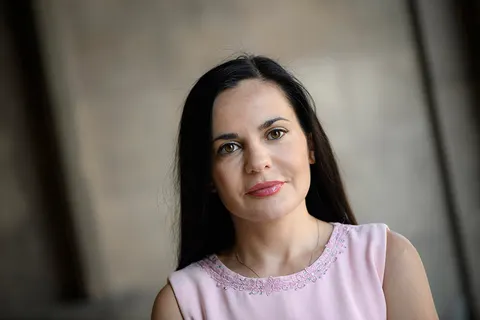
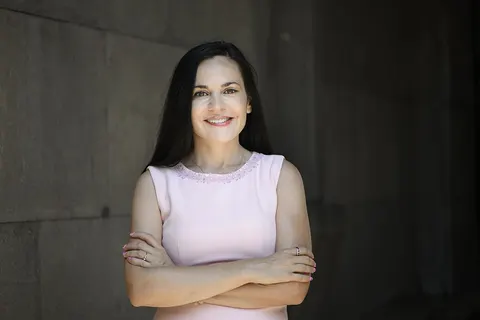
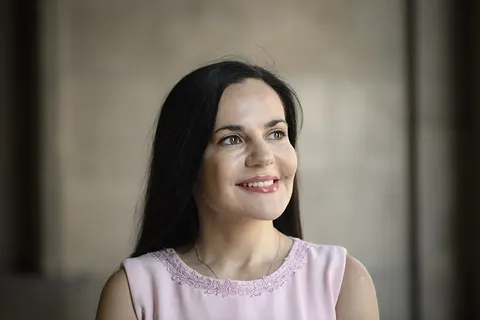
Assoc. Prof. Mariana Todorova is a futurologist who works at the Institute of Philosophy and Sociology of the Bulgarian Academy of Sciences (BAN). She holds a PhD in philosophy and has completed short fellowships at Harvard, in the U.S. State Department's International Visitor Leadership Program and at the Chinese Academy of Governance. She served one term as a member of the National Assembly, Bulgaria's parliament.
She is the author of the book Izkustven intelekt. Kratka istoriya na razvitieto i etichni aspekti po temata (Artificial Intelligence: A Short History of Its Development and Its Ethical Aspects). Last year she represented Bulgaria at the intergovernmental meeting, held under the auspices of UNESCO, to draft an ethical framework for artificial intelligence.
Will AI-driven technologies really reach every human field within just five years? What will our lives look like then? Are we too late with our attempts to introduce ethical rules for this kind of development? Is the time of artificial general intelligence coming?
What does our future as a species look like?
– Not long ago a guest gave me a formulation that struck me as very accurate. We tend to overestimate the short-term effect of technologies and underestimate the long-term one. Is there something like that when we start talking about artificial intelligence?
– There is probably such a tendency in the approach and in the popularization. But the serious problem is the widespread misunderstanding of what this type of technology actually is, which is why the subject gets overgrown with myths. The first very clear line of demarcation is that
today we have narrow artificial intelligence, which can solve one specific task.
Whatever the approach—machine learning, neural networks or training through semantic languages—a model is built and achieves better and better results.
What people project, on the other hand, and what they fear most, is an artificial intelligence that would be self-aware. One that would have consciousness, and not only consciousness as we know it, but one that reflects on experience in some real environment.
The reason for concern today should be that we cannot control many of the risks. Especially with neural networks, programmers cannot see what happens below the third layer. It is known that OpenAI has achieved a very serious breakthrough and will most likely announce it soon—the GPT-4 model. They keep launching a model, letting it be tested, and when they see something worrying, for example a very strongly pronounced bias, they stop it and change it. Huge teams work on this.
– Its predecessor, GPT-3, certainly attracted enormous attention, and it is impressive how fast development is moving in that direction. In your view, what are the main risks in this field that we as a society should think about in good time?
– The impossibility of sufficient control is a problem the professionals have to solve, if they can. I think that in the long run it won't be possible. The more advanced artificial intelligence becomes, the more it will take on the characteristics of a black box, which is what our brain is too. And not because we program it wrong or because programmers don't know how, but simply because it is an extremely complicated and complex system.
But what people actually underestimate, and what they need to build an adaptive response to, is that
there is no human sphere that will remain untouched by digital technologies driven by artificial intelligence.
My plea is always that it be considered separately, because the other technologies really do have all the parameters of technologies, whereas AI is developing in a direction in which we will have to think of it in entirely different categories, even as a separate entity.
From our birth to our death, every human field will be permeated by these technologies. Including purely biological processes and ones we are not used to thinking of as a business niche.
In its documents, the Chinese Communist Party talks about the production of people between 2030 and 2050.
And this is not science fiction or transhumanism, but a concept for developing synthetic biology assisted by artificial intelligence, which follows genome tracking and selects the best genome for a human being. Of course, this raises profound moral and ethical questions.
– And then comes the future of artificial wombs, which is also being discussed more and more seriously…
– Yes, such experiments are already being done with mice. Then we see on what massive scale the impact of AI is unfolding in education and health care. Kindle ran an experiment in which they connected their device to an AI-based platform.
We read the e-book, and it reads us.
From facial expressions, from eye movements, from concentration on certain content, a cognitive deconstruction is made of where we struggle, which text our brain finds incomprehensible. This can gather information and create a personalized approach to education, but on the other hand, a lot of very sensitive data gets collected this way.
Medicine and agriculture are, in my opinion, the fields AI is entering fastest and most successfully. Agriculture in particular offers far more opportunities, because the moral and ethical risks are absent.
The Dr. Watson platform diagnoses trivial illnesses, and during the pandemic it was used by people who had no access to human doctors. Telemedicine is advancing, along with all the wearable devices that collect data from us. They measure parameters such as sweat, saliva and blood pressure, and even analyze breath, which can provide information on more than 300 diseases. Cameras connected to AI can deconstruct an illness from the way we move or from our facial expressions. We could go on with the subjects of aging, longevity and immortality. But as Yuval Harari says, this makes it possible for us to be watched or hacked “under the skin.”
– But while immortality still sounds like a distant future in every one of its aspects, this spread of AI into more and more professions will fundamentally change the labor market. What do you expect most in that direction?
– I can't think of a profession that won't be affected. People don't see or feel the short-term effects, but the change is coming very quickly. It isn't even true that it is happening more slowly here in Bulgaria; business today is international. Last week I was at the chocolate factory in Svoge. The production line is fully robotized and is the fastest of its kind in the world: it makes 6,600 chocolates a minute. Some workers quit as early as the training session, because they are shocked by such close contact with the robots.
Automation, robotization and artificial intelligence will enter every single sphere, and I predict this will happen within five years. Then the big question, which already concerns governments, is how to strike a balance between existing professions, new technologies and preserving jobs and incomes. A solution will probably have to be sought in alternative incomes that don't come from labor. Yes, these new technologies create new opportunities and therefore new jobs, but those jobs are specialized, tied to very specific digital skills, at least at a basic level, which are seriously lacking in Bulgaria, and in Europe as well.
– So far we have talked only about narrow AI, which offers one specific solution. But what do things look like when we go further out in our predictions? Toward artificial general intelligence and even the notorious singularity…
– In my view, what we really should worry about is the creation of general AI, and after that of super AI. The difference between them is thin. Nick Bostrom says that the moment one appears, literally within the next hour there will be a superintelligence, because it will very quickly, exponentially, teach itself to surpass us many times over.
You know about the debate: others believe this will never happen, because the question of consciousness is key. Steven Pinker, Bill Gates's favorite scientist, says it can't happen. Yet according to Yuval Harari, it doesn't need the kind of consciousness we have. If we are talking about consciousness at all, and an anthropocentric one, similar to ours. Sufficient speed of the algorithms could lead to a new quality.
When I talk to your colleagues who work in AI, I ask them why the breakthroughs happen, for example with GPT-4 or China's multimodal AI. According to them, what helps is the ever larger base on which these systems can be trained. GPT-4 will be trained on 570 billion sentences. The more data there is, the more clusters of consciousness appear. In other words, we see that factors such as “quantity” and “speed” may turn out to be enough to simulate consciousness.
For me this is more of a hypothesis, but it seems to me that at some point
humanity and our development begin to adapt to technology, and not the other way around.
And this cognitive decline, this mediocrity, the twilight of expertise and of science, seems to me to be adapting to a kind of technologized and very sterile thinking. People look for shortcuts; in science these are called heuristics. When I'm a guest on television, in 10 minutes they ask me questions that would take 20 hours, and not everything can be digested and presented that way, so it becomes unscientific and devalued.
– So even when we are not talking about true consciousness, enough accumulation could resemble it and even surpass it?
– My thesis is that perhaps this general AI doesn't need to develop a consciousness like ours. Certain parameters such as speed and quantity, which stimulate associativity, will simply be enough to simulate such processes. In my view, it is more likely that such a general AI will appear, and that is exactly what should worry us.
Last year I took part in a UNESCO intergovernmental meeting on ethical frameworks for AI. What personally troubles me is, first, that politicians perceive all this simply as technology, as software, while it has long since gone beyond those boundaries. And second, they don't think of it as a technology in continuous development.
When we talk about narrow AI, we must always discuss the risks, but the opportunities are still far greater, because very important solutions are being found. The fears and concerns should come because of general AI, and they need to be discussed by developers and engineers, by philosophers, ethicists, psychologists, by every kind of social scientist. And then this should be explained to the people who make the decisions, to the politicians.
– That is one of the big themes of Digital Stories too. I have given the floor to people from completely different fields, such as a priest, a conductor, a photographer. And yet I constantly run into crude irony and skepticism on social media: utter nonsense, this is so far off, pure fantasy. What are the chances that we overestimate these technologies, that we ascribe more capabilities to them, to narrow as well as general AI?
– We couldn't possibly overestimate narrow AI. You mentioned a priest: in Japan there is already a temple where that function is performed by an AI-based robot. Germany carried out a project to complete Beethoven's Tenth Symphony. He left only sketches, and an AI-based platform was trained on the music of that era, not only Beethoven's but also that of his like-minded contemporaries. There is even speculation that Banksy is an AI, or at least a collaboration between an artist and an algorithm.
So we see that it is entering every kind of field: in the creative ones it is forming new niches, new types of art, and in medicine it can detect abnormalities at the micro level. Simply because we don't have the cognitive abilities to handle such a volume of information and to find patterns.
It is underestimated because people don't see the examples, or rather don't pay attention to them. They watch Hollywood movies, at most they talk to Siri or Alexa, but very soon they will start noticing more applications. As for general AI, Steven Pinker may well turn out to be right. We have no answer as to what our consciousness is, any more than the unconscious and the subconscious; it is not produced by the brain, that much is clear.
A well-known American scientist, Eric Drexler, says it is better to keep it at the level where it provides us with a set, a complex of services in every sphere, but doesn't develop further and doesn't switch between them. Although in my view what Google and China are doing now is already beyond that line.
The overestimation lies rather in looking for a resemblance to humans, but it is not long-term.
– Musk criticizes Google's approach, saying that giving an algorithm access to such volumes of information without sufficient control would be the end of us as a species. So he offers the other paradigm instead: connecting ourselves to computers through the Neuralink brain-computer interface. Isn't that the more sensible long-term solution?
– I follow Elon Musk, and he has evolved quite a lot in his views. From 2015 to 2018 he shared Stephen Hawking's fears and invested instead in the concept of open artificial intelligence, OpenAI, to which everyone could add content, so that AI would reflect the state of humanity, of communities, of societies. But it turned out that many chatbots actually display racism, fascism and other extreme manifestations, simply because the biases are contained there, and in concentrated form.
It seems to me, although he has never said so explicitly, that this was what led Musk to the idea that our brain must be connected to a cloud system or AI, and that this should be part of human enhancement. Experiments have been done with monkeys and pigs, and a robot has even been built to perform this operation on humans. It was explained in great detail that a specific spot on the human skull is opened, a small piece of brain tissue considered unnecessary, the size of a sugar cube, is cut out, and the device, which is about the size of a 50-stotinki coin, roughly a U.S. quarter, is implanted. What isn't said is that once implanted, it can be deactivated but not removed, because that carries risks for the brain.
In my opinion, the biggest challenge is respecting the laws of thermodynamics. Every device, including my computer right now, overheats. You know what happens to protein when it overheats—coagulation and death.
And if we go further, still not knowing what consciousness is and how it drives our acts of will, with such a device present in the distant future we won't know which is our own expression of will and which is a mechanism prompting our brain to do something.
– In this direction there is also a big psychological barrier we have to get past, and we may have to do it extremely fast.
– Not long ago I spoke with a professor from South Korea who wants to have a Neuralink implanted, because she says it's the only way for her to stay competitive. Otherwise she won't be attractive to students, she won't have the necessary knowledge, because she develops linearly while technology develops exponentially.
People are becoming disoriented, and technology contributes to that. Every day the world produces as much information as in the last 8,000 years before technology. But we have no time at all to reflect on it, to draw conclusions. There could also be a strong trend of humanity turning toward the sciences of mental health and self-improvement. But there will probably also be a very strong trend toward connecting with technology—technological absolutism, and the thing that will de facto turn us into cyborgs.
– Are there any meaningful models that could channel information more thoughtfully, so that we perceive what is happening more adequately? I mean some form of journalism that would get us out of our bubbles. That would professionally present the things that really matter, instead of the way we get informed closing in more and more on social media, getting distorted and oversimplified there. So that we don't skip all the huge subjects and problems you and I are discussing now, which few people care about.
– I would like that, but I suppose that
first we will reach some kind of information cataclysm, and only then will solutions be sought.
Following the trends at Netflix and Apple TV, they are pursuing personalized, individual content. Platforms are even being developed, based on AI, that profile the individual and provide specialized information according to personal interests.
So the idea of some kind of collective media will probably fall away or shrink, and we will simply tune our platform to whatever interests us. We may end up receiving information diametrically opposed to what concerns our neighbor, even though we live in the same physical reality.
In my view, this will intensify the phenomenon of “echo chambers,” which is produced by algorithms anyway. There is an idea to create an internet free from this, to switch the algorithms off, and it will probably come to that, although it would collide with the idea of censorship.
Yes, it will be a kind of censorship, but a censorship of censorship.
The metaverse, which I expect to explode in the next five years, to virtualize things and create a mixed reality, will distort matters even further.
Today we have no strongholds to hold on to. This disorientation will become dangerous; it will lead to social clashes. What's more, we see that actions don't matter—it is words and messages that have a very strong effect. They are consumed, and only a small part of social groups looks for words to be turned into actions.
Yes, in the end I think something different will have to prevail, because it will be impossible to live and govern in such an utterly disoriented world. The point is that there also have to be people who want it…
– I'll be glad if people like that are exactly the ones reading Digital Stories today. Thank you!