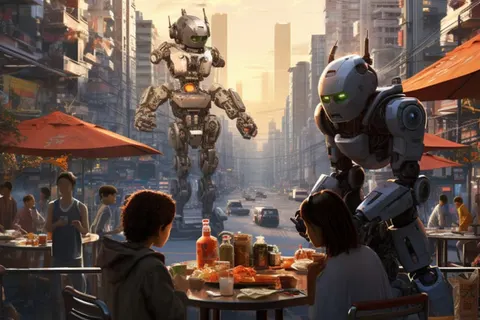
“There’s Really No Point in Owning a Car”
Does the future finally belong to electric cars? What will mobility look like tomorrow? Will we still own cars of our own? And how far away is the moment when people will no longer need to drive? For Denitsa Daverova, “yesterday” is cinema. She gave it two decades, and her father wrote the screenplay for the legendary film of that name. Today and tomorrow, though, belong to technology. Since childhood she has had a passion that is rare among girls: cars. Then came electric vehicles. In 2018 she rode in an electric car for the first time and quickly decided that this was the future, both for mobility and for herself. She left the film sets and founded Travel by Electric, a platform that gathers all the information drivers need in one place.
 02
“In Building True AI, We Get Only One Shot”
Everyone is talking about artificial general intelligence, the enormous next step that will confront us as a species with colossal and unpredictable challenges, and one of the first scientific conferences on the subject was organized in Blagoevgrad by Dimitar Dobrev, an AI and mathematical logic researcher who teaches at Sofia University. Before we let the genie out of the bottle, he says, we should at least decide what we want from it. We talk about intelligence as a force, our naivety about the future, control, regulation, open source, and one simple but frightening question: if we don't know what future we want, how do we expect to get it?
 03
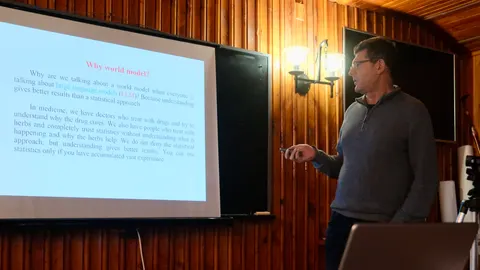
15 Predictions About the Future We Can Laugh At
Trying to peer into the future is a doomed challenge, yet reading tech predictions that never came true turns out to be unexpectedly entertaining, especially when… they are your own. In more than five years, I have published just over 500 Digital Stories. I will invite an impartial observer to assess them and pull out specific passages that have not aged well at all.
 04
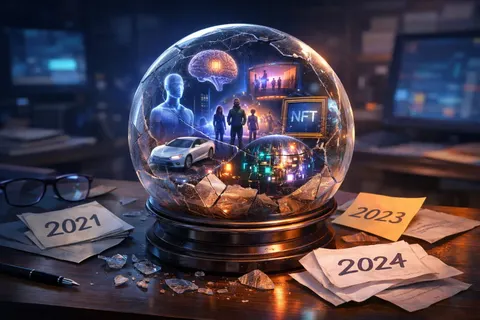
Look Up at the Cosmos! What Comes Next?
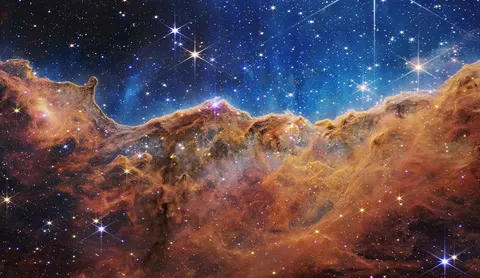
For the first time in 54 years, humans reached the Moon and even flew around it, yet the news slipped past in a feed full of daily worries, when it deserves to be center stage. Molecular biologist Svetoslav Aleksandrov has spent 20 years explaining the exploration of the Universe on his site KOSMOS BG, one of the most important corners of the Bulgarian web. We board the rocket to talk about the future of people, technology and space, and about humanity's next great goal out there.
 05
“A Complex and Difficult Year Lies Ahead”
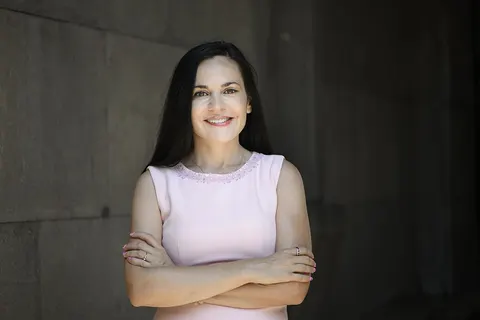
No, there's no astrology here, just pure science. How many scientists do you know who can predict the future with 85 percent accuracy? I know just one, and the verdict isn't only mine, but ChatGPT's too, from a particularly telling experiment. Assoc. Prof. Mariana Todorova returns for what has become a traditional Digital Stories interview at the start of each year. The futurologist always gives us important things to think about, so there's no need for a long introduction. Let's peek into the future together!
 06
Petko Dinev, the Man Who Gives NASA Its Eyes
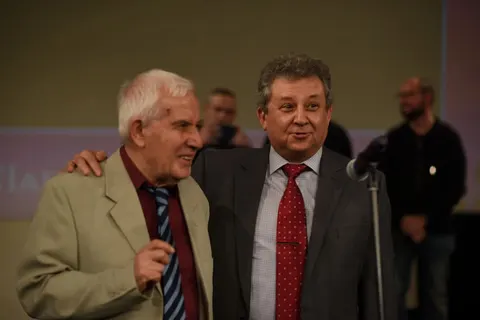
A Bulgarian and his team build the cameras that helped NASA turn its gaze to the Moon, and then to Mars. His designs are used by all the biggest aviation companies, and besides having already “set foot” on our satellite, they fly aboard thousands of satellites in orbit. In the 1990s Petko Dinev left for Florida, where he started working at NASA. He then founded his own company, which stands out worldwide for its expertise in building industrial cameras. His path began in Kazanlak—he is Bulgaria’s first gold medalist in physics and a student of the legendary Teodosiy Teodosiev, known as Teo. Our guest is also among the main characters of the new documentary Sotsialno silnite (The Socially Strong), which gives the floor to the gold medalists of Teo’s school. How does a person end up at NASA by chance? How does a scientist build a company that becomes the world benchmark in its industry? How can we change the fact that today half the students at the high school he graduated from fail to scrape even a pass on the math matura? How do we make science fashionable and give technology a chance? How do we, as human beings, catch up with its enormous growth? We have huge questions to discuss with this exceptional guest. “Yes, we live in interesting times. Maybe even too interesting. I don’t think we’ve reached the limits of technology. I think we’re still in the overture…”
 07
Which Predictions for 2025 Came True—and What Lies Ahead?
In 2015, seven leading futurists laid out their expectations for the decade ahead. In a few hours we will welcome that very 2025, so we can now judge how well they did in the dynamic and turbulent first quarter of the 21st century. Then comes the more interesting part: a look at what the same futurists expect today, especially the ones who turned out to be right, and what the coming years hold according to the people who called the last decade.
 08
Caught in the Whirlwind of Quantum Nanotechnology
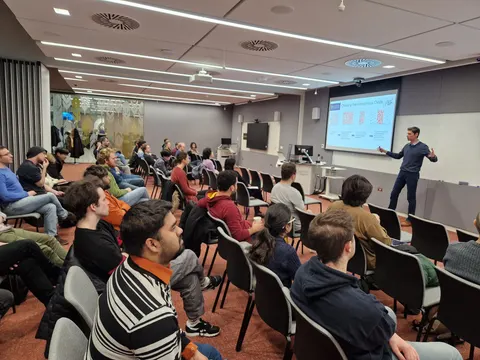
We live in the Silicon Age, says today's guest, and the next steps in how we make chips depend not only on technological progress but on how we develop as a civilization. Prof. Vihar Georgiev, who earned his doctorate at Oxford and now teaches and does research at the University of Glasgow, works in exactly the field that will decide whether we can keep the famous exponential growth of computing power going. He is also helping build the technology that could let a tiny sensor tell us more about our vital signs and illnesses than today's most advanced laboratories can.
 09
Become a Teacher!
The first day of school is approaching, and it is a good occasion to look for answers to the big questions in education. How do we bring more young, well-prepared teachers into Bulgarian schools, how do we teach technology when its fast-moving world produces big news every week, and how can artificial intelligence become a friend and helper to both teacher and student? Angel Georgiev, creator of the Znam.be platform and co-founder of the Sindeo academy for teachers, believes that “teaching at a school today is more accessible than ever.”
 10
Bozhidar Stefanov: Chemistry Against the Layers of Dust
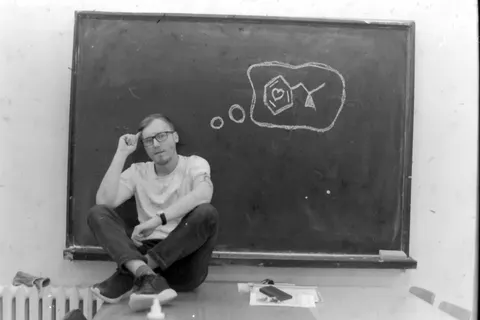
Bozhidar Stefanov was invited to work at Oxford, but he chose to build a chemistry lab at the Technical University of Sofia, in a room that still has no air conditioning. Before he moved in, he tells me, his colleagues called it “the isotope room,” because in the 1970s it was used for experiments with radioactive isotopes. “I’m not going in without a Geiger counter,” I say with a smile, and he pulls out the very instrument and shows me that the readings are normal. Never joke with a chemist. Then he tells me about clearing out the lab, about the layers of dust (and East German porn magazines) he shoveled out before he finally had a place of his own to do research. During the pandemic he learned to embroider. And before that, for many years, he caught the cameras’ attention as someone who could present science in an accessible, accurate and attractive way at FameLab events. Lately, though, his focus has been elsewhere: on producing scientific results. I believe him that the environment is healthy; I have no choice, he knows the subject. But I also believe that we can have both clean air and great prospects for science in this country, if there are more people like him. I may even forgive him his skepticism that artificial intelligence will solve the big questions of chemistry… because he is a chemist, a recognized scientist with rich experience. And because it is time we listened more and more to the people who burn for science and have chosen it as their calling. People who understand what they are talking about and may not offer the most colorful, animated view. But they offer the one that really paints the future…
 11
Agent GPT: When Artificial Intelligences Start Playing as a Team
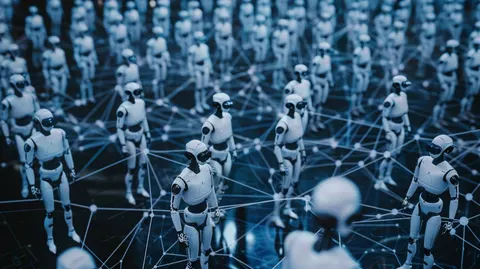
What if we turned the stereotype of artificial intelligence on its head? Instead of a single model we chat with, we face countless separate “individuals.” We hand them tasks, and each works autonomously, specializes in a particular job, accumulates knowledge about it, keeps an eye on the others… The goal might be, say, to build software. One model learns to formulate the requirements, another writes the code, a third prepares the visual side, a fourth tests what came out and how… and so an entire software company comes together, working millions of times faster than ordinary ones, because it is built not of people but of algorithms. How far off is that future today? Not long ago Sam Altman said that this is exactly the direction in which very serious breakthroughs are coming. AI agents are one of the fields of computer science where we expect big news. The next generations of artificial intelligence, able to solve far more complicated and complex tasks while making far fewer mistakes. Many of the leading experts say this is the approach by which we will take the next big step in the development of artificial intelligence. Here is why.
 12
“Within Five Years, We Will Merge the Real and the Virtual”
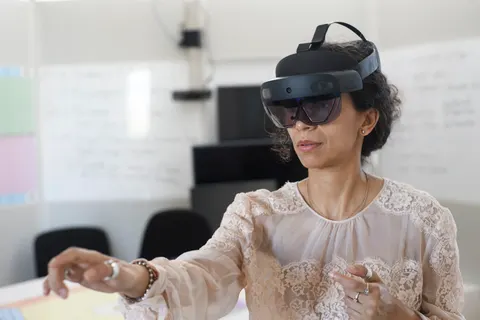
We are talking at the Technical University of Sofia, in a lab where the next generations of augmented and virtual reality are being built. Assoc. Prof. Agata Manolova, dean of the Faculty of Telecommunications, explains why we are not yet living in the metaverse and how close we are to a virtual reality indistinguishable from the real thing. It is a thoroughly engineering-minded conversation about the virtual and the big questions it raises.
 13
“The World in 2050”: Can We Peek into the Future?
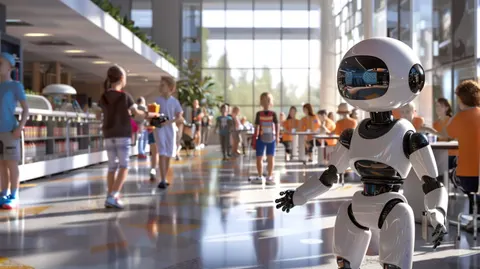
Will technology make our lives easier, or will it trigger a huge crisis by shaking up the job market? Will we enjoy the fruits of advanced artificial intelligence that has helped us dramatically extend human life, explore space and develop the next technologies? Or will we wake up in a world of total control, as predicted by the dystopias? What will life look like in 2050? It is time to peek into the future and discuss the fascinating forecasts of an author who has the courage to make predictions in such a dynamic period of history. And he has already done it once, with enviable success. Can we predict the future? Not a chance, since every small step can change the direction. But is it worth trying? I think it is essential: however far off our ideas may turn out to be, the very act of looking, the attempt to make sense of it, is the first step toward preparing for it. Toward avoiding some of the dangers.
 14
Buying Eternal Youth
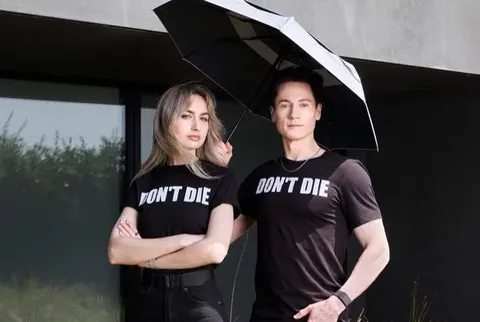
Forty-six-year-old Bryan Johnson has already spent more than $4 million to make his body work like an 18-year-old's. He claims it is working. He puts everything into it, going as far as infusing himself with blood plasma from his own son. He believes he is the most measured human being who has ever lived, and that his experiment will change the life of everyone who wants to live long. In other words, everyone. Dream or utopia? An obscene waste of money or an idea that could change our evolution? Genius or sheer madness?
 15
Dr. Fiziev, the Man Teaching AI to Read Our Genes
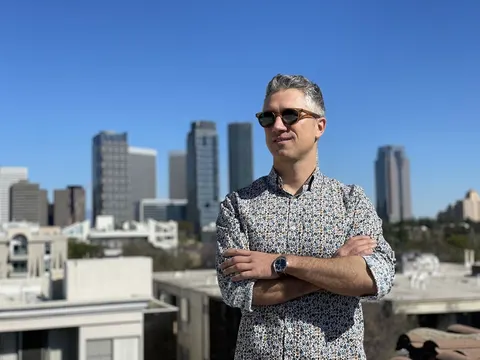
“The combination of genetics and artificial intelligence is extremely powerful, and I expect big news in the coming years,” says Dr. Fiziev. Why is it so hard to tell which of our genes are to blame for a given problem, what do we gain now that anyone can read their own genome, and did we overestimate heredity as the main factor in whether we stay healthy? Dr. Petko Fiziev, a bioinformatics specialist who leads an AI team at Illumina in the heart of Silicon Valley, also talks about the future of gene editing and “designer babies.”
 16
“Is There Any Part of Our Lives AI Won’t Change?”
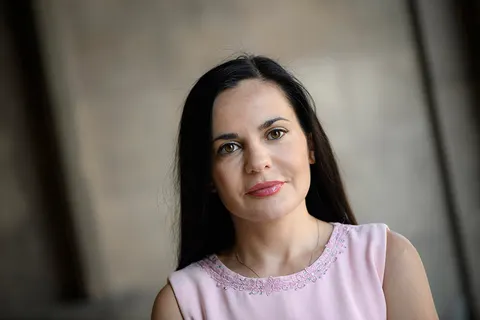
Why are we so unprepared for the great changes technology is bringing us? Can we catch up? What are the most important pieces of news to expect in the new year, 2024? Why is the revolution in every area of our lives irreversible and even closer than expected, with the full force of scientific argument behind it? Why is it important to shake off the petty concerns of the day as soon as possible and, faced with enormous challenges, come together? Assoc. Prof. Mariana Todorova is a futurologist at the Institute of Philosophy and Sociology of the Bulgarian Academy of Sciences. “Within just 5 years, technologies based on artificial intelligence will enter every field. They will be around us from birth to death,” she said in our conversation in 2022. And in the first days of 2024 she is even more categorical: “Now it is 100 percent certain. I think there are 2-3 years left, and that depends on how prepared we are, not on what the technologies themselves can do. If you can think of a field that won’t be heavily affected by artificial intelligence, challenge me, so I can prove you wrong…” How do we prepare for that future?
 17
The Living Computers
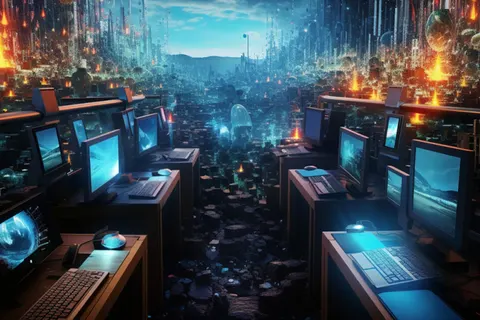
Information technology has always tried to imitate nature's most perfect model: the human brain. Now it is on its way to doing so more successfully than ever—by building a computer that runs on living human brain cells! What happens if we bring together the best of both worlds: the biological, with its evolutionary efficiency and its instinctive, creative imperfection, and the technological, with its ability to derive patterns and build on them? Biocomputers look like the logical future, and it is no accident that many of the people sketching tomorrow have turned their eyes in this direction. Serious scientific breakthroughs and successful startups in recent years suggest that the next big technological leap may well be coming from here. These are the arguments.
 18
FM-2030: The Man Who Refuses to Die
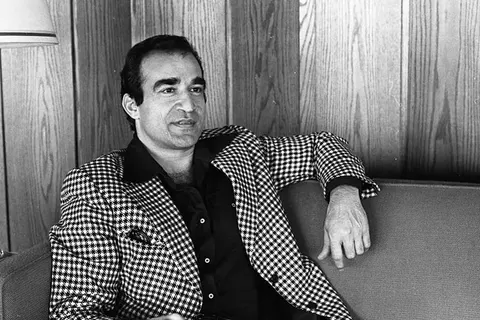
Left or right? Up! He believed that when 2030 came, he would wake from the ice to celebrate his 100th birthday. He was convinced that by then we would have reached the heavens, settled other planets, put our petty squabbles behind us and, lifted on the wings of technology, marched onward in human evolution. Was FM-2030 right? Could the sharp-shooting basketball player still surprise us with a three-pointer of a prediction? If so, in just seven years we will be able to discuss the details with the man himself. If he really is revived, the forgotten creator of transhumanism, who picked a name like a radio station's, will surely have a lot to tell us… If not, he will become just another dreamer who overestimated humanity and ran ahead of his time.
 19
Let’s Hear What the Baby in the Womb Is Saying
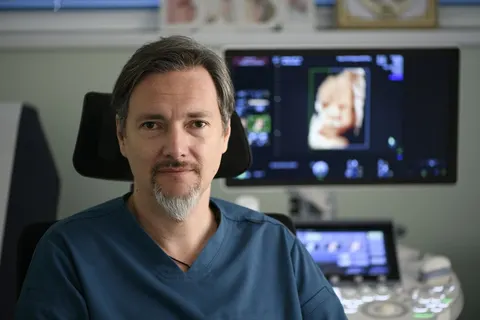
Lately we talk much more about providing incubators and equipment to save newborns with complications. But are we doing everything we can to prevent such situations, to make them rarer? Not according to our guest today, Assoc. Prof. Petar Ignatov, an obstetrician-gynecologist and the creator of an innovation that could help diagnose and save a huge number of unborn children.
 20
Do It Yourself: AI That Builds AI
What happens when artificial intelligence takes on its next big job: creating… artificial intelligence? What if we asked the famous ChatGPT to “create” a new neural network to solve a specific problem? Can complex algorithms build their own successors, what would that change, and could it lead us to the next step, an absolute AI capable of solving any task? These questions have many possible answers, but while we ask them we may miss something important: systems already exist in which AI oversees and assists the process of creating its own “kin”…