Why are we so unprepared for the great changes technology is bringing us? Can we catch up? What are the most important pieces of news to expect in the new year, 2024? Why is the revolution in every area of our lives irreversible and even closer than expected, with the full force of scientific argument behind it?
Why is it important to shake off the petty concerns of the day as soon as possible and, faced with enormous challenges, come together?
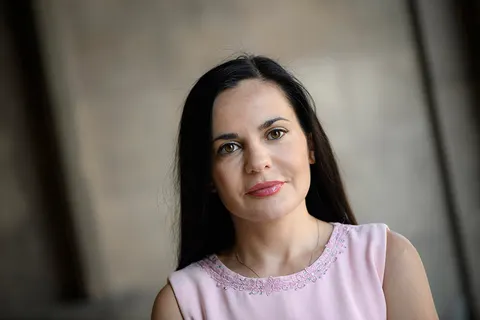
Assoc. Prof. Mariana Todorova is a futurologist at the Institute of Philosophy and Sociology of the Bulgarian Academy of Sciences (BAS).
She holds a PhD in philosophy and has specialized at Harvard, in the U.S. State Department’s international leadership program and at the Chinese Academy of Governance; she has also served as a member of the National Assembly, Bulgaria’s parliament. She is the author of the book Izkustven intelekt. Kratka istoria na razvitieto i etichni aspekti po temata (Artificial Intelligence: A Short History of Its Development and Its Ethical Aspects). She represented Bulgaria at the intergovernmental meeting that drafted an ethical framework for artificial intelligence under the auspices of UNESCO.
“Within just 5 years, technologies based on artificial intelligence will enter every field. They will be around us from birth to death,” she said in our conversation in 2022. And in the first days of 2024 she is even more categorical:
“Now it is 100 percent certain. I think there are 2-3 years left, and that depends on how prepared we are, not on what the technologies themselves can do. If you can think of a field that won’t be heavily affected by artificial intelligence, challenge me, so I can prove you wrong…”
How do we prepare for that future?
– You recently returned from the world forum of futurologists in Dubai. What impressed you the most?
– One thing was the meeting with the astronauts of Expedition 69, who returned from the International Space Station on September 23—two Russians, four Americans and the first astronaut from the United Arab Emirates.
I expected them to talk about scientific experiments—they had operated on a blood vessel, tested whether heart surgery or meniscus surgery could be performed in orbit, which matters for the projects to colonize Mars and the Moon. But what they shared was deeply human—the psychological threshold of being so far from Earth. The fact that it turns into a small, beautiful blue dot makes them rethink a great many things. Until they saw the atmosphere as something very fine and delicate, they had never realized that this layer, which shields our lives from solar radiation, is so fragile.
The other key message was how dependent they are on one another. They wanted to show that when humanity faces a truly important global question that concerns everyone—in this case, the success of the space mission—geopolitical and strategic stories don’t matter at all. Both the Russians and the Americans said:
we want to give humanity the formula for understanding, the model for success, for cooperation,
up there we are interdependent and we truly are like brothers.
– Alas, we can’t all go up there to see it for ourselves, and technology helps us forget it more and more.
– The other interesting encounter was with a well-known technological absolutist, optimist and influencer—Whurley. He handed out booklets made entirely by artificial intelligence, with very beautiful illustrations and text. He asked a series of questions along the lines of: why does world hunger exist when a third of all food is thrown away? Why can’t we cope with climate change and environmental pollution? Why are diseases that had disappeared coming back?
He expected us to supply the answer; he built his presentation on that logic, to show us that the elephant is in the room and we don’t see it. The answer was that there are about 8 billion of us, and only 0.1 percent are scientists—people who actually do science. While we complicate our lives with the technological revolution, we have extremely complex problems that keep reproducing themselves.
His thesis was that the only way to close this deficit fast is to use artificial intelligence, and the more advanced the better. At the end he revealed the secret: the brochure had been created by his 6-year-old son in 30 minutes. He said that
children already have a very good intuition for working with these technologies.
They aren’t biased, they don’t expect complexity and impossibility; they just use their imagination and creativity, and they handle it very well.
I recently came across an article saying that America has only now set a date for landing on the Moon, because it turned out that part of the calculations, part of the technology, was lost from the days when mathematicians computed everything by hand.
– There’s that famous photo of Margaret Hamilton, who led the team of programmers, standing next to all the code they wrote—and the stack of paper is as tall as she is!
– Exactly! One hypothesis is that NASA hasn’t managed to send a new mission not only because it’s expensive, but because part of the technology has been lost and they can’t reconstruct it. I asked him about it in that context. We use artificial intelligence, it is becoming ever more perfect, it is already on the border between narrow and general, large language models produce flawless results when given a precise task.
There will certainly be a boom in scientific discoveries; I see it in the finding of new galaxies, in the detection of cancers. AI processes big data and calculates incredible things.
We have enormous opportunities, but we may fall into the trap of the easy road.
Just as the knowledge behind Apollo was lost. If, because of ChatGPT and the other models, programmers themselves stop developing mathematical code and that knowledge is lost after a generation or two, what happens? What if we walk into this trap, simply turning everything into tools and replacing mathematics with a game of symbols?
Whurley chose not to answer me.
People of this type, with this mindset, are very useful. They want to go all the way, and they have their place. But the threat is real—like in the films where a solar flare wipes out electricity and the internet, and people no longer have the analog thinking or the instinct for where to start, how to rebuild that knowledge.
The people of the future, completely dependent on the digital, may have to rediscover everything in some primitive way. There has to be a plan B and some guardians of the analog. In time we may simply have to take the long road.
– Yes, but who could those guardians be? With artificial intelligence we look for regulation, but states are weaker than OpenAI, than Meta. Even alliances are weak: if the European Union imposes stricter limits, everyone will move to China. The only form of resistance I can imagine, the only chance for regulation, is pressure from society.
– Yes, society could be a good corrective, as it has been on other global issues, like nuclear weapons. I believe that
for artificial intelligence some kind of global consensus and regulation has to be reached, just as with nuclear weapons.
Even if, again as with nuclear weapons, it is used for mutual deterrence, that is better than having no consensus at all. Otherwise, on the principle of tax havens and offshore zones, companies can move to China, for example. Recently a small company, in partnership with NVidia, bought a barge and fitted it with 10,000 powerful processors so they could build artificial intelligence in international waters, beyond the reach of any regulation. They said they would push to become the first AI nation! But in my view this is more likely to make us rethink maritime law, ancient as it is, than to establish new principles.
If humanity doesn’t reach that consensus, we will go through great chaos. It is already creating different jurisdictions—the EU has banned facial recognition, with small exceptions, while in China, India and America it is entirely permitted. The same goes for the analysis of biometric data.
I think the cases that arise will force us to get there, but it will be very hard. The companies themselves don’t want regulation because it holds them back, but on the other hand their leaders fear they could be held responsible in the event of a serious incident. That’s why Sam Altman spent the whole summer traveling and meeting political and economic leaders. One hypothesis is that he was fired because of Q*—a new-generation multimodal artificial intelligence that had bypassed certain measures of control, security and restraint.
– So we are left guessing and relying on rumors about something that may determine our future. Meanwhile Altman is known for having a big bunker, stocked with everything imaginable, so he can survive a cataclysm. But how did we end up with a system in which what happens depends on Musk, on Bezos, on Altman? We’re supposed to be an advanced civilization, yet we’re slipping back into a feudal society—important decisions are made by individuals who consider themselves chosen by God, though no one has delegated such responsibilities to them.
– They all have this kind of messianism. Musk, too, showed great concern, but he did it for commercial and marketing purposes, because he had fallen behind in artificial intelligence. He probably wanted to catch up by calling for a moratorium; the goal is hardly that noble.
These people are the faces of the projects, but behind them stand huge teams, multinational corporations and shareholders who care about profit.
It doesn’t depend on them alone; they embody certain expectations. But the whole situation, for a long time now—since Covid, since before GPT-3—has been rather reminiscent of the film Don’t Look Up. We face problems at different levels, of different kinds, that we can’t solve, and we stand frozen, like a deer in the headlights.
It really is strange that we don’t try by every means to solve the environmental and climate problems.
Even after the worst cataclysm, Earth would offer far better conditions for life than Mars or the Moon.
We still have much better chances here, even if we have to create an artificial atmosphere.
It is also alarming that these people think apocalyptically and look for escape routes, which breeds a lot of conspiracy theories. People start to think that if these billionaires, opinion leaders and trendsetters choose such measures, something is probably going to happen. But they are eccentrics too, also limited by their own irrationality. I don’t believe they possess any hidden knowledge.
The problem is that the political person has disappeared; that figure is in some kind of crisis. This even affects society’s ability to hold a dialogue through the political person, in the collective sense—politician, leader, party representative. It is a consequence of the crisis of ideologies, and it disrupts the dialogue within society and the possibility that anyone can represent it.
We live in hybrid times, a product of social media, which struck at the classic authorities and put influencers, bloggers and experts in their place, rather than scientists.
We have to work in this direction—restoring, reinventing democracy,
so that there are clearly defined actors. They should make clear decisions and be held accountable, because tech leaders are under no obligation to be. We see that nation-states are powerless. That’s why there must be global mechanisms, an institution resembling a global government, only for truly essential issues.
– The UN, only one that works… And we arrive at a moment when we live in incredibly dynamic times, yet America is choosing a president between two men pushing 90. And most major countries are led by people over 70.
– Everything has become very fluid, because we live in a state of constant change.
It is so constant and so frequent that we don’t even need to think about the future; we live with the feeling that the future is now,
that everything is going faster and faster. That the future is far poorer in metaphors and meaning than it ever was.
In such turbulent times, instead of adapting to rapid change, of being like chameleons, people harden and seek conservatism, some kind of fortress. That’s why they choose unfit, elderly leaders—because in the past old age was a guarantee of wisdom.
– I see that conservatism in the comments on my articles too—that there’s a plan to wipe us out and artificial intelligence is just the next step, while according to others nothing has happened in the world of AI and it’s all marketing.
In my view, this reboot of the democratic process, of authorities, can’t happen without some form of media. They are the ones who can validate qualities, serve as a platform for discussion, something that can tame this fluidity. I keep waiting for new media to appear, but they still aren’t here.
– Yesterday I saw a media outlet whose content is generated entirely by artificial intelligence. The presenters are animated figures, but they already have facial expressions and a sense of humor.
Artificial intelligence generates the context for the reports, it also profiles the users and broadcasts news according to their preferences.
This really is the trend Netflix started, toward excessive personalization. For me it is even more dangerous, because it fragments things further and blurs the sense of community. It is what the German sociologist Durkheim called “anomie”—the disintegration of communities. We shut ourselves into micro-communities, and that is a problem. Another problem is how people can resocialize and learn to reach consensus. For now the new media work toward personalization, individualization. Collaboration platforms exist too, but they are voluntary and require initiative. It will be very interesting to see how we deal with this trend.
– ChatGPT has been with us for a year now, and even in the IT community many people say it’s an expensive parrot, that it has reached its limit. That an AI winter is coming, because every field goes down that road. Could they turn out to be right? That we have overestimated what is happening?
– I have never thought so. First, we still
haven’t experienced the multimodal models, and not because they don’t exist, but because the big companies don’t know how to monetize them.
They are looking for a profitable, efficient business model, because these models are very expensive. For a long time ChatGPT brought OpenAI losses, and the company wouldn’t have survived if it weren’t for Microsoft’s 10-billion subsidy.
The paid version of ChatGPT changed that a little; it has around 200 million subscribers, but it is still unclear whether the model is sustainable. Google offers something different: they split Gemini into three models—Nano, Pro and Ultra. Nano is a model we’ll use on our phones and personalize with our own data. Pro will be like GPT-4, and Ultra will have truly exceptional capabilities. So
humanity has not yet fully felt the real effect of what has already been achieved technologically.
The second issue lies in ourselves. We are very conservative, and we are starting to build adaptive responses. Some deny it, others attribute human characteristics to it. Still others say they are taming it, but in fact artificial intelligence is taming us. Even friends of mine believe it is conscious, that it understands them, that it changes its behavior every day; they assign it human attributes. But the fact that we communicate with it as we would with an animal or another person is a process of getting to know it, of overestimating or underestimating the situation. We have no real assessment!
And third—
the statistics on how many people have lost their jobs haven’t come out yet. They will, and then there will be a sobering up,
because there are quite a few. In America, I think 70-80 percent of copywriters are no longer doing that work, and the same will turn out to be true for accountants and legal analysts.
Once these 3 elements sink in, there will be a new attitude. The factors that could lead to an AI winter are falling away one after another. Which is frightening, because at times we humans resemble monkeys playing with fire.
– And Moore’s law still reigns. We reach the limit of one technology and somehow the next one appears, letting us carry on exponentially. Meanwhile the great divide the tech leaders we mentioned still argue over is whether our salvation lies in separating ourselves from technology or merging with it.
– Those are the two doctrines: if you can’t beat them, join them. Or stop them before they destroy you. Merging is, for me, a very interesting phenomenon. I have yet to meet a neuroscientist who can build a scenario of how this communication would work. We communicate through a kind of subject-object opposition, through the eyes, the most natural extension of the brain. When it happens directly, how do we limit our thoughts and our will? How do we know that something is ours, whether it is authentic or not?
Are we all capable of doing it? On the other hand, we couldn’t stop it, because it will give us many solutions. Perhaps
the winning strategy is to buy time, time in which to make up for our cognitive abilities and gaps,
to learn, to understand it and to decide stretch by stretch.
For now, in my view, there is no right strategy. But the time for a pause has already come. So that people can make sense of what has happened, see the effects on the labor market. This will change economic systems! So they can see their own place and get to know the full functionality.
But of course that won’t be achieved, simply because there is no common sense. There is no shared understanding.
As Geoffrey Hinton said: “The aliens landed in my backyard, but they spoke such good English that nobody realized they were aliens.”
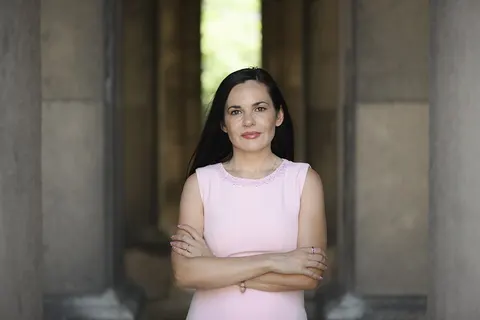
– We spoke exactly a year and a half ago, and you said that within 5 years artificial intelligence combined with robotics would change every area of our lives. How does that forecast look today?
– Now it is 100 percent certain.
I think there are 2-3 years left, and that depends on how prepared we are, not on what the technologies themselves can do. If you can think of a field that you believe won’t be heavily affected by artificial intelligence, challenge me, so I can prove you wrong.
– I couldn’t. I am in touch with two professions, and through them with countless others, and I can’t think of such a field. I already see every day how this progress makes the difference, and I wonder whether it is wiser right now to learn how to use today’s technologies, or whether there’s no point, because they change so fast and it makes more sense to develop flexibility.
– We have to learn both. In my view there’s no point in going too deep; the technology is changeable. We have to be flexible, but here again
we fall into that trap of shortcuts, of everything on the surface.
Until we reach the point where we use something we don’t understand. To me that is quite dangerous.
I attended a lecture on the impact of artificial intelligence on medicine. I was very struck by a gynecologist who said that people don’t even fully and comprehensively understand the IVF procedure—it has worked for a long time, but it is a bit of a gamble. As if we have experience, and yet…
– …and yet it may turn out that we don’t know the process well enough. As Anton Donchev said 10 years ago, we carry a phone in our pocket but we don’t know what it may bring us. Whether it might be killing us slowly and imperceptibly. In a sense, that is exactly how it turned out.
– Children are very sensible. Lately I’ve been visiting schools, and they ask me remarkable questions. One girl asked me: “Fine, we’ll reach the limit of our ability to adapt and we’ll simply switch off. What comes then?”
Mental health is already the most important issue, and we can no longer compete, no longer adapt.
We are linear, while technology is exponential. So what do we do? How do we stop this technology?
– We open TikTok and look for a dopamine escape.
– But that makes you unfit.
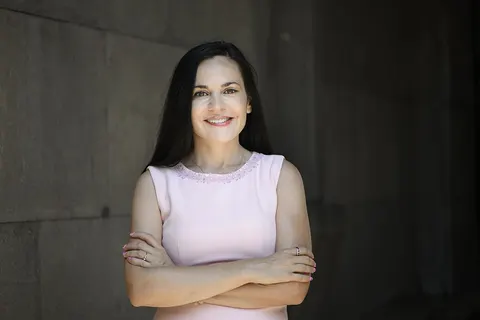
– So what? The system no longer has much need for you to be fit…
– Yes, capitalism needed people—working and consuming—and that’s why it provided health, education and social systems. Now it has no such need. But
we can’t simply look at people as biomass, unless artificial intelligence decides to.
All the more so since we are opening a little door for it to do just that, by building organoids into neural networks. Here we are already heading toward the bad scenarios.
– The holidays are just over, the new year has arrived—let’s end by looking at the good scenarios. What news would you be glad to hear in the coming year?
– The discovery of some fundamental drug for fighting cancer; artificial intelligence could do that.
There is a hypothesis that
all human languages share a common root—that the myth of Babel may turn out to be true.
Artificial intelligence could prove it! It could give us a better understanding of our origin as a species, or of the origin of life on Earth altogether. Those very important scientific questions around which we have built beliefs, religions, ideologies and social systems. It could shake them, and it could also make us better, more humane…