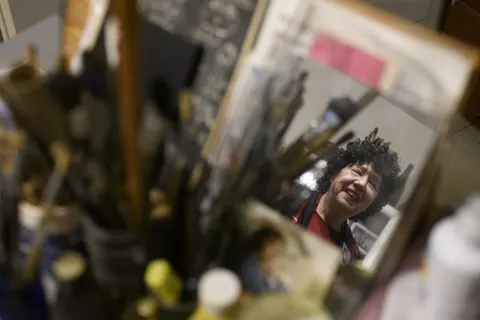
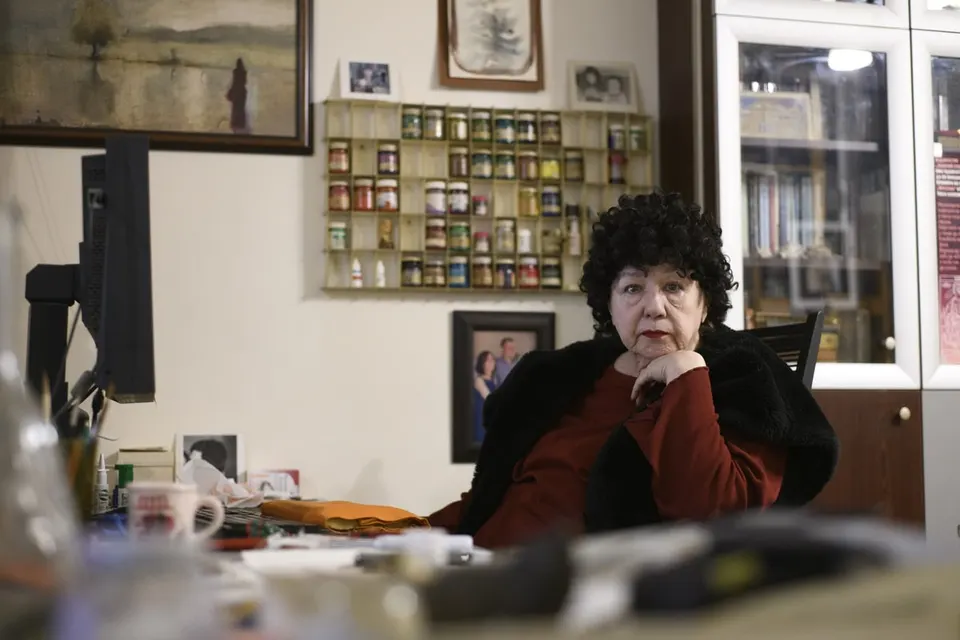
Tekla Aleksieva became a legendary illustrator after creating 120 covers for the books of the Galaktika Library, Bulgaria’s cult science fiction series. Generations of readers link the greatest science fiction novels with the images she painted. Besides being an artist with a singular eye and countless accolades, she is also the author of a poetry collection.
- What does she think of images generated by artificial intelligence?
- Why does she believe we are surrounded by kitsch on every side—in literature, in art, in life?
- Can we get our good taste back, and how?
- Why must we never, under any circumstances, leave the Earth?
- And how is it that... Tekla Aleksieva never managed to finish the book behind one of her most famous covers?
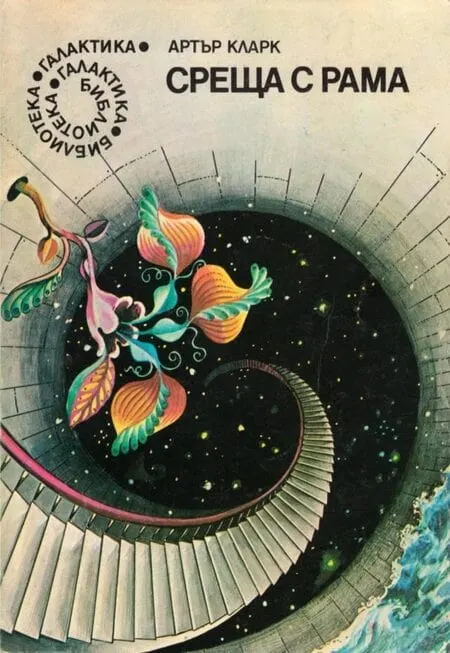
– We can’t help but start with the Galaktika Library! The series belonged to the Georgi Bakalov publishing house in Varna, while you’re from Sofia. How did the story begin?
– Back then we artists all knew each other; there weren’t that many of us. When the publishers decided to launch the series, they called my husband, Zheko Aleksiev, and his friend Bogdan Mavrodinov and invited them to do the graphic design. It didn’t matter who was from where—we knew each other’s work and we knew who could do what, and on deadline, too.
They suggested I paint something for the project, because I have that kind of style—I depict things precisely. My husband and Bogdan worked out what the series should look like, and they needed someone to paint the picture for the cover.
At the time I didn’t even know what I was painting. They told me: a very beautiful woman in a red hat, submerged in the sea, with her tail sticking out.
A piece of cake! I painted it without a clue why, and it turned out exactly right,
they knew that if they described something to me, I could do it.
Not every artist has a representational style like mine. Back then I was illustrating textbooks in biology, zoology, natural science. Whereas my colleagues painted more abstractly and supposedly more modern.
We sent the proposal to Varna, and they loved it. They started sending us the books, and we’d read them. The three of us would sit down and think about what the cover should look like, what it should be. Zheko and Bogdan are great artists, but in a different field—book design. They got on with their own work and soon left me to come up with the covers. And so it went for 10 years...
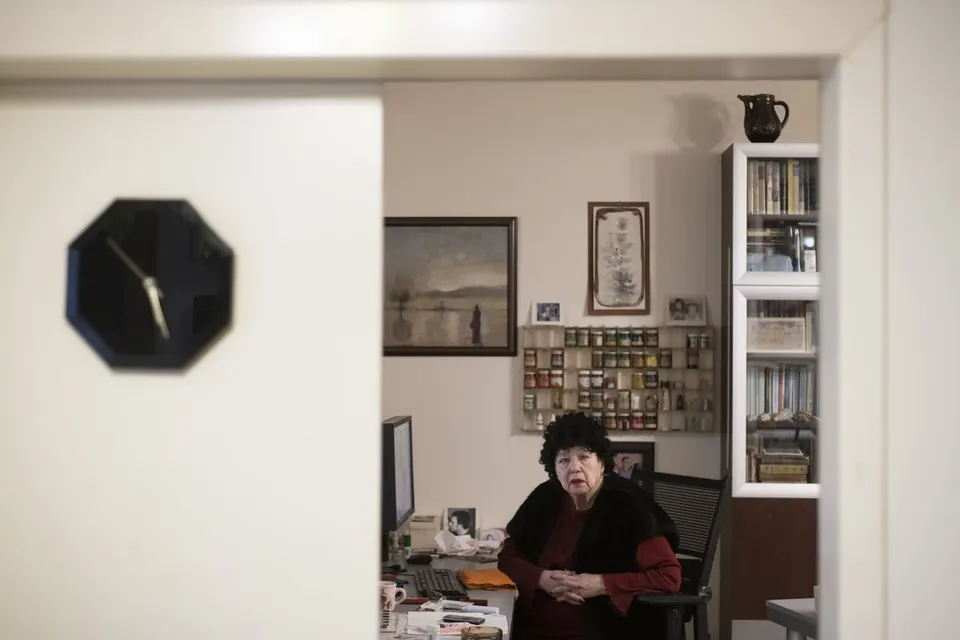
– Did you expect it to be such a success? That 50 years later we’d be talking about a cult series?
– Back then it never crossed my mind, but when the books started coming out, the success really was enormous. People lined up in queues. First, because they loved science fiction, and they still do. But the pictures were striking, too—there were no books like that in Bulgaria. The covers helped a great deal, and from there it all went hand in hand.
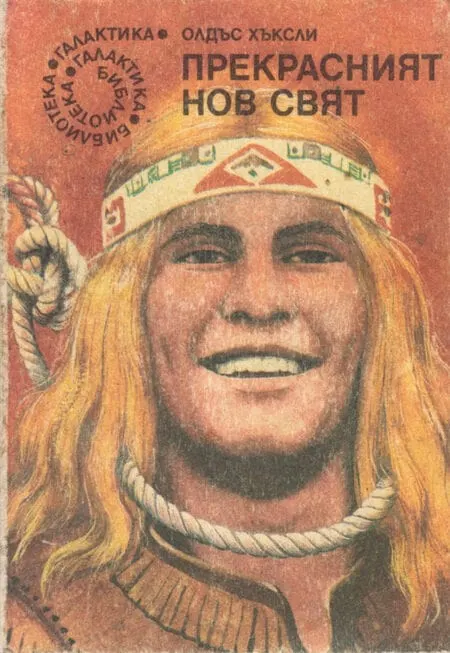
– Wouldn’t it have been easier to use the original covers? Today almost everyone does that for translated literature.
– First of all, that’s very dumb. Second, you have to pay for the original cover, and it costs dollars.
The most important thing about these covers, in my view, is that they’re honest.
They depict the book very accurately, unlike a lot of today’s covers, even new editions of the same books, which simply express nothing.
People picked a book by its cover, read it, and saw that everything lived up to their expectations. The picture had opened up their imagination.

– What print runs did they reach?
– Nobody knows. Officially it was a hundred thousand each, but all of Bulgaria read them. Because of the huge success they started doing reprints, but how many there were...
– Which are your favorite books in the series?
– I don’t have a specific one. In general my favorite book is Solaris by Stanisław Lem, but it didn’t come out in Galaktika.
But there are illustrations I like very much as pictures. With others I’m not pleased with myself.
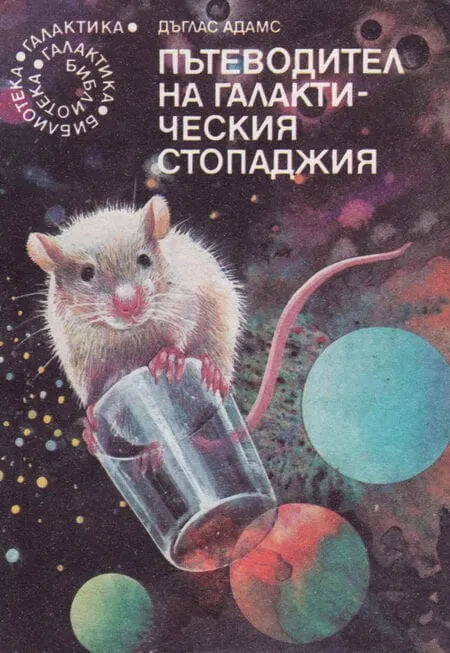
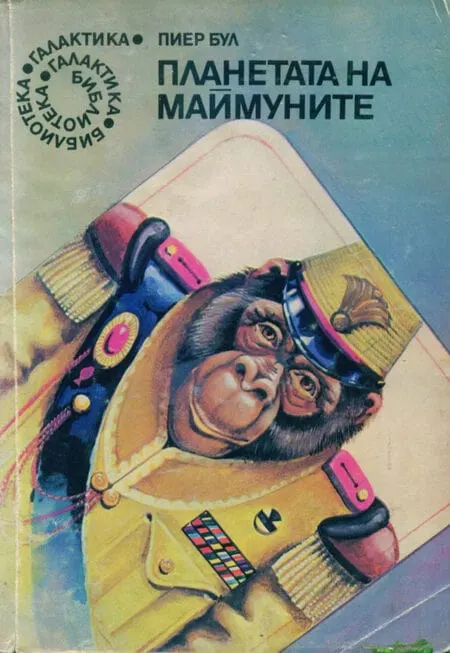
– The Hitchhiker’s Guide to the Galaxy and the cover with the mouse come to mind right away.
– God forgive me, but I never managed to finish the Guide. I don’t know why it bored me so much. I’ve read thousands of books, but there are some that just irritate me.
Now, because of the huge success of both the book and the cover, this hitchhiker is in demand—people read it.
I came up with that cover with terrible agony.
I racked my brain for ages over what to paint, got as far as some mice and nothing else occurred to me. When I found out how much people loved it, I tried reading it again and failed again.
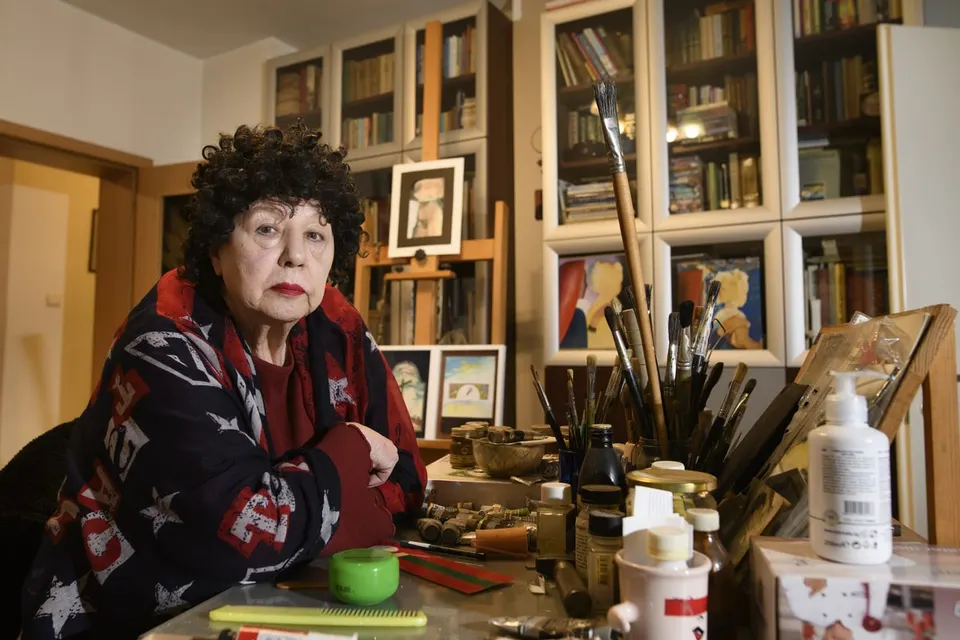
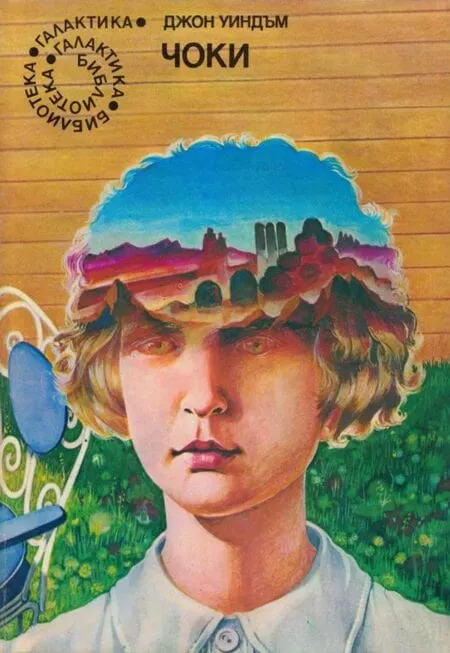
– Dune, I think, is another novel that’s impossible to illustrate, and you have an unforgettable cover for it. Hollywood spent more than 50 years trying to turn it into a film and only now succeeded—that’s how hard it is to visualize.
– Maybe they succeeded because the technology is so advanced.
But art—art is stylization and nothing else.
Nothing else. It isn’t even about the image, it’s about stylizing the idea so that it doesn’t directly resemble the image you’re after, yet still shows it.
There are 10,000 ways to make a film. The films we watch now
are just a literal retelling of the plot—he shoots, she shoots.
There’s no stylization in the movement, in the ambience, anywhere.
If you’re staging Chekhov in the theater, you can stylize it so that it isn’t exact, so that it’s in a completely different setting, and the author’s idea still shines through.
I imagine the film they made of Dune is packed with incredible effects. So what?
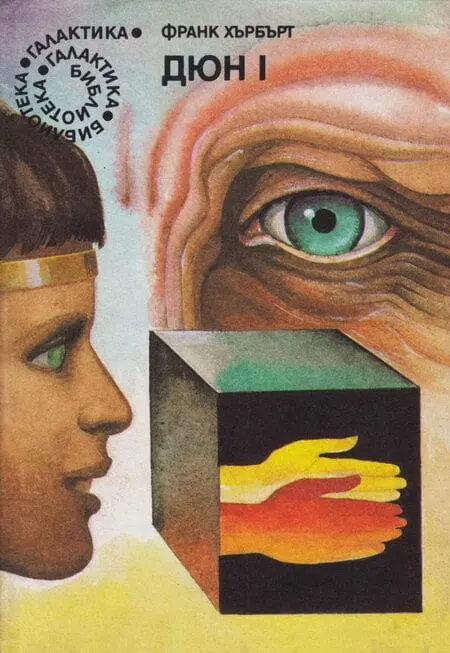
– I think it captures the spirit, too.
– Possibly. But when I come across some fantasy made with the new technologies, I skip it and don’t watch. The alien looks like a giant praying mantis, drool dripping from its mouth, it has teeth and it’s very scary, it eats people alive. Everything is made terrifically realistic. But it just bores me to death. There’s no imagination.
What have I watched several times? Star Wars. You’ll say it’s a fairy tale, a fabrication, but it has tremendous stylization and a master director. Never mind that there are hairy creatures and who knows what else—everything is done with such finesse, the directing is so elegant, that it’s a film I can watch many times.
– Why do you think there’s this tendency to neglect style in favor of effects?
– The people who make them aren’t true artists, they aren’t creators, they aren’t painters. They make commercial films; people love that and that’s what they watch.
And photos? Look at selfies—I take a picture of myself in the bathroom, in the toilet, outside, inside. And people look at them and are delighted. They admire themselves, especially the prettier ones, and from that visualization of reality they move on to the other kind, which crawls all over the internet. Photos of glossy women, men, beaches, marvels. All very colorful, very beautiful... and very kitschy.
Kitsch is precisely the absence of stylization. And it prevails today.
People have no training, no direction, nobody has explained anything to them. They like the gaudy stuff.

– But why? We have access to unprecedented troves of information, to every book, every film we want. Why aren’t the standards rising?
– There’s no way they can rise. On the contrary, they’re falling,
because it turns out that art is elitist. It demands a great deal of culture and training,
and now there’s neither. So what remains is a small elite group that understands what it’s all about. And the more other marvels appear, the more that group shrinks in proportion.
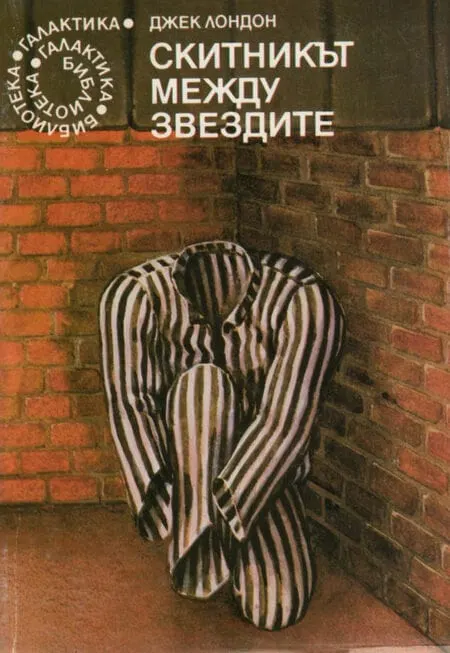
– Well, there used to be at least 100,000 people who would buy Stanisław Lem, and now there aren’t.
– Back then there weren’t many good books. There were a few libraries with good novels. We started reading science fiction in Russian—that’s how we learned Russian, and the idea of science fiction, which was just being born at the time, came along. Now
very few people will buy Stanisław Lem, because in his books there are no drooling mantises or little blue men on some planet.
Solaris is such a deep book, so humane, and it deals with humanity’s fundamental problem.
Stanisław Lem is a genius, but few people today want to read geniuses. They’re bored—there’s no action. Taste has become very commercialized.
– How can we change that—by raising children differently?
– It seems impossible to me.
As I see it, the world is heading for catastrophe, and it’s a good thing nobody has yet dealt with this intellectual elite that understands what it’s all about.
I’m not talking about Bulgaria, but about the whole world. The whole world reeks of kitsch! And why? Because it makes money.
– That’s how capitalism works. But then isn’t it time to think about something next, something better?
– That can only happen with a very active change in education, so that people can think. Students aren’t taught that now. A test, tick one of three boxes. That doesn’t work. It’s another thing to ask a question and have the student answer it himself, find the real possibility by reasoning.
– Solaris also strikes me as a very fine metaphor for today’s technological world, for the internet. It, too, is like a planet that draws everything out of us, wrings us dry, manipulates us.
– That’s exactly the fundamental problem of humanity I mentioned—where to go? From Venice to China,
to keep moving... But why? To conquer, if he can.
And now, since the whole world has been conquered, the Earth has grown too small for him, and man is going to conquer Mars. Good Lord, is that where he has to drag his stinking soul and his complexes?
Besides, man is tied to the Earth by an umbilical cord. To fly, he has to carry half the planet with him; however fast he passes through wormholes, he has to eat and drink... and answer the call of nature.
– I think there’s something beautiful, too, in this dream of conquering new worlds.
– Why should we conquer them? We
are like greedy children who want to contact the aliens so we can take their toys,
not to draw on their wisdom. We don’t need wisdom, we know everything—who takes advice these days? People are waiting for some alien to come and teach them how not to fight each other. It won’t happen.
People will wage war until the end of the world, because it’s an instinct, the instinct to spread the seed.
As long as it commands us, we won’t stop fighting.
– So it seems. In the ’90s there was talk of the end of history, but wars came back, even in Europe. Still, I find it sad that we abandoned space. After we set foot on the Moon, we stopped going there for 40 years.
– And we shouldn’t go. Artemis set out to conquer the Moon. But did anyone ask the Moon? Please, don’t go barging in there.
What are we doing on the Moon? We can’t feed the 8 billion people
who live on Earth. They go hungry, live without water, diseases run rampant. And we’ll go to the Moon with all these problems, just like in Solaris.
– Or in Ray Bradbury.
– The Martian Chronicles is one of the greatest books. It’s the pinnacle of stylization.
– You say “stylization.” I recently ran an experiment with artificial intelligence, asking it to illustrate Bulgarian poems and song lyrics. What came out of it, I think, definitely has style. Is that good? How will we tell apart what a human has created?
– As soon as I see them, I’ll tell you how. Artificial intelligence has arrived—welcome.
You are you—an individual, right? You were the same individual when you were a little child; it’s still you. As an individual you don’t change, you fill up with perceptions. You have memories. When God created man, as the Bible says, “male and female created he them.” He breathed a soul into man. Unlike all the other creatures he made, he gave only man a soul, individuality and intellect.
Only God can breathe in a soul. Man can only make something that has a mighty knowledge base and makes associative connections. But you can’t breathe a soul into an intelligence, and poetry is nothing but soul.
What would I give an artificial intelligence to test it? For instance, it has no sense of humor. There’s a riddle: “To use it at the front, you have to lick it at the back—what is it?” A postage stamp. That joke has a sexual subtext, a subtle hint, which I don’t think any artificial intelligence could invent, because it’s a humorous hint. Not pornographic, but very delicate, just to make you laugh.
– Sometimes humor is pure formula, too—there are writers like that. But I’d really like to show you the pictures I’m talking about. Yes, it probably can’t have a soul, but the question is what we do when it imitates one indistinguishably.
– Let’s see them. Now, this picture is very ugly! There’s no idea at all, absolutely cheap kitsch, not fit to look at.
Further on there are pleasant pictures, fine. But any artist can do that. Why does it have to be artificial intelligence?
– Because it takes seconds and, more importantly in my view—in its own way.
– I can see that they’re all supposedly different, but they’re the same. Never mind that the colors and shapes differ. It’s all one pleasant picture. It isn’t something that proves itself to be art. It’s a pretty picture, I have nothing against it.
But how do you illustrate poetry? First, you mustn’t paint a thousand things. Poetry doesn’t need gaudy pictures, it needs meaning. The picture can’t literally repeat the verses. It has to complement them. It has to create only the feeling. I can do crazy things too, but there’s no need.
Stylization, stylization, stylization!
Man is a scattered creature. He advances very well technologically, but in his thinking—no. Humanity lives with the past, the living and the dead together, ever since we’ve existed. There are cults of the dead, there is history. We are constantly in contact with the dead. On the one hand that’s good, but on the other I think it squanders some potential, because at a certain point you’re tied down.
– And that’s also why we’re doomed to fight, because we have conflicts in our roots that we can’t outlive.
I heard you say on the First Page podcast that an artist paints not with the hand but in the brain.
– That’s right. There’s nothing easier than painting the Mona Lisa—I studied that for 11 years. You have to keep inventing something new that doesn’t look like the real thing.
Because art isn’t real—it’s a parallel reality.
– Can’t technology make us better?
– It can’t change us. Only faith in God can make a person better. There are insanely good people in a global sense. They say Christ is love. I can’t quite understand what that love is, but that’s the path. Whereas
what can technology improve in the soul?
Nothing, except making things more convenient. You get up in the morning and it’s warm without having to go chop wood. Yes, it’s pleasant, but it won’t make me a better person.
– Whereas art can.
– Yes. Visual art and literature can. Of course, you have to consume a lot of it, and good quality. A man once told me how seeing one of my drawings changed his life. He’d been at a dead end, but he saw something, his thinking changed, then his life, and now he’s an extremely successful businessman. I know many other cases like that.
Oh, God, well, it’s all in the brain! When you read, your thinking changes.
Recently I heard a story like this. An illegal immigrant sneaks onto a ship and hides in a storeroom. They lock it, and it turns out he’s in a refrigerated chamber; he realizes it but can’t get out. They find him frozen—he had been writing on the wall hour by hour. At first he did exercises, fought for his life, but he froze more and more and finally died. When they found him, the astonishment was enormous, because... the refrigerator wasn’t working. He froze only because he thought he was cold.
Our brain is a very powerful weapon.
– What I miss is that there’s no contemporary science fiction today to help us make sense of what’s happening. Only the classics from the last century.
– I read one work of science fiction that filled my soul—Liu Cixin’s The Three-Body Problem. The first volume left me stunned; I read the second like a good friend. Magnificent.
But, yes, there aren’t many authors. Everything has to be born in its own time.
Once the theater scholar Gocho Gochev and I got to talking about man and art, and he said: “Do you know that the line from Chekhov’s play The Cherry Orchard—‘I’m thinking of marrying Ivan Ivanich’—
an actress can say in 10,000 different ways!” But who will choose? That’s what art is.
People still have 10,000 ways to think and to look at the world. And what do they do, damn it? They stare at their phones. The children growing up now have never seen what’s around them. They are the subject of science fiction, living in a parallel world. They don’t know what the streets look like, what people look like. It makes me think there’s no hope. Who will bring them into this world? If it happens by chance, they’ll be shattered.
– I’m trying to raise my children the opposite way. There are limits on technology, but I worry that at some point the system will change them.
– I’m quite old—I was born shortly after the bombings. Sofia was in very bad shape; there was endless destruction, never cleared away. In our yard on Tsar Shishman Street stood a small ruined house. We played in it—insanely interesting. A few walls were left, bricks, the frame of some window, lots of broken things.
We gathered everything we found and built ourselves new houses in the corners of the yard.
What imagination it takes to make a palace out of broken things! A fairy tale out of a shattered window! Every straw became an iron scepter...
When will a child who can grab every possible scepter and palace on his phone sit down to play a game like that? Never. He has no imagination—it’s been drained out of him.
– Even so, I see children’s inner need for everyday imagination. And I sense that sometimes we suppress it.
Could we end up in a world without literature?
– No. If you think on a cosmic scale, the only thing that sets man apart from the rest of the cosmos is the word. He has the same atoms, the same chemical substances; he is part of the cosmos from head to toe. What’s different is the word. That’s the catch.
– Are the word and the image at war today?
– It’s not good if they are. Because the image hands you everything ready-made. While the word makes you think.