What do young people think about artificial intelligence? I have hosted all kinds of guests with interesting points of view on the subject, and I have also summed up the thoughts of no fewer than 750 people who filled in the Digital Stories survey. This time I hand the floor to seven people in their twenties who have set out on a completely different profession, yet have also dug deep into what today's algorithms can do. Gen Z, as the West calls those born at the turn of the new century, definitely has something to tell us.
How colorful Digital Stories can be… The previous one gave the floor to 88-year-old Petar Shoilev, who had just completed his PhD, and this one goes to the young.
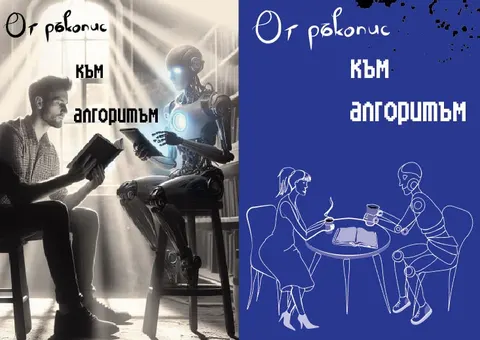
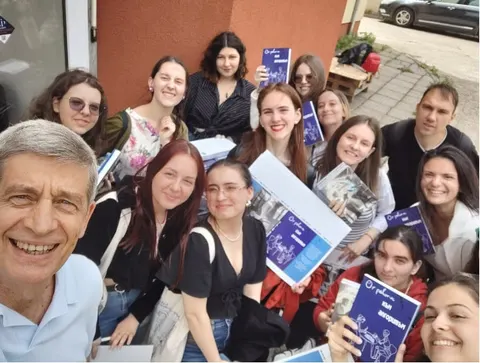
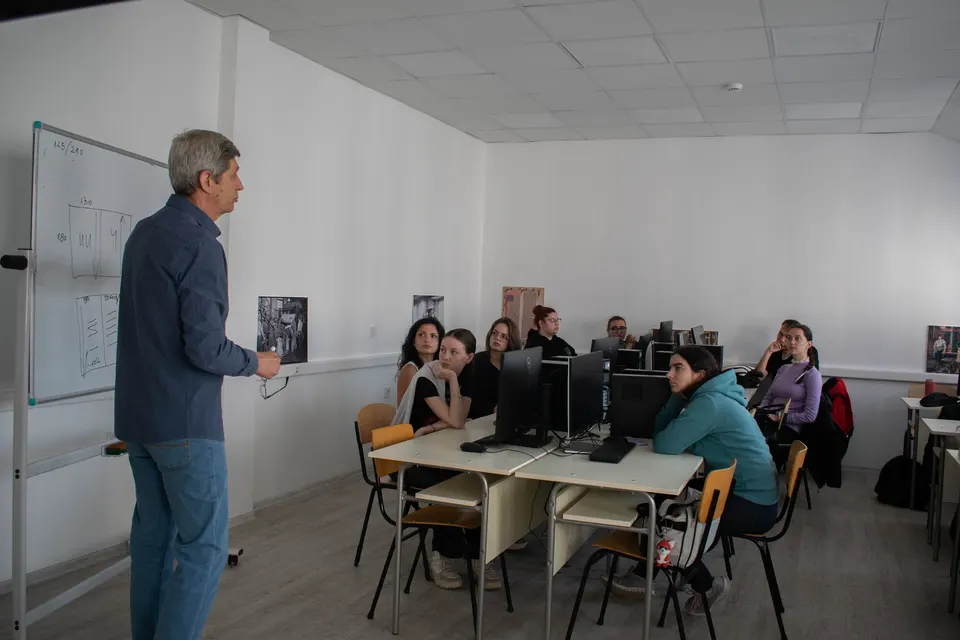
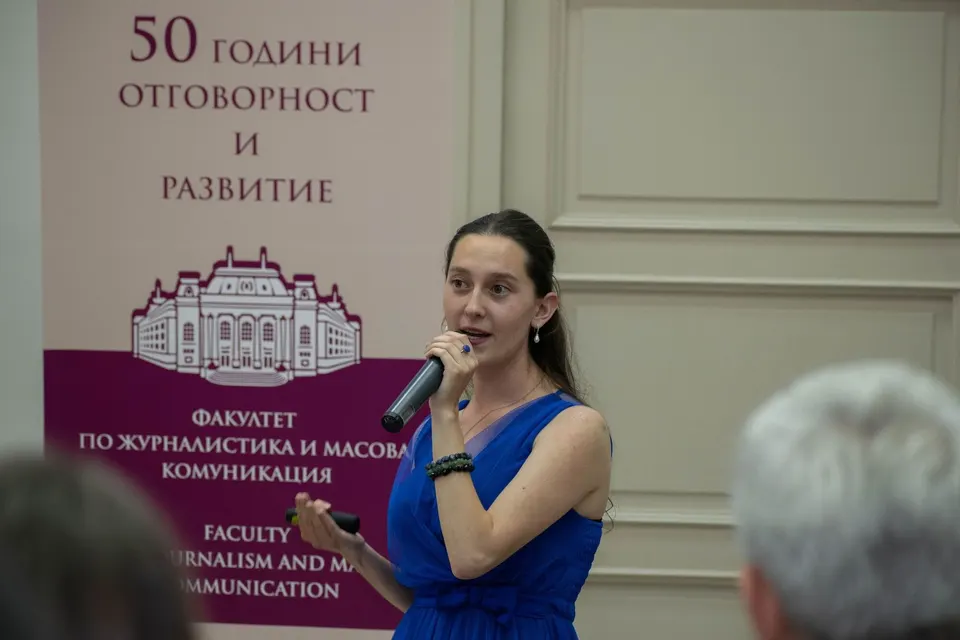
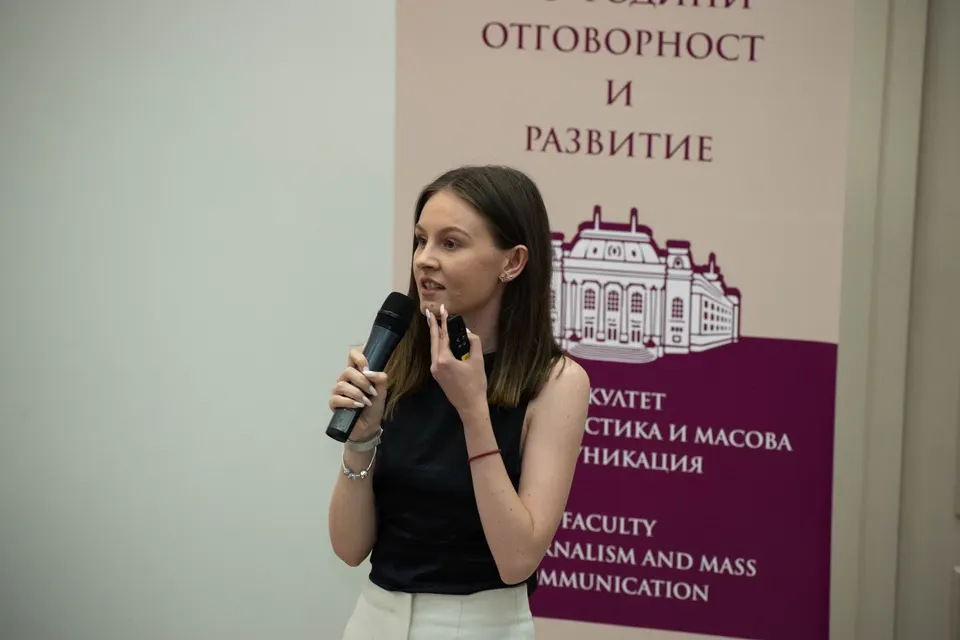
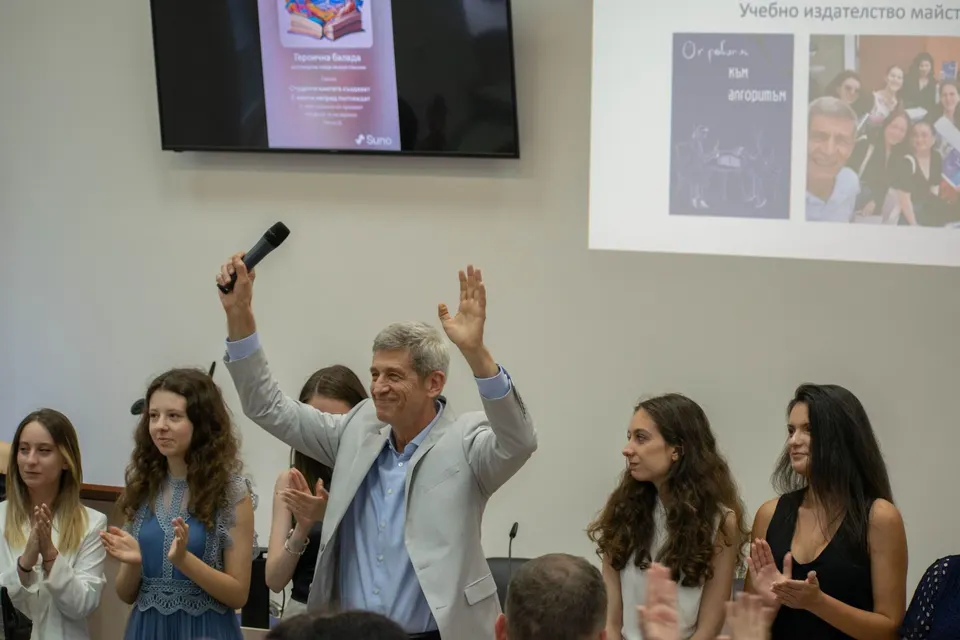
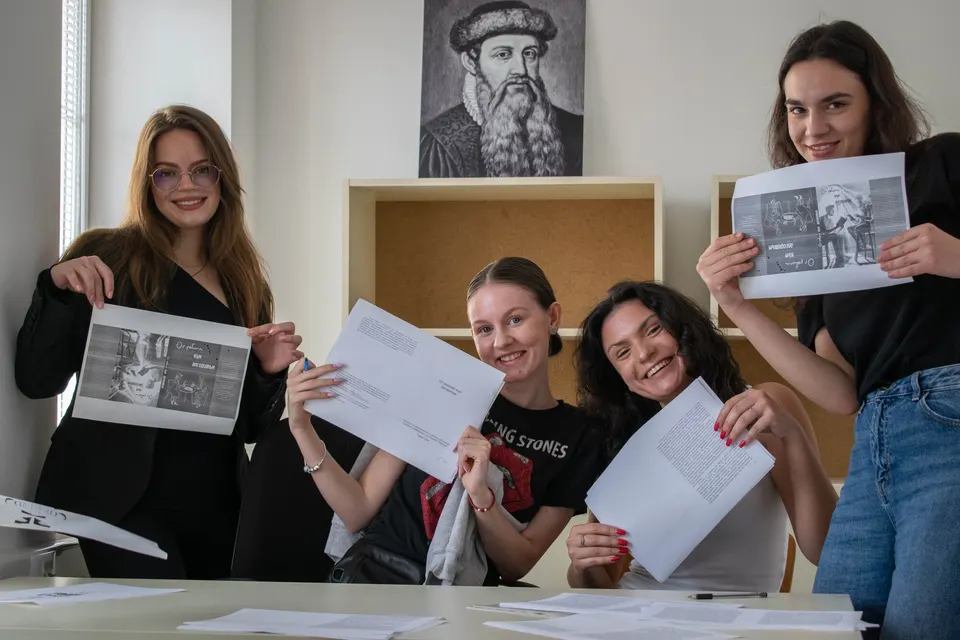
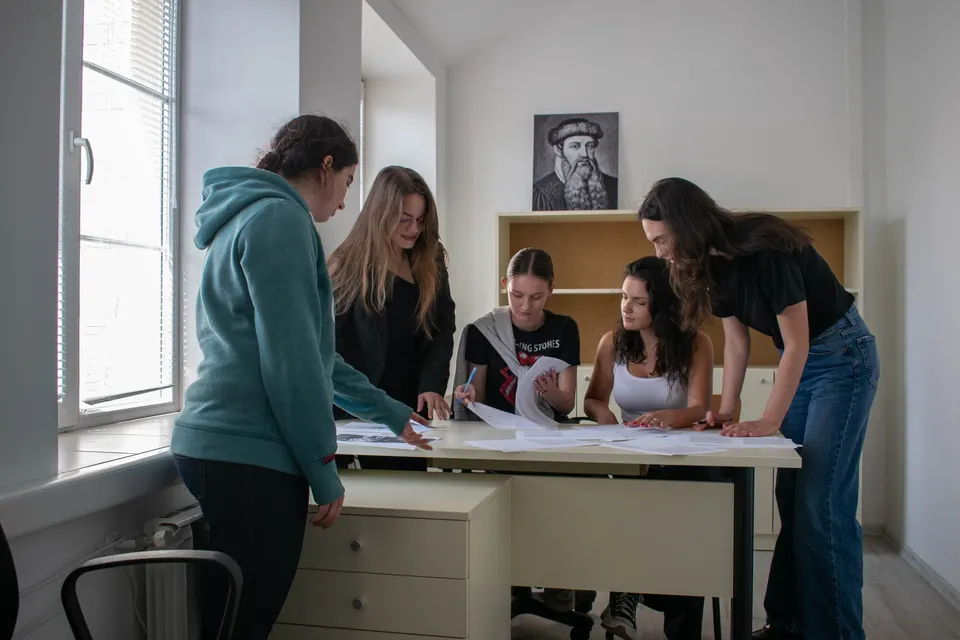
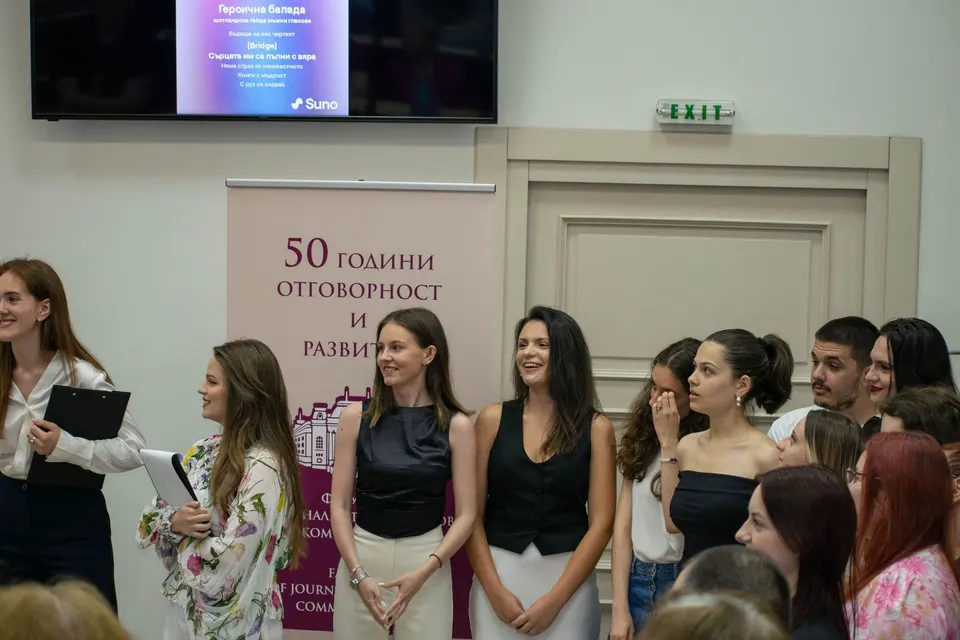
Ot rakopis do algoritam (From Manuscript to Algorithm) is the name of a book published a few months ago that brings together important perspectives on artificial intelligence (including, believe it or not, that of AI itself). It was created as a student project in the master class of the Book Publishing program at Sofia University. Led by their lecturer Dr. Georgi Aleksandrov, my guests today produced a finished edition, going through every step of its making. The book was then presented at an event at the Faculty of Journalism, where I had the great honor of saying a few words as a guest chosen by the students themselves. That is where our conversation about the important topics of our day began. And here is how it continues, in a blitz conversation with many voices…
Why do these young people imagine that more and more people will soon be reading books? What future do they see in our relationship with technology? Why is it important to remember that this future is in our own hands, and that it is not artificial intelligence but we ourselves who may create the greatest problems for our civilization? This conversation certainly gave me plenty to think about…
– Can someone chatting with ChatGPT today fail to realize that there is no human on the other side? What would give it away?
– You can tell it's not human. However good it is, ChatGPT still makes small mistakes that strip away the human touch and make what it produces look unnatural.
For now the difference is easy to spot in a longer conversation. In our book you can see an example in the interview we did with ChatGPT. It contradicts itself, cites unreliable sources as its own answers, and makes unusual spelling mistakes.
I think ChatGPT definitely has the ability to write like a human. We would “catch” it only if we were very careful and had worked with it long enough to recognize its “style” or the mistakes it tends to make.

– Can we tell what a human made from what was generated today? In which areas is it easiest to tell, and in which can we no longer tell?
– In processes that don't require creativity, it's harder to figure out what was generated.
It's most noticeable in creative work. While we were making the book, we ran an experiment, which was also shown at the launch, and the first time we tried it we struggled. It's definitely harder to tell what was generated by AI in images, if you're not familiar with it.
For me, writing is where generative artificial intelligence can surprise us the most—in our book, for instance, it proved to be a not-bad author. In image generation it's much more recognizable and makes many more mistakes.
– What is the most important thing we should teach the next generations of artificial intelligence?
– Not to let AI take the initiative, and to rely on their own minds. To use AI to create better things, not to make life easier and avoid putting in the effort.
– Which technological breakthroughs can you not wait to see?
– Maybe flying cars. But at this point we feel that, as Gen Z, we're ready to welcome every new technology. Teleportation devices, flying, levitating bicycles or boards…
– What will the world look like once we have achieved artificial general intelligence that surpasses humans?
– For now we can't picture it, because we believe that
as it develops, we'll be able to build a positive relationship with it
and use it as an assistant in all sorts of everyday tasks.
Honestly, I don't want to picture it. Even in the best case, human imagination and creativity will simply wither away.
– What will we do with all that free time?
– From my own observations,
when people have nothing to do, they create problems for themselves.
I imagine the development of AI as the industrial revolution of the 21st century. People once worried that machines would take their jobs, and in reality new professions were created.
We'll consume its media products, we'll trust it with everything.
But artificial intelligence can't do everything for us. We need to think for ourselves and keep developing, otherwise we'll turn back into the primates we were 20 to 30 million years ago.
– What new professions do you imagine will appear?
– IT and engineering positions focused on the products of the future, such as autonomous cars and robots. Broadly speaking, jobs tied to the Internet of Things, cybersecurity, and the development and maintenance of systems that use AI. It's also possible we'll see teachers and instructors who train robots and AI systems instead of people.
– Who can rest assured they won't be left without work in the age of advanced artificial intelligence?
– Professions that demand intellectual work—engineers, teachers. Also those that carry a high level of responsibility—directors, doctors, lawyers. Artists and people in creative professions, because AI imitates but has no way of conveying feelings. And professions linked to AI and new technologies.
– What is the most impressive skill of artificial intelligence right now?
– The speed at which it gives answers and solutions to particular problems. In some cases what it generates is better than what a human creates.
Its ability to write with emotion.
– Might we be overestimating what today's technology can do? To some, ChatGPT is just an expensive, poorly trained parrot…
– The algorithms it uses give AI a certain autonomy and the ability to teach itself, which lets it keep getting better without any help from humans. So I think that even if we overestimate its current state,
our vision of its potential is definitely realistic.
To some extent we overestimate its “creativity,” since it draws information and ideas from material created by people. Then again, we humans also seem to draw inspiration from one another…
– What turned out to be the hardest step in preparing a book?
– Looking at the book through someone else's eyes, so you can create a product that is more successful, interesting and valuable to readers.
Sometimes the cover design can turn out to be the hardest step; we ran into this problem ourselves before we landed on the right design. But when preparing a book, any step can turn out to be the hardest, depending on its specifics and its audience.
The hardest part was meeting deadlines. We're a group of different people with different habits, and getting in sync was one of the challenges. Still, I think we managed to understand each other, and instead of “crashing” into our differences, we learned to help one another.
– Tell us an interesting fact or aspect of AI that you didn't know before you started working on the book
– AI doesn't give reliable sources when you ask for them.
– And some curious abilities you didn't suspect AI had?
– When I insult it, it doesn't take offense.
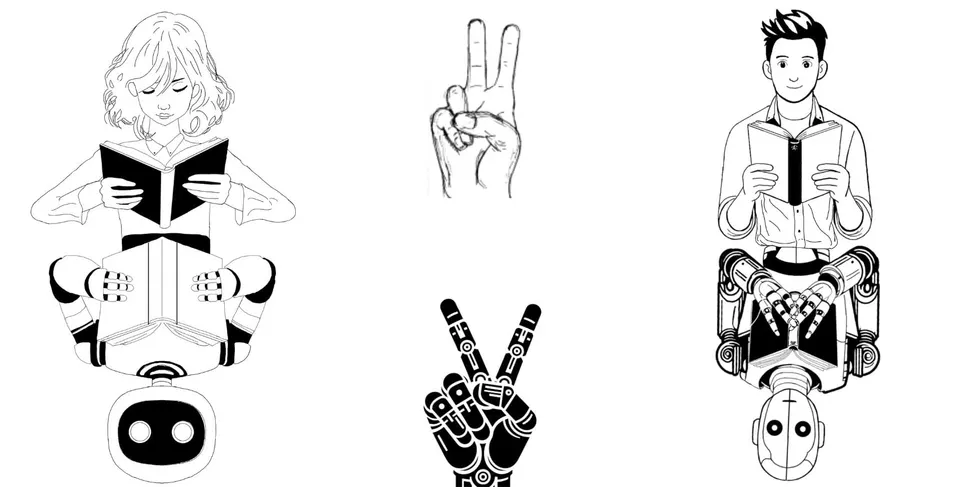
Generating covers—although it also came up with some pretty funny proposals, like giving us humans robot bodies with human heads.
– Which of the guests in the book surprised you most with their opinion, and how?
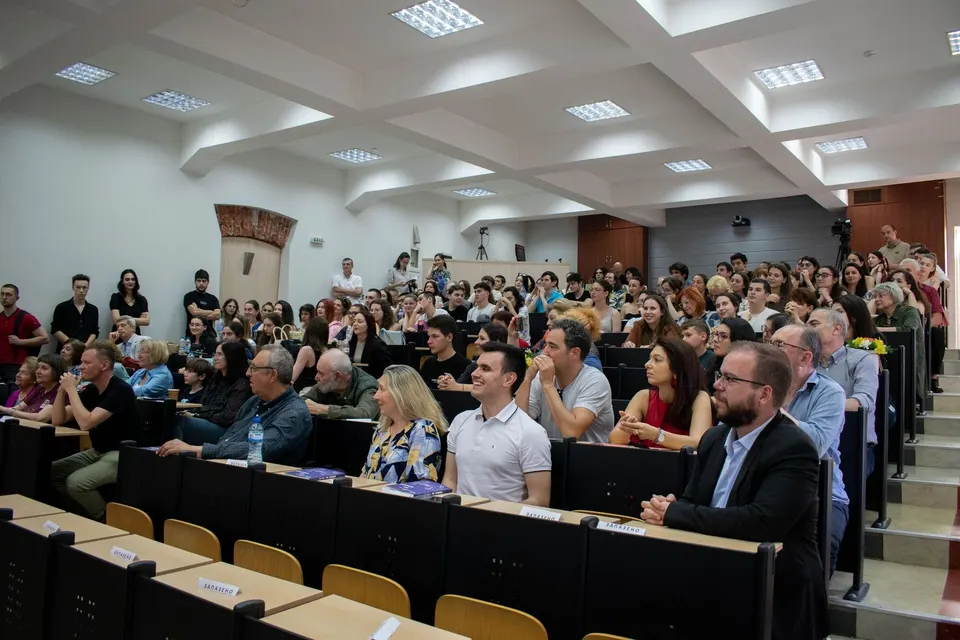
– Every guest's opinion was valuable to us. Quite a few of our lecturers told us they were surprised we had managed to fill the hall for the launch. Some previous launches hadn't drawn nearly as many people. But every opinion showed us that the hard work we put in as a team paid off with plenty of smiles and valuable knowledge about our profession, book publishing, and about our conversation partner, AI.
– What are the most widespread and mistaken stereotypes about artificial intelligence?
– Perhaps that
its potential is so great that at some point it will become more powerful than humans. In fact, that depends entirely on us.
We decide whether or not to let it dominate us.
There's definitely also the stereotype that artificial intelligence will conquer us and leave us with our “hands tied.” I believe that if a person is aware enough, there's no way a program can leave them helpless. The arrival of AI simply reflects how far technology has come, and in my view it should push people to improve themselves twice as hard and to use it as their assistant.
– Do we, as a society, talk enough about the challenges that technological progress throws at us?
– In my opinion, at times we even talk about it more than we need to, but perhaps we tend to fall for propaganda theories instead of relying on scientific data.
I think it's important to talk about technological progress, but not in a way that frightens society—rather by showing that if we know how to use technology as an assistant, we can make our everyday lives easier.
– Which important questions do we most often overlook?
– There seems to be more talk about how AI will replace us, when in fact the point of its arrival is to make the world a better place.
What we most often forget is that
artificial intelligence was created to help us, not to replace us.
It's important to discuss this question more often.
We ask it about everything except how the algorithm works—how it develops, where it learns from, and how it finds all that information. We have no idea what the answers we get are based on. Whose are they?
– What is the most dangerous thing AI could do to people?
– I don't think AI can do anything bad to us, because it is our creation. We can create problems all by ourselves. The most dangerous thing, in my opinion, would be to hand our responsibilities over to it.
– Do you believe a terrifying algorithm could appear and take over?
– No, I don't believe one will appear. It's important to understand that technologies are our creation, and we have the choice whether to give them more “power” or to use them wisely.
– Why did you decide to invite me, of all people, to the launch? What does Digital Stories have that interests you and that you can't find elsewhere?
– When we were choosing guests, we all agreed that our guest shouldn't be one of our lecturers or one of the experts interviewed in the book. So when we came across Digital Stories and learned more about you, we were unanimous that you would be a great guest for our presentation.
What impressed us about Digital Stories was the meaning behind the project, and of course, as future publishers, the fact that you've also written a book. But the mission of your project really impressed us, and that was the other reason we chose you.
– What kind of digital stories would you like to read?
– Ones about books and AI, and all the stories about future technologies, from experts and from you.
– Expect a rather interesting series about books soon. The IT leaders of Bulgaria will share their book recommendations… What will the social networks of the next generations look like?
– A closed new world that promotes certain ideas,
one lacking development and progress, replaced by a kind of cyclicality and similar content in different forms.
But social networks could also look quite different. They might become a much friendlier place, where people don't hate on each other so much and don't compare themselves with others. Where they use social networks for growth, because they can be used that way. And AI will certainly be part of the future algorithms of social networks, with some quite interesting features for how we communicate there and for the content we consume.
– Will people read more or less in the near future?
– In my opinion, more people will read.
Being buried in useless, easily digestible information online will make them start looking for something deeper and more meaningful.
The new professions require a higher level of awareness and knowledge, which means more time for reading and learning.
More people will definitely read. Interest in books grows with every passing year, and we, as future publishers, will share the mission of helping that interest grow.
We believe books will always be here.
In Bulgaria there are countless statistics—one of them tracks whether society reads. The data is a little sad: about 40 percent haven't read a book in the past year, and about 10 percent say there's no point in reading. But that doesn't mean readers are going extinct. There will always be people who love books and what books give them. I think there's hope that in the coming years the number of readers will grow, simply because more and more is being published, on the most diverse subjects.
We're seeing a trend of reading becoming fashionable again.
Readers are carving out their own corners on social media—BookTok, Bookstagram. That's where current bestsellers get discussed and ideas for future ones are born. Judging by that, we can say for sure that people will read more. What they'll read remains a mystery. Whether TikTok reads will keep topping the charts, or we'll see the rise of a genre other than fantasy or romance, we don't know. But whatever kind of content we're talking about, reading will keep spreading.
– What sets readers apart from non-readers?
– The information they have access to. The information in books is endless, and as the saying goes, “For every problem, there's a book written about it.” Books help us reach different points of view that are useful for our own growth. Non-readers, meanwhile, stay in one place and never leave their comfort zone. They don't grow…
The desire to grow. Even ChatGPT can confirm that.
I'll never understand why people don't read, let alone why some are against those who do. In my view, a person who doesn't read simply hasn't found their book yet.
And this pleasure—reading—has so many upsides!
A richer vocabulary, correct writing, better expression, a more developed imagination… So read, people! You have nothing to lose and everything to gain.
– What will happen when the algorithm learns to write better texts than humans?
– We'll read it, if it really has something to tell us.
We'll see. But it may start writing the same texts over and over.
We'll have to learn to write better programs.
– Which role in book publishing will be the first to be fully delegated to AI?
– From my own observations, page layout involves a large amount of routine work and could be taken over by AI to some extent.
I also notice that for the most widely spoken languages, a large number of proofreading programs already exist and are in use.
It could be digital marketing. AI has already entered that field. But it could also help with designing covers, as well as with printing.
– And which one never will be?
– Perhaps editing and proofreading.
– What is the most important role of a publisher today, in these dynamic technological times?
– To make people think, not just absorb flat ideas.
To create books that will still be read 100 years from now.
For me, the most important ability a publisher can have is adaptability. The dynamic times we live in should only be an incentive for growth for everyone in this field. There is innovation now, there was innovation 30 years ago, and there will keep being innovation. It's precisely the publishers who adapt and see the new opportunity in everything who will cope with an ever-changing world.
In my view, the publisher's role is to adapt technology to their advantage without harming the reader. That's only possible through transparency about the content on offer. Wherever artificial intelligence was involved, let it be labeled.
The book has been threatened many times in its history, but never replaced.
Even if artificial intelligence becomes the most published author, readers raised on the classics would never allow AI to establish itself as the only author.
– Are there books that, in your view, predict with great accuracy the direction technology is taking us?
– There are. The ones focused on technology. But also science fiction, because it has written about advanced technologies since time immemorial.
– And books that ask the most important questions we need to answer today?
– All nonfiction books—the personal development kind.
– How do we get our attention back, so we can once again read long texts with focus?
– Maybe once we see the benefits of reading, we'll be more motivated to win back our attention.
It's important to set aside time often and build a habit while reading something interesting. It helps to be surrounded by people who already do it.
With more reading and less scrolling.
Reading is, above all, a habit.
Since childhood we hear that we should read, but nobody tells us why or what.
Most of the times we fail to hold our attention on a long text, it's because we approach it as an obligation, a leftover from summer vacations and endless reading lists. The first step in returning to reading is to figure out our personal motivation. Do we read for fun, to learn something new, or simply because our inner voice tells us we “should”?
Depending on our mindset, we choose what matches our needs and mood at the moment. Then comes the battle for attention between the phone and the book. In such cases, if you too are chronically online, the most effective thing is to put the source of distraction far away, say in the next room. It's also important to build the habit—set aside 30 minutes of your day for a week, purely for reading, no matter how many pages you get through.
– What do we lose if we don't?
– Our minds. Our thoughts. Ourselves.
We lose the chance to make the best use of our brain's potential, so that our lives become better and more meaningful.
– Could reading become a mass fashion?
– As a rule, mass fashions don't demand much in terms of culture or intellectual capacity in order to catch on. Reading may well become a mass fashion, but the question is whether what it offers will be of quality.
– What will the last manuscript written by a human look like?
– Just like one written today. I don't think human writing will disappear.
I don't think the human ability to write manuscripts will disappear. It will look the way it does now.
– What do you dream of?
– Having more time to read books by human authors, and more people to talk with about the ideas behind those texts
Perhaps our shared dream is to become good at book publishing and to help our future readers develop a passion for reading.
The answers are by:
Maria Sokolova, Viktoria Sotirova, Martina Cholakova, Yana Tomova, Lyudmila Kioroglo, Yoanna Petkova, Radoslav Bonev