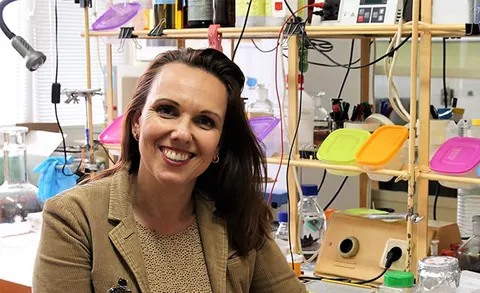
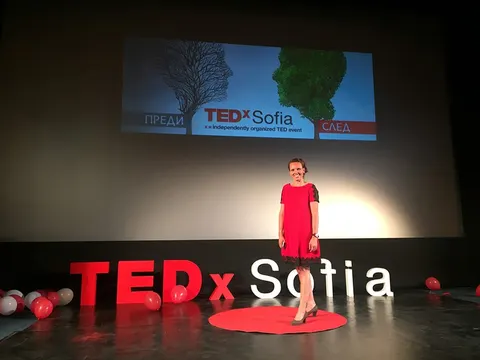
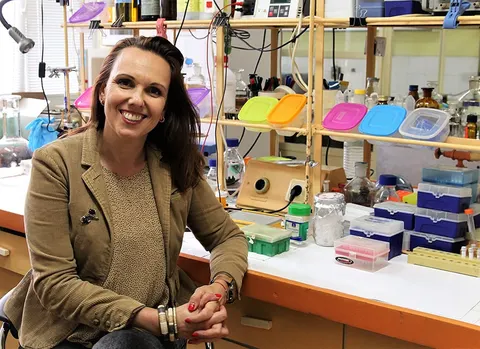
Assoc. Prof. Milena Georgieva is a molecular biologist at the Bulgarian Academy of Sciences (BAS). She is not only a proven expert in her field but also something far rarer and more precious: a scientist who can present scientific subjects vividly, engagingly, accessibly and, at the same time, competently.
Her research covers molecular biology, the biology of aging, genetics and epigenetics. She has authored more than 100 scientific publications and lectures at international scientific forums and conferences.
Will science soon let us live much longer? Is immortality possible? Could computers be the next step in evolution? And how do we win back trust in science?
– Not long ago I wrote about the projects that promise us immortality, or at least a drastic extension of human life. You wrote that the piece was “a critical, slightly playful and very wise look at a future that heralds biological, technological and/or digital immortality.” Can people really… be immortal?
– As a biologist, I know that from an evolutionary point of view there are almost no immortal organisms. There are some that live a very long time—whales reaching 300 or 400 years, microorganisms 400 or 500. But these are all organisms living under strictly controlled conditions. It is normal for them to maintain a relatively stable physiology.
We live in the most varied environments, exposed to all kinds of influences, such as ultraviolet radiation and many other factors that damage the DNA molecule and alter our epigenetics.
I believe that right now
we have all the potential to deal with the diseases associated with aging.
All the knowledge is there. And we can apply therapies to improve people’s condition, to postpone neurodegenerative or cardiovascular diseases.
But whether this will lead to immortality… I’m rather skeptical. Purely in evolutionary terms, nature somehow maintains a balance: we mature as organisms, we produce offspring, we reproduce, and then the natural process of chronological decline begins. Scientifically, too, we are still very far off. But there are people, such as Aubrey de Grey, who claim that the first immortal humans have already been born on this planet. In my view, these are more like media tricks to attract investors’ attention.
– And do you think a serious extension of lifespan is possible?
– This great race to make people immortal has been going on for a long time. In 2000 the human genome was sequenced, and the genes that make us who we are became known. Around then, data also accumulated showing that genetics is not destiny; rather, environmental factors are—the way we eat, physical activity, stress. Even how we interact with others: all of this affects the body’s physiology, and does so at the level of DNA.
That’s when a big race began over how to extend human life. It is clearly possible. History shows it: if we look back, people lived to 40, 50, 60. Today we have regions with an average lifespan of 90, such as Okinawa in Japan and some Mediterranean islands. Which leads us to think that lifestyle factors can definitely influence and postpone aging, provided the body doesn’t start out with some mutation that drives it. So, logically, the possibilities of science point to serious mechanisms for controlling this process.
And you can see it in our everyday lives: we live longer, healthier lives. The main goal of scientists, the one with which this research began, was to tackle the diseases associated with aging. We invest enormous resources and effort in fighting age-related diseases—cardiovascular, neurodegenerative, cancer. At the same time,
a great deal is also invested in the battle against the process of biological aging itself, in modeling and controlling it.
– How far along is this research?
– Saccharomyces yeasts are among the pioneers in the field of the biology of aging. They are single-celled organisms, but they are very similar to our cells in all their processes, even in their genetics. It was shown that reducing calories or applying low doses of stress extends their lives quite substantially—by 15, 20, 30%.
The research continued with model animals. In them, too, the same measures led to the cells cleaning themselves out. The organism is put under the stress of low calorie intake and purges itself of harmful buildup. Then came the modeling of these processes in humans. But here it’s much harder—I’d have to clone myself to be able to follow the entire lifespan of a single person.
This research began back in the 1980s, but the sequencing of the human genome gave it a big push. It became clear that aging is the result of accumulated information errors in the DNA molecule, and not so much of mutations or damage. Epigenetics, the science that studies how our genes are expressed, became especially fashionable.
– So we already know that it isn’t mainly genes that determine longevity.
– The greatest interest in aging came from studies of large cohorts of centenarians. The idea was to sequence their genomes and find the genes that would make us centenarians. Yes, there are some mutations that make our genome more resistant to damaging environmental factors, but there is no single gene or group of genes responsible for how we age or capable of reversing the process.
That is actually great news: it means everything else consists of factors we can modulate. That’s why we started talking about personalized medicine—medicine, diets, exercise based on a person’s genetics. Personalized aging is a hot scientific topic right now. Many laboratories—not only in fundamental science but also in applied research—are working on developing such techniques.
– What is personalized aging?
– The main goal, first of all, is for a person to know their biological age, which is different from their chronological age; it isn’t determined by when you were born. When the two differ, we start looking for all the factors and systems causing it. They determine how stable the genome is against damaging environmental factors. These are the factors that make the body enter so-called autophagy from time to time, and that keep it under lower doses of stress, the so-called hormesis.
In 2013 an algorithm was developed to calculate biological age based on specific chemical modifications to the DNA molecule—changes in DNA methylation. This algorithm, called the “Horvath clock,” works on the basis of which regions of DNA, in which cells and tissues of the human body, are methylated or not. A person gives peripheral blood, the white blood cells are isolated and markers of DNA methylation are examined, which are then used for the assessment with the help of neural networks. Added to this are the most standard biochemical blood tests each of us has done every year: blood sugar, cholesterol, triglycerides, which are also quite indicative of what is happening to our body. And so we get a good estimate of each person’s biological age.
– And once we know this biological age, what comes next?
– Based on it, we look for the factors that change it. A person might, for example, try changing their diet drastically and then compare the results. They’ll get an idea of how accelerated or slowed their biological aging is, and why.
Various techniques are being developed for turning back biological age with the help of epigenetic modulators. Scientists have managed to map the epigenome of different cell types as well—they know the possible chemical modifications of DNA and what they mean for cells. They also know the factors that modulate them. These modulators can reset the epigenome. DNA can’t be changed, but the epigenome is the picture on top, those chemical modifications that constantly shift in response to the way we live, the way we eat, the way we take care of our bodies.
Personalized programs with dietary supplements are being developed, so-called geroprotectors, which are a very fashionable topic right now. The list includes various vitamins, mostly from the B group, and vitamin D. Metformin, the classic drug for treating diabetes, is also a very hot topic. It was shown that it, too, brings the body into a state of mild caloric deficit, and this slows aging. Using this drug to slow aging is in advanced clinical trials.
There are various theories about how to slow aging, one of them through specific nutrition, again prescribed on the basis of our genetics and epigenetics. In my view, the most important thing is that ever larger datasets are being collected. That is where the big news will come from.
– Because ever more powerful algorithms are coming into play, advanced artificial intelligence capable of finding the patterns, is that it?
– Exactly. Around the world, Jeff Bezos’s Altos Labs, Google’s Calico and thousands of others have made headlines. Huge sums are being invested in this kind of research, and large databases are being built.
What’s interesting about Bezos is that the team is focusing on gene editing. CRISPR/Cas9 is the main, most advanced technique for gene editing of human cells, and last year it won the Nobel Prize in Chemistry. The technique was introduced into biological practice in 2013, and it is incredible how soon it received the prize. Bezos has gathered some of the best specialists in gene editing, and they are working on restoring tissues and cells with these techniques. They will try to “reprogram” the body to a younger age.
The processes of biological aging begin the moment conception happens and the fertilized egg is formed. That is the largest stem cell, containing the genomes of the mother and the father. As it divides during embryonic development, it differentiates and specializes without changing its DNA. The Bezos team wants to run this programming back to its starting point in order to rejuvenate the body. There have been very great successes in treating congenital blindness and blindness associated with aging. Prof. David Sinclair, a well-known Harvard professor of genetics, has managed to achieve this process in mice. There is a lot of hope in this field, but also a lot of question marks. Returning a differentiated cell to a stem-cell state can also cause cancer; it has to be handled very carefully.
Extending life by one year saves countries billions, and the scale is enormous.
Both the means and the resources—scientific and financial—are dizzying. I follow these trends and
I deeply believe this is a brighter future for humanity.
Because, as we saw, COVID hit older people harder due to the fact that their immune system has also aged biologically. That is the main reason for the severe course of the disease in the elderly. There are many challenges we’ll have to open up with bold steps.
– With the advance of artificial intelligence and the ideas of brain-computer interfaces, do you think it’s possible that computers might somehow turn out to be the next step in evolution?
– I think rather that
technology can support biological evolution.
Our conditions are changing drastically; we live in a very different world, and this doesn’t allow our bodies to catch up quickly. Because we are the result of millions of years of evolution. I think computers and AI will rather speed up the process of our adapting to rapidly changing environmental conditions. Global warming, changes in the way we eat, in how food is produced. In the way we follow diets, in stress. Our perception of the digital world is changing, metaverses are coming—things for which our bodies and our nervous systems are not ready. I think artificial intelligence will actually have to help us in this area. But I don’t believe it will become another crown of evolution, of living nature.
Let’s not forget that this is something we create, something we train with the data we feed it. Neural networks wouldn’t exist if there were no data for them to process. And whenever people discuss how dangerous AI is, whether it can educate itself, whether it could lead to artificial superintelligence, they forget that this depends entirely on us. To what extent will we allow it, to what extent will we feed it data, will we demand that the algorithms be what we want them to be? In biology we still have unexplained mechanisms of neural and intellectual development, of the different kinds of intelligence. We still don’t know the biological mechanisms, let alone being able to create an AI that would in turn create higher human beings.
All in all, I see AI in a supporting role, and I’m not afraid of it in any way. At least not as a biologist.
– In recent months it has become mercilessly clear that many Bulgarians couldn’t care less about science. How can we win back trust?
– I think we’ve actually already won it back to some extent. All these groups for and against vaccines, what COVID is, whether it exists, where it comes from. I see that people are seriously lost, and their problem is not so much distrust of science. It is the pile-up of fake news that floods us constantly, and the algorithms that amplify it—that’s the scariest part. I often talk with skeptical people; I very often give advice, but only to those who ask me for it. I simply say what I do, what I know, what I believe, what lies behind this science. And I see that these people are willing to listen and understand. Very often they reply: “Why don’t people like you talk about COVID?”
Instead, they listen to certain professors who use the platform to promote themselves rather than science. Most of them are my friends, but I’m quite disappointed by their behavior.
Being a scientist means being highly responsible toward the science you communicate.
Every time I go out to speak to the media, I do it knowing that I must be prepared with solid knowledge. Not just accumulate it, but analyze and synthesize it, so I can present it in the best possible way. It really is a serious effort. Unfortunately, very few of the colleagues who communicate about vaccines, drugs and antivirals during this pandemic put in that kind of effort. They clearly don’t realize that when they appear in the media, they bear the full responsibility—social, personal and scientific—before this society, and they have no right whatsoever to use the platform to show off their ego.
– And also to dabble in sciences they don’t understand.
– That annoys me too! People talk who have never been near a single COVID patient, who don’t know what COVID is. I, for example, always say I’m not an immunologist or a virologist. I understand molecular biology, the biology of aging, genetics and epigenetics. I can give my view of things, what I’ve done with my own body, how I got through the illness, what I told my daughter about vaccines. But not go out and talk like an immunologist. I’m seeing terrible trends.
I think COVID put us in a situation where we paid very serious attention to scientists and to science per se. But this was misread, by scientists themselves as well, who used it as a platform for self-promotion. We were flooded with fake news, amplified by the context. Even intelligent, well-read people without a background in biology are in checkmate and don’t know what to do.
I even get calls from friends of my daughter, who studies in the Netherlands, and they’re skeptical too. We talk on Zoom; without pressuring them, I simply answer their questions—should they worry about infertility, does the RNA from the vaccine interact with DNA.
– You have serious experience in communicating science from the days when that was quite exotic in Bulgaria.
– That’s why I think interest in science has revived. Our team has been communicating science since 2006. Back then, the attitude at the BAS toward this kind of communication was entirely skeptical; they looked down on us—we are the great scientists, and you communicate in some peasant language. Elite science shouldn’t leave the laboratory. Now suddenly it’s super fashionable,
everyone goes out to talk without realizing that communicating science requires different knowledge, a different language.
That is a scientist’s first responsibility. You have to be prepared, rigorously and fundamentally solid in what you’re saying, and in the same way—but in a different language, with different facial expressions and different gestures—communicate the science you specialize in to society.
It is precisely science that stands behind the COVID vaccines and the sequencing of the coronavirus genome. That happened with tremendous ease, whereas just 10 years ago it would have been impossible. The human genome of a few individuals took 20 years to sequence, and now, for the COVID genome, two months were enough. Today a complete human genome can be sequenced for €100 to €1,000, compared with 9 billion many years ago.
Society has to understand very deeply that without science there is no future. Just as there is none without education or without healthcare. These are the three foundations of human civilization.