For the first time in 54 years, humans reached the Moon and even flew around it, notching up a string of unprecedented achievements. The huge news slipped past in a feed full of problems and the outrage of the day, when it is precisely this news that deserves to be in focus.
It is time to get our interest in the cosmos back. Because of the new technologies we can explore it with, because of the opportunities it gives us. And because of our debt to the human spirit, which is called to always look for the next page.
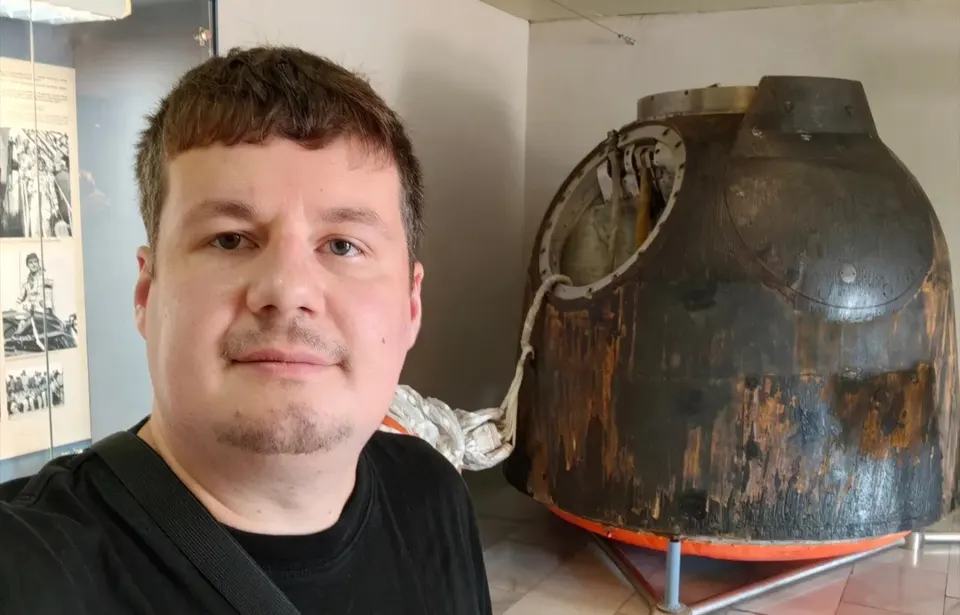
Svetoslav Aleksandrov is a molecular biologist and the creator of the site KOSMOS BG. It is a very important corner of the Bulgarian web, where for 20 years now he has been writing, with persistence, knowledge and depth, about our exploration of the Universe. We climb aboard the rocket to talk about all the big topics connected with the future of people, technology and space.
What is humanity's next great goal in space?
– Not long ago I ran a survey about children and technology and asked parents what they want their children to be when they grow up. I barely came across “cosmonaut” or “astronaut” among the answers, while when I was a child it would have dominated. Why do you think we ended up here?
– You know, I've wondered about that more than once myself: every single launch of a rocket carrying a satellite or astronauts has always struck me as a majestic sight! But I think Artemis II gave us a partial answer to that question. After the mission returned to Earth, there were people from science and technology who said:
“I didn't realize how important this mission was to me until I saw it become reality.”
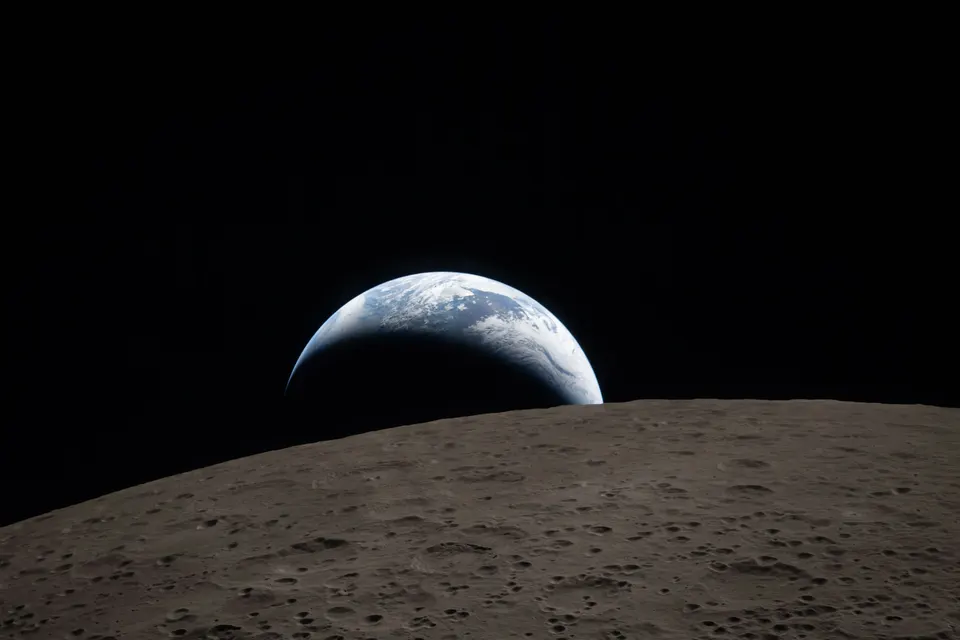
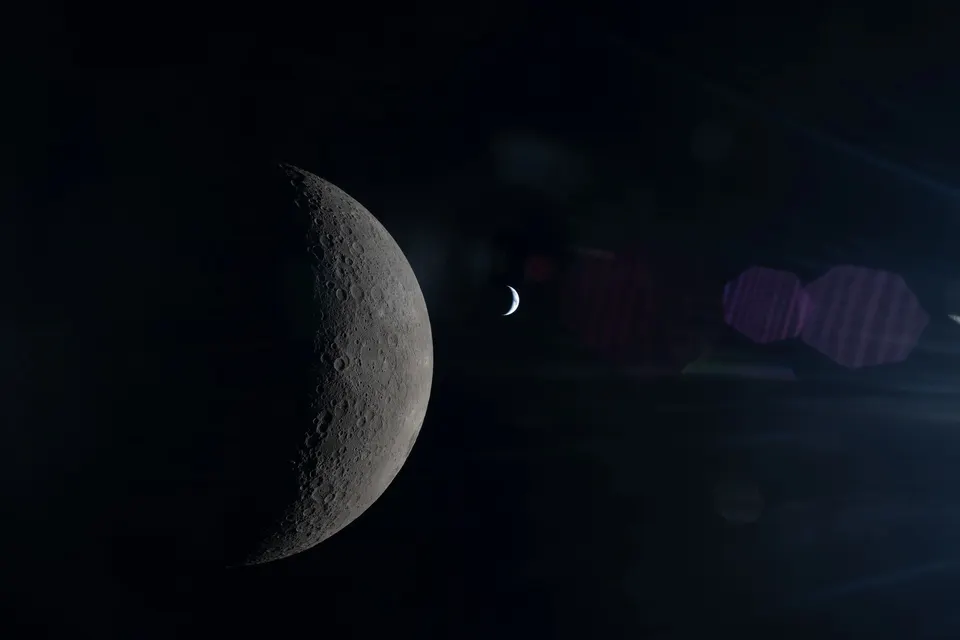
I understand perfectly what they meant, because I felt it too: watching astronauts take off for the Moon, watching the Earth recede and shrink in their window and the Moon grow larger—that was something completely unknown to our generation!
Artemis II showed us what was lost after December 1972, when the Apollo 17 mission flew. Imagine it: children in the '50s and '60s read science fiction, they read about robots, about flights to other planets. Then, in December 1972, human flights into deep space come to an end, spaceflight shrinks back to low Earth orbit, and over the next half century, true, we have some majestic achievements—for example, building the International Space Station, the size of a football field, and establishing a permanent human presence in space.
That doesn't change the fact that
we entered the 21st century with a world that looks far more like the world of the Flintstones than that of the Jetsons.
Under those circumstances a collective disappointment was inevitable. And so being an astronaut is no longer as attractive as it used to be.
But now that crewed expeditions into deep space are resuming, now that we have artificial intelligence and humanoid robots are probably coming soon—for real this time!—the 21st century is finally starting to look the way it should.
– I hope that's really true, but… it seems a large part of society never even found out about the success of the crewed lunar mission. Why?
– In 1968, when Frank Borman, Jim Lovell and Bill Anders, the crew of Apollo 8, read passages from the Book of Genesis on Christmas Eve, it happened in front of billions of viewers. But back then the mass media were far more limited than today. There was television, radio and newspapers. That's it. In today's world of the internet and social networks, public attention is badly fragmented. There are countless places where a person can get informed—quite apart from the fact that a huge share of those channels spew disinformation, and artificial intelligence only amplifies that.
Still, let's not forget that, in spite of everything, Artemis II attracted considerable interest. As the most recognizable space popularizer in the country, my problem was a different one—I couldn't be everywhere at once. I was invited to comment in many places, and I had to turn some down—not that I didn't want to, but with work, a family and two children, it was physically impossible to be everywhere. Even this interview of ours we had planned several months ago—and we're only doing it now.
– True, but… in my view, news like this deserves much more discussion and a return to the center of public conversation. The fact is that the sciences exploring the Universe aren't there today. Do they gain or lose from that?
– I don't agree that they don't make it into the center of public conversation—after all, I've been actively popularizing spaceflight for two decades. Back then, 20 years ago, the situation really was depressing—there was none of the private momentum we see today. But
I have witnessed space coming back into public view,
first, thanks to private players like Elon Musk and Jeff Bezos, and second, thanks to a new generation of science fiction in novels and films—Andy Weir's The Martian (and now there's a lot of talk about Project Hail Mary too), and Ronald D. Moore's series For All Mankind. Broad public interest, naturally, isn't constant, but it always flares up when something interesting happens—say, Perseverance landing on Mars in 2021, or the Artemis II flight to the Moon.
But I agree that there are never enough people to do the work. My field is citizen science—I'm a discoverer of asteroids, supernovae, brown dwarfs, binary star systems. Even there, in the various projects where we make discoveries, there is always a need for new volunteers to join in! The field is open—
today it is much easier to make discoveries than it ever was before,
but it still takes the will to put in hard work.
– How do you explain the fact that aliens have lost their “halo” as the public's favorite thing to fear, now that we have artificial intelligence?
– Aliens are perceived as something distant and abstract, compared with real threats like pandemics or wars, for example, which are very close to us.
Artificial intelligence also adds a serious element of uncertainty about jobs—and right now, at that. But modern astrobiology (which, by the way, has recently started developing actively in Bulgaria—we have a master's program at Sofia University!) is looking for an answer to the question of whether we are alone in the Universe—and doing it in an academic way that is radically different from the picture lodged in the public mind of flying saucers or little green men.
The truth is that over the last 30 years—that's how long it has been since the discovery of the first exoplanet around a main-sequence star like our Sun—we have learned an immense amount about the Universe, about planets and their conditions, so that
when we discover alien life, we'll be better prepared. And therefore less frightened.
– I keep asking and can't find an answer for myself: how is it that we sent people to the Moon, we sent Voyager with technology that looks primitive by today's standards, and yet for half a century no human foot has set down even on our own satellite, let alone another planet?
– I strongly object to the claim that the technology of the '60s and '70s was primitive. People usually look at the computing power of the Apollo guidance computer and compare it with the modern personal computers every one of us owns. That's how they fall into the trap of thinking: “Oh, that computer is complete junk next to my phone, I can't imagine how they got to the Moon.” But let's look at its specs—a 1 MHz clock, 4 KB of RAM, 72 KB of ROM. Computers with specs like that only reached people's homes in 1977—I'm talking about the Commodore PET and Apple. In other words, the Apollo guidance computer was almost a decade ahead of its time.
Besides, it was perfectly adequate for the tasks involved in navigating the Apollo spacecraft.
By the way, the paradox is that while that computer was once ahead of home technology, today it's the exact opposite—
modern space computers are often modest compared with consumer ones.
The computer on NASA's newest Mars rover, Perseverance, which landed in 2021, has a single-core 200 MHz processor, 256 MB of RAM and 2 GB of flash memory. From the point of view of today's user, that is hopelessly outdated technology. But its job isn't to run heavy programs—only the strictly specialized software needed to get around on Mars.
The reason it took 53 years to resume our flights to the Moon has nothing to do with better microelectronics or computer technology—it's because
only now, half a century later, do we once again have super-heavy rockets for crewed missions in the class of the Saturn V.
Rockets like that have rarely been built and can be counted on one hand—in the past there were the Saturn V, the N1 and Energia. Only very recently have we gotten new super-heavy rockets like Falcon Heavy, the Space Launch System (the rocket that carried Artemis II), Starship and New Glenn.
The problem was that in the past the existence of such rockets couldn't be justified—fine, they can be used to send people to the Moon, but for what else of practical use? Spy satellites, geostationary communications satellites and robotic space missions could all be launched without trouble on more modest rockets. Now, though, that may be changing—there will be a market for super-heavy rockets thanks to megaconstellations, and above all those meant to build orbital data centers.
– You mentioned the positive role of private space ventures. Many of the big tech leaders of recent years—Musk, Bezos, Richard Branson—are tied to space. How do you see this race? Do you think they contribute seriously to progress in space exploration, or do they rather harm national programs?
– They're useful—and we can say that categorically, because
before these billionaires came along, the United States faced the possibility of being left without any significant launch vehicles at all.
In 2011 the Space Shuttle was retired, and NASA had no way of sending astronauts to the ISS except as passengers on Russian Soyuz spacecraft. For satellite launches and interplanetary missions there were expensive rockets like the Delta IV, as well as the famous Atlas V with its Russian RD-180 engines. After 2014, when Russia annexed Crimea, the Americans had to stop buying RD-180s for their Atlases.
The truth is that if SpaceX hadn't created the Falcon 9, the Western world would have been in very bad shape. And recently Blue Origin's New Glenn rocket has entered service too.
– Why do all these people, joined by political leaders, turn out to be so generous with promises and so much less so with results? SpaceX's rockets are undoubtedly a phenomenon and a big step, but if we believe Musk, we should have sent people to Mars long ago, with him among them…
– It's true that among the billionaires, Elon Musk has succeeded the most with SpaceX, while the others have disappointed us. Yes, not all the billionaires succeeded—and there are logical reasons for that; few of them realized what the risks of the space business were.
Richard Branson turned out to be the most naive: he expected to take ready-made technology—air launch from the belly of a plane, demonstrated by the first private crewed spacecraft, SpaceShipOne, in 2004—and immediately start making money. And although he created orbital rockets (LauncherOne) and crewed tourist spacecraft (SpaceShipTwo) that were technologically successful, his orbital rocket company went bankrupt and the tourism one is on the verge of it—the numbers didn't add up.
Technological success doesn't guarantee market success.
Also, to succeed you have to surround yourself with good people—and that was precisely Jeff Bezos's mistake. For a long time his company, Blue Origin, couldn't build its rockets and spacecraft on schedule, because it was run by CEO Bob Smith—a man who came from the old aerospace industry, with all its bureaucracy and inefficiency. But recently Smith was replaced by Dave Limp—and right after that the successes began. The New Glenn rocket is already flying!
As for Elon Musk, he's the most successful of them all, and his rockets, as you said, are a phenomenon. So why hasn't he sent people to Mars yet? The truth is that even his successes come after drastic delays. In 2010 Musk expected to have the crewed Dragon spacecraft by 2012–2013, but it was only ready in 2020. Yet it's the best there is today—apart from Soyuz, only Dragon can carry crews from Earth to the ISS and back. So
Musk revolutionized crewed transport to orbit. Mars, however, is much farther away and requires a bigger ship—such as Starship.
Its development began in 2018 and it is still in testing. It's unclear when it will be finished—but if the story of Dragon's success has taught us anything, it's that it will happen later than we'd like.
– What is humanity's next great goal in space? Over the years I've been left with the impression that it remains rather vague…
– For many years it was vague, yes—because all sorts of possibilities were floated in public: flights to an asteroid, flights to the Moon, flights to Mars. It was especially visible whenever presidential administrations changed in the U.S. George W. Bush supported flights to the Moon, Obama was against them—he wanted a human to go to an asteroid first, and then on to Mars.
But things are different today—the Chinese are on the verge of sending a human to the Moon and building a permanently inhabited base there. That is exactly what turned out to be the catalyst that unleashed the new space race between the U.S. and China.
The goal is clear: the Moon. So is the task: to establish bases and a permanent human presence on our natural satellite.
The stakes are high—who will tap the Moon's resources? Who will start mining helium-3? Who will deploy a radio telescope on the far side of the Moon? Who will manufacture satellites and spacecraft on site?
The Moon is also an important intermediate step before sending humans to Mars. I think it's clear to all of us, but let me stress it once more: it's hard to dream of flights to Mars before we've mastered the Moon.
– I hope such steps really are coming; I think they'll definitely be a good sign for us as a civilization. Crewed flights certainly attract a lot of attention, and they have history behind them. But haven't we shifted toward far more uncrewed missions? Isn't that exactly why public interest faded—because we started sending probes far away instead of people? What do we gain?
– As someone who works mainly with data from uncrewed missions in my citizen science projects, I admit I'm somewhat biased toward them. I love them! We mustn't forget that even if humans visit the destinations I've already talked about—the Moon, asteroids and Mars—there are many places that will stay out of our reach for a long time. The hellish surface of Venus, or the moons of Jupiter, where the radiation is far too strong.
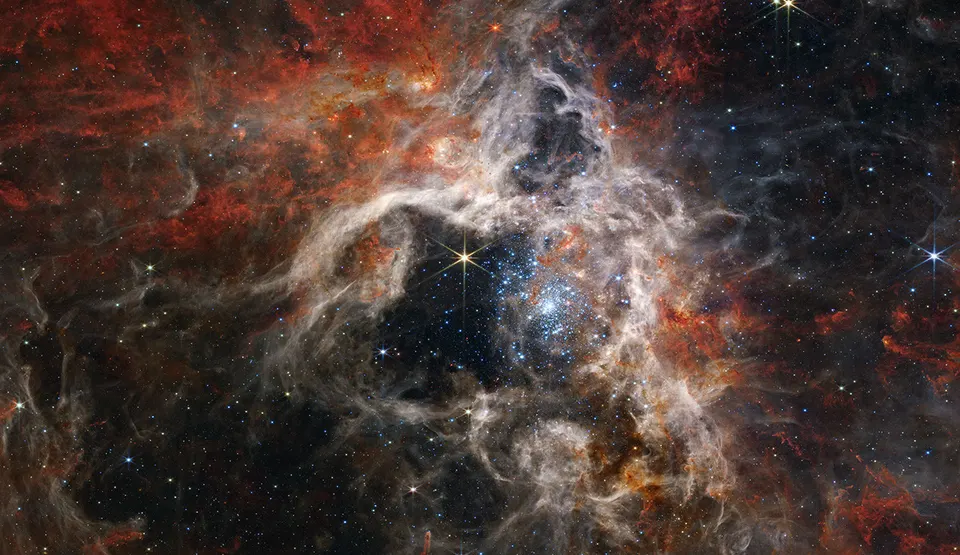
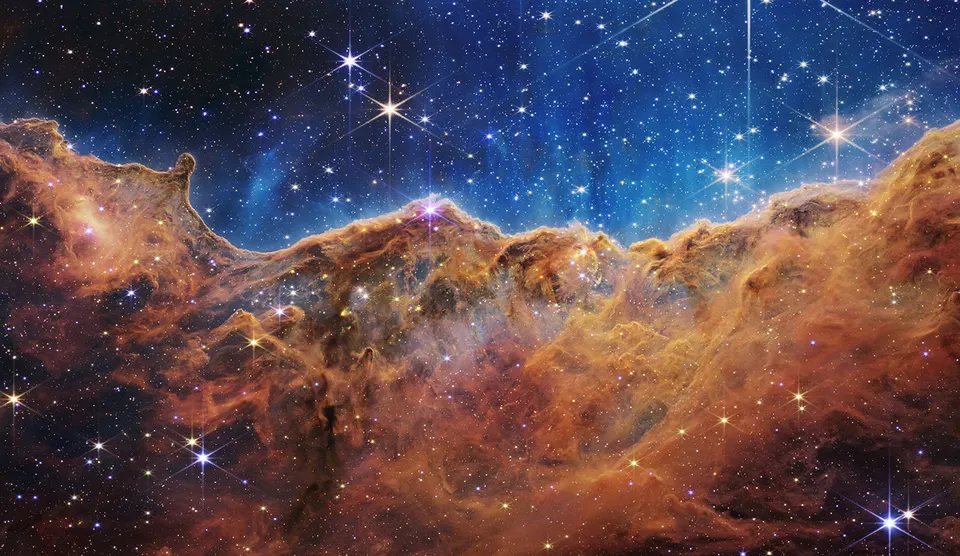
But I don't agree that uncrewed projects don't generate strong public interest. A few examples: the landings of the Mars rovers, the flight of the Ingenuity helicopter on the Red Planet, the images from the James Webb Space Telescope.
Uncrewed missions are unquestionably more numerous, and always will be, because they are cheaper and carrying them out involves smaller risks,
including business and political risks in case of failure.
To your question of what we gained, I'll answer directly: scientific data. Uncrewed spaceflight has always delivered far more data, far more discoveries, far more papers in prestigious scientific journals than crewed spaceflight. Unfortunately, the scientific contribution of the International Space Station—the main focus of modern crewed spaceflight—is rather modest.
But I think you'll agree that Artemis II brought public attention back to spaceflight in a special way. For a few days I looked at the Moon differently. I kept telling myself: “There are people flying out there.” And imagine what it will be like when we build bases. We'll be saying: “There are people living out there”! In that respect we undoubtedly lost something in the half century after Apollo, with no serious programs to settle the Moon with humans and not just robots.
– And still, I'm convinced the buzz around the mission should have been bigger and reached further. Of course, it's not too late, especially if we follow through with the next steps we talked about. Is there an alternative, in your view, to terraforming Mars as humanity's future?
– Oh, yes—that is exactly the clash between Musk and Bezos. For Musk, we have to go to Mars to save ourselves—to have a colony as a plan B in case something goes wrong on Earth, to guarantee that humanity survives. Bezos's vision is completely different—he believes there is no plan B for Earth and we must do everything we can to protect it as our unique home.
But protecting the planet can only become reality if we move heavy industry off it, into space and onto the Moon. It will be interesting to see how these two visions clash in the future—and whether they might just end up intertwined.
– Apart from Artemis II, what have been the most important breakthroughs in this field in recent years that never reached most of the public?
– I'd single out three main breakthroughs that excite me personally. The first is the arrival of rockets with reusable first stages—so far that means Falcon 9 and, recently, New Glenn. It makes launches possible every day or every other day.
The second is the rise of microsatellites, standards like CubeSat—these allow ordinary companies, not just space agencies with billion-dollar budgets, to run their own missions.
The third is in space astronomy and astrophysics—thanks to new space telescopes we're learning more and more about the nature and conditions of exoplanets, a brand-new field, since the first planet around another star was discovered only some thirty years ago.
It turned out that most exoplanets look like none of the planets
in the Solar System—they're intermediate in size between the Earth (the largest rocky planet) and Neptune (the smallest gas giant). And although we can determine their orbits, sizes or masses, we know practically nothing, almost nothing, about the conditions on their surfaces. These are an entirely new type of planet, which we label with terms like “super-Earths” or “mini-Neptunes.”
But what is on them, whether they could be habitable—we don't know!
– And what's the big story you can't wait to cover on your site?
– I've already covered it—Artemis II. For me the most long-awaited event was getting to cover a crewed spaceflight beyond Earth orbit. I didn't care what kind of flight exactly—what I cared about was
humanity finally beginning to break away from low Earth orbit,
where we'd been circling endlessly for the past half century. I wanted something different from flights to stations or free laps around the Earth. I'm glad I lived to see it again.
– Here's to going further still! I truly admire that for 20 years now you've kept stubbornly writing about this on your site. I'll be glad to talk through the next big space news with you too!