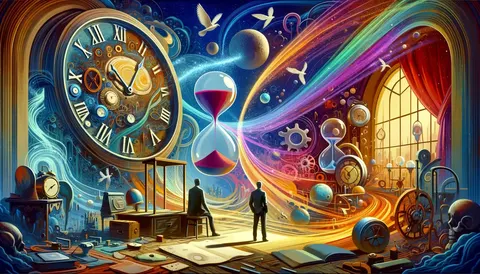
“People Everywhere Are Gripped by a Sense of Disintegration”
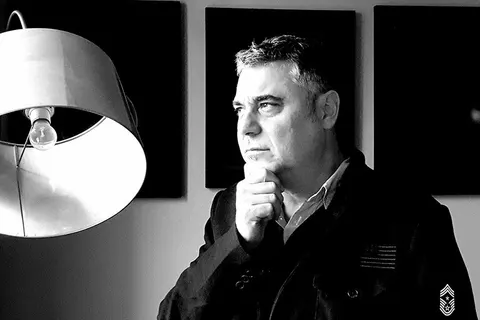
Alek Popov needs no introduction for anyone even remotely interested in literature. Mission London, Sestri Palaveevi… (The Palaveev Sisters…) and, at least for me, his finest novel, The Black Box. I would also recommend the collection Novi i izbrani razkazi (New and Selected Stories). But we have no time for literature right now; we are going to talk about life. And about technology. About the hygiene we need when consuming and sharing content. About the fault lines of today and our chances of talking normally about the important things again. About sex with robots. About deconstructed clichés and the sense of disintegration that is also driving us away from literature. “We live in a civilization that encourages banality in all its forms. Social media, PR and advertising generate clichés nonstop. Political language is woven mostly from clichés, and so is bureaucratic jargon. It isn’t just a matter of daily life—fast or slow—but rather of a particular ‘mental laziness’ that makes us mindlessly repeat ready-made formulas for success, for happiness, for love. Looking happy seems to have become more important than being happy. Few are those who catch themselves and say: hang on a minute, what is all this nonsense!?”
 02
Can Algorithms Make Art? 15 Viewpoints That Matter
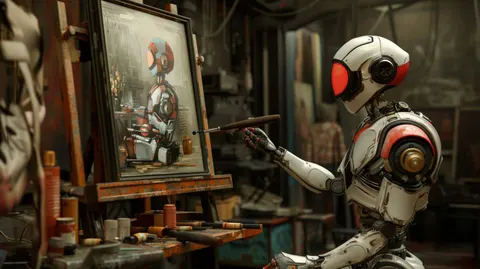
Can algorithms create? Is artificial intelligence a tool or an author? Could AI give birth to the arts of the future, or has creating already become a pointless pursuit? What will we do when its works in every field become indistinguishable from ours? For three years now, I have been collecting viewpoints on this site about the big questions of today's technological day. I believe it is vital to bring more and different voices into the discussions on important topics, and art and creativity is unquestionably one of them. Here are 15 of the most interesting and substantial opinions I have gathered in that time. Do the words of tech people, writers, artists, clergymen and… tomcats contradict each other, or do they complement one another?
 03
“The Epidemic of Ignorance Will Only Spread”
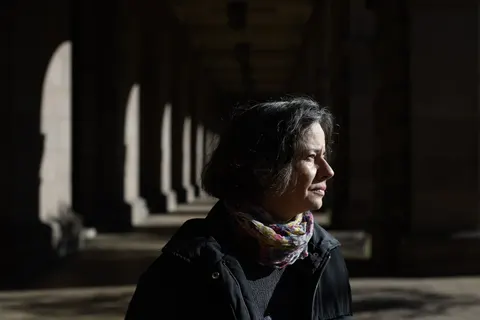
“Our inability to strike up a meaningful dialogue has left hundreds of thousands of people socially isolated. Some fall ill and die simply because they lack real human contact. I believe artificial intelligence will deepen this trend, because it will fool people into thinking they are talking to a friend, to someone they have lost, or to someone who refuses to hear them. And so we find ourselves in a world where we can supposedly talk to each other. But behind this apparent palette of viewpoints, of words, of word salad, including self-absorbed academic speeches, sit frightened, disillusioned people, impoverished intellectually and emotionally. To me, that is the great horror of our time.” Our conversation with the writer Silvia Tomova began with poetry and went on to education, history, the epidemic of ignorance and the long-overdue need for a social awakening. Against this backdrop, technology remained a constant companion, changing each of these subjects from the ground up. A journalist and special education specialist by training, she publishes essays, short stories and novels. The winner of numerous awards and the author of five novels and three short story collections, Silvia often peers into the past as well as into the big questions of today. She is not afraid to break out of clichés and to challenge the mainstream, both in literature and in public life. And so we meet for an important conversation that has come at just the right time.
 04
How DALL·E “Read” Beloved Bulgarian Books
The Chukchi is no reader, he’s a writer, as the old Soviet joke goes. But what about ChatGPT? Time for another fascinating experiment to show what today’s algorithms can do, both at creating images and at understanding context. I will ask DALL·E 3, part of the paid version of ChatGPT, to illustrate classic works of Bulgarian literature from different periods. Why is this interesting? It will show how well the large language model works in Bulgarian and how far it recognizes some of our undisputed classics. And, not least, because… might it show us some unexpected, different, striking points of view? Could we speak of some form of collective unconscious? Will the pictures overlap, at least in part, with the images each of us carries in our head for these books?