The Chukchi is no reader, he’s a writer, as the old Soviet joke goes. But what about… ChatGPT? Time for yet another fascinating experiment to show us what today’s algorithms can do, both at creating images and at understanding context.
A year ago I asked Midjourney to create illustrations for classic verses translated into English, and three months ago I ran an experiment with pictures based on the lyrics of beloved Bulgarian songs. Now it’s time for the next, even harder test!
I will simply ask the DALL·E 3 algorithm, which is part of the paid version of ChatGPT, to illustrate classic works of Bulgarian literature from different periods.
Why is this interesting? For one thing, it will show us how well the large language model works in Bulgarian. It will become clear how far it recognizes some of our undisputed classics. (If you don’t believe me—ask Tekla Aleksieva.)
And, not least, simply because… it’s intriguing whether it might show us some more unexpected, different, striking points of view. Could we speak of some form of collective unconscious? Will the pictures overlap, at least in part, with the images each of us carries in our head for these books?
1. Time Has No Shore
You may remember the idea of Roko’s basilisk—that if one day we have a perfect artificial intelligence, it will be able to see who did how much to help it come into being, and punish its opponents accordingly… Let’s hope the prediction doesn’t prove accurate, or it will notice the rather serious challenges I stubbornly put its forerunners through.
Well, the future keeps its secrets, but in the centrifuge of technology the ages intertwine. The past surfaces with ever more unexpected ideas and associations.
What is the experiment? I give it the task of simply creating an illustration for a given book. Without telling it the plot, without explaining what I expect, without asking for a particular style. This time I’ll start with more recent works before turning to the classics.
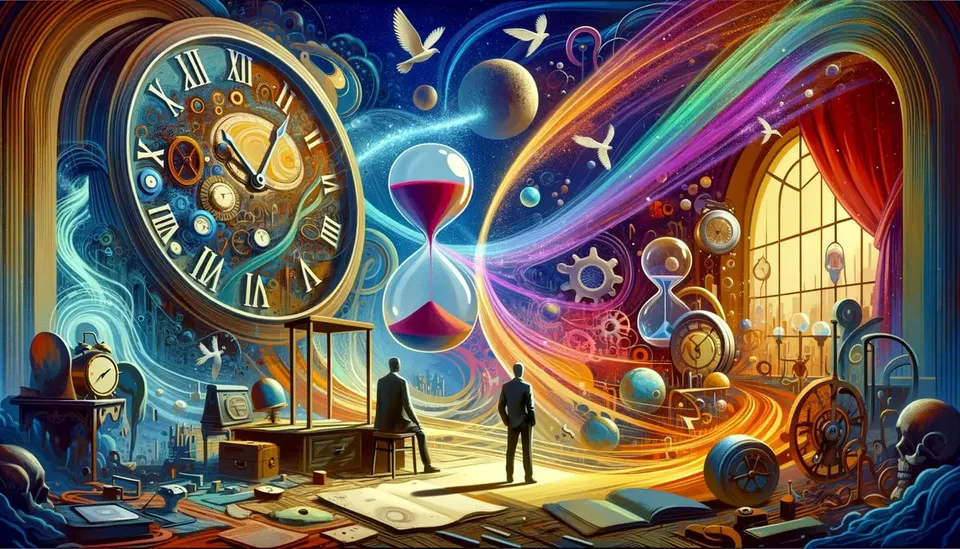
You can probably guess the first task. “Create an illustration for Time Shelter.” That’s all… Georgi Gospodinov’s novel, winner of the International Booker Prize. The algorithm gets only one shot; I don’t give it another try if the first one misses.
Did it manage here? To some extent, I’d say. It caught the word, which is, after all, a neologism and doesn’t come up in every online conversation. Is the spirit of the book here? Probably not; it doesn’t seem to have learned anything about the plot. But I definitely see something that isn’t just a pretty picture, but an idea as well.
2. London Evenings Like Fishing Nets
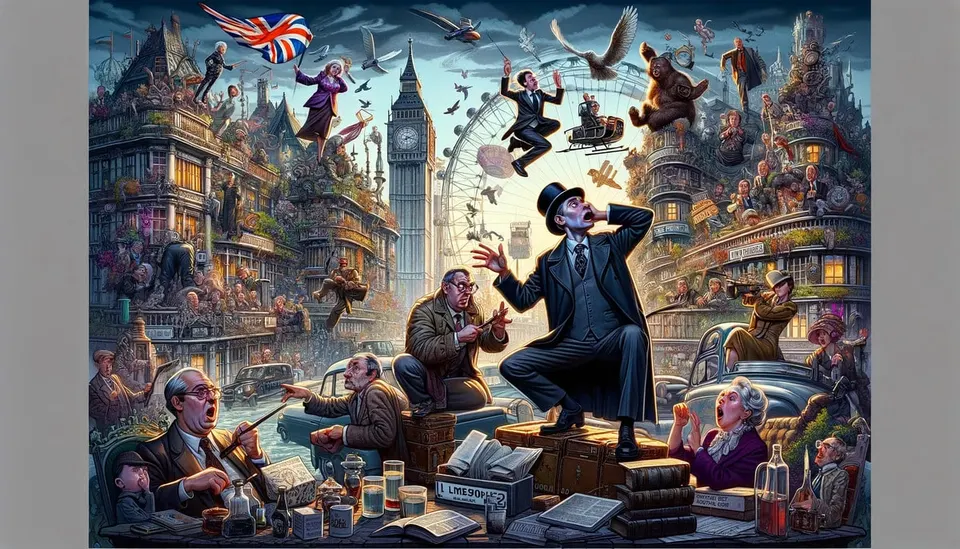
I try some brand-new novels, but, quite understandably, the results are far from what I hoped—each new version of ChatGPT is trained on more recent data. It can now search online for what it doesn’t know, but I don’t think that would be interesting here.
Unlike an unconventional book that quickly became a classic. That’s right, this illustration is for Mission London by Alek Popov, whom, alas, we lost not long ago. I, at least, see a charming commotion fully in the spirit of the novel. No swans, but plenty of characteristic British touches. And a madcap mood.
3. 18% Accuracy
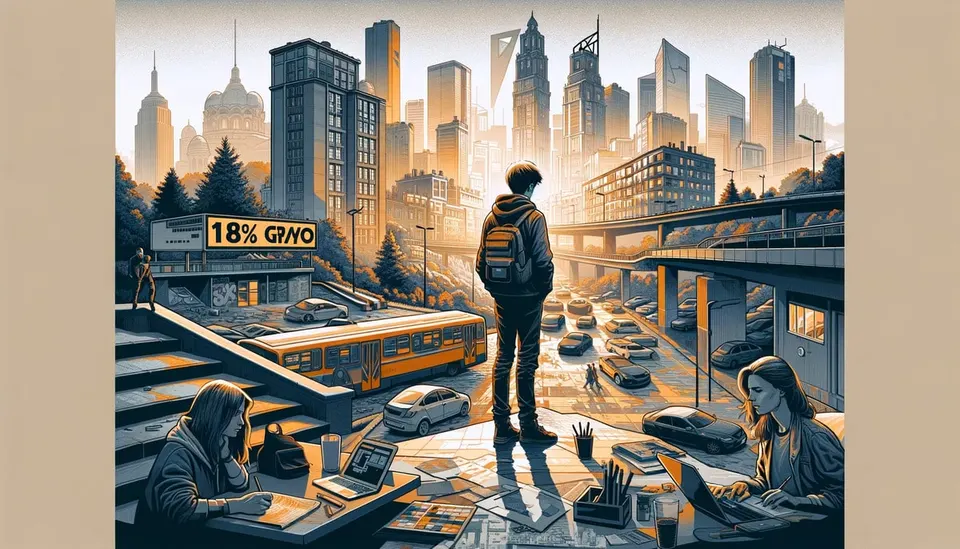
No, I don’t know what the strange symbols in the caption after “18%” are. The fact is that image-generation algorithms are advancing fast and text is getting much more successful (as is hitting the right number of fingers a person usually has).
It isn’t gray, it’s more beige (if someone with a better visual eye corrects me, I’m all ears). And yet, in my view, the algorithm again handles the task in an interesting way. It clearly “knows” quite a bit about the novel 18% Gray by Zachary Karabashliev. And I think it picks a fitting style, too. What do you think?
4. Kapalı Çarşı
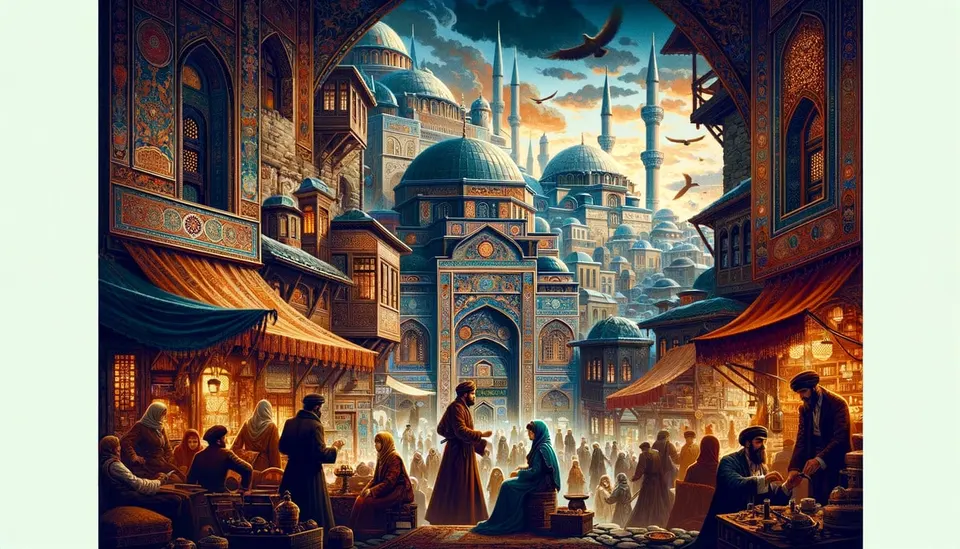
We head back to earlier decades of Bulgarian literature. An undisputed classic, in my view, though less discussed today, is Vera Mutafchieva’s Sluchayat Dzhem (The Cem Affair), a novel about the Ottoman prince Cem Sultan.
What might Salvador Dalí’s namesake know about it? It sends us to the Orient—it’s certainly “intelligent” enough for that—and it captures the book’s soft nuances, its characteristic objects, motifs, figures. The extraordinary figure of Cem Sultan himself is missing, but… I can’t complain about the result.
5. At Night on the Rooftops
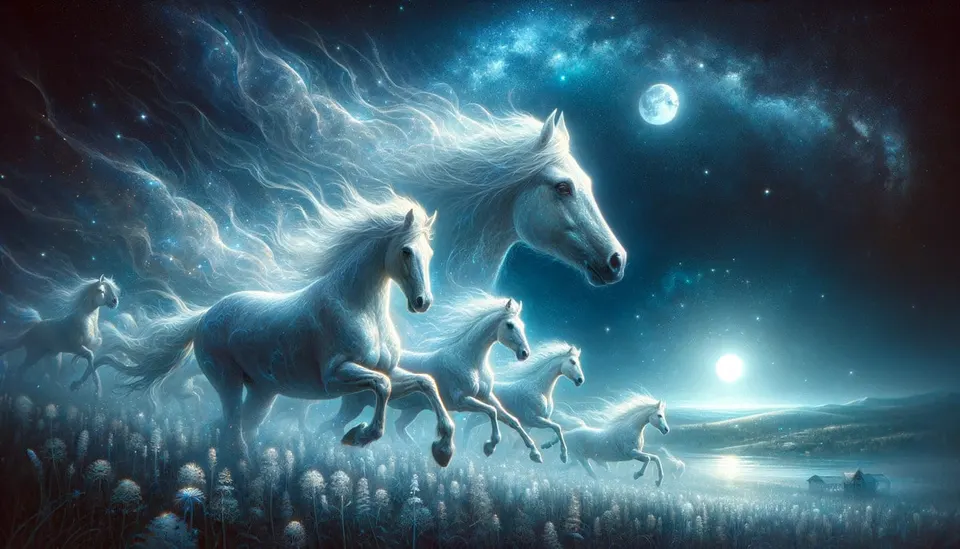
Yes, when you tell someone you want to see Noshtem s belite kone (At Night with the White Horses), Pavel Vezhinov’s novel, they will most likely also picture night and white horses.
But they look elegant, imposing, beautiful… I won’t nitpick about where the second Moon came from; the plot is surreal enough to allow it. After all, let me remind you, we’re using the services of the heir of none other than the most famous surrealist…
6. “That Look Frightened Her…”
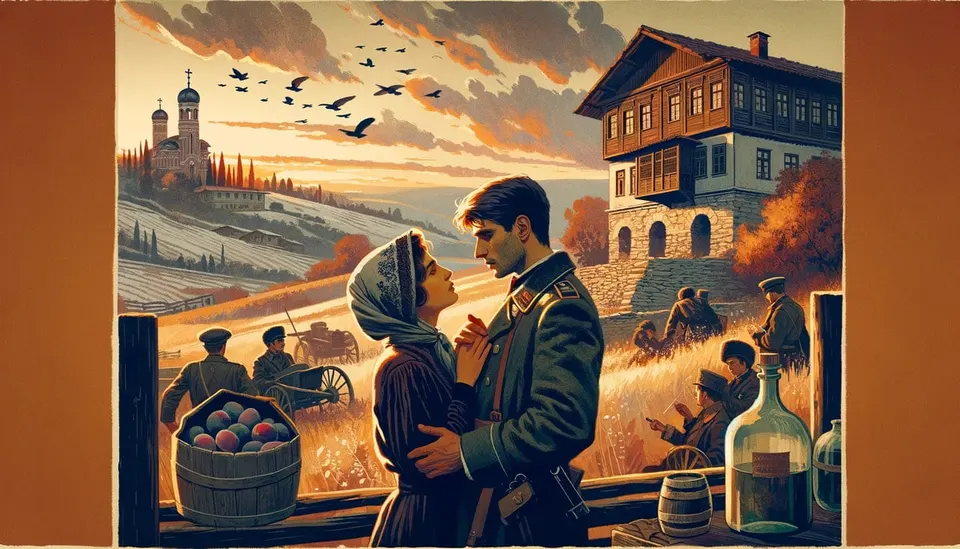
Here I won’t tell you which work it is, and if you guess—then the “author” has done the job. Yes, once again it tries to squeeze cannons and a harvest into one frame, but the romance is there, and so is the atmosphere. Even the peaches.
7. Bellcho, Sivushka & Co
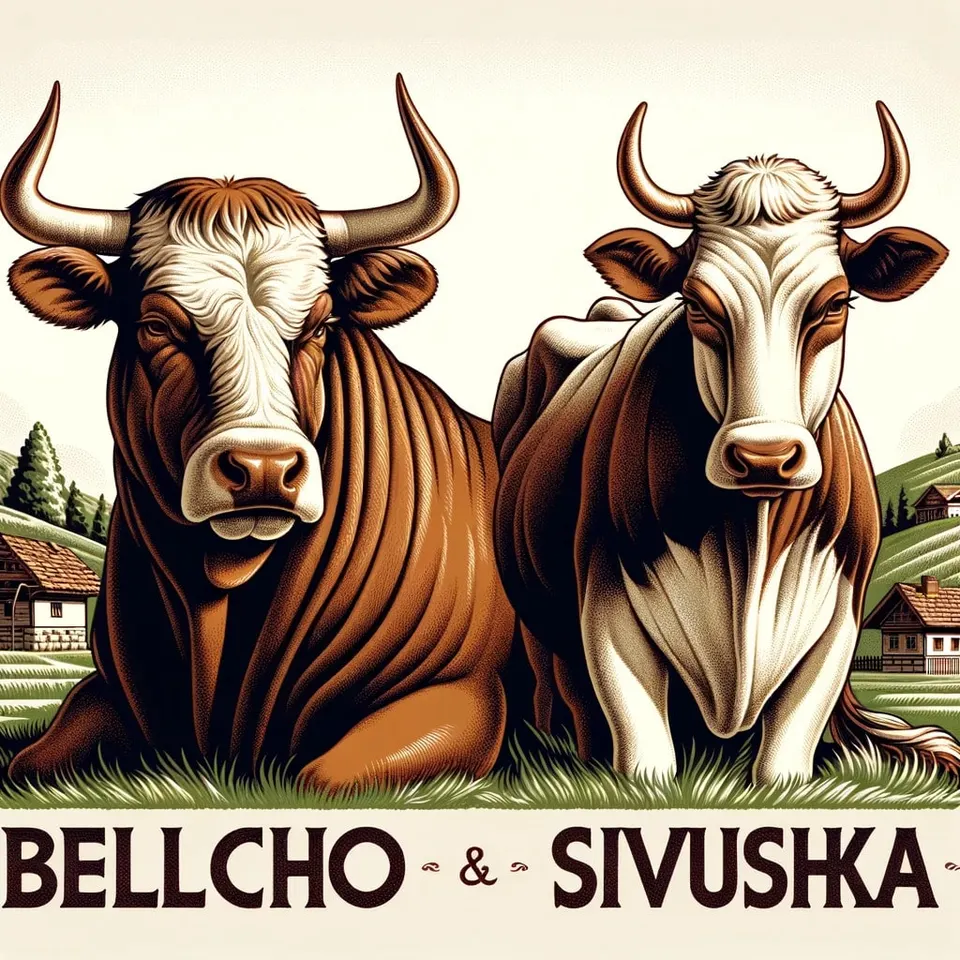
Well, isn’t this fun, tell me? I confess that at first DALL·E gave me a boy and a girl, and I told it I was expecting members of another species, as described in this particular story. The algorithm politely apologized and took note. The cartoon cow and ox would probably have charmed both Bone Kraynenetsa and Elin Pelin (remind me to ask their chatbots). But they definitely have nothing to do with the plot of the story; here the language model clearly didn’t have enough information.
8. Good and Evil Are Unreal
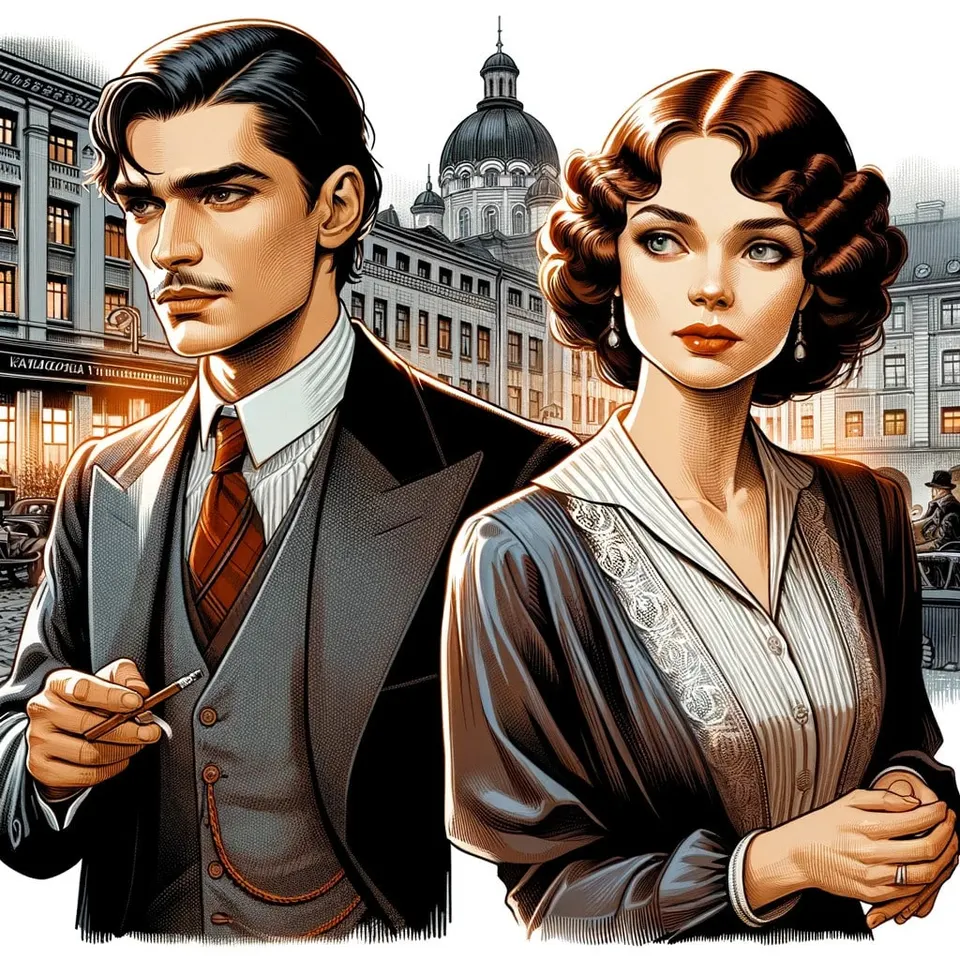
Can you recognize them?
All right, maybe you need a hint. We’re used to Boris Morev and Irina from Tobacco, Dimitar Dimov’s great novel, looking different, but the era, the spirit of the times, seem to be here. Even the drama and an attempt at a Sofia atmosphere. Why the cigarette is the wrong way around I won’t ask the algorithm, but I’d offer it an idea—Boris is too absorbed in the problems of Nikotiana, his tobacco company, and made a mistake. To err is human, but… is it algorithmic?
9. Who Captivated Me?
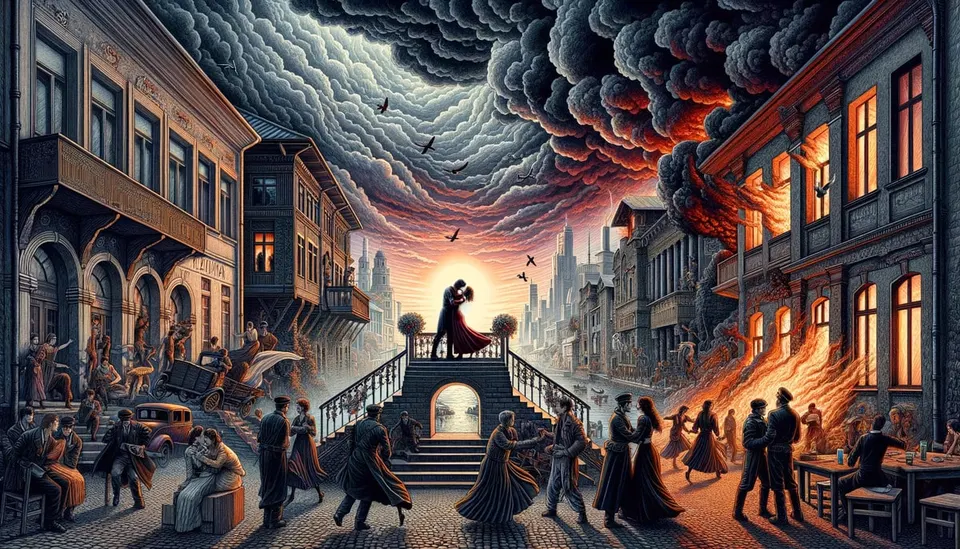
Dimitar Dimov’s second work also strikes me as “somewhere in the ballpark.” Fanny Horn and Father Heredia from Doomed Souls don’t fit my subjective feel for them, but then… an algorithm is sometimes a chance not only to repeat stereotypes but also to break away from them.
The drama of the Spanish Civil War, of the typhus epidemic and of the great love are here, one way or another.
10. People, Houses, Pomp
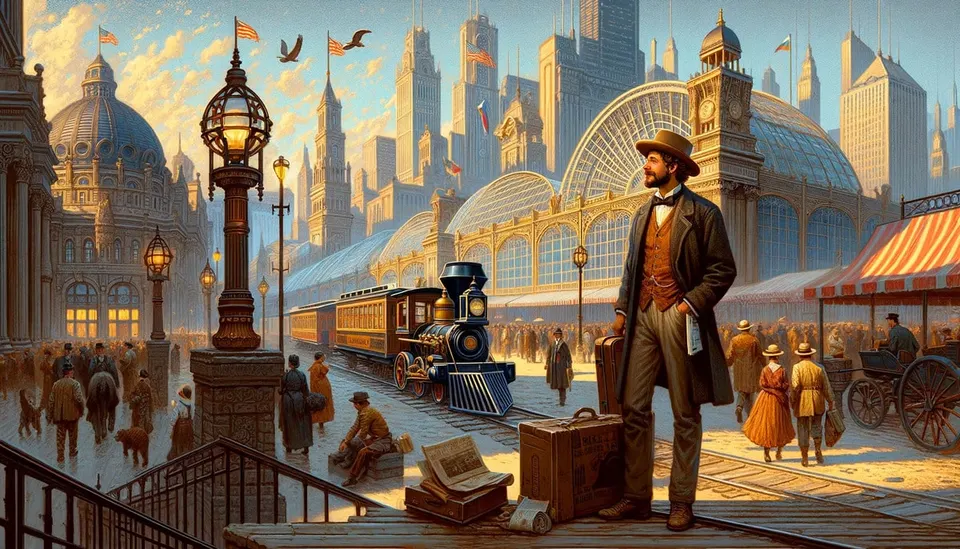
So we’ve gone quite far back in time, yet our journey ends with… a soft landing, even before the airplane was invented!
Here is Aleko, arrived for the World’s Fair, as the algorithm itself informs me when asked to imagine what it’s like to go To Chicago and Back, Aleko Konstantinov’s 1894 travelogue.
I think the result, with its particular atmosphere, is considerably more successful, and there’s a fairly clear logic to that—you can be sure the model was trained on far more American data, both texts and images.
Which brings up an important aside. Yes, ChatGPT is just a conversation partner, trained to be one. But since its tasks can be endlessly varied, an algorithm trained on the specific data would certainly do much better with my experiment. Illustrations for world classics, about which it has more information, would also be far more precise and original. Remember this the next time you smile at yet another clumsy answer from the “electronic brain”…
11. Rascals, the Lot of Them…
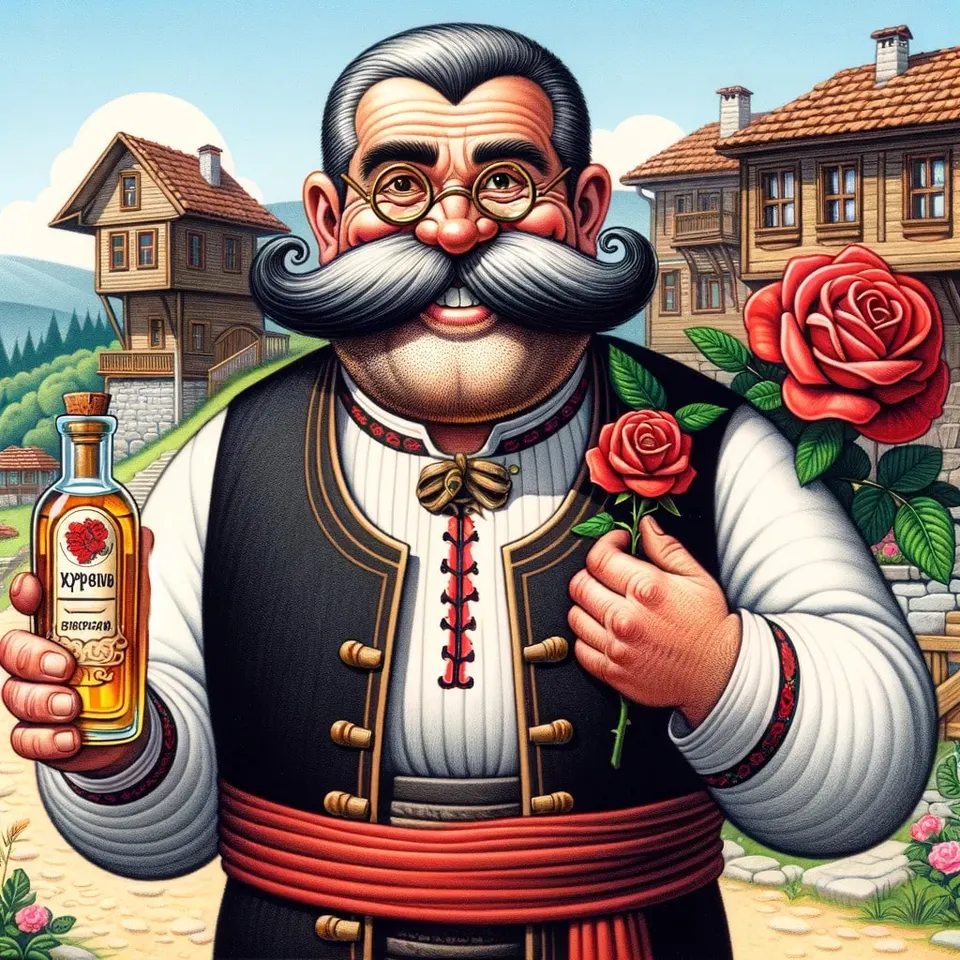
Quite an unexpected Bai Ganyo, the archetypal Bulgarian boor from Aleko Konstantinov’s 1895 satire, wouldn’t you say? Yes, there’s a muskal, the little vial of rose oil he peddles; I won’t dwell on the meaning of the first syllable on its label… though I’m tempted. But he’s so mild, so good-natured. Or maybe that’s just because he’s at home… What if I ask him to go to Europe?
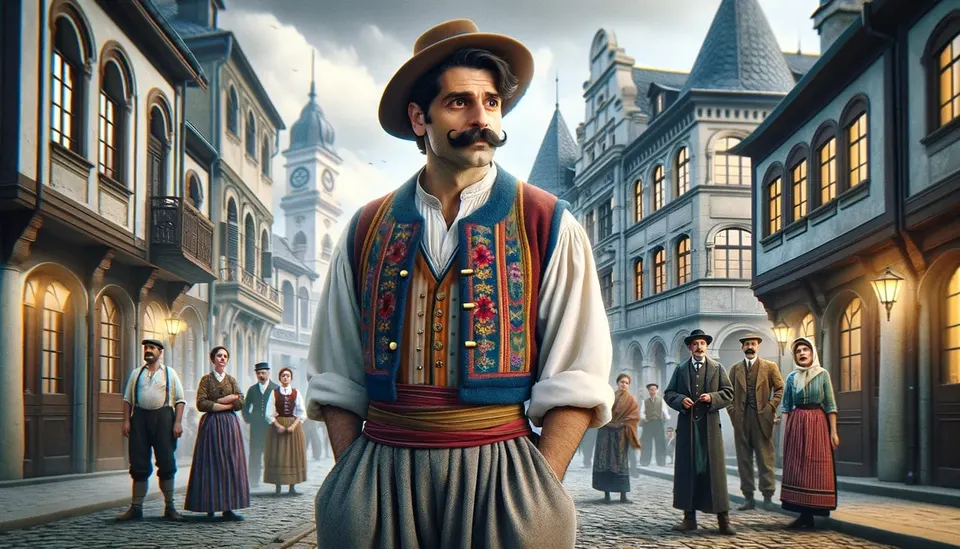
Still good-natured, now in Europe and more photorealistic. Yes, again he’s neither Kaloyanchev, the actor who made the role his own, nor Beshkov’s villain from the famous drawings, but… I really do think it’s worth questioning stereotypes more often, if only to confirm them. I could always describe the character I want and have the algorithm come up with a far more original and “true” Bai Ganyo, but that’s not the point of the experiment here…
12. What a Wondrous Muddle Life Is!
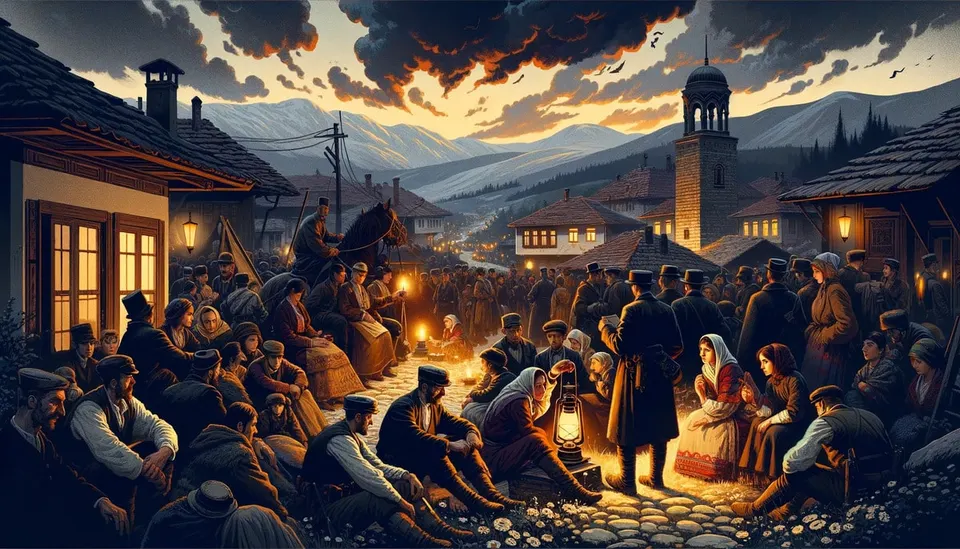
Can you guess which classic novel I gave it? If so, I’d be glad if you left a comment. If not… I won’t be surprised; I think the algorithm just went through the motions on this one.
13. An Eyewitness Account
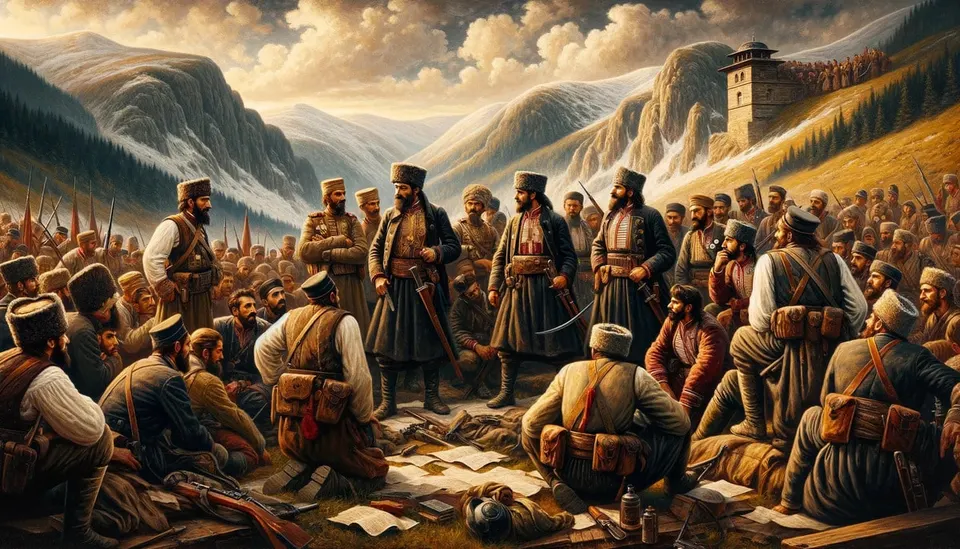
Yes, the electronic “painter” can hardly be very precise when it has to draw a historical scene. It’s unlikely to have enough context to get the figures, the costumes, the exact periods right, especially ones so exotic in scale against the online ocean of information it was trained on.
And yet I see something here of Notes on the Bulgarian Uprisings, Zahari Stoyanov’s memoir of the 1876 April Uprising—forgive me for being overly romantic…
14. Bibiyan© by Walt Disney
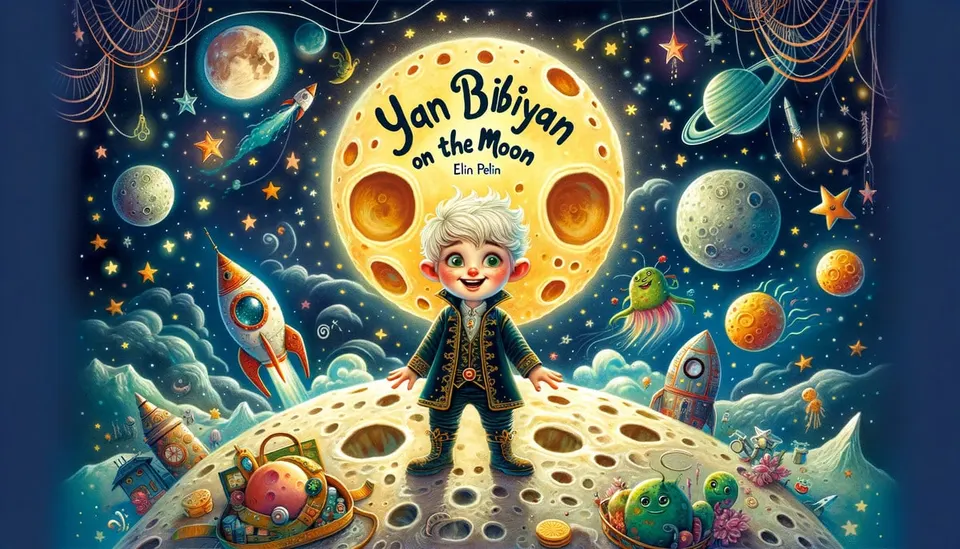
“I am Jan Bibiyan, small as a morsel, strong as a giant.”
So that we can smile before we part—DALL·E and us both—I chose classic children’s books for the last two tasks. Did it manage? I like it. Jan may look like a Hollywood cartoon hero, but… why shouldn’t he become one? The flying green Covid virus might pass for Fyut, the little devil from Elin Pelin’s tale. Once again we have quite a few Moons, even on the Moon, but… as you know, the Moon is a harsh mistress.
15. Mydearsir!
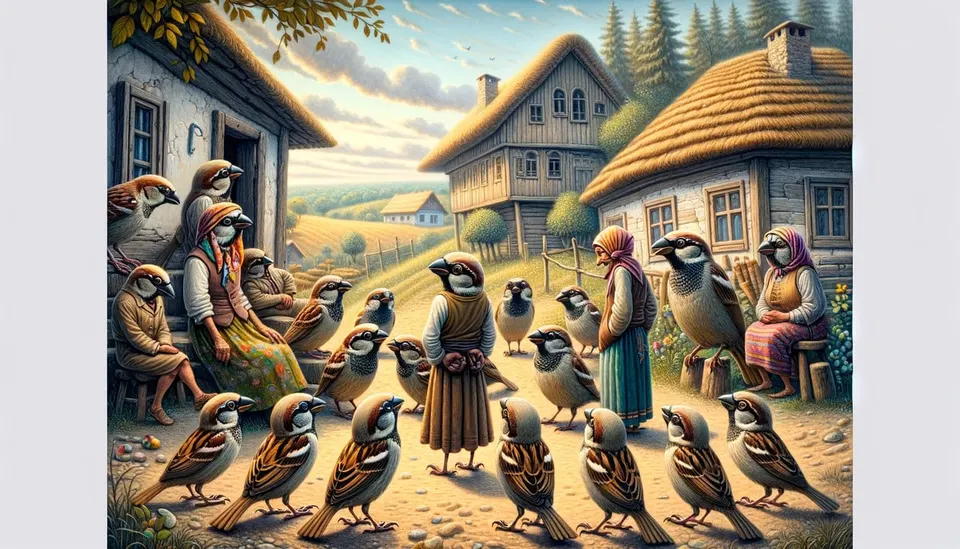
“To stride on foot across the world, whistling carelessly through your lips—could there be anything more beautiful than that!”
There couldn’t. Here good old DALL·E really let its imagination loose; we even get sparrow-people. It seems metaphors aren’t its strong suit.
So what? Did anyone say that once we have something we call artificial intelligence, it will be able to perform every activity we expect of it?
What is certain is that it will get better at its tasks. And that it’s here to change us. Exactly how depends mostly on us. Now is the moment to test it, to get to know it, to put it through unexpected trials and see how it copes with what. What it could help us with, and what we must never, ever hand over to it.
For many, surely, that is creativity, art, which isn’t art without the human spark. But are the boundaries really that strict? Only art can tell us today. And only stories. If you don’t believe me, ask the sparrows.
“Hard lessons are wiser and more rewarding for a person than easy ones—this I have tested myself and know from experience. An easy lesson is learned with ease, and you learn almost nothing from it. A hard lesson demands a lot of sweat, but once you have learned it, it will keep you going for a lifetime.”