Artificial intelligence amazes us with its ability to create text, images, and now even video. Technologies that seemed unthinkable are part of everyday life today, and at the same time they challenge the way we see ourselves as a species and as a society.
- Can algorithms create?
- Is artificial intelligence a tool or an author?
- Could AI give birth to the arts of the future, or has creating already become a pointless pursuit?
- What will we do when its works in every field become indistinguishable from ours?
For three years now, I have been collecting viewpoints on this site about the big questions of today's technological day. I believe it is vital to bring more and different voices into the discussions on important topics, and art and creativity is unquestionably one of them.
Here are 15 of the most interesting and substantial opinions I have gathered in that time. Do the words of tech people, writers, artists, clergymen and… cats contradict each other, or do they complement one another?
1. “Art Is Freedom!”
“AI can learn anything that lends itself to automation. I think that rules out poetry,” said the poet Ivan Landzhev.
Will algorithms really be capable of creating “high” art—what does he think? “I can't answer you with a ‘yes,’ because my definition of art runs through freedom. Art is free expression. The creative act itself is freedom. And for that you need a subject. Even after the ritual murder of the author by literary scholars in the second half of the 20th century and his subsequent resurrection, again by literary scholars, we have to agree that, after all, Somebody out there is expressing themselves.”
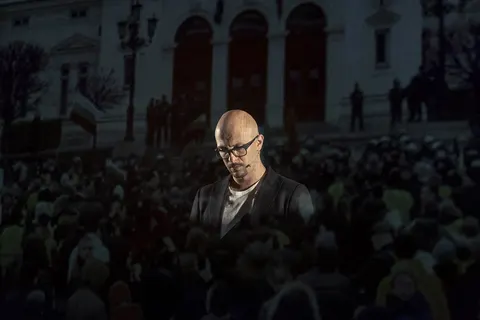
“What is AI's style? That's the first thing. Second—where will artificial intelligence make a mistake? Error has fundamental significance in art. Where will your hand tremble so that you make the thing your own? I realize the future may prove me wrong, but I still think art needs human error. A computer cannot be careless. And in that, it falls short of us.”
Art follows from mistakes? Rather poetic, and it's not as if ChatGPT never makes mistakes… I'm joking—the poet's words are wise, no question. But what do people from the world of technology think?
2. “Will It Laugh? No, but It Will Make Us Laugh…”
Here is an IT guest who answers in something closer to haiku style: Prof. Julita Vasileva, a world-renowned scientist in the field of information technology.
– Do you think there will one day be an AI capable of laughing and crying?
– No, but it will be capable of making us laugh and cry.
– And that one day computers may have feelings?
– No, but they will be able to manipulate ours beautifully.
Short, clear and also very precise—and, once again, from an interview given before the noise around this kind of technology over the past year.
3. “Who Will Tell It What Is Beautiful?”
“What will happen if I tell it: ‘You were created… or she was created—see, the very notion of gender gets lost too—you were created for this. Play me something beautiful!’ And it will ask what beautiful is. The idea of beauty changes even among people themselves—just look at fashion! We'll come back to Michelangelo's David sooner or later, but until then there are the big earrings, the tattoos, or the bodybuilders with their body proportions… What is beautiful for people today, who will provide the algorithm for beauty?”
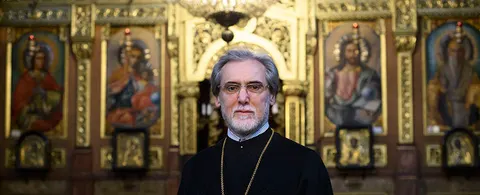
The sense of art undoubtedly passes through the definition of beauty and through the spirit of the age, the famous zeitgeist. These words belong to another unexpected guest of mine, the priest Father Nikolay Georgiev.
“That is why I think the process of creating artificial intelligence, if it doesn't slip out of control, will be difficult, because we have no consensus on many categories. On the other hand, I am always for freedom. And just as freedom has led to the endless development of art and science, technology will probably contribute a great deal to the well-being of humanity. At least I hope so. As long as sick minds don't use it to destroy…”
4. “But Then We Would Have to Let It Feel, Too”
Yes, for now things seem to be under human control when we talk about what gets created. At some point all this could change, control might not be enough, and we shouldn't skip that part of the question.
“Will artificial intelligence one day be able to compose music?” I asked the conductor Maestro Nayden Todorov.
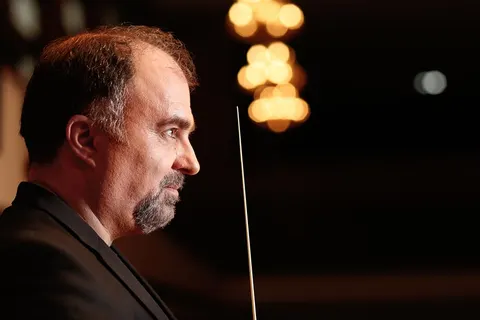
“It can do it right now. Purely technically, composing music isn't hard if you master the rules. But to make it interesting to people, captivating, to affect their emotions… For that we would have to give artificial intelligence the ability to feel as well. And that frightens me.
I'm afraid of an algorithm that on the one hand can reason rationally and on the other can experience emotions. Because rational thinking may lead it to the question: why is humanity needed? And the added emotional element may bring the answer along with it.”
5. Digging Up a Monster
But hasn't a writer standing before the blank page reached that moment only after reading many other books? Books that have shaped his worldview, even if imperceptibly, unconsciously…
A good share of journalism, say, could be delegated to algorithms—on that point Rayko Baychev and I are in complete agreement.
In his view, though, that is not how things stand with true art. “The high peaks of art, and the possibility of an artificial intelligence creating a work equal to them—that I don't believe in. To write The Magic Mountain, say, or Lolita, to match Thomas Mann, Nabokov… it seems impossible to me. If mass literature is derivative, if it repeats what has already been done, digs through a ‘database’ and imitates it (sometimes with seductive dexterity), something else happens in the great works.
There is an unfamiliar chill of something inexpressible, hidden, hard to catch: what Capote calls ‘digging up a monster.’ High literature is driven by that kind of ferocity, by mania, by a certain madness that is hardly suited to an algorithm.”
6. “It Writes and Translates… but Not Like the Inimitable Ones”
“Digging up a monster” is a terrifying metaphor in this context. But it is certainly interesting that many of my guests stress precisely the difference between a written book and a Book—the one with the power to change things, the high one. Or will it write for each of us, exactly the way that particular reader expects? Or perhaps people of the word are too partial to the word, and people of music to their own art…
“Good storytellers will always find their way to an audience, and the audience will find them,” says the journalist Svetoslav Ivanov, who doesn't believe we will ever have an “electronic Ivo Ivanov.” “No, I can't imagine it. At the very least, I can't imagine an electronic Ivo Ivanov who gets that excited about basketball.”
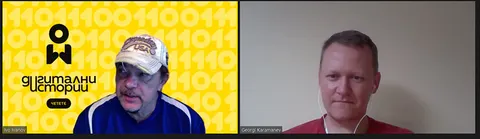
Well… why don't we ask Ivo Ivanov himself, what do you say?
– Will algorithms one day be able to give birth to stories like yours?
– Of course there is a mechanical element in creating these stories. There is an algorithm in them too—an internal one. There is a beginning, a development and an end. There is logic in their structure. There is an architecture that a machine could recreate. But so far there is nothing in technology that can replace human imagination.
Nothing can replace me or you. You create moments that are yours alone. Every human life is simply a chain of moments, of memories. And at the end, at the very end, before you close your eyes forever, that is you. You are simply an accumulation of priceless memories that belong to you and you alone.
7. “Somebody Will Corrupt It, Just Watch…”
Beautifully put…
Other writers hold a similar position, Nikolay Terziyski among them: “A while ago I listened to a Nirvana song created by a computer years after Kurt Cobain's death. A song that was the product of analyzing all the band's old songs. I genuinely had some fun, but I never played it a second time. It's a good example of what artificial intelligence can do when it comes to creativity. Literature simply won't be literature if it's made by algorithm.”
How can we tell that it is Alek Popov, and not an algorithm, who writes his stories? According to the man himself, because “AI still has no sense of humor. That is because it isn't able to accept the contradictions and absurdities that human life is woven from. He, or rather ‘it,’ is set up in a Protestant way—straight-laced and puritanical. Right now its creators' greatest concern seems to be that nobody should corrupt it. But that will happen too, just watch. Now, then it might actually start writing…”
8. “The Instinct for Stories Will Never Disappear”
The animator Antoni Hristov has a view that stretches from Hollywood to the world of today's computer games. He isn't worried about competition from algorithms. “All my life I've been used to ‘dangers’ that come along every now and then—computers were one, they were going to take everybody's job.”
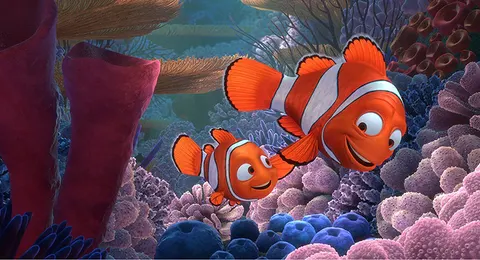
In his view, though, creativity will remain an inner human need. “Creativity and original thinking will never go out of fashion, and neither will the sense of entertainment, of fun. I have two friends I've banned from telling jokes—they just can't do it. That will never disappear: the instinct for telling stories, for entertaining. Making others feel, making them think, making them grateful for the story you're telling them.”
“If you're creative, you'll always find a way. Always!” he adds.
9. “Evolution in AI = Evolution in Art”
“AI is here, and it is entering every sphere of our lives exponentially, whether we like it or not. We have to adapt to the new reality and learn to use the opportunities these technologies offer. And they are incredible!” says Dimitar Karanikolov, architect and photographer.
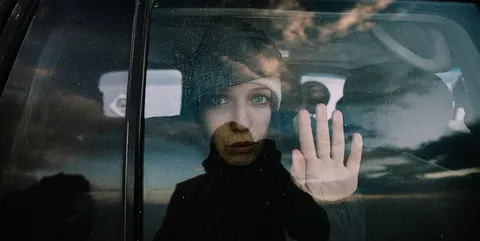
“Before 1900, realism reigned in the visual arts, but the moment photography became widely accessible, achieving realism stopped interesting artists, and that is exactly when new styles began to appear—expressionism, surrealism, cubism. Something similar will happen now: the evolution of AI will lead to an evolution in the arts. People will have to find new ways to create and to express themselves in a manner that cannot be imitated or generated. What times!”
10. “A Neural Network Is Just a Brush”
What times indeed! We have access to a new, incredibly powerful tool for creating, and… we still don't let our imagination loose enough to use it to the full, reminds the IT specialist and host of the podcast Govori internet (The Internet Speaks), Vladimir Petkov (Kaladan).
“Take this example: a gentleman entered a drawing competition and won it, and then revealed to the jury that he had used a generative network. There was a big scandal, and it opened a conversation about whether it's ethical to use machines this way.
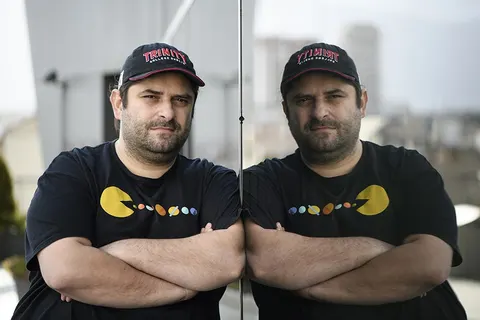
He said: ‘Yes, I use neural networks that someone else built. But why do the people who care so much about human involvement completely deny my contribution—training the machine, choosing data, experimenting, tuning it?’
His point of view is that the neural network he used is very much like a painter's brush. Or a photographer's camera. Whether you photograph, paint or use a neural network, it's all the same. More than that: in a way, the neural network democratizes art, opens it up to people who haven't spent years learning to draw and don't have those mechanical skills.”
11.“What Is Feeling?!! My God!”
“This is no time for poetry,” wrote Nikola Vaptsarov, the Bulgarian poet executed in 1942 for his resistance activity. And for the next viewpoint I invite another… “virtual” guest, the poet Dobri Zhotev, who half a century before ChatGPT wrote:
“The Cybernet was endlessly amazed.
Its three antennae stood up straight
and turned into question marks:
‘What is feeling?!’
‘What is feeling?!! My God,
why, it's feeling, simply feeling!
Do you understand me, Future?’”
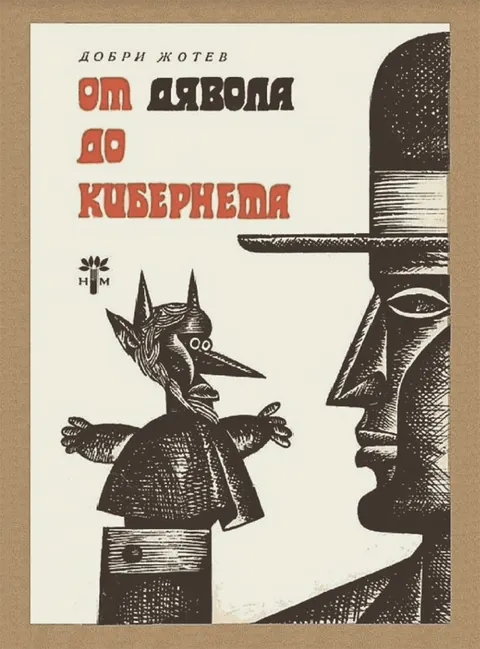
To look at the future sensibly, it's worth giving the floor to the past as well.
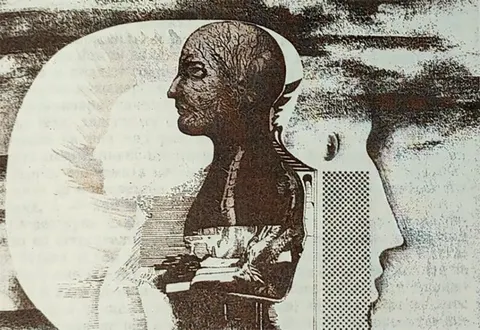
“The next stage will be tied to the efforts of ‘electronic art’ to find new means of expression. In all likelihood, new arts will emerge, firmly welded to computers.”
Right? These words are almost 40 years old, from the collection Silueti na XXI vek (Silhouettes of the 21st Century).
“Synthesizers of visual images will probably be created at the beginning of the next century. The question that provokes the most debate, of course, is: will the computer become a creator? Logically, the answer requires a second question: what is a creator? If a translator is a creator, why shouldn't a translating computer be one? If arranging musical works is creative work, why shouldn't computers in the same profession be creators?
We can, naturally, say that the computer is not a creator because its activity is not conscious. There is solid logic in this counterargument. Fine, but many creators constantly stress that they too work under the influence of unconscious creative impulses. And again a counterargument: a person doesn't understand how he creates, but he understands that he creates, and he takes pleasure in his work. Agreed—the computer is not a creator. But it is not a creator today. What about tomorrow?”
12. “And How Will We Teach It to… Be Bored?”
It is already “tomorrow,” and we are still wondering. I think one big question has become clearer. Can great works of art be squeezed into a template—is genius magic, or an algorithm that landed in the right place?
According to the writer, storyteller, teacher and who knows what else Ivaylo Kunev, “we have seven basic plots. If I'm right, if all great stories are built this way, then there's no good reason artificial intelligence shouldn't start writing better. The question is, what is genius? I define myself as ‘copy/paste.’ I pile up stories, I consume 100 to 120 audiobooks a year, more than 70 paper books, I pile it all up and then steer it toward a story. In other words, up to my level or a bit above it—people who are simply aggregators—it'll put everything into the mathematical model and blow us away. But F. Scott Fitzgerald, Hemingway—how would you ever come up with Benjamin Button, how would you think of it?”
But what will make people create?
“Some of the greatest discoveries were made by a bored class. Oscar Wilde is bored—he was born rich. We have the whole of Russian classical literature—bored. Dostoevsky, and Hemingway again, Fitzgerald. A bored class! Which, out of boredom… starts generating remarkable things. That's how I picture it. 80 percent degradation, and a few people who will create… and oh, how they will create!”
13. “The Emotion Comes from Knowing a Human Made It”
“We humans are social animals, and a large part of the pleasure a person gets from a painting, a poem or a book comes from knowing that a human created it,” says the writer Vasil Popov. “Imagine an artificial intelligence writing: ‘Don't weep, mother, don't grieve that I have become a haidut’—it would look absurd. But if you know about Hristo Botev, the revolutionary poet who died fighting the Ottomans in 1876, about the times in which that work was written, and that a haidut was an outlaw rebel, then it takes on meaning. Van Gogh's paintings are beautiful, but they are even more beautiful if you know what a sad life he had. I think at some point people will become oversaturated and will need to know that behind every work there is a human being.”
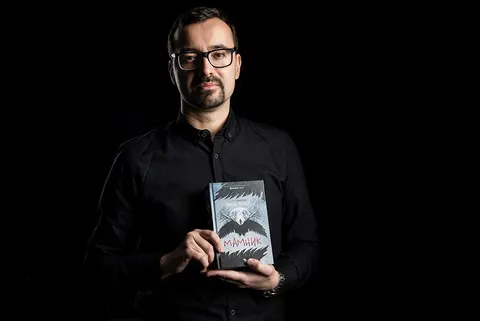
You know, what's interesting here is that a guest of mine from the “other world”—the software world—talks about the very same thing: the programmer Alexander Kondov.
“When I read a book, I like to know that what's written was born of meaning, of some emotion, some experience, that somebody sweated and thought over every word of the text. Edited it a thousand times, wondered whether it belonged here, built plotlines, thought about exactly what they wanted to say. Stephen King says writing is the most primitive form of telepathy. Somehow, when you read, you get inside the author's head. You see their way of thinking, the way they express themselves. With ChatGPT, I sometimes read something and wonder: did someone really write this, did someone think it through? Or does it simply have a taste for what is meant to be said? That's perhaps the only sphere where I'm not a fan of this breakneck progress. I want to read something written by people!”
And then… the digital artist Tsvetomil Semkov led me in the same direction. “Paradoxical as it may sound, I think that as technology advances, the author will actually become more and more important. The human element and the road traveled will matter more and more, because otherwise there's no point—pretty pictures are everywhere, and there will be ever more of them.”
14. But What Counts as Art?!
If a work made by an algorithm cannot be told apart from a human one, does that make it art?
“I don't know whether anyone can answer that right now,” replied the writer and actor Byurhan Kerim, and all I can do is agree.
“Humans weren't made to compete with machines at computational processes—that battle was lost long ago. What humans need to do is not compete with the machine, but offer an alternative,” says the design lecturer Svilen Gamolov.
15. Art for Art's Sake
One of the first tests on this site was a strange one—an interview in stories. I would give a short opening, and the writer Nikolay Tellalov would answer me with a fictional continuation:
– The artificial intelligence writer sent the finished file to the server.
– And waited for its first reader.
But impatience was creating internal tension. So it isolated part of itself and made that part forget writing the book, so that it could become its first reader.
It went well. The virtual reader liked the novel.
The AIW created a second virtual reader.
The second one, however, criticized the work. Tore it to shreds. It even posted a spiteful comment on the forum of the Chitalishte—named after Bulgaria's traditional community reading houses—where 100 people instantly liked the criticism and shared it on their profiles… (the continuation is here).
If this interview hadn't been one of the first on the site, back in 2021, I would have thought it was GPT's handiwork.
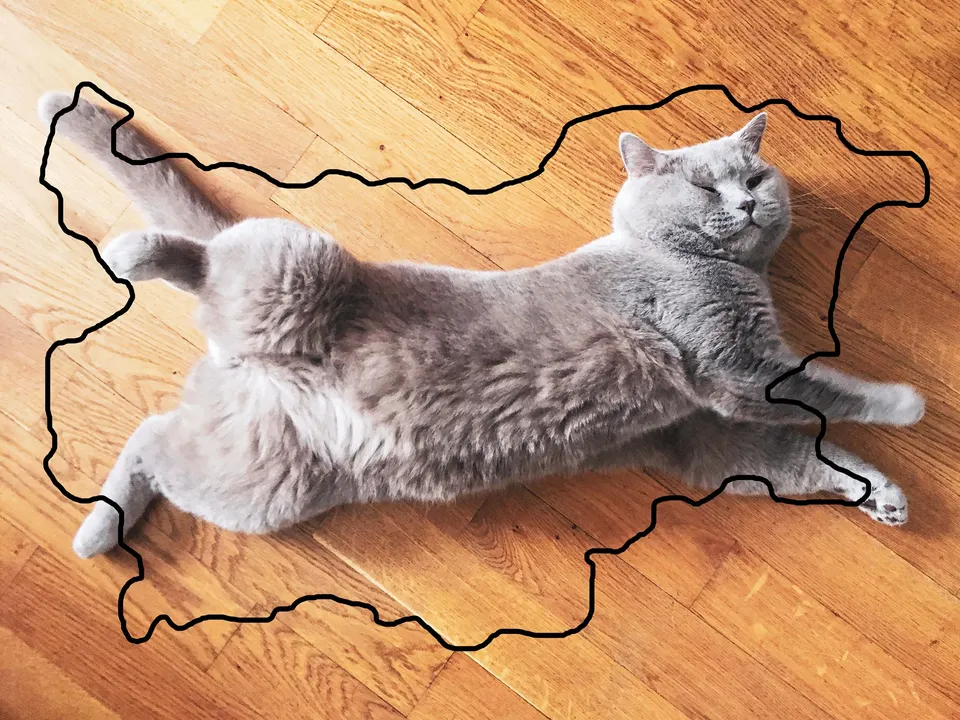
We part with the words of Rumen the Cat, whom I asked whether he fears that artificial intelligence might replace Him in people's hearts.
“Wen they kreate a artifishul intellijence wot can manidge to snach haff the frid sprats off a hungree turist on the Blak See cost, then ill start getting a teeeeny bit wurried with the wun eye.”
So, as Douglas Adams—who (still) hasn't been my guest—wrote… don't panic!!!