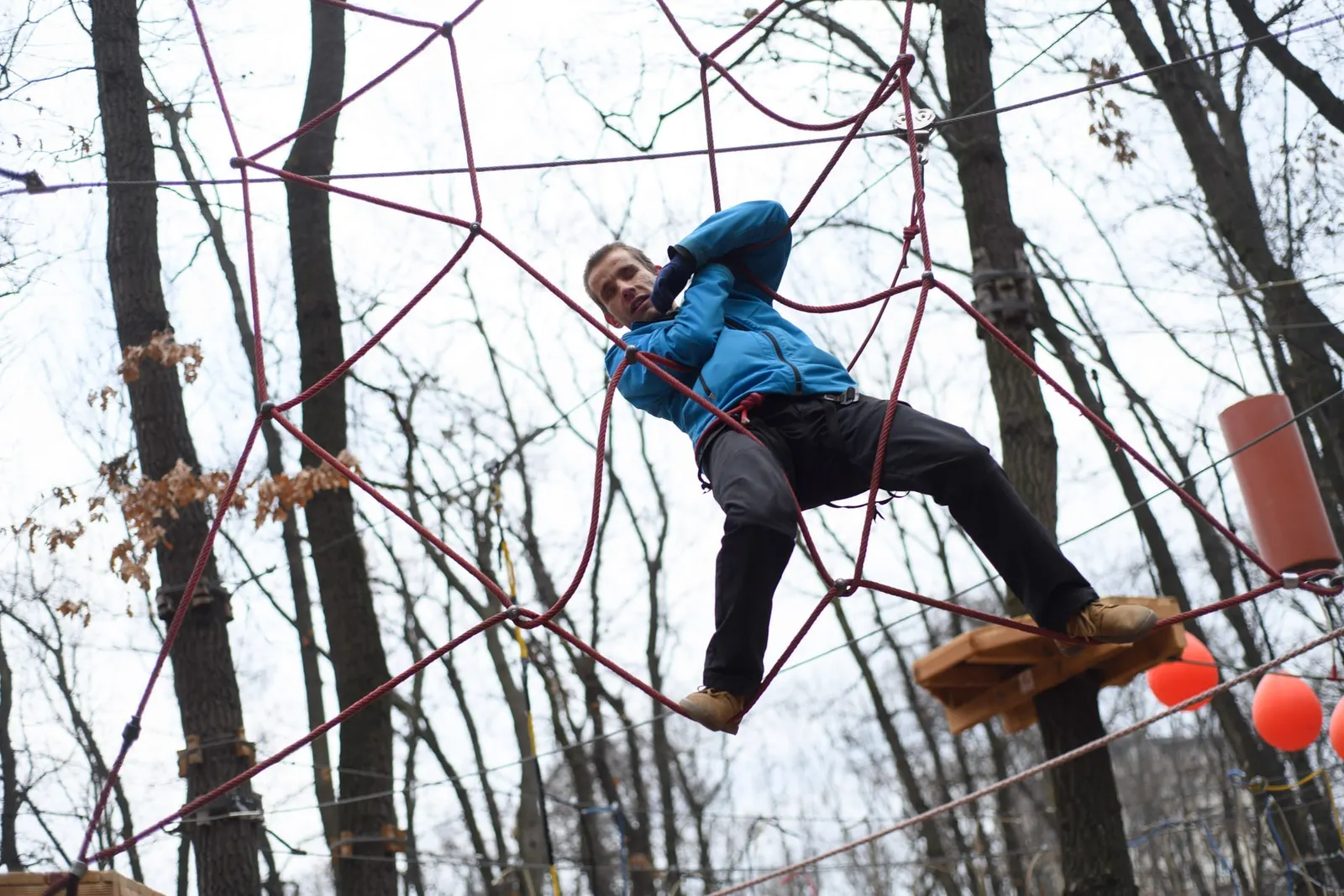
Viktor Asenov never stops running, always onward toward the next record to conquer. If you happened to come across the remarkable Digital Story of the blind long-distance runner, it hardly left you indifferent. Because it holds many lessons, and it is also a reason to continue the conversation with Viktor. About the everyday hardships of Bulgarians with visual (and other) impairments. About how we should treat them, whether we are attentive enough, whether in Bulgaria we look after their rights.
The last question is rhetorical. I'm sure you, too, have noticed that the buses in Sofia are adapted for people with disabilities. But have you ever seen anyone actually get on one in a wheelchair? And what about websites? Today everything happens online, technology makes life easier for all of us, and it could be so useful to the people who need it most.
But it isn't. How can that change? Viktor and I talked it over and came up with five concrete ideas. For me at least, each of them is a reason to stop and think, so that I, too, can feel useful. I hope it's the same for you…
1. In the Internet's Closet
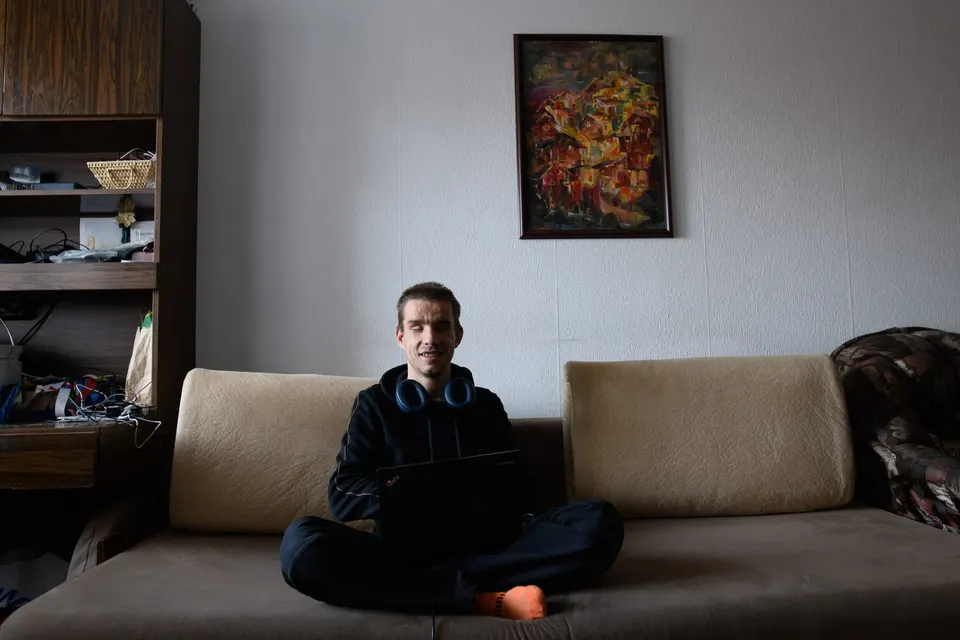
“In my view, website accessibility is an extremely important topic, and companies across the board downplay it,” says Viktor. It is also a topic that will be talked about a great deal in the coming months—I'm telling you this as a journalist, but also as a front-end programmer.
The European Accessibility Act is a document that sets out why and exactly how all websites operating within the EU must be built so that they are accessible to everyone who opens them with the help of screen readers. This technology is used by people with visual impairments and lets them make full use of today's websites—as long as certain rules are followed. If the programmers building the sites don't pay the necessary attention, the sites become awkward and even incomprehensible for people who open them through screen readers.
Soon that will definitely be the exception. The deadline for websites to comply with the requirements expires in June 2025. The fines are serious, and the topic will come up more and more, since websites often have to make a serious effort to meet the requirements.
But why does it matter? I'll let Viktor explain:
“Right now websites don't follow these rules at all! Banks, shops, across the board. People like me have no other way to use a given site. Technology keeps improving, developing…, and I open the page and can't even use my online banking.”
“For people who aren't IT specialists, I'll explain it like this. We have a warehouse full of stuff, crammed with everything you can think of. We go in to look for something and start rummaging chaotically, because we haven't labeled the shelves and sections properly. In the ‘plumbing’ section we find drawers full of bolts. You dig through the piles and keep pulling out things you don't need. It's the same with improper labeling on websites—everything has to be clearly described: buttons, forms, headings.
For example, we have a form to fill in—first name, middle name, last name, year of birth. If you land in the ‘middle name’ field and its label is somewhere far away, the reader has no way of orienting you. It becomes almost impossible to fill in the whole form.”
Or take images. Obviously, the first thought of any website owner is not to describe every picture so that it's clear what it shows to visitors using screen readers. Yet this is not only extremely useful for them, it's not at all difficult—it can even be automated. As long, of course, as we make a certain effort.
“It matters for people like me, and it's wonderful that companies will have to start following the rules,” says Viktor. “I'm sure plenty of programmers will say to themselves: ‘Do I really have to? Why should I fix some old mess?’ Well, try it. Take a screen reader and you'll quickly see how unpleasant it is to land on a site where the rules aren't followed. And how many pages that applies to in full…”
Sometimes it's hard to judge how well a given site meets the requirements; in other cases, serious inconvenience arises when more complex problems have to be fixed. So I'll take this opportunity to recommend the software company I work for—AIOPSGROUP, which has put together a team with more than a few interesting digital stories (which, of course, I'll tell soon), including people with visual impairments and experienced specialists in precisely this field. The idea is to help exactly when accessibility matters (more on the topic here).
2. Digital Red Tape
After that minute of fully deserved and deliberate advertising, let's go back to accessibility, but in its other forms.
Today we all spend so much of our time online, delegating more and more of our lives to computers. Technology allows for greater accessibility; people with various disabilities can use it ever more fully… but sometimes it takes only a small, thoughtful effort.
Viktor says one such example is voting machines. They aren't designed for the needs of people with visual impairments, and it wouldn't be hard at all to make them so. That way, blind people could vote fully on their own, without having to ask for help and without the risk of voting for someone other than who they had chosen.
In Bulgaria, at least, elections come around often enough… so maybe it wouldn't be hard to give this some thought?
According to Viktor, the same goes for ATMs. All too often the chosen solutions have the user enter data on the screen itself—no buttons, no keypads. Convenient, easy, but… not for people with visual impairments. “It's the same with card terminals,” says Viktor. “The problem is entering the PIN. Usually I have to go and tell it to the cashier so they can enter it for me. It's happened to me—I have people I trust. We go to the storeroom because the front is full of people, and then it turns out there's no signal back there… We enter the amount, go to the back, enter the PIN, come out and pray it connects so the payment goes through. That's modern, but it isn't accessible. It's a problem for me, and for the seller too. Of course, technology is a plus for people, but sometimes it's introduced without proper thought,” Viktor sums up.
Sadly, in his view, there are also serious problems with blind people's access to innovative technologies that could make their lives dramatically fuller.
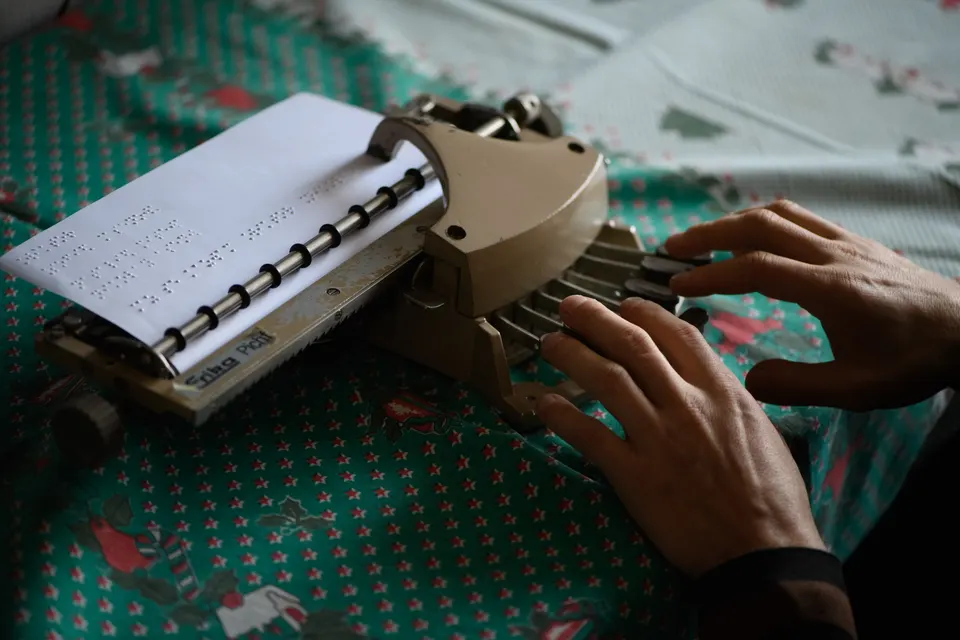
At the social assistance directorates, they apply for high-tech assistive devices—for example, glasses that describe the surroundings and help with orientation. Or braille displays and printers—all technologies that are very useful but that many can't afford: the glasses cost 8,000–10,000 leva (about $4,400–5,500), a braille printer from 12,000 to 20,000 leva. “So far, so good, but somebody is clearly mocking us. The directorates keep inventing new documents, the conditions change all the time. Right now I'm working precisely on saving this program, otherwise we'll lose the European Union funding,” says Viktor.
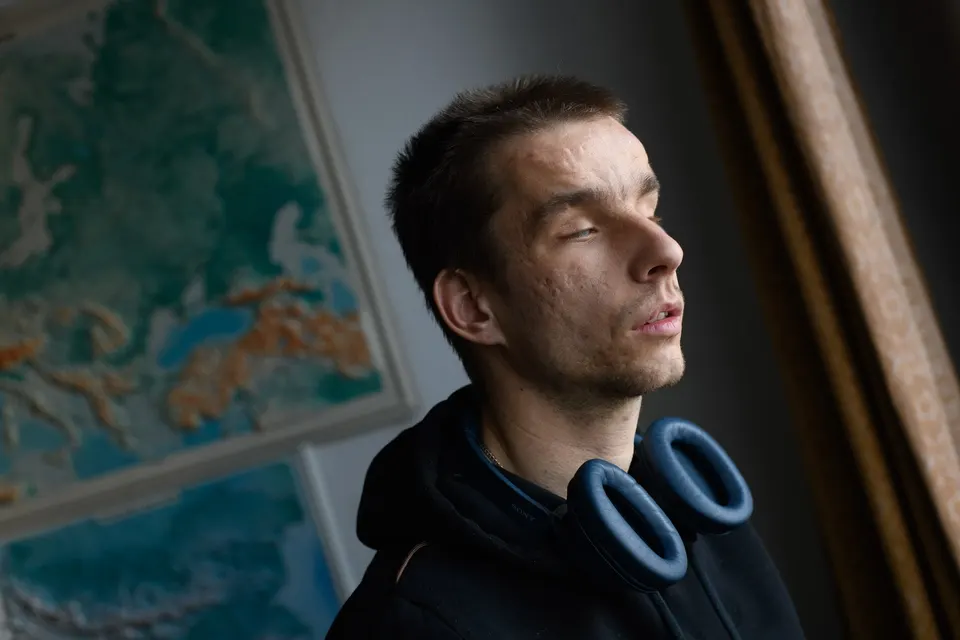
3. It Never Hurts to Ask
To be honest, I don't know how to avoid making mistakes in the way I treat people with disabilities. How can I be useful if I meet them? How can I avoid offending them? Maybe you ask yourself similar questions, so Viktor's answer may be useful to you too:
“It's not hard, people don't make any big mistakes. What's important to know is that it's always good to ask: ‘Do you need help?’ If yes, you stand next to me and offer your left elbow. I don't insist on it—if I need help, I'll come and ask you myself, because I'm more of the blunt, no-nonsense type. But a lot of other people don't dare. It's always good if you just ask.
The normal thing is to say when the light is green and when it's red. If you see someone with a guide dog, under no circumstances touch it by the leash before asking whether you may. I, for instance, will let you pet him—my dog will jump up, be happy, want to sniff you, pay attention to you. But there are cases where this can lead to serious problems.
Ask, people! Just ask! Don't worry that you'll blurt out something silly!
The other day a woman stopped me: ‘Could you give me directions in the neighborhood—how do I get out onto Botevgradsko?’ (a major boulevard in Sofia). I stood next to her and pointed: if you turn that way, you'll come out on Todorini Kukli Street. She was obviously having trouble finding her way, so I gave her directions.
There are people who panic when they strike up a conversation with me and only then notice that I'm blind. Relax, I'll explain, I'll even point you the right way. I, for one, will certainly not be offended.”
Talking more, asking more… isn't that the way not only to be useful to people facing various difficulties, but also to solve some of the big problems we all face as a society?
4. Staying on the Line
Moving offline, I can't help asking Viktor, as someone who has traveled quite a lot, what he thinks of Sofia's urban environment. I can guess what the answer will be, and it doesn't surprise me. He has been to quite a few countries in Western Europe—Spain, Italy, Austria, Germany, France. He says that although conditions in Bulgarian cities are gradually improving, we are still very far behind them. Still, it's much more convenient in Sofia than in Nepal. “There are places worse than us for urban accessibility… But if we're going to compare ourselves with the Nepalese, that doesn't seem okay to me. There are no traffic lights there, no pedestrian crossings, nothing,” says Viktor.
One of the biggest possible improvements is laying tactile guide lines in the pavement. Tiles, or adhesive strips, with gentle parallel ridges that help people with disabilities get around safely.
How do they work? The lines lead in such a way that a person with a white cane can rest it against them and follow them to a given destination. They alternate with raised dots where there's a fork, and braille signs describing which way leads where.
They would be very useful not only on the street but in shops as well. “This is done abroad and it's definitely a big plus. We're not going to close the mall and rip up the entire floor! These guide lines really work and don't bother anyone,” says Viktor.
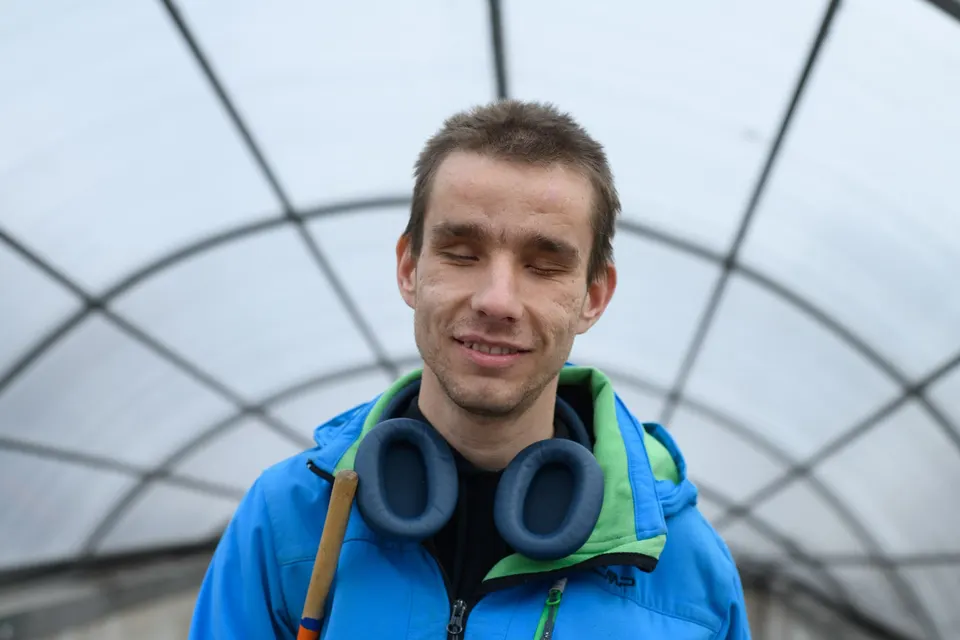
5. Out Pops a Dog
A big topic that, according to Viktor, doesn't get talked about enough is guide dogs.
First of all, it's important to know that they should be allowed absolutely everywhere—into a laboratory, a dentist's office, a shop, and every kind of vehicle. There is only one exception, and that's an intensive care operating room. The dogs are specially trained, and it's important that they be admitted everywhere. Yet Viktor says it very often happens that he is refused, and that people make trouble for him in all sorts of circumstances.
These dogs go through very serious, specialized training so that they stay calm and can cope with the complex urban environment, which was not designed with them in mind.
That's why they're trained in Sofia. The aim is for them not to be frightened by loud noises, to know unusual surfaces, to get used to all kinds of vehicles.
“Our dogs are trained to walk even where there's no sidewalk, because that happens often here. Once I was present when colleagues from Australia came to the only guide dog school. And they were astonished, because they didn't expect to encounter horse carts, missing sidewalks, garbage bins on the sidewalks, parked cars. Afterward they said that if the dogs can cope in these conditions, they are definitely among the best in the world.”
“The guide dog school is my great cause,” adds today's hero. “There's only one in the country, and it's funded solely by sponsorship. All over the world such schools are funded by the state, but in Bulgaria, unfortunately, the state has abdicated this duty.”
If you, too, think this cause is important, you can help in various ways. For example, foster families for guide dogs are constantly being sought.
To become one, it's enough to live in Sofia and be able to keep a dog, with no children under 10 in the home. Once or twice a month, on weekends, the foster family has to take the dog to training. Otherwise, it's good for the dog to be walked as much as possible and in as many places as possible—if there's also a cat in the home, that's a plus, because your guest will learn not to be startled by this natural irritant either. It's a plus if the building has an elevator.
And so… it turns out it isn't that hard to be useful to one another. And sometimes small steps can help people with visual impairments a great deal. I couldn't find reliable data on their exact number, but there are definitely more than 10,000 of them in Bulgaria.
And the first step is so easy! Just think. Just ask…