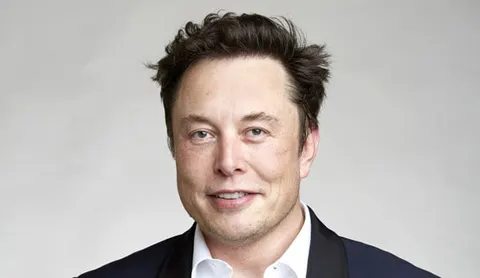
You may even be tired of seeing his name in the news. He is the undisputed superstar of our time, and just about everyone has tried their hand at portraying his endlessly curious persona.
And yet, we will try to peer into the heart of all the major contradictions that Elon Musk holds within himself. We will look further back into his story in search of his true face. In today’s public space, torn apart by extreme contradictions, the nuances are increasingly lost. And it is precisely in them that the key lies.
The Inhuman Human
He is the man who:
- Brought the most powerful nation on Earth today back into space.
- Promises us he will push on to Mars, even though he has postponed his forecasts quite a few times already.
- Promises to connect our brains to computers through the Neuralink project.
- Sparked a transportation revolution by creating the unthinkable Tesla project: an ultramodern, sexy and affordable electric car.
- Became the person of 2021 according to every ranking imaginable, and the richest earthling in world history.
And at the same time, the man who:
- So often manages to infuriate even his biggest fans with some strange, extreme position.
- Can, with a single word on Twitter, sink or lift entire companies and decide elections.
- Is capable of being rude in the ugliest way.
- All too often turns out to be far too naive in his optimistic forecasts.
- Is definitely pathologically eccentric.
- Is unimpressed by what people think, or else deliberately provokes them with decisions like giving his latest child an elvish name. Like launching his own car to drift toward the stars. Like challenging Vladimir Putin to a duel on Twitter to end the war in Ukraine…
And yet… who is he, really?
The Aging Kid
Today Elon Musk is exactly half a century old. For horoscope lovers, we will note that he is a Cancer, born on June 28, 1971. As if always out of contrariness, he moves crab-like, backward and forward at the same time. Despite all his colossal successes in business and technology, he remains an overgrown kid. In May 2021 he revealed that as a child he had been diagnosed with Asperger’s syndrome, a condition on the autism spectrum.
The creator of PayPal, SpaceX and Tesla is the last of the Mohicans from those romantic times when we believed that a strong personality could change everyone’s life. We expect him to pave the way for the transportation of the future, to bring about the long-awaited energy revolution and, to top it all off, to take us to Mars. Aren’t those expectations a bit much? Where does the charm of the last remaining capitalist Superman lie?
The Daydreaming Pragmatist
When he gives interviews, he drawls his words, looks timid, behaves like a character from The Big Bang Theory, and still holds everyone’s gaze (and, sparing no self-irony, he really did appear in an episode of the nerdy sitcom). He never stopped criticizing Donald Trump on his way to the White House, yet agreed to join his advisory council on the economy and innovation so that his opinion would be heard. Then he left it with a bang, disagreeing with the decision for the United States to abandon its commitments under the Paris climate agreement.
He is as much a dreamer as he is a strict pragmatist, and you certainly would not want to find yourself cast as his competitor. Even less so among his friends or subordinates.
The Pacifist Brawler
“I had a tough childhood, maybe that helps me,” says Musk. He was born in Pretoria, South Africa, at the height of apartheid. He was conceived during his parents’ honeymoon, but things did not stay sweet for long. They separated when he was very young. So that his father would not be lonely, Elon and his brother decided to go and live with him, but he turned out to be a harsh and cold man.
The whole environment was the same. At school he was bullied—the usual fate of the dreamy boy who is into computers more than into games outside. One day the class thugs pushed him down the stairs, and he spent a whole week in the hospital. His only friend at school betrayed him too: he invited Elon to meet, and Elon walked into yet another beating.
At 10, however, he saw for the first time one of those clunky ancestors of today’s computers, and things changed. He had found the catalyst that set in motion the perpetual motion machine of his endless curiosity. At just 12, his name was heard in the computer world for the first time, as the creator of a successful game.
His other passion was reading. Sometimes he spent up to 10 hours in the library, and whenever he went missing, his father knew where to find him. He never stopped trying out the new things he read about—although he was an obedient student, that did not stop him from launching rockets during breaks.
Triumphant Tragedy
Then he turned 17 and faced an important dilemma: stay in his native South Africa and go into the army, serving a regime he disliked, or try something different. He and his brother Kimbal left for Canada in search of a distant uncle. It turned out the relative had long since moved away, but from childhood Elon had never given up easily. For a year he did whatever work came his way. He picked vegetables, but the seasonal work was not enough, and so they ended up at a lumber mill, where his job was to clean the boiler. The pay was decent, but… half an hour in the high temperature and polluted air inside was enough to kill a man. Of the 30 who started the job, two were left after the first month, and one of them was Musk.
He needed the money to continue his education—he had set his sights on computer technology and soon reached his goal. Stop picturing the typical geeky youth now. Flirting with his fellow student Justine Wilson, Musk made a bet over which of them would get the higher grade on an exam. Musk scored 97 percent and… lost. But he didn’t give up: he went to the teacher’s house to convince him that an answer he had not accepted was in fact correct. In the end he won the contest, but conceded defeat anyway, sending Justine 12 roses, each with a different note.
At the same time, while studying hard, Elon was… simultaneously the owner of an illegal bar for 500 people and the author of innovative papers on renewable energy and modern technology.
Soon he had to decide what to devote himself to, and his first idea was computer games; he played for days on end. “But then what mark will I leave on the world?” was the question that came up. At university he had spent a lot of time thinking about which directions made sense to work in, and three fields had always stood out as the ones that would develop fastest: the internet, renewable energy and space.
The Boring Sensation
That magic trio would shape his path forward. In the early 1990s the internet was far from playing today’s role. Elon and his brother Kimbal were already in the United States and took a road trip across the country, debating which area of life could be revolutionized by new technology.
They started with the media. Their first company, Zip2, was an online information directory, but things went slowly. Used to it since childhood, the two argued and often settled who was right with their fists—once, after a nasty scrape, Elon had to get a tetanus shot. Their style of discussion evidently produced results, though, because the platform took off and even attracted clients like The New York Times. Soon the company was sold for good money, and Elon had turned from a suspicious immigrant into a promising young man before whom every door was open.
The Practical Theorist
It is tempting to settle for your first success. But Musk immediately took on his next project, pouring a huge share of his earnings into it. Since his student days he had had the idea of founding an online bank, because he believed banking had fallen behind in the world of technology. Money does not require heavy data traffic, there is no need to upgrade any infrastructure; it can be turned into values in a database, which simply has to be well protected. That is how a brand you surely know better was born: PayPal. The pilot transfer was sent by email on Christmas Day 1999.
The system let us move money cheaply, traceably and conveniently from one end of the planet to the other, and it was Musk’s first big project. As would become clear later, he is not afraid to enter complex sectors like banking; he slowly studies them before turning out to be an expert.
In 2002 eBay bought PayPal for $1.5 billion. At just 27, Musk was already a multimillionaire. Less than 10 years after doing hard physical labor in Canada for a pittance, he bought himself a plane. Also a McLaren sports car for $1 million—one of 62 in the world. Unlike the other 61 owners, who used their shiny toys for important occasions, he simply drove it to work. Until, a year later, rushing to a meeting, he floored the gas pedal… and the million-dollar McLaren turned into a heap of scrap. “And the funniest part is that the car wasn’t even insured,” Musk told his passenger as he climbed out of the wreck.
The Naive Visionary
He is not a man who likes to play it safe. He goes through risks and bold decisions. At one point his partners at PayPal conspired to sideline him, thinking he was too adventurous. That did not stop him, and when the sale of the company went through, Musk found himself on the launch pad for the flight toward his real goals: he made $250 million, of which $180 million was left after taxes.
Before getting down to work, though, he decided to treat himself to a break. During the turbulent years of his first projects he had proposed to that same Justine from university. Simply, as they were walking down the street, he told her that everything in their relationship had become a bit much and it was time for a change. She agreed, and the next day the fiancé repeated the procedure in the usual saccharine, clichéd American way.
After the successful deal it was time for a long-postponed honeymoon in Musk’s native South Africa, at a wildlife reserve. The days passed beautifully, and the two returned to America more than pleased with their holiday, when… he fell seriously ill and lost consciousness. The doctors tried diagnosis after diagnosis, things kept getting worse… until a young doctor who had come from far away suggested trying something the high-tech specialists had not thought of: drugs for malaria, routine in those parts of the world. Musk survived thanks to a cheap medication and concluded: “That’s my lesson from taking a vacation: vacations will kill you.”
The Grounded Martian
Musk nearly ended up “in heaven,” and it was precisely then that he began to look at the skies differently. He had to take it easy for six months after the serious illness, lost 22 kilograms and decided to move to Los Angeles. One evening, to break up the tedious recovery, he showed up at a dinner of the Mars Society—a group of enthusiasts united by the idea that humanity must not postpone colonizing the Red Planet. He liked their ideas, and that very evening he donated a huge sum to build an Arctic base for research ahead of a future expedition to Mars.
The next morning, still badly weakened, he was determined to fight and knew how to leave a deep mark of his passage on Earth. He went to NASA’s website to see the plans for settling Mars… and found nothing. So he decided that he must be the one to take the first step. His idea was to send mice to Mars, which by his calculations would cost $15 million, and then a greenhouse.
The dream had been unleashed. Musk met with representatives of the Russian space industry, and they began working together, but then a new idea came to him. After diving deep into this subject too in a matter of months, Musk realized that the space industry had not evolved much in 50 years. He decided it was time for something radically different, and that he was the one capable of creating it.
The first step was to send into space a rocket that could carry satellites into orbit. In April 2002 Musk dropped the idea of sending plants and animals far away altogether and set up a company for commercial projects that would one day take humanity to Mars. SpaceX was founded in June of that year in an abandoned warehouse. Musk decided the first rocket would be called Falcon 1—naming it after the Millennium Falcon, the ship of Han Solo and Chewbacca.
If at the time putting 250 kilograms of cargo into space cost $30 million, Musk promised to “lift” 635 kilograms for $6.9 million. Promises are a cheap currency, but Musk, by now an experienced market player, managed to give them a high value. “I may have been too optimistic about the timelines of some of our projects, but I have never promised something I didn’t deliver,” he says.
The Family Loner
In the midst of the venture his wife Justine gave birth to their first son, Nevada Alexander Musk. The two cared for him step by step, just as the pediatricians taught them. But at 10 weeks old the baby died suddenly—it was the inexplicable diagnosis doctors call sudden infant death syndrome.
Musk does not like to talk about what happened, but he and Justine did not despair. Weeks after the fatal moment she went to an IVF clinic, and nine months later she gave birth to twins. Exactly a year after that she gave birth again: this time to triplets.
The dad, however, had no time for diapers; by then he had assembled a team of outstanding specialists who were turning his dreams into reality. The challenges were many. One of SpaceX’s first tasks was to build a gas generator—a small rocket engine that was soon mounted on the company’s jeep and tested. The abandoned warehouse was now crammed with people and machinery and looked like a real dream factory.
Musk said the first rocket built there would fly in 2004. People worked 12 hours a day, six days a week, stopping only at Musk’s command… to spend a few hours playing networked action games with lots of shooting.
March 24, 2006: Falcon 1 stood on its launch pad. It lifted off, and then fell straight down. Musk did not take the first failure dramatically and hurried to say that in six months the next rocket of its kind would fly into space.
The first successful launch came on March 21, 2007. Five priceless minutes of successful flight before the rocket began to wobble and, its job done, turned back toward the ground.
The Gambling Pragmatist
At the same time, all eyes turned to his other big venture—Tesla, which Musk had funded with part of the money he made from selling PayPal. Like its space sibling, the company that showed electric cars could be attractive, a rich person’s dream and a symbol of taste, seemed doomed at the start.
Here too Musk applied the rules he knew from software companies: build as many of the resources as possible yourself, take risks by tackling unfamiliar fields, avoid dependence on countless raw-material suppliers and on traditional media advertising. And although at the time there was still no working, sellable Tesla prototype, the company’s founder managed to attract attention.
He had already become a pop celebrity, as is evident from his wife Justine’s blog. She describes how the two of them met Leonardo DiCaprio, who jokingly asked to be given the future Tesla model, and Musk refused. Incidentally, again in those moments of candor, she writes about how her husband went to great lengths to buy her a 19th-century edition of Pride and Prejudice, and how his best friends call him Elonius. And that he loves to bet a dollar on tasks he is sure to win.
Musk had suddenly become a star, having built the image of a man who makes grandiose promises and then keeps them, though never on time. The media called him “half playboy, half space cowboy.”
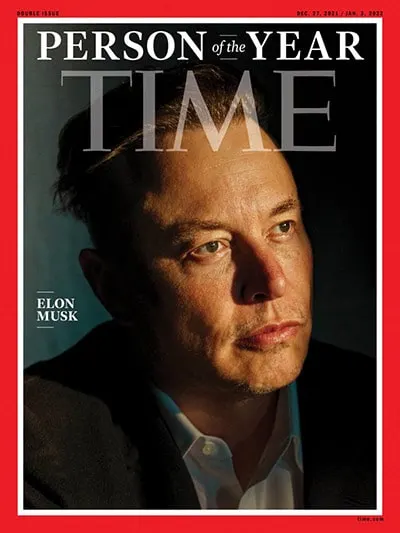
It would be a long time before we all got to know him better. And before, on the last day of 2021, Time magazine named him Person of the Year with its famous definition: “Musk is a genius, an industrialist, a showman, a madcap hybrid of Thomas Edison, P.T. Barnum, Andrew Carnegie.”
The Nerdy Playboy
2008 brought a hard moment for him. The global financial crisis combined with tactical setbacks at both companies, and Musk’s prospects went from rosy to black and blue. Both companies had made grandiose promises that were running late, and their founder was determined to fight, throwing himself into negotiations and balancing acts. He told a friend he was ready to mortgage his own house and end up in his mother-in-law’s basement, as long as he got working prototypes of an orbital rocket and an electric car.
Soon the mother-in-law stopped being an option: a letter arrived, and Justine learned that… her husband had filed for divorce. He is not easy to live with, the friction was there, but he had not even told her he was considering such a step.
When Musk decides something, he is not one for backing down. A few months earlier, one evening a friend had managed to drag him to a bar, where he met a 22-year-old actress, almost half his age at the time, who had become a star with her role in the latest Hollywood version of Pride and Prejudice. She admits she listened to him out of politeness, while the futurist was amazed that a model was interested in rockets and electric cars. He invited her up to his hotel room to show her his rockets, and… as she tells it, he really did show her models of his rockets. Then Talulah Riley, 14 years his junior, got a marriage proposal before her future husband had even filed the divorce papers (he told her, “being with me means choosing the hard path,” evidently leaving out the millions after the divorce proceedings).
Blossoming in Crisis
He and Talulah spent quite a few years together but had no children. At one point they divorced, remarried a few months later, and then came another breakup. Musk began a relationship with another actress, Johnny Depp’s ex-wife Amber Heard; then they split, then got back together and split again…
Until it came to his relationship with the Canadian singer Grimes, which produced Musk’s latest child to date, the one with the famous name. At first it was to be X Æ A-12, and the final version on the documents reads X as the first name, AE A-XII as the middle name and Musk as the surname.
Sometimes Elon worries that his children will not suffer the way he did in the rough environment of the South African school. He believes the hard moments of his childhood helped him become who he is. His six kids are growing up happy and can afford every luxury, given their father’s fortune.
“But what am I supposed to do, create hardships for them artificially? How would I do that? For now the biggest battle is limiting video games. The rule I introduced is that they always have to read longer than they play.”
In December 2021 Elon said he had split from Grimes, and for a short while he was an eligible bachelor. Before it emerged that his new girlfriend was the 27-year-old Australian actress Natasha Bassett, who says she fell for him because he is “so smart and interesting.” And suddenly it turned out he had… yet another child with Grimes, which they had neglected to share with the public. But it is time to be done with his personal dramas and turn our attention to what matters: the successes that make him my generation’s favorite visionary.
Innovation from Scrap
The first production Tesla arrived triumphantly on the market and became a total hit. Falcon 1 managed to reach orbit on its fourth flight. Six years from the first project had been enough… but also four and a half more than originally planned. There had been many stumbles, but SpaceX was now the first private company to put a rocket into orbit, which placed it among the handful of countries that had done so. NASA decided to fund the project under which Musk’s rockets would carry astronauts into orbit.
The Falcon could now fly, with an oval container for satellites or people ready to find themselves far from Earth. What’s more, Musk’s rocket takes off and comes back—an idea long abandoned along with the space shuttles. Most specialists claimed that reusing space travelers was not efficient because of how materials wear out in space.
Today rockets are launched at least once a month, even though just a decade ago it seemed impossible for a single company to take on such a venture.
Musk’s company makes 80 to 90 percent of the parts for its rockets itself—from the engines and electronics to the software. This strategy is in stark contrast to the competition; for example, another of the leading companies, ULA, openly boasts of depending on 1,200 suppliers. Doing it in-house allows greater flexibility and makes it possible to refine some technologies. Musk gives radio transmitters as an example: SpaceX engineers found that with simple design changes their weight could be cut by 20 percent, while the cost of some types of equipment dropped from $50,000–100,000 to $5,000.
The Honest Liar
After 2009 and the big success, resources grew considerably, and with them the scale of the work. In December 2010 Falcon put into space the Dragon capsule—the spacecraft initially meant to supply the International Space Station with cargo and later to carry people into orbit. The launch was a success, the Dragon splashed down safely and brought back to Earth… an intact wheel of cheese. The wheel had been given to Musk by the billionaire and fellow competitor Jeff Skoll, back in the years when our hero thought the right way to colonize space was to send mice first.
By now we are well acquainted with Musk’s knack for such wacky decisions that grab PR attention and stick in memory. Like the decision to send his personal Tesla Roadster into orbit. During the long (if we believe Musk—billions of) years of travel its creator predicts for it, the mannequin aboard the car will listen nonstop to the same David Bowie song.
Musk’s real triumph in space came in 2020: in May, Falcon 9 and the Crew Dragon spacecraft sent two astronauts to the International Space Station, and at the end of the year the same happened with four more. It became definitively clear that this was the first American rocket in a very long time capable of carrying people into space.
The Humanist Capitalist
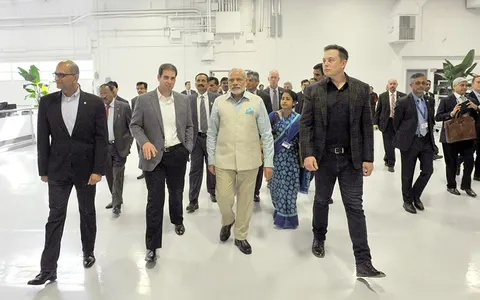
“You walk one mile south, then one mile west, then one mile north, and you end up where you started. Where are you?” This is one of Musk’s mandatory questions for future SpaceX employees. In the early years he insisted on interviewing them personally—that is how the pioneering 100 were hired—and to this day he likes to pick new staff himself and does so whenever he can (and on the question—have a think yourself; you’ll find the answer here). Today his companies employ more than 20,000 people, and the plan is for that number to keep growing. Candidates are vetted on many levels, go through a series of tough tests and at the end write an essay on why they want to work at SpaceX.
“Elon has always been an optimist. To put it mildly. When it comes to the deadline for when something will be ready, he can be an absolute liar,” says one of the lead engineers, Kevin Brogan. “He usually picks the most aggressive schedule, assuming everything will go as planned. Then he shortens the deadline further because he assumes everyone can work even harder. He often goes to the factory and starts quizzing the engineers about a particular material or part. At first I thought he was testing me, to check whether I knew my job, but then I realized he actually wanted to learn. He would question each of us until he had learned 90 percent of what we knew. He is capable of absorbing an enormous amount of information with almost flawless accuracy.”
The Nice Jerk
However great the successes, they are never enough for Musk, and that makes him a rather unpleasant boss. A week after one of the biggest successes—putting the first Dragon into orbit—it was time for the company Christmas party. Everyone was ready to celebrate, dressed in festive outfits, when Musk gathered six of the directors and spent an entire hour giving them a dressing-down (or a dragon-down?), because part of the support infrastructure for one of the rockets was behind schedule. Meanwhile their wives waited behind a few thin office partitions for the scolding to end.
“Musk’s worst character trait is a complete lack of loyalty or human attachment,” says one of his former employees. “Many of us worked for him tirelessly for years, only to be tossed aside like garbage at the end without a second thought. Maybe the idea of keeping us on edge and afraid was planned in advance. The people who worked for him were treated like ammunition—used for a specific purpose until worn out, then discarded.”
Still, Musk is no less demanding of himself. He does not spare himself and travels constantly. Every week he works at least two days at SpaceX headquarters, two more at Tesla and one for SolarCity, each of the companies located in a distant city. He has no permanent home, but doesn’t like hotels either, and sleeps at friends’ places.
Not long ago he boasted that he had sold all his real estate and… the richest man in history is homeless.
He rarely allows himself to rest, but when he does, it is in unusual ways: he celebrated his 40th birthday in an old castle where… he played hide-and-seek with friends. What makes him closer to people in our part of the world is the fact that he loves to swear for any reason or none at all.
Give and Take
“It’s a little strange to love gasoline. Honestly,” says Musk. Let us briefly return to Tesla, which excites with its earthly dimensions no less than Musk’s cosmic ambitions. In mid-2012 the flagship arrived—the Model S, which reaches 100 km/h in 4.3 seconds and goes 480 kilometers on a single charge, with electricity consumption equivalent to 2.3 liters of fuel per 100 kilometers—all specs unthinkable for an electric car until then.
With its aluminum construction (an unusual material for the purpose, chosen by Musk), the car achieved the highest score in history in safety ratings. In ordinary cars engine efficiency is 10 to 20 percent, while 70 percent is lost as heat from the several thousand moving parts in use. The Model S has an efficiency of about 60 percent and… barely a dozen moving parts, as Americans like to count them.
Then came the next models and the improved Autopilot.
And here, last but not least, comes the marketing—strong because it is sincere and original. If you decide to buy a Tesla, delivery is special. The company brings the car to your home, your office or wherever you like, and if you decide to pick it up at the factory, you get a tour of it as a bonus. For many months it needs no maintenance, and if something goes wrong you get an identical replacement car.
In 2013 Musk staged another unusual event. He invited Tesla customers and fans to a large hall; a car stood on the stage, he climbed up next to it, a hole opened in the floor, and Musk explained that from the very beginning of the project the battery pack had been designed to be swapped in seconds. Until then the company had told no one about this feature, which means you don’t have to wait at every station for the battery to charge—you just swap it and drive on.
Then he set himself new, ultra-ambitious goals, and by all appearances he would never achieve them. The board of directors even tried to get rid of him… but they failed, while he, on the contrary, surprised everyone once again. Then came the next enormous successes and the engineer-entrepreneur’s wealth, unthinkable today.
The Underground Airhead
Although he is a rocket fan, he believes the road to easing traffic in big cities runs underground. In 2013 Musk proposed the Hyperloop project: a giant pneumatic tube underground whose capsules, reaching 360 km/h, would carry people and cars. At first this would happen in Los Angeles. Musk plans to build a network of tunnels that would end the problem of people losing too much of their lives getting to work. They would drive their cars into an elevator, the cars would be fixed onto platforms and moved along under control.
Another part of the future comes from the development of the Gigafactories, with which Musk wants to make even cheaper and more eco-friendly batteries for electric cars. “My goal is a future in which we no longer feel guilty about the energy we use. And for that we need only 100 more Gigafactories,” says Musk.
In this direction his successes are still lagging. So before we part, let us once again look up at the heavens together with him. This year a breakthrough is expected with his Starlink wireless internet system, meant to cover the entire planet.
The Earthly Mars
And we turn our gaze to the Red Planet. According to Musk, we ought to colonize it, and that will begin with a big city with numerous settlers. For that to be possible, we need to find a way to launch rockets several times a day. “If you carry 100 people at a time, which is a serious number for a long journey, you will need 10,000 flights. A convenient window for reaching Mars comes once every two years, so it would take 40 to 50 years. Each flight must first reach orbit and refuel there, which requires a tanker ship, and the journey would take three months instead of six. The engine must run entirely on methane.
“I think by 2025 we will have engines and ships ready,” Musk believed in 2018. “If the cost of the trip today is a billion dollars, we won’t have a colony. But if it drops to $1 million, it’s much more likely. There will be enough people willing to sell everything they have and move. This is not about tourism, but about a journey comparable to going to America when it was the New World. At some point we will have to warm up the planet’s surface, but the chance of Mars coming to resemble Earth while I’m alive is 0.001 percent,” the visionary reasons soberly, yet he never stops working toward that 0.001 percent.
Over the past two years he has not been quite so generous with forecasts on the subject, until on February 11 he gave an impressive presentation, including an animation of what lies ahead.
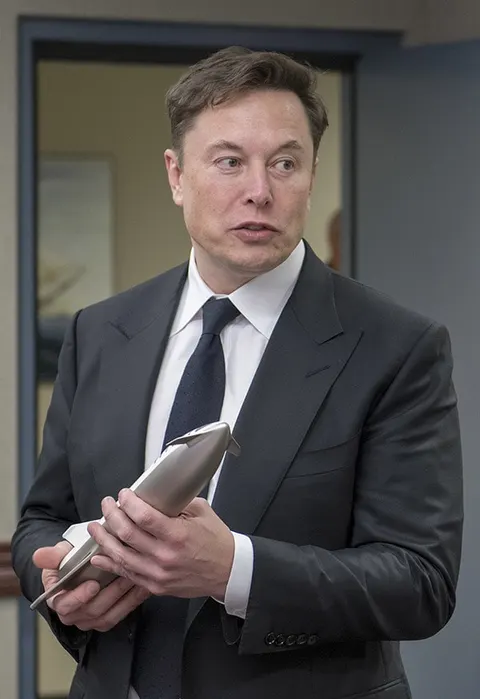
Musk unveiled the new rocket system made up of the Starship spacecraft and the Super Heavy booster, designed to carry large numbers of people to Mars and even farther.
The booster is designed to spend a total of six minutes in the air—two for the ascent and four for its return trip. The system will be able to handle three launches a day. Super Heavy has more than twice the thrust of the Saturn V, the most powerful rocket ever to head into space.
It seems the dream is becoming ever more concrete and close…
The Dreaming Dry Stick
“I think it’s important to have a future that is enjoyable and inspiring. There have to be reasons to get up in the morning and want to live. What’s the point? What inspires me? What awaits me in the future? If it doesn’t include being out there among the stars, being a multiplanetary species, I would find that incredibly depressing,” says Musk. “It would be very sad for me to believe that we humans will stay on Earth forever. I don’t want to be anyone’s savior, I’m just trying to think about the future without being sad,” says Musk.
In his office hang two pictures of Mars: one as it is now, and a completely different one, a green version, the way he dreams of seeing it.
However nasty some sides of his character, however brazen he may sometimes seem, for now he appears to be humanity’s great hope for a new space age. For the time to come again when children dream of becoming astronauts, not influencers. When together we will have the chance to discover new worlds. Like no other, Musk’s story shows that nothing is impossible. If you are stubborn enough never to abandon your dreams, even for a moment.
To the question Musk asks in every interview, the most intuitive answer is the North Pole. But the South Pole is also a possible answer, and it is the people who give that one who catch his attention more—remember that if you ever find yourself in a job interview with Elon.
The biographical side of Musk’s story is based on the book “Elon Musk: Tesla, SpaceX, and the Quest for a Fantastic Future” by Ashlee Vance, his only official biography, written with his special cooperation.