Autonomous cars are one of the most eagerly awaited technologies today. News keeps arriving from some corner of the world where prototype cars have been allowed to drive themselves. And yet it all remains mostly in the realm of experiment. The big news of fully self-driving cars seems very close… and has for quite a while now. We wait for them impatiently, so they can change our whole relationship with transportation. So they can save thousands of human lives.
But when will they be fully here? How do they work? Can they really guarantee our safety?
Drivers Are Like a Flock
I will never forget my first encounter with autonomous vehicles. It was some 30 years ago, in the village. The mayor, four terms in office, had overdone it a little with the rakia, the Bulgarian fruit brandy, and climbed onto his tractor. The machine refused to start, so he decided to push it down the slope and jump on while it was moving. The result was a noisy collision with our house, and a few days later the owner of the autonomous tractor had personally taken up the job of bricking up the damage to our wall.
Should we expect something similar from the new autonomous cars? Definitely not. They won't know how to lay bricks and patch up their own damage. But by all appearances, they will be able to drive us around more carefully than we can manage ourselves.
What is driving? A sequence of decisions. Gas, half-clutch, turn, brake. And a bit of swearing, especially if you're in the center of a big city. The decisions are made on the basis of the most detailed possible data about the traffic situation, the weather conditions, the state of the car.
Minivan, Stay Put!
In other words: (swearing aside) all of this looks, on the face of it, like a wonderful task we could delegate to algorithms. Because that is exactly what they are good at—coping with clearly defined conditions. Artificial intelligence—machine learning algorithms—can analyze an enormous number of input parameters to arrive, in the end, at the optimal decision. Gas, brake, turn.
Our electronic chauffeur will certainly make far fewer human errors. Its mood and condition will no longer matter at all. If everything is working properly, there is no way it will “scrape” a lamppost, or overdo the drinking, as Bulgarian celebrities quite often do. No way it will ignore road conditions. Or drive recklessly. Of course, there will always be crashes, but we'll come to that in a moment. Logic suggests there will be significantly fewer of them, because the factors that lead to road accidents will be drastically reduced.
Machine learning has shown it can work astonishingly well in many directions. Facial recognition is practically flawless. Translation done by neural networks is heading down the same road.
Just Around the Block
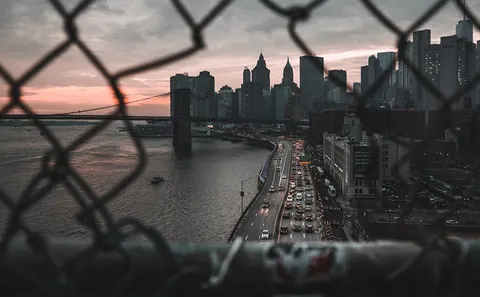
So what if we soon have cars that drive themselves? Huge areas of our lives will change. Yet another profession with many, many members will disappear. I'm sure you'll miss the taxi driver with his eternal “They've ruined this country”; let's hope the creators of AI put enough sense of humor into the electronic driver.
What's more, owning your own car will become practically unnecessary. Whenever you need one, you'll be able to rent it. The price will be much lower than today's taxis, because one of the most expensive components drops out—human labor. And that will improve planning and change the entire organization of cities and traffic. With fully autonomous cars, problems like traffic jams and the shortage of parking spaces will be left in the past forever.
And carmakers will earn less, because they won't need to sell a car to everyone… Could that be the reason why we still don't have the first car that meets all the requirements for autonomy?
Let It Roll
To tell you the truth, based on everything I've read, I have no clear-cut answer. Perhaps, for now, many of the main contenders really don't gain anything from retiring the driver. And yet, by all appearances, the moment is not far off when quantitative accumulation—the serious development work of leading companies—will lead to a qualitative leap in this field.
There is skepticism too. At the beginning of 2020, the Volkswagen executive Alex Hitzinger said that autonomous cars could never happen. I don't believe him, given the arguments and resources harnessed in this direction.
It is a fact that the new technologies are not expected to make the cars themselves much more expensive. As the former head of Waymo, John Krafcik, puts it, a modern Jaguar equipped with everything needed for autonomous driving will cost no more than a Mercedes S-Class. In other words: the additional equipment—cameras, sensors and computer systems—evidently won't be all that expensive. And of course, quite a lot of it is already on board today's cars.

Beyond the Crankshaft
While we're still on terminology, the global organization that regulates this field—the Society of Automotive Engineers (SAE)—does not accept the term “autonomous cars” (which I use because it's the most recognizable). And with good reason: it really carries the nuance that they can make their own decisions, almost as if they were separate beings. That's not what we're after. In some places you'll also come across the mistaken term “automated” car, which again isn't accurate. Automation has been part of every car for a very long time. SAE suggests we call them “self-driving cars.”
The definition is “a vehicle that senses its environment and operates without any human involvement.” On the way there, however, there are six stages. The classification is SAE's work, and the levels run from 0 (fully manually driven) to 5 (a fully autonomous car).
Here is what these five small steps in the classification look like—small on paper, but enormous as far as cars and taxi drivers are concerned. Clearly, at zero the driver is in complete control of the car. After the first step, there is an electronic assistant that helps with minimal interventions where necessary. We passed this stage long ago, with the intelligent systems built into almost every car produced this century.
A Driver on Another Level
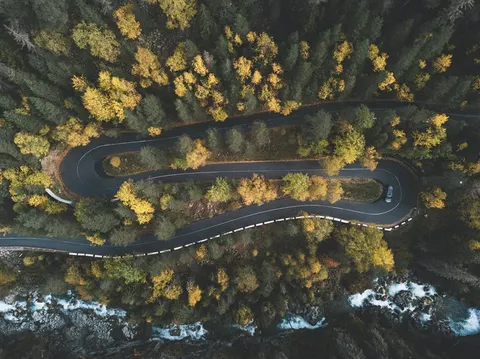
At level 2 the electronic system can manage acceleration and braking, though the driver still holds control in his own hands. Things change sharply at the third rung of the ladder. There the main driving is in the “hands” of the software; the driver can only take over when he judges it necessary, or when the algorithm makes that decision. At level four the software takes care of everything by itself, except in situations where it judges it should hand control back to the human. And finally, at level 5, comes what we've gathered here to talk about. Full software control throughout the drive.
In short, the definitions go: level 1—hands on the wheel, 2—hands off the wheel, 3—eyes off the road, 4—mind off the driving, 5—the human driver becomes a passenger.
In other words: at levels four and five you can ride along and even sleep, but at level three you have to be on the alert at every moment, in case you need to take over when conditions don't allow the autopilot to cope.

Drive, Don't Argue!
In 2016, the U.S. Secretary of Transportation Anthony Foxx was promising: “By 2021, we will see autonomous vehicles in operation across the country in ways that we only imagine today. Families will be able to go out simply by ordering a vehicle to take them for a ride. To take them to work, to school.”
In 2018, Waymo predicted that its autonomous car would be on the road in 2020.
Well, '21 has come and is soon on its way out, but autonomous cars still aren't here.
There are plenty of examples of car prototypes that successfully meet level three in this classification. In many places around the world, trials continue with cars that drive themselves, but in one form or another, at every important moment, control can be taken over by a human inside the car, or remotely.
And yet the steps to stage 5 still look rather big. Very little is needed, and still the next step turns out to be much harder and slower than expected.
Some of the tests are carried out on routes restricted for the purpose. You'll often see headlines that autonomous cars are already on the move in certain places on the planet. Unfortunately, this always happens under conditions restricted in some way, or under fairly precise human supervision.

Motor Vehicles Without Motor Accidents
There seem to be four main contenders from whom we expect the big news of a fully autonomous car, ready to hit the streets all over the world. Google's project Waymo has shown very serious progress in recent years; it is aimed solely and exclusively in this direction and very often leads the news. Alongside it are Tesla's prototypes. Elon Musk has long been pouring serious money and ambition into the future of autonomous cars, and his prototypes have equally promising characteristics.
In third place come the developments from China. The engineers there, by all appearances, have very serious state backing to win the race. Quite understandable, given the overcrowding in the megacities. And the huge market that will open up once the prototypes start working. We mustn't forget the Japanese either. One of the first applications of autonomous drivers, possibly at level 4, was Toyota's at the Tokyo Olympics this year.
It's genuinely intriguing to see who will be first; the competition is fierce.
Sometimes the companies themselves inflate expectations in an attempt to attract attention (and money to continue their research). There's been a lot of talk about Tesla's “Full Self-Driving” (FSD) system, which already has all the hardware needed for autonomous driving. And yet, for now, the version on sale covers only level two of autonomy.
Just Along for the Ride
One of the stumbling blocks puncturing the tires of enthusiasm is certain “delicate situations” in which a driver would do better than his electronic colleague. In certain circumstances, it seems, the human driver's instinct is more accurate.
Evidently there is still no system good enough to take road conditions into account the way a human can. Anyone taking their first steps in machine learning can create an algorithm that drives well enough in some simple computer game. But a solution is still being sought when it comes to real conditions, full of all kinds of surprises. Not just a drunk celebrity at a red light, or one cutting you off, but also an icy stretch of road, a pothole (only in Bulgaria do we have none of those). A whole new paradigm in which, for the time being, the human driver, with a reaction time far slower than the algorithm's, sometimes makes the more accurate decision.
There is also talk of purely human advantages, such as: once you've exchanged a glance with the person crossing, you've obviously agreed who goes first.
By the Book
March 18, 2018. On that day, a car belonging to Uber, another of the big contenders in the race, with a safety driver on board, struck 49-year-old Elaine Herzberg as she was crossing the street with her bicycle in Tempe, Arizona. It was the first fatal accident involving an autonomous car, and it quickly echoed through the media, which back then had no coronavirus to cover yet.
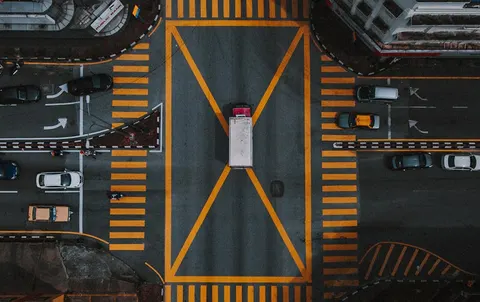
And here come the big ethical questions. If the algorithm judges that a crash is unavoidable, whom should it save—five pedestrians, or the passenger riding comfortably inside? Considering which of them pays the carmakers, I find it hard to imagine the decision will be entirely impartial.
And when such a crash does happen… who is to blame? The person who was just riding along, or the manufacturer? The programmers, who merely teach the algorithm to make decisions but don't make them in its place? Or will we build a prison for algorithms too?
Don't Argue, Drive!
Beyond all these ticklish questions, in recent years there has also been a lot of talk in the West about algorithms' tendency toward racism. Yes, decisions made through machine learning are impartial, but entirely on the basis of the data they've been fed. And still, with a sufficiently apt correction, the fine-tuning can be done to defeat racial discrimination.
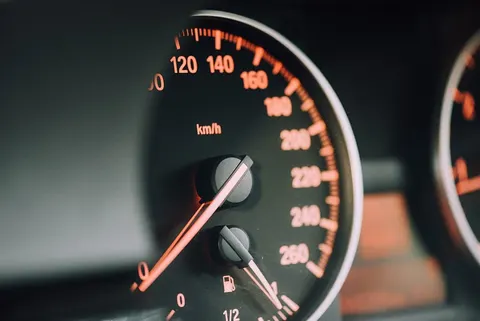
Other current prototypes suffer from serious problems too. Honda's autopilot currently works with a limit of 48 km/h, Audi's at 60. Waymo's prototype (as I say the name out loud, I suspect Google would choose a different one for Bulgaria) is one of the few meeting the level 4 criteria. But it is only permitted to operate in perfect weather conditions; otherwise there's no guarantee the sensors will provide the correct information on which the algorithm bases its decisions. Which, to some extent, takes things back to level three.
Bugs in the computer world are unpleasant but inevitable; our whole experience in the field proves it. And in this case, every bug may be a matter of life and death. And yet: even spacecraft are controlled automatically, in a far more complex and unknown environment.
Something for the Officer?
Last but not least, there are the legal procedures. Changing legislation is far from easy, also because of the ethical questions we touched on.
Then again, computers judge the right speed better and know how to keep their distance. They aren't in the habit of flashing their high beams at you on the highway, or driving at 300.
There will always be crashes. At some point a pedestrian will simply appear in a spot where there's no time to react; brakes will fail because of unexpected faults. And still, algorithms will certainly make the number of crashes considerably smaller.
“Considerably” is a considerably weak word. According to data from the European Parliament, human error is the cause of 95% of road accidents! For Bulgaria the data is similar; in some periods the percentage is even higher. According to the same European data, the European Parliament expects automated driving systems to save the lives of 25,000 people and prevent serious injuries to another 140,000 by 2038. They say such a system will cut urban CO2 emissions by… 80 percent! Those are saved lives too…
Who Gave You a License?!
One more big prejudice: security against cyberattacks. The cars of the future will be computers, which means… they can be hacked. What happens if the car in question is hacked and made to slam at full speed into a lamppost?
This question is extremely important. But it's already too late to be asking it. Today's cars are already packed with computer systems for which it fully applies. And yet the fact that we haven't heard of sufficiently serious problems of this kind so far is quite encouraging. The security of this type of technology is an interesting subject that deserves more serious attention.
New cars (to the extent that there are any) run on an average of 100 million lines of code. Cars have long been full of computer solutions; the question is simply who gets to be in command. It's estimated that once this changes, around 300 million lines of code will be “at work.”
Step on It, Next Stop Burgas
On March 5 this year, Honda took a big step, releasing 100 prototype hybrid sedans capable of level 3 autonomous driving. Officially, their drivers were allowed to take their eyes off the road. The step was a bold one; it's still too early, and no serious results have been announced on how successful the experiment has been.
Like you, probably, I have a robot vacuum cleaner—it looks a lot like a self-driving car, if we set aside the problem of crashes. In that field, Chinese technology has clearly conquered the market in recent years. So, I was watching how my little beast gracefully skirted the edge of the rug it had stumbled on, only to climb onto it elegantly on a diagonal. I was impressed with it… for about 10 minutes, and then it told me it was in another room. It crashed and got hopelessly stuck under the radiator.
Of the two incidents, the first is undoubtedly the more important and interesting. Ironing out small problems like the second one is easier. Autonomous cars won't wait for us; they'll be here soon.
Personally, I prefer riding a bicycle, and I can't wait for the moment when all drivers will know where to give me the right of way. When there will be no risks while I'm waiting at the traffic light. What about you? Are you ready for this future?