“In the software world, people with visual impairments can find exceptionally good professional opportunities,” says today’s guest. And he proves it with his own example.
He is one of the most active and persistent enthusiasts in the Bulgarian WordPress community, especially when it comes to website accessibility. For two whole decades he has been building web pages with open-source platforms. And now he has also set out on the path of classical programming…
Today Ismail Ismail has two big goals. To help make more of the enormous possibilities of life online accessible to people with disabilities.
And to show that in information technology they can find a very successful professional future.
Open your senses to a rather unexpected… point of view.
Call Me Ismail
Can blind people really program?
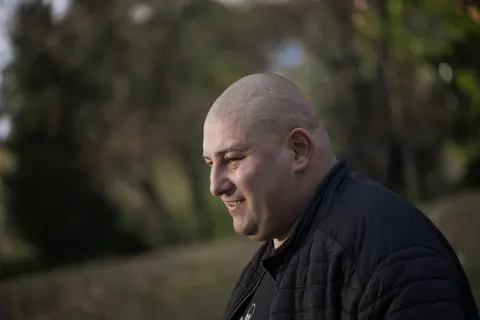
Ismail, known to his friends as Esmo, definitely knows what he is talking about. He was born where the Rila and Rhodope mountains meet, in the small town of Yakoruda, and as a baby his life was literally on the edge. He was born prematurely and placed in an incubator… alas, in a time when these machines were still far from perfect. Too much oxygen led to retrolental fibroplasia. Also called simply retinopathy, this diagnosis hides a serious visual impairment—the retina is destroyed and cannot take in visual information.
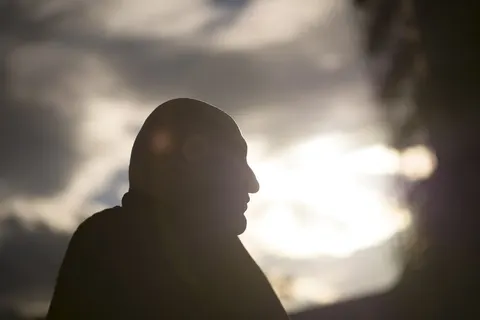
Our hero was somewhat lucky and did not go completely blind. On paper his sight is 100 percent impaired, but he can still make out silhouettes. What’s more, constant exercise of the eyes is important for preserving his vision, and it was precisely that which steered him toward… building websites.
Seeing Is Touching
Technology drew him in when he was still a kid. While he was in high school, on the threshold of the new century, his parents gave him his first computer, which he used mostly for games.
Over the following years, though, these machines grew more and more interesting to him. And when the time came to choose a career… it turned out that a university degree in computing was out of the question, because back then there were no conditions for young people with visual problems to study it.
So he enrolled in history. The science of the past fascinated him too, and in 2008 he earned his bachelor’s degree at Sofia University.
Alas, he never managed to find a job with that diploma, and that brought him back to computers. While still a student he had been impressed by the first systems similar to today’s WordPress—with the help of Drupal, and later Joomla, he started making websites, first for friends and then professionally.
One for All
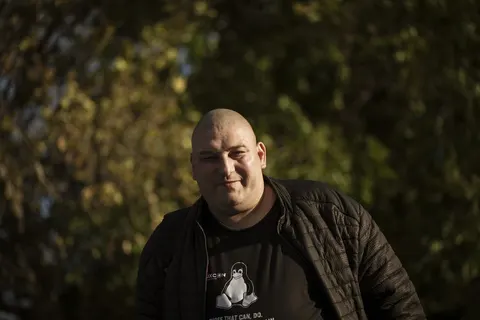
When WordPress rose on the horizon, he became one of the platform’s first big fans in Bulgaria. “It’s made to be fast and easy for people,” says Esmo. He was won over both by the chance for anyone, even without much experience, to build their own site, and by the community. The idea of open source, of belonging, of everyone contributing according to their abilities.
He hasn’t stopped to this day. He regularly attends community meetups and has been a speaker several times. He contributes constantly to the actual work as well—most often translating new versions of the platform into Bulgarian, but also “fixing” accessibility-related bugs.
In recent years, checking whether websites are fit to welcome people with disabilities has become another of Esmo’s main occupations. Alas, in Bulgaria there is practically no way to make a career of it, while in the West there is a separate specialty—software quality assurance specialists focused specifically on accessibility.
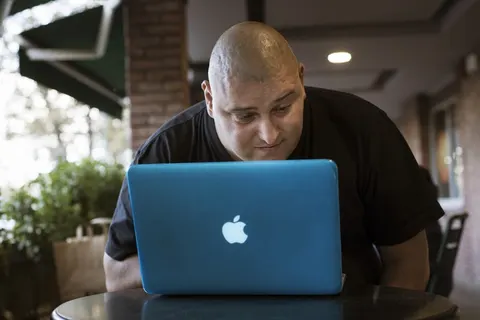
Lately he has been on his way to fulfilling another big dream of his—advancing into the depths of front-end programming; he is currently taking the JavaScript track at SoftUni, a popular Bulgarian coding academy. Meanwhile he keeps building WordPress sites with the three themes he has specialized in over the past few years.
Look Up
And while Esmo has some residual vision, in his view programming can be a wonderful pursuit for completely blind people too, except that in their case it is more a matter of back-end technologies.
But how does all this work if you can’t see your code?
“When you’re completely blind, you use so-called screen readers—software that returns everything normally visible on the screen in the form of text,” Esmo explains. In recent years, software development around the world has become more and more convenient for people with disabilities. The most popular code editor at the moment, VSCode, is fully adapted to their needs.
It’s no coincidence that there are quite a few completely blind programmers in the West; Esmo knows two Bulgarians working in Germany—a PHP programmer and a Java specialist. And here at home?…
Bulgaria has no official statistics on the number of people with serious visual impairments, but they are believed to be no fewer than 13,000. Barely 5 percent of them have any kind of job, according to the only unofficial statistic I can find online.
Could that perhaps change?
Déjà vu
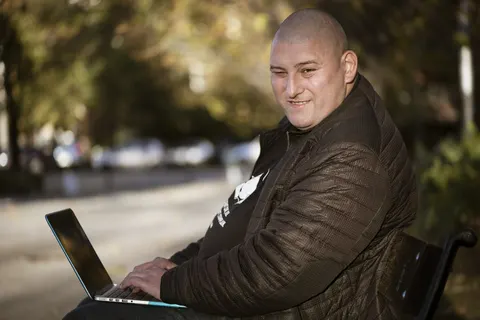
Because a person surely feels fulfilled and happy when they find their calling, as Esmo’s smile shows the moment we start talking about programming.
“The idea that a blind person can become a very successful back-end programmer needs more publicity!” says Esmo. “Code is just text that gets processed. Modern software is quite advanced. The point is for more people to try!”
What does he think every young blind person should know before turning to programming? “First, that it won’t be easy. Second, that it’s hard, but not impossible. Third, a lot of people are put off by the math—it depends on what you write, but in most cases it isn’t complicated at all. And fourth, don’t give up! It’s hard at the beginning, but then it gets really interesting.” I think exactly the same.
Alas, for now there are no specialized courses for blind people in Bulgaria, but our guest’s experience shows that today it can work out in ordinary academies and universities too.
Steps Toward Accessibility
It is more than clear how poorly our urban environment today meets the needs of blind people—the sidewalks are sometimes an adventure even for a healthy pedestrian. That is why technology has become an indispensable helper for people with visual problems, assisting them with things like shopping online, navigating, and avoiding obstacles.
But if accessibility in the real world is expensive and evidently beyond the means of our municipalities, online it turns out to be just as important—and not nearly as hard to achieve.
Frankly, I had never wondered whether this site was accessible to blind people. Fortunately, my guest confirms that everything is fine; he follows Digital Stories and even asked to tell his story himself, hoping it would motivate more young people with visual problems.
It turns out that checking whether a website is accessible isn’t hard… someone just has to think of doing it.
One Small Step for a Developer…
There are four main screen readers—those developed for Windows and by Apple, and two open-source projects. The software is set up to read a web page’s code according to certain rules, and if those rules aren’t followed, it seriously “stalls.”
“A site is accessible when you can navigate it freely without a mouse, using only the keyboard. It has to follow the rules of semantic HTML, because the tags help the screen reader decide what to read. It’s also important for the color scheme to be legible and high-contrast,” Esmo explains.
How many Bulgarian websites meet the requirements? A few years ago our guest found himself leading a team that checked web accessibility in the public sector, and at the time about 50 percent of the sites turned out to have serious problems. In his experience things haven’t changed much today, because we do have formal requirements in this area, but they aren’t followed, and nobody monitors them. Recently, for the first time, the state e-government agency has had dedicated testers, but according to Esmo their recommendations still remain unresolved.
And… Smile!
Beyond official websites, there are no rules at all. In his view, a good example is Apple’s ecosystem, where every app is checked for accessibility before it reaches customers. “At one conference I watched how Google tests for accessibility—everything goes through a completely blind person, a low-vision person, and someone with a motor disability. They had seven QA engineers testing only that.”
For most websites, of course, this isn’t possible, especially in a small market like ours.
Still, the effort is clearly not great, and it’s worth every owner of a little corner online giving the topic some thought. (If you decide to do so, our guest recommends WAVE Accessibility Tools, Google Lighthouse, or the axe DevTools extension for Chrome.)
A few years ago Esmo found love, and today he is a family man. He keeps building websites, contributing to the open-source community, and taking delight in what he does.
His plans for professional growth are tied to WordPress, while enriching his knowledge with other technologies as well. “I dream of making it as a normal person! Life and health are what matter most; everything else can be achieved.”
And it seems that Esmo’s story confirms that very maxim more strongly than anything…