
A Canadian psychology professor is about to take the stage of Hall 1 at the NDK, Sofia's National Palace of Culture, to speak to an audience of mostly young people and advise them on how to put their lives in order. The tickets have sold out, and a second event had to be added despite some rather serious prices. Despite a subject that, at first glance, is far from the most sought-after, far from the mainstream. Strange… or is it?
Jordan Peterson is a special kind of figure. He knows how to stir people up. Praised and contested, around the world and here in Bulgaria, the professor has managed to win cult status as a most unusual online influencer. And he has done it by talking about topics that are supposedly so familiar.
But how did a psychology professor turn into an extraordinarily successful, sought-after speaker and bestselling author? Is it the skills of a psychologist, an influencer or a lecturer that lie at the heart of his success? What is it that makes Peterson such a recognizable figure of our new age? Are we rediscovering forgotten values through him…, or, on the contrary, are we returning to outdated concepts that no longer fit today?

Strict but Fair
I confess, I am still looking for the answer to all these questions. I also confess that I don't find him or his ideas particularly likable, but that is beside the point. His “rules for life” and the tests he has popularized, which supposedly let you “discover yourself,” have clearly found their place. “He simply gives young people what they lack: simplicity,” went one apt opinion among the many I looked up. Of course, his followers would disagree—for them, the answers Peterson offers are multifaceted and complex. Just as there is nothing simple about, say, the personal responsibility he so often talks about.
Jordan Bernt (after his Norwegian grandfather) Peterson was born in 1962 in Alberta, Canada. He earned a bachelor's degree in political science and psychology at the university in his home province, then went on to a doctorate in clinical psychology. For years he taught at Harvard, until in 1998 he returned to his native Canada to join the psychology department at the University of Toronto.
Since his field is clinical psychology, over the years he has simultaneously worked with patients, carried out research and taught students. For most of his life he has seen around 20 patients a week. He is described as a faithful follower of Jung, something he himself likes to repeat.
The Good Guys
As a child he was raised a believing Christian, then he turned to socialism, and finally swung the opposite way—to capitalism in its classical sense. Although he is an obvious champion of conservatism, he describes himself as a classic British liberal and a traditionalist.
Until less than a decade ago, few people apart from his students had heard of him. Peterson wrote his first book in 1999, but it reached mainly the people he taught. Maps of Meaning: The Architecture of Belief brings together psychology, mythology, religion, philosophy and neuroscience to analyze the history of belief and the search for meaning.
The book may not have become popular, but in the years that followed it would lay the foundation for his lectures and talks. And those would unexpectedly turn him from an unknown lecturer into a world-famous speaker. Peterson flipped the paradigm and became an influencer in the role of a scientist, in his mature years, which makes him an even more interesting figure.

Left, Right
Gender—lately we talk about it here too, not too deeply or competently, turning it into a convenient chewing gum of opinions. Peterson's fame was born in 2016 precisely because of it. At the time, a hotly debated story in Canada was a set of legal changes concerning discrimination on the basis of gender identity. As you know, the farther west you travel across the globe, the more this topic has been discussed in recent years. And although it isn't always visible, everywhere the debate passes through some rather polarized opinions.
This is exactly where the psychology professor's conservative rhetoric shone. He launched his philippics against what he called the “ultra-left” policies of political correctness and identity. Or “postmodern neo-Marxism.” His three-part lecture was titled “Professor against political correctness.” Peterson attacked the legal changes because they required people to speak about gender identity in a strictly prescribed way, and thus restricted freedom of speech. He was adamant that people's rights matter—as a psychologist he had had transsexual clients—but that this was not the way to protect them.
Then came a television interview of his in which the host tried to interpret his words rather extremely, and he gave as good as he got. In October 2016, a video appeared online of Peterson's unexpected encounter with a group of students, equal-rights activists.
In it, he coolly and methodically answers transsexual people, saying that he recognizes their identity but not the way their rights are being protected. An experienced orator, he develops his thesis—that the rise of political correctness will create greater discrimination and far more dangerous phenomena.

The Professor and the Night
His statements quickly gained popularity and became a leading media topic. Naturally, attracting a huge number of supporters and just as many opponents. As is typical of the online age, the hate between the two extremes and the polarization of society certainly helped fuel the enormous interest. Sound familiar from our part of the world?
In literally a few weeks the professor became a celebrity, and his series of video essays began racking up huge numbers of views. Gradually his university lectures became even more popular.
The global boom came in 2018, when Peterson published his book 12 Rules for Life. It was followed by a massive tour, in which he presented it to huge, packed halls. And what is it about? The search for meaning…
“Since we are all vulnerable and mortal, pain and anxiety are an integral part of human existence,” Peterson writes in the introduction. “That is why we need something to counter the suffering that is intrinsic to Being. We need the secure footing of a deep system of values. Otherwise, the horror of existence will quickly overtake our lives. And then nihilism will rush in, with its hopelessness and despair.”

Clean Rooms, Good Friends
Well, there is no argument that we need values, and the psychologist has evidently found a niche that had long been left empty in the modern Western world. So what are these 12 rules that he sets against chaos and that, in his view, give life meaning? Here they are:
1. Stand up straight.
2. Treat yourself like someone you are responsible for.
3. Make friends with people who want the best for you.
4. Compare yourself to who you were yesterday, not to someone else today.
5. Do not let your children do anything that makes you dislike them.
6. Set your house in perfect order before you criticize the world.
7. Pursue what is meaningful (not what is expedient).
8. Tell the truth. Or at least don't lie.
9. Listen. Assume that the person you are talking to might know something you don't.
10. Be precise and clear in your speech.
11. Do not bother children when they are skateboarding.
12. If a cat crosses your path, pet it.
Now, I won't argue with the thousands of people who say this book gave them direction and gave their lives meaning—they really do exist, both online and off. Nor is there any argument that some of the rules, even most of them, swing the pendulum back toward a classical upbringing. So what is it, then, that makes the professor so scandalous?
On the one hand, he is definitely against many of the trends that define today's Western society. On the other, he tends to simplify complex psychological processes, which as a specialist he knows very well, into life advice in the style of Paulo Coelho, the onetime darling of fashion models.

The Other Side of the Pendulum
He is accused of excessive conservatism, of misogyny, of giving a platform to far-right ideas. Of his theses helping to get people who are different discriminated against.
Peterson says that feminists actually harbor “an unconscious wish for brutal male domination,” calls developing nations “catastrophic pits,” and told the Times that he supports “enforced monogamy.” If you ask his admirers, they will say these are quotes taken out of context that have nothing to do with his worldview but have become a stigma.
Does he really believe these theses, or does he use scandal as a factor in his success? Everyone has their own answer—mine is: both. Peterson is extraordinarily successful because he has found his audience. In the West, and here too, Generation Z, born over the last quarter century, needs its own values, which somehow ended up forgotten by the social processes of our time.
A huge percentage of Peterson's fans are certainly young men, who today all too often find themselves in a depressed and vulnerable social position. And they find meaning in his ideas. According to this article, for example, he has become a lifestyle guru for men and boys who feel displaced in a world where white male privilege is under attack.

Gorbachev, Žižek and Nietzsche Walk into a Bar…
“We're so stupid,” says Peterson. “We're alienating young men. We're telling them that they're patriarchal oppressors, masters of a culture of violence. It's terrible. It's so destructive. It's so unnecessary. And it's so sad.”
The professor says there is no such thing as male or white privilege; these are historically accumulated advantages with their own logic, shaped so as to best meet the needs of society.
There is one more thing that can't be denied him—an extraordinary ability to captivate, charisma, rhetorical mastery. All of it garnished with that much-needed pinch of retro aura that gives a sense of wisdom, of experience. Besides his talent for speaking, his broad general culture adds a great deal. His books and speeches feature Cain and Abel, Nietzsche and the history of the USSR alike.
He isn't shy about getting into arguments. His conversation with the philosopher Slavoj Žižek about Marxism and capitalism, and about the place of happiness in the two systems, is more than interesting.
His words are often controversial. For example, when he promoted the diet of his daughter, who chose to eat… only meat, which supposedly worked wonders on the many illnesses she suffered from.

Of Cats and Men
Psychologists themselves are divided in their attitude toward Peterson's activities in recent years. In his profession he is indisputably established, among the 70 most-cited specialists in his particular field, with more than 100 scientific publications cited over 18,000 times. One of his best-known papers is about what makes people creative—in his view, it is those who pay attention to seemingly irrelevant, small details.
In recent years he got himself mixed up in yet another scandal—his colleagues in Ontario ordered him to undergo media training so that he would not undermine the authority of his profession. He, of course, called this an attempt at censorship and flatly refused.
For many years he studied totalitarian regimes, and he draws on this, saying that his conservative theses today not only do not encourage far-right parties but, on the contrary, show the way to fight any form of fascism.
He says it was precisely his interest in the totalitarian regimes of the 20th century that led him to psychology. So much so that he collects paintings from the period of socialist realism and named his daughter Mikhaila after Gorbachev.
Prof. Peterson and Mr. Hyde
In recent years Peterson has abandoned scientific work and become much more of a speaker and influencer. In his typical style, he doesn't hide the commercial element at all. “I shouldn't say this, but I'm going to, because it's so goddamn funny,” Peterson says on Joe Rogan's podcast. “I figured out how to monetize social justice warriors. If they let me talk, I make more money on Patreon… If they protest me, then the arguments start on YouTube and my revenue goes up much faster.”
There's no doubt that in recent years he has earned a good deal from his various ventures—the list is long. The books, the talks, psychological-testing websites like Selfauthoring.com and understandmyself.com. His YouTube channel has almost 7 million subscribers.
Still, there is nothing hypocritical in any of this, because it fits well both with the strokes that paint his public portrait and with the advice he gives.
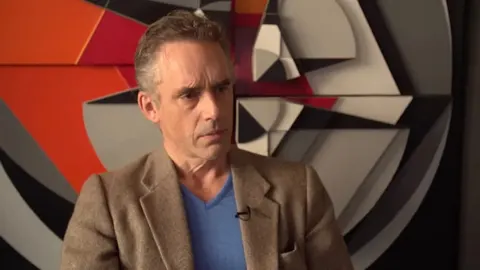
Pet the Cat
He often cites Elon Musk as a positive example, and the richest man of our time not infrequently speaks flatteringly of the psychologist too. Peterson's Twitter account was suspended after he posted a photo of a popular model who is… um, overweight, with the comment: “Sorry. Not beautiful. And no amount of authoritarian tolerance is going to change that.” Then he went on with comments about a transgender actor. One of Musk's first tasks at the helm of the company was to restore the account.
After 12 Rules, another 12 appeared in yet another bestseller.
Then Peterson drew attention again after he nearly lost his life in 2020. The problem began with his wish to free himself from a dependence on benzodiazepines, prescribed to him after his wife was diagnosed with cancer. Since he couldn't find a single doctor in all of North America willing to prescribe the treatment he wanted (and he didn't disclose what it was), he went looking for it in Moscow. There he developed pneumonia, fell into a coma and spent eight whole days between life and death.
A few months later he and his family moved to Belgrade, then he returned to his usual form and began a series of tours, the next of which will bring him to Sofia. Organized here, symbolically or not, by Comedy Club.
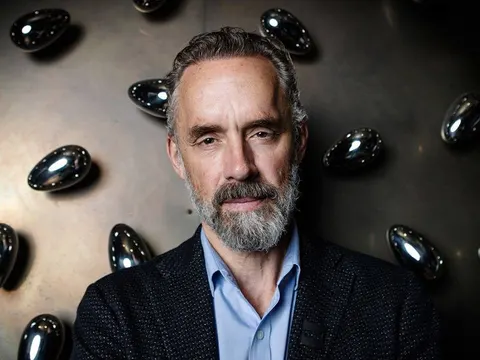
A Lobster Straightens Its Shoulders
Many of his theses are debatable—for instance, the one about “postmodern neo-Marxism.” In the view of many, mine included, the two words are too far apart to be put together today.
He often disputes the existence of climate change. He believes scientists fit the data to match their prior expectations. “This is what worries me most on the subject: climate is everything. But your climate models don't include everything, only certain indicators that you choose,” the psychologist says.
One of his favorite examples of success is lobsters. The first of the 12 Rules begins with them. He compares these little creatures with humans, on a social but also a hormonal level. Although lobsters rarely live in groups, when they do, the hierarchy is dominated by the individuals that project strength. Those with a more authoritative body language who display dominance, while the weaker ones try to look smaller, staying hunched up so the others won't think they are being challenged. The same thing, Peterson explains, happens with people. For example, when into a bar walk… let's call them strong lobster-people.
In his view, our place in the hierarchy depends on our behavior, and only by straightening our shoulders can we dominate in life. If our posture is hunched, we look small, defeated and defenseless. As a result, we begin to feel exactly that way. “Look for your inspiration to the victorious lobster, with its 350 million years of practical wisdom. Stand up straight, with your shoulders back,” Peterson writes.
Well, that comparison is a little primitive, isn't it? Or are we really that dependent on our hormones?

A Clash of Characters
But let's leave the lobsters. Another piece of advice Peterson is particularly famous for says that young people would do well to learn to tidy and clean their rooms before setting out to change the world. Whether all the people who created the world we live in today had tidy rooms, you can ask him yourself if you are among the lucky ones who managed to buy a ticket for his visit. In the literal or the metaphorical sense, of course.
“Last night I gave a talk to about a thousand people, and 500 stayed after it ended,” Peterson recounts in an interview, his eyes welling up. “Most of them were young men, and one after another they came up, shook my hand and said: ‘I've been listening to what you say… I started cleaning my room, working on my life. I started working hard on myself. I just want to thank you for helping me…’”
The psychologist became especially popular thanks to technology; the online world allowed him to become what he is today. And with his ideas he stands against many of the characteristics of our time that arrived thanks to, or together with, those very technologies. One thing is clear: like him or not, Peterson is a phenomenon that can tell us a lot about the present day. And about what is coming tomorrow.