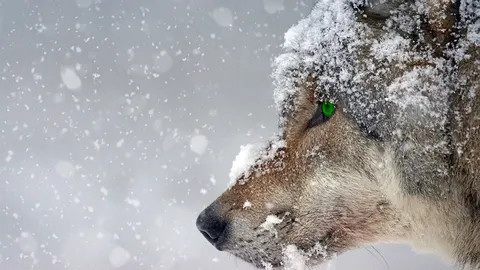
Predators may not be our favorite creatures… especially if we happen to be herbivores, metaphors aside. In America's Yellowstone National Park, people long puzzled over the cause of sudden, heavy flooding… Then it became clear: because the wolves had been killed off, the grazing animals multiplied so much that they destroyed far too much of the natural vegetation. New wolves had to be brought in from elsewhere…
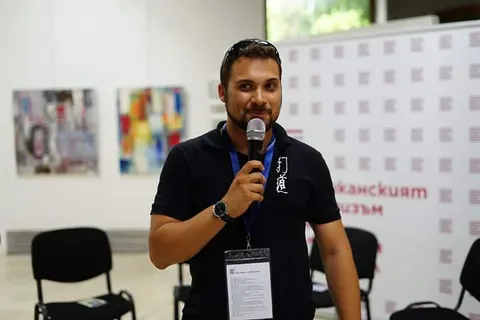
So what? It is worth all of us learning about the connections in nature. It turns out that even COVID may have reached us because we forgot them… But that story will have its turn. Complex ecological subjects are the specialty of Aleksandar Petrov, creator of Padpadak Daily (padpadak is Bulgarian for quail). The series of short videos is here to remind us how important it is not to forget the age-old rules of nature, which lately seem to be the last thing on our minds as we stare at the news of the day.
Padpadak Daily
You can probably think of many similar examples—say, the good old sparrows of China, retold by the Bulgarian sparrows of Yordan Radichkov, one of the country's best-loved writers, and even by The Three Fools, the classic Bulgarian cartoon series.
The more we know and remember about nature, the better our chance of staying human in digital times. If you have doubts, or if you simply want to learn something curious about the connections in the world we live in, Padpadak Daily is the right place.
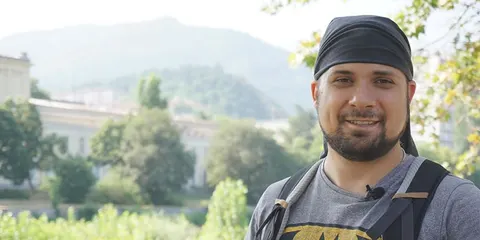
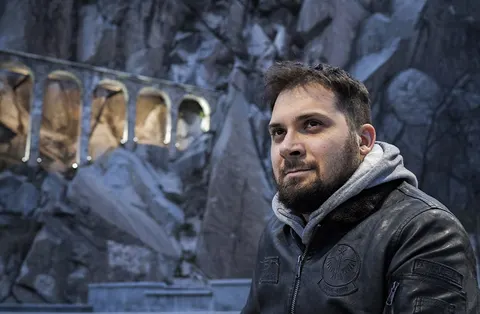
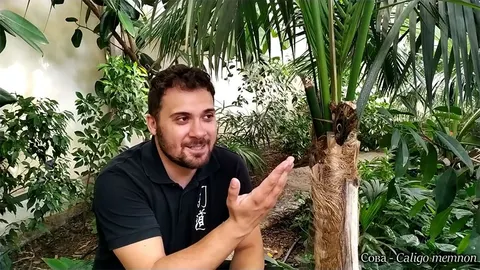
Aleksandar is a dreamer, determined to tell and show things in the thrilling way he knows how. His own path to nature has been long and winding, and that is what gives it meaning. But how was Padpadak Daily born? And how can we help the quail's flight climb ever higher?
Pheasant Weekly
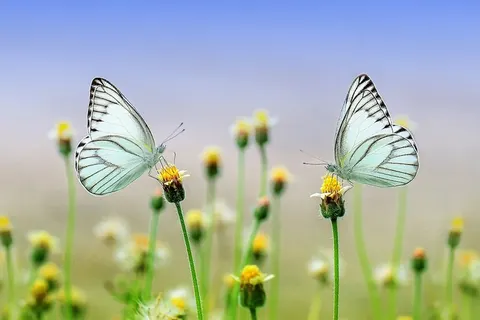
As a kid, our guest dreamed of becoming a writer, and he still writes today. He has published a book of poetry… about butterflies. He writes under the name Aleksandar Skald—the pseudonym is the Scandinavian word for a northern storyteller.
In his early twenties he was deeply taken with Scandinavian mythology and style. And northern, because Aleksandar has traveled all over Bulgaria but comes from the “wild” Northwest (if the subject appeals to you, I also recommend this read). He was born in the village of Zlatia in the Montana region and graduated from the forestry high school in Berkovitsa. Then the dream of writing led him to Bulgarian language and history, which is what his bachelor's degree is in. He worked as a teacher for a while, and before that, somewhat unexpectedly, he had started gaining experience as a host on regional radio stations.
“I worked very seriously on my voice, on the training you have to go through to sound good on the microphone. At the same time I kept writing, I didn't abandon that childhood dream, but… something was missing,” the creator of Padpadak Daily recalls of his twenties. After living in cities for a long time, he went back to his native village for a while, and there it dawned on him what exactly he had been missing.
“I sat by the Tsibritsa River. It's named after цибрене (tsibrene)—that's what people there call the glints of sunlight on the little ripples of a river. I started listening to the water. After a very unpleasant period in the cities, it hit me. Nature is actually the thing I need, but I had never paid attention to it, because it had always been around me.”
Vulture News
He decided to start spending more time outdoors, and then, almost without noticing, his interest became professional. He moved to Plovdiv and began volunteering at the Bulgarian Society for the Protection of Birds. There he met charismatic people who told him about nature and recommended books.
He also went with the ornithologists on field surveys, the first one devoted to the griffon vultures of Madzharovo. “Huge cliffs, and above them hung an enormous vulture with its wings spread against the blue sky. It was November, very cold, with a fierce wind. But it was exactly that picture that made me take up zoology and ecology more seriously, and become more interested in nature,” Aleksandar says, going back to that turning point.
Just then the Natural History Museum in Plovdiv advertised for an eloquent staff member to welcome visitors, and Aleksandar, a longtime radio host, decided to try his luck. He worked at the museum for several years, guiding visitors mostly through an impressive “live exhibit” of exotic butterflies flying among the guests. Meanwhile, he completed a master's degree in ecology.
Today he is happily unemployed, using the time to prepare his PhD in ecology and ecosystem conservation at Plovdiv University. Its subject is a curious one—an ecological comparison between the fox and the stone marten, two predators that often share the same habitat, yet whose relationship has never been studied well. He is examining their diets to see whether they compete for food, and how their seasonal and daily activity overlaps. And the observations will surely become the next episode of the venture through which Aleksandar won us over: Padpadak Daily.
Lark Times
“What I like about Padpadak is that it focuses on researching and popularizing Bulgarian nature,” says Viktoria Beshliyska, author of the much-talked-about novel Glina (Clay) and the blog Po dirite na dumite (On the Trail of Words). “It's made by young ecologists, and the information is presented so that anyone can understand it—even children. Because love of nature is nurtured from an early age, and caring for the planet begins with knowing what is right next to us.”
So, this is a series of short films presenting curious topics connected with nature. You can follow them on Facebook or YouTube,
The idea, too, came by chance. At first Aleksandar planned to make short clips, shot on his own phone, showing different places around Bulgaria and talking about their nature. “But over time I kept learning more about nature, I organized what I knew and wanted to pass it on to people. That's how the idea came for Padpadak Daily to be not so much a show about nature and tourism as about nature as a science.”
He shared the idea with friends, and one of them, Emil Yordanov, told him: “Fine, you can write and talk, and I can shoot and edit. Let's try to make something.” That is how the first episode appeared—“Land of the Butterflies.” Aleksandar was still at the Natural History Museum then, and they showed the hall and the life cycle of these wonderfully curious animals. The photographer Georgi Stoyanov provided footage of a butterfly emerging as an adult—climbing out of its chrysalis.
Today the series has three full episodes, and Aleksandar supplements them with short themed clips—the latest is about wolves. The newest addition is a podcast in which specialists in various fields of nature present fascinating topics.
Parrot Journal
Why does our guest put so much time and effort into a project that would hardly be a commercial success?
“I've noticed that people harm nature mostly because they don't know. They don't know they're doing harm, or what harm it may then bring to them as well. I believe education can fix most of the world's problems, and that goes for nature too. That's the idea behind Padpadak Daily: to show through examples how important nature is and how connected we are to it,” says Aleksandar.
He is determined to work hard on the project and to release new episodes more and more often. He tries to make each one more professionally produced than the last, and he is currently raising money to buy a better microphone.
He hopes to get more serious backing to help him reach the next level. He believes Padpadak Daily could become a popular television show and so reach more people. He has already discussed the idea with TV channels, but the national ones tell him the project is better suited to the cable channels, and the cable channels say the reverse—a game of ping-pong.
Owl Mail
In his view, there are many formats aimed at educating children on these subjects and not a single one for adults. Many people tell him his series is suitable for kids, but he doesn't think so, and that is not his idea. Because it is adults on whom life today depends—whether nature survives and is handed down to their children.
The next episode will be about the Maritsa River, about how important it is to people and, at the same time, how poorly we look after it. After that comes a film about oak forests. “I'm thinking of turning to the subject of habitats. Our country is very small in area, yet it has a tremendously rich variety of habitats. When you travel, notice how often the landscape changes. Farmland, riverside forests, cliffs, beech and conifer forests… We have an incredible natural diversity that is worth learning to appreciate and protect,” Aleksandar adds.
To protect it, because in doing so we help ourselves too. And here we come to what I mentioned at the beginning—that caring for nature may protect us even from the next coronavirus like the one that so easily poisoned such a long stretch of our lives.
24 Partridges
“It's a fact that the destruction of habitats, which is happening in Bulgaria too, can lead to global pandemics,” says Aleksandar. Zoonoses—diseases passed from animals to humans, such as swine flu, bird flu or coronaviruses—arise as a result of the destruction of the habitats of various species.
“You have a tropical forest that's enormous and shelters a huge number of animals. But it gets cut down, the animals crowd ever more densely together and start passing viruses and bacteria to each other. Microorganisms mutate more easily and quickly. And it's very likely that this is exactly how we ended up with COVID-19,” says Aleksandar.
Do you still think nature is now distant from us and doesn't matter? Whatever your answer, open “Padpadak Daily.” It will give you some interesting food for thought…