“A person’s worldview depends substantially on their information metabolism.”
“Man is a bot to man. And bot is man to bot. But what kind of man is the bot? And what kind of bot is man?”
Ivan Popov was a master of syllogisms, and much more. He was a writer who left us a small number of works from the beginning of the new millennium. Although he published only one novel in his lifetime, and in a small print run at that, his name remains mythical.
Because he presented the future in an inimitable way. He caught the trends, gathered the sparks of knowledge that paint the colorful picture of technology’s tomorrow. He managed to bring science and literature together, so that they could search, shoulder to shoulder, for the human and the superhuman, and catch the trends.
An author who one day should make it into literature textbooks… if, of course, there are still textbooks by then. And literature. That will happen only if we don’t lose the battle for the future to a future we are not ready for.
Department for Relations with Reality*
*The subheadings are also titles of works by Ivan Popov
The most important thing is to do what you do with heart… and with кеф (kef, sheer enjoyment). K.E.F.—but as an abbreviation of the Bulgarian for “cyberpunk, heuristics and futurology”—was the name of the website where for several years Popov, who described himself as its “irresponsible editor,” published most of his essays. He also created the pages Podkrushieto and Laboratoriya po ezikovo inzhenerstvo (Laboratory of Language Engineering).
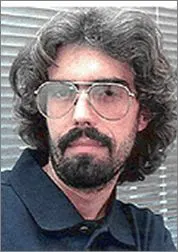
Born on May 28, 1970, in Sofia, Ivan Popov graduated in physics and went to work at the Space Research Institute of the Bulgarian Academy of Sciences (BAS). He ended up in the department where not only digitization but also the early applications of machine learning first arrived in earnest. He worked on neural networks at a time when even in the West this sounded like an exotic field.
“Historical time flows unevenly,” writes Ivan Popov. “Long epochs of stagnation, when it seems that the order is eternal and everything stays the same as ever, are suddenly interrupted by periods of turbulent development (and sometimes of degradation). And when it seems that development will go on forever, it unexpectedly stops and a new stagnation begins…”
Well, for the writer time flowed very fast. Yes, he had chosen an institute devoted to space, yet space is almost absent from his works. Quite understandably: in the 1990s concepts were suddenly turned on their heads, and the topical easily proved stronger than the stars.
Besides, by all appearances, Popov was driven forward more by technology. By the broad view of where it is leading our civilization.
Wandering Ants
“According to popular belief, humanity progresses roughly along this scenario: technology develops constantly, and as a result life keeps getting better,” writes Ivan Popov. “At some point, in keeping with Hegel, quantity turns into quality and the social order changes (from primitive to slave-owning, then to feudal), and progress continues ever upward.
The moments of a ‘qualitative leap,’ when the entire social structure changes—the principles of the economy, the law, morality, people’s mentality—can be called moments of the arrival of the future. In history so far there have been only a few of them (from 3 to 6, according to different scholars), the latest being the Industrial Revolution in Europe, and now a new revolution is expected to begin—or has already begun—that will lead to the so-called information society.”
In the 1990s the writer decided to stay in Bulgaria, even though his parents set off on a long journey full of adventures that took them all the way to New Zealand. Over the following decades they would invite him to join them, but he would always refuse.
The physicist worked for three years at the space institute, and that period would later show in almost every one of his works. He left BAS to carry on as a freelance translator and writer.

Jesus, Muhammad and Bill Gates: Instructions for Use
“Futurologists predict almost unanimously that the twenty-first century has large-scale social changes in store for us,” writes Ivan Popov. “Civilization will enter a new phase (informational, or post-industrial, or ‘the Third Wave society’; for short we shall simply call it ‘the future’). Futurology strives to calculate the future, while cyberpunk strives to paint it in color, Dolby and stereo. The two form something like a neat couple, like the left and right hemispheres of humanity’s collective brain. In one place they present the future in theories, in the other in images and action…”
Yes, the paths of futurology and cyberpunk rarely meet and intertwine, and perhaps never as successfully as in the words of this Bulgarian writer. On one side come science’s attempts to forecast the future; on the other, the science fiction genre, in which the arrival of new technologies is shown through their social impact and the dangers they bring.
At the beginning of the new millennium Ivan Popov abandoned his scientific career for good, and one of his favorite occupations became translation. Thanks to him, works by Stanisław Lem, by the cyberpunk writer Victor Pelevin, by Nick Bostrom and many other authors reached Bulgarian readers. He began writing essays and stories of his own. He published in the pages of Tema magazine, and two of his pieces even appeared in… Playboy. Yes, a classic and at the same time inimitable figure from those 1990s days of punk and cyberpunk…
On the Apostolic Activity of Muscle Gangs
“The future may be as progressive as you like, as white and fluffy as you like, but for it to arrive, for the present to be defeated, we must pass through a great civilizational crisis,” writes Popov.
“What is more, from the point of view of the present, the ‘white and fluffy’ future would strike us as completely insane and impossible to live in. Just as the primitive hunter is not adapted to life in an agricultural society, nor the ‘natural’ peasant to life in a modern city.
In the ‘great leap,’ along with everything else, the value system of society changes radically, as do its notions of good and bad, of proper and improper. The psychological makeup of the individual changes too; a ‘new man appears in place of the unsuitable old one.’ To live in the future, we need a new coordinate system in our minds. Measured by the old coordinates, the future is utterly harmful and provokes a struggle against itself…”
Popov became part of the Ivan Yefremov science fiction club, named after the Soviet science fiction writer. Even in the darkest times of the transition from communism and the end of the century, and to this day, Bulgaria has always had an active group of people, generation after generation, who love science fiction. As a rule they have stood apart from the mainstream and the commercial, but they have existed in order to make the future.
Yes, their names will be recognized only by people with a special interest in books; for them it is enough to mention Yuriy Ilkov, Nikolay Tellalov, Atanas Slavov, Kalin Nenov. If you haven’t heard of them, it is not too late—that will be the subject of a future digital story.
It was Yuriy Ilkov who invited him, known as the General or by his pen name Makriya Nenov—a special figure in the history of science fiction in these lands, who for decades has made apostolic efforts to make sense of the genre and popularize it. And so Popov found himself among them, among kindred spirits who were excited by where the world was going, who loved literature and knew how to value it…
In Search of the Future Man
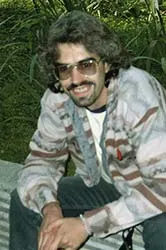
“A person’s worldview depends substantially on their information metabolism,” writes Ivan Popov. “Part of the worldview is one’s idea of the future.” In his texts he brings together so many scientific fields and so many directions of knowledge that one could quickly get lost, were it not for the writer’s sense of humor and his captivating ideas, which keep pulling you back.
TIM, or “type of information metabolism,” is a term rooted in Jung’s research that describes the way a person perceives the news and the world around them, and the way they process it and make sense of it. Today it fits more than intriguingly with how we cope with the news of the day, with the sea of information.
Under this system, people fall into 16 groups. Popov writes that he dug into the classification after coming across meaningful discussions at the Sofia science fiction club. He found it hard to explain to himself why visions of the future differed so much.
“I tried to understand why for every debater there are ideas they will never give up, and others they will never be willing to accept…”
He classified himself as an “intuitive-logical introvert,” a person who “sees the future as a consequence of our actions and plans, but not in a design key, rather in an anti-design key: as a consequence of the side effects of our activities.
He predicts developments mostly in the near term: for him, the future is hidden just around the corner, and to understand what it is, we must remember which futures have sprung up before humanity at previous historical ‘corners.’” The same group includes Stanisław Lem, Boris Strugatsky, Philip K. Dick and Victor Pelevin.
The Bricklayer-Plasterers of Babylon
“Horror! The personal communication bot has switched itself off. A month ago already, but nobody noticed. ‘What must my mother in Chicago be thinking,’ Sidorchuk frets. ‘She’s used to the bot calling her every two or three days. That is, to thinking it’s me calling. Though who knows, maybe she’s set up a bot too?…’ It is fashionable now for bots to do the talking, since people have no time. And yet they must show attention to their loved ones.”
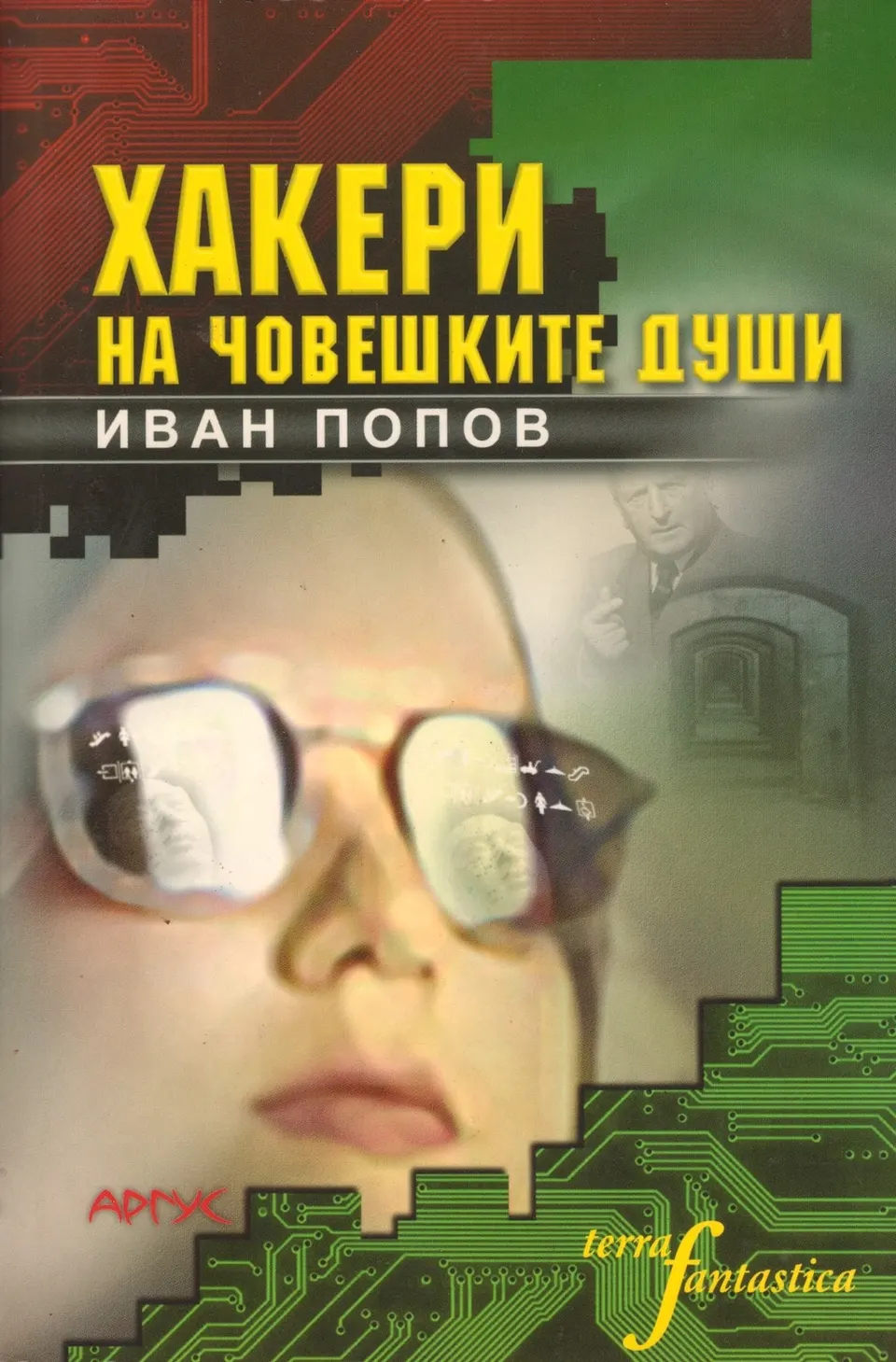
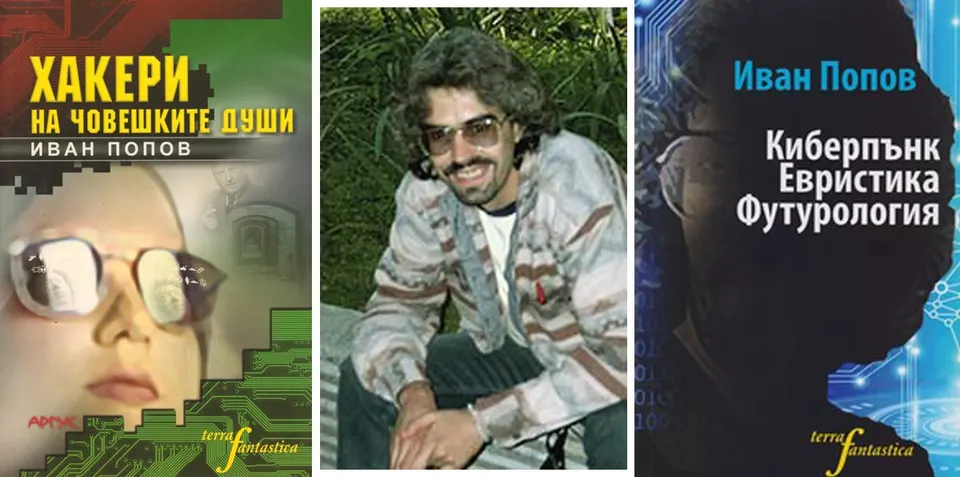
The quotation is from Hakeri na choveshkite dushi (Hackers of Human Souls), Ivan Popov’s first and only novel, published in 2004. Curiously, before that he had published two other texts with the same title, which set off in different directions. It is said to be the first Bulgarian cyberpunk novel and was the first title in the Tera Fantastika series. It appeared in a modest official print run of 200 copies, although today it is known to anyone interested in the genre.
The novel won 2 awards—the Eurocon 2004 award for a debut and the HuGoa award for the best Bulgarian science fiction book of the year. In 2005 it was also nominated for the VIK award.
The novel is truly unusual—as gripping as it is perceptive. Short but concentrated, bursting with humor and vision. As the aforementioned Yuriy Ilkov writes, “a strikingly common trait of Ivan Popov’s works is that his fiction is steeped in science, while his scientific texts are highly literary.” Which in this case becomes a treasure.
The book transports us to an invisibly distant future ruled by advanced civilizations that rely on their technological dominance. It revolves around flows of information, and the main tool for manipulating and programming people is language. “Humanitarian technologies” are used, behind which lies social engineering. “Man is a device for processing information. And an object of control by means of that very same information.”
Users: The New Serfs
Sound familiar almost two decades later?
The book is divided into two parts, and the second sounds even more familiar. The heroes head for a “state of the fourth or fifth functional type,” a “mandated territory of evil,” to find out who is behind the cases of human brains being hacked. As Vasil Velchev writes in the afterword, “the allusions to Bulgarian reality during the transition are many, and the science fiction novel comes to look downright like social satire.”
Sometime around 2011 Ivan Popov stopped going to the club, and over the last decade his name was not heard in literary circles. The only exception came in 2015, when one of his earlier stories was translated into English and published in Sci Phi Journal. That placed it among the 120 texts competing for a prestigious award the following year. We can only imagine how things would have turned out if he had won it…
Alas, I could not find much testimony about his life in that decade; I cannot tell you what he did, what weighed on him and what moved him. Nor whether he saw so many of the things he had described come true.
Problems with Reason
“Humanity will be divided into two unequal parts according to a criterion unknown to us, and one of the purposes of ‘human-machine’ interfaces is to spare the user the need to know the internal workings of the machine; the human is required to know only the interface. There are other people who created this interface and therefore must know what lies beneath it, must poke around ‘under the hood.’
We shall call these two types of people users and programmers, respectively. In religion this is the division into shepherds and flock, in politics into party apparatus and flock, and so on. Some develop, maintain and service the interface; the others passively line up according to its requirements. Today the most important ‘programmers’ are the media, show business and advertising.
There are people who set themselves the task of mastering ‘the undocumented capabilities of the device hidden under the hood.’ Such people may fittingly be called hackers. The hacker as such exists outside the context of the social division into users and specialists. In other words, he hacks not only the technical interface, but also the social interface coupled with it.”
Ivan Popov took his own life in August 2019. Few traces of the news remain on the internet; he never liked to talk about himself or draw attention to himself. Which is a pity—readers would surely have been glad of more interviews, stories, details.
As Vasil Velchev writes, Popov would not have included even a biographical note in his novel, because he was exceptionally modest.
Cyberpunk: The Highest Form of Realism
“It is important that each successive type of civilization uses the human waste of the previous epoch as its ‘building material,’” writes Ivan Popov. “The future is born on the garbage dump of the present and uses the energy of its decay. (Example: industrial workers are former landless peasants, the waste of agricultural civilization.)
What waste do we observe today? For example, the jittery crowds on internet forums and chats. This human resource (mainly school and university students and BOWs—bored office workers) could somehow be put to work, for instance in systems for collective (game-based) decision-making.”
Facebook? Or are we yet to find a way to truly seek collective decision-making from the “BOWs,” instead of using them to monetize advertising?
“Paradoxically, as the density of communication flows increases, so does the cost of getting a given piece of information through to society. The reason: the more people shout, the lower the audibility and impact of any single message. Large-scale media campaigns are within the reach of only a small number of big social players.
Under these conditions the system (society) reacts by splitting into ever more specialties and subcultures, by fragmenting communication flows into separate ‘information cocoons’ with weakly connected ‘reality tunnels.’ More and more important information remains out of reach not only of the ordinary person, but of narrow specialists as well.”
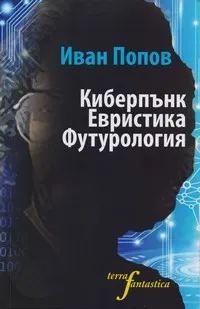
In 2020 the collection Kiberpank, evristika, futurologiya (K.E.F.) (Cyberpunk, Heuristics, Futurology) came out, compiled by his father, Georgi Popov, who returned briefly from New Zealand. The book cannot be bought; it does not even have a price… it is only given away and exchanged. A true apocrypha of the digital age, gathering Ivan Popov’s texts from the website of the same name.
Psychotechnics and Ideological Engineering
Just as the internet has its own apocrypha. Although his three websites are long gone, the web has a memory of its own, thanks to which words live on for many years. So it turns out that online manuscripts don’t burn either… (See here.)
“We modern people are used to the idea that the economy must necessarily grow—by a few percent a year. Yet every mathematician knows that no process in the real world can grow exponentially forever: both humanity and the Earth are finite systems, so there can be no infinite growth in them…” writes Ivan Popov.
And also: “In the phase of linear development, disproportions, contradictions and imbalances accumulate in the system. That is, the crisis is a consequence of the changes accumulated in the linear phase, and it seeks a resolution, the elimination of the disproportions through a radical change in the mode of functioning. It is no accident that ‘krisis’ in ancient Greek means decision. And it is no accident that all the ‘qualitative leaps’ in human history, all the instances of a new socio-economic order being born, came after ferocious civilizational crises.”
Progress Through Downgrade
His texts contain serious economic analysis, but perhaps the most interesting thing is the way he combined his knowledge of history with his scientific instinct and experience. Decades earlier he was already aware of all the challenges the advance of artificial intelligence would confront us with. Of the big questions that are truly looming as technology advances. Of topics that most of us still do not think through in depth today, although it is long past time. But besides the questions, many of the answers are there too, and they can sound merciless.
But no, don’t think there is no optimism.
“In the future we can expect a uniquely large information inequality between people. At the bottom there will be degrading masses, their knowledge and outlook limited to the picture tube of the television set; at the top, a thin stratum driven upward not so much by economic motives as by a hunger for knowledge and skills. ‘The crazy new man’ will probably take shape in this thin stratum, will win the competition for resources (= jobs) and at some point after that will become an obvious role model for everyone else, including the degraded masses. That is, he will be recognized as normal and desirable.”
Once again, his father Georgi and the science fiction club launched the first short story competition named after Ivan Popov, whose first winner was the incredible storyteller and friend of Digital Stories Nikolay Tellalov.
The Future Comes by Breaking In
And so—the future. The future is the great theme that is coming. Is the future already here? If we believe Ivan Popov (and there is good reason to), not yet. Because when it comes, nothing will be the same anymore. As Nikolay Genov, to whom I owe enormous thanks for drawing my attention to today’s hero, put it, Popov “develops a very interesting thesis—that classical futurology merely stretches out the present, while the future is always hostile to it, it is its complete negation, so radically different that it means nothing less than its death.”
“The emerging new social order—however progressive it may seem to us from the distance of time—from the point of view of the contemporaries of the ‘great leap’ looked either like mass madness or like a deep, irreversible degradation,” explains Popov.
“The real future is not the one we strive toward, but the one we fight against,” the physicist futurologist also writes. “So it will arrive not necessarily in the most developed parts of the world, but where they fail to chop off the tentacles it sends out. And if we take into account that the more developed a society is, the stronger its regulatory system, it follows that the future will arrive not at the center of Western civilization, but somewhere in its weak but technologically receptive periphery. (Don’t go thinking I mean Bulgaria, heh-heh! There are even shabbier and more disorganized countries, such as Ukraine, Moldova or Colombia…)”
Decree on the Abolition of Society
“We can only regret that Ivan Popov did not write in recent years,” notes the astronomer and science fiction writer Valentin Ivanov. “His satirical cyberpunk was a remarkable, original and innovative phenomenon in Bulgarian science fiction. I laughed and cried at the same time as I read about the mutri—the thick-necked racketeers of 1990s Bulgaria—exploiting the country’s scientific resources.”
“One of the trends I expect in the future is a fall in the cost of innovation (a radical one, at that), as a consequence of the introduction of artificial intelligences (in the broad sense),” writes Popov. “The price of human intelligence will probably fall too. The question is what the future information civilization will look like, and above all, what the future consumption of information goods will be.”
“Ivan Popov had one of the sharpest and most merciless minds I have ever encountered,” adds the science fiction writer Atanas Slavov, a wonderful author who, alas, did not long outlive today’s hero. “Gentle and kind as a person, a considerate friend and companion, he was uncompromising in exposing human delusions and ‘mass hallucinations,’ as he called ideologies and religions.”
“With enormous gratitude I have ‘borrowed’ from his essays,” Slavov continues, “the wonderful analogy of a worldview as an operating system that time ‘installs’ and ‘uninstalls’ in the mind of the ordinary person. The Bulgarian, he used to say, is in a ‘cross-eyed state’ in his value system, because he has lived through three installations of social operating systems—monarchist, socialist and capitalist. The first two have already been ‘uninstalled.’ How do you expect him to know where he stands?”
Toward a Revolution of the Hallucinated Classes
“The historical trend. Human IQ is increasing, but slowly. It roughly doubles every thousand-odd years. And how fast does the amount of knowledge double? About every fifteen. Communications grow stronger faster still. From the shaman, people heard a few one-liners a week at a corporate meeting… or whatever it was called back then. Whereas we get our heads pumped full every minute by televisions, newspapers, books and who knows what else. Now they pump them full through our eyeballs too…”
“The author’s light, playful language does not hinder him—on the contrary, it helps him describe deep and precise situations,” writes Yuriy Ilkov. In his view, it is time “to see Ivan Popov not only as the high priest of cyberpunk in Bulgaria, but as a figure in our culture for whom even the strongest words fall short of capturing and appreciating his manifold creative work and describing the rich nuances of his artistic, scientific and philosophical incarnations.”
“The history of intelligent machines began with a whole heap of idiotic delusions,” writes Ivan Popov. “They thought one had to arrive at a humanlike intelligence. But what the devil for?! Does any other machine physically copy the human body?”
When the Bogomils Were Virus Writers
I also read a comment online—the Bogomils, I should add, were a medieval Bulgarian heretical sect: “If I ever get the chance to meet Ivan Popov, I would find him a donkey so he could ride into the city of the mandated territory, and I would weave him a wreath of palm branches. He deserves them.”
Without any futurist pretensions, I can’t wait for the future in which some publisher will recognize this author’s worth and present him as he deserves.
Will we ever truly appreciate his contribution and ideas, will they help us cope with the future? Will they reach more minds now, when technology demands it more than ever… who knows.
The most important thing is that hackers keep existing—not the criminals, but those who embody the writer’s idea of the word. Those between the programmers and the users, the people outside the system who can change it and make sense of it. Just as Ivan Popov knew how to do, and will go on doing for a long time to come.
P.S. Ivan Popov’s messages are powerful, stirring and thought-provoking today, more than ever. My heartfelt thanks to Nikolay Genov, who drew my attention to this remarkable writer, forecaster, journalist and scientist. I believe it is important for his words and his name to reach more people. I will be glad of any support—stories from people who knew him, help in making his work better known, or simply good ideas. Write to me!