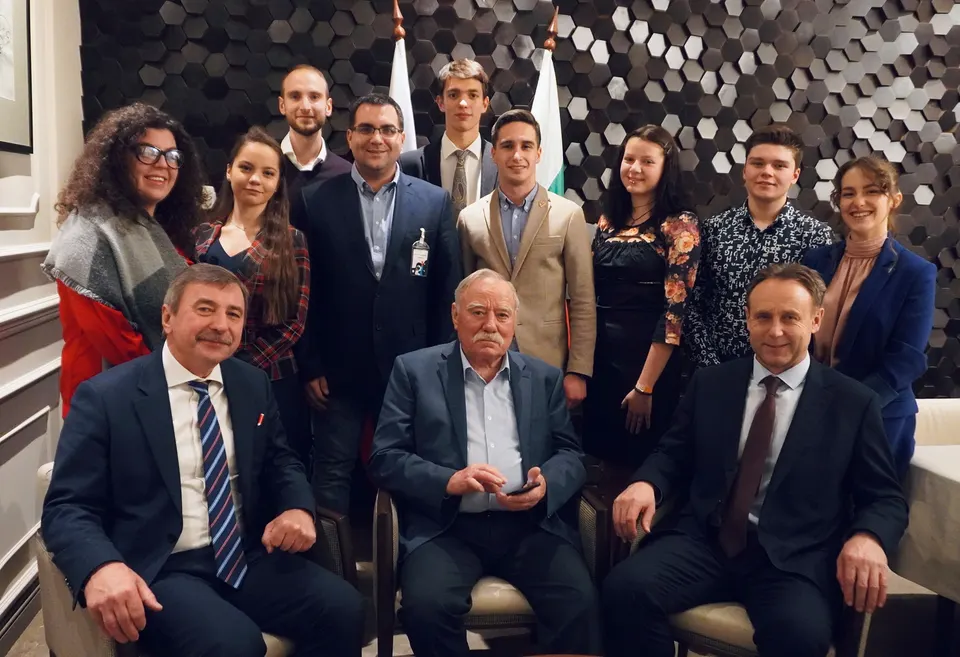
Two aircraft engineers who graduated in Moscow; an electrical engineer who studied in South Korea; and an operations director who is… 17. He uses the time left over from his high school classes to prepare paperwork, and also to help carry and install the heavy components.
It sounds a little like the Fellowship of the Ring, but it is actually a fellowship called Photonika, and its task is even harder: to “light up” the stars over Sofia. To make sure that our capital finally gets a planetarium of its own.
More than that: as a next step, it will let children in small Bulgarian towns, right in their schools, rediscover what is so beautiful about the stars, why space is fascinating, where the magic of science lies. If that isn't a Digital Story, what is!
Stars in Their Eyes
It's not as if there's a shortage of entertainment for children. You go to the mall and you're all set—the lights and the favorite characters lie in wait at every turn. But what if there were a way to entertain kids with something more meaningful? The stars, for instance, or science…
More than ten years have passed since I first wrote about the idea of a planetarium in Sofia. Back then there was a wonderful, ambitious, well-thought-out project to make it happen, but… the money and the organizational muscle for such a meaningful venture are hard to find. And so Sofia remained the only European capital without a planetarium.
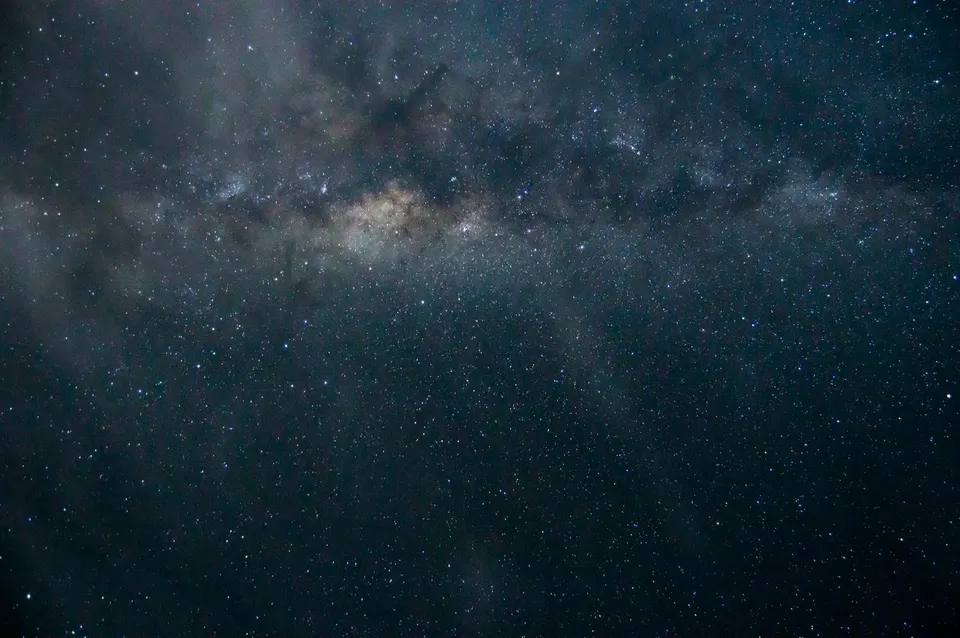
Sometimes time simply has to pass for everything to fall into place. And now it is finally going to happen: the first prototype will open in Sofia before the end of this year. A place where you go to the movies, only a different kind of movies. The stars aren't like Brad Pitt—they are eternal and real.
Yes, the project, which its creators have named Andromeda, is for a small hall that can hold only 15 guests. But it is built on the best and most modern technology, and it very, very convincingly “transports” its guests to the stars. And, as I said, it is only the first step: the fellowship is ambitious and ready to turn this pilot venture into a calling. The first planetarium in Sofia is meant to become the prototype of a product that audiences in many towns will later get the chance to enjoy.
Under the Stars
The story is told to us by Apostol Spasov, the 17-year-old who handles the team's administration, funding and organizational processes.
The core of the “fellowship” came together in 2017. At its heart is Nedislav Veselinov, an aircraft engineer who studied and worked abroad and came back to Bulgaria to build projects of his own. The first idea that brought him together with his friends, united by a love of flight and space, was to raise money to repair the beautiful but rather neglected observatory in Borisova Gradina, Sofia's oldest park. The money was raised, but something went wrong in the communication with Sofia University, which owns the observatory.
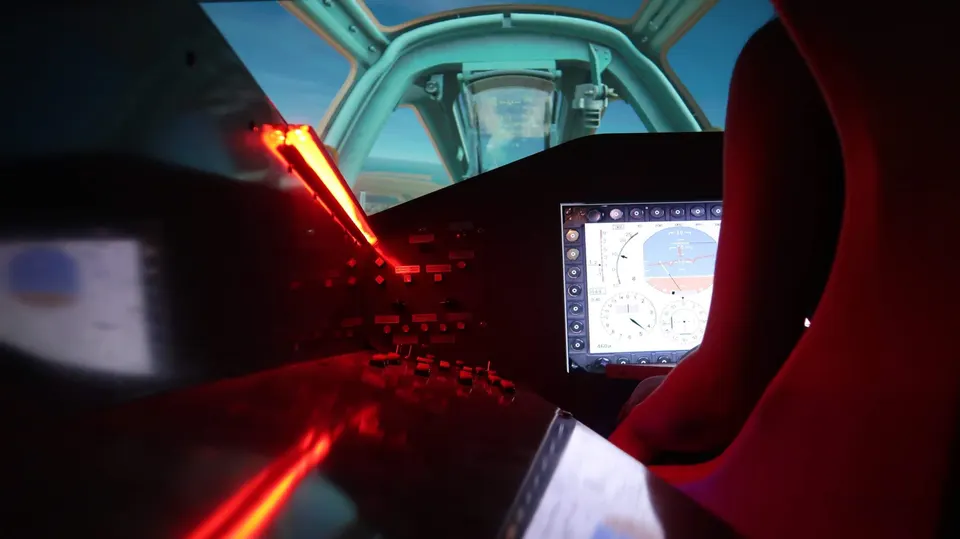
So the sky lovers decided to find a new challenge. They built an innovative pilot-training simulator, the first of its kind made in Bulgaria. The prototype can be seen today at the Russian Cultural Center on Shipka Street. It's a thoroughly realistic model, far from a toy: a serious simulator, the kind military pilots can train on.
Star Couples
You find yourself in the cockpit of a Su-33, a Su-25 or a MiG-29, and you have to apply real skills at every stage of a flight—from takeoff and coping with strong winds to aerobatic maneuvers.
Meanwhile, the Photonika enthusiasts also organize various events aimed at drawing young people's interest to the skies. The Aviation and Space Day they hold in Varshets, a small spa town in northwestern Bulgaria, for example, brings in kids from far away who come to try the flight simulator or join one of the other activities.
Then the enthusiasts became convinced that things were clearly working out for them and they were ready for the next challenge: Andromeda, the main subject of today's Digital Story. They founded the company Photonika and took on serious research, and then the purely technical work of building the planetarium.
Through Hardships to the Stars
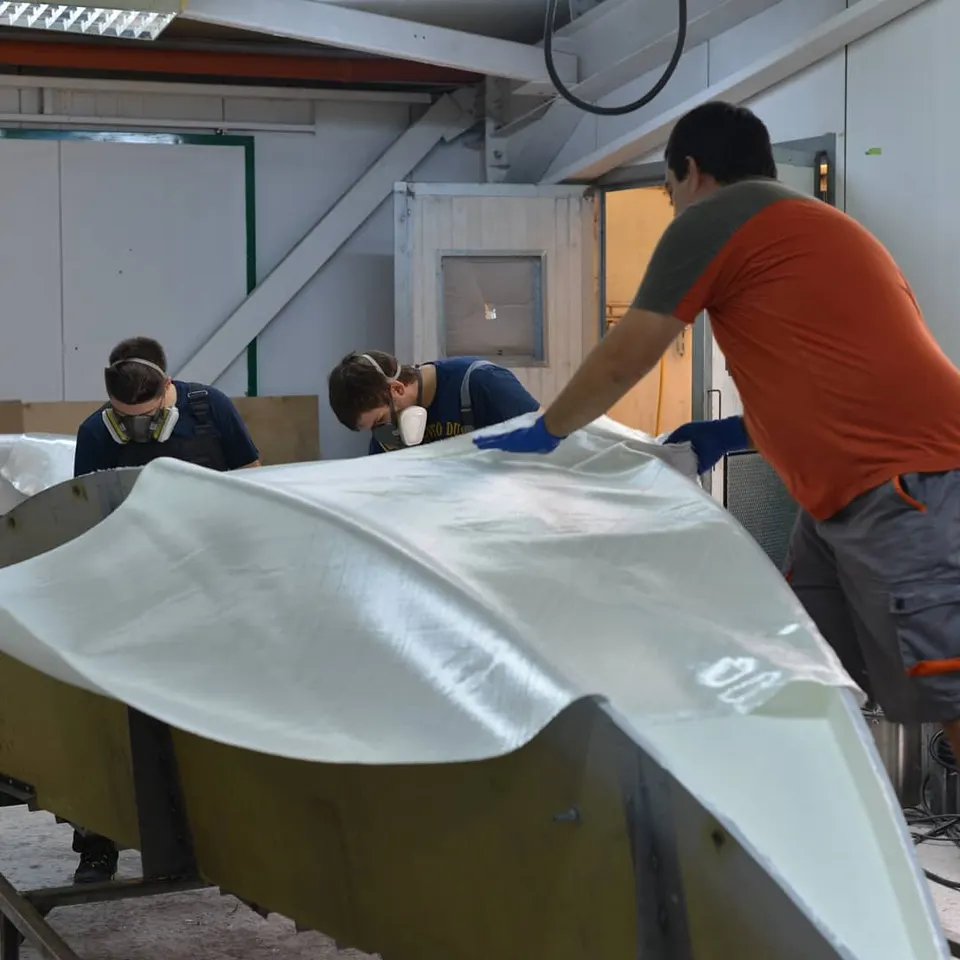
It is December 29, 2 a.m., and Nedislav and Apostol are… busily working on the planetarium's dome with all sorts of strange tools. They often have to do it at night, because all eight members of the venture's core team have plenty of other tasks and challenges.
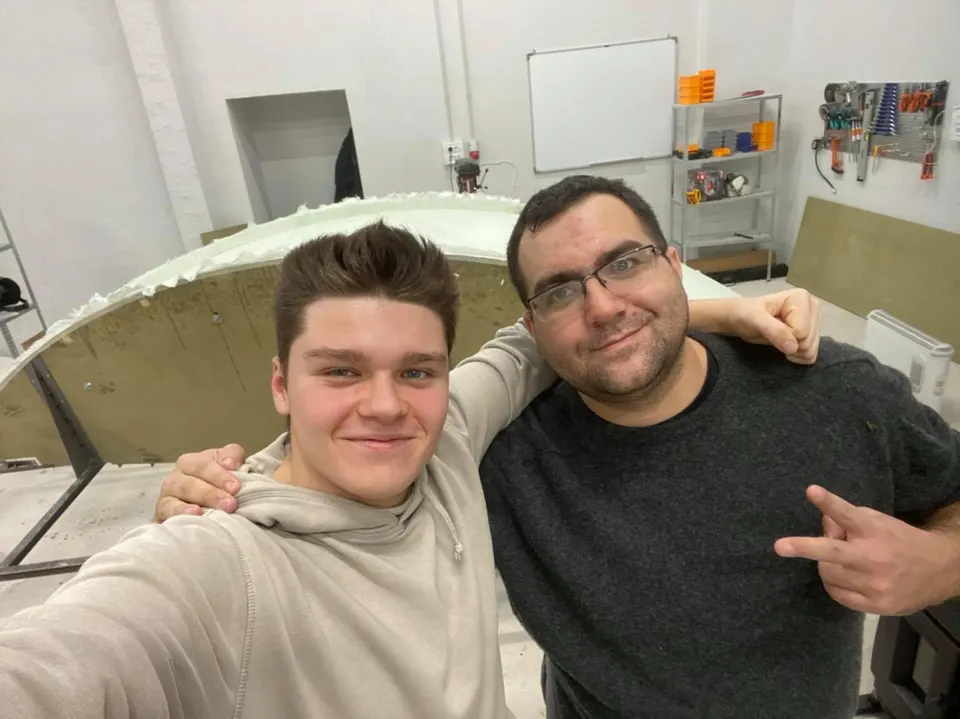
The original plan was to finish the facility in May; then the deadline was pushed back to the end of 2021, and by all signs, this time the enthusiasts will make it.
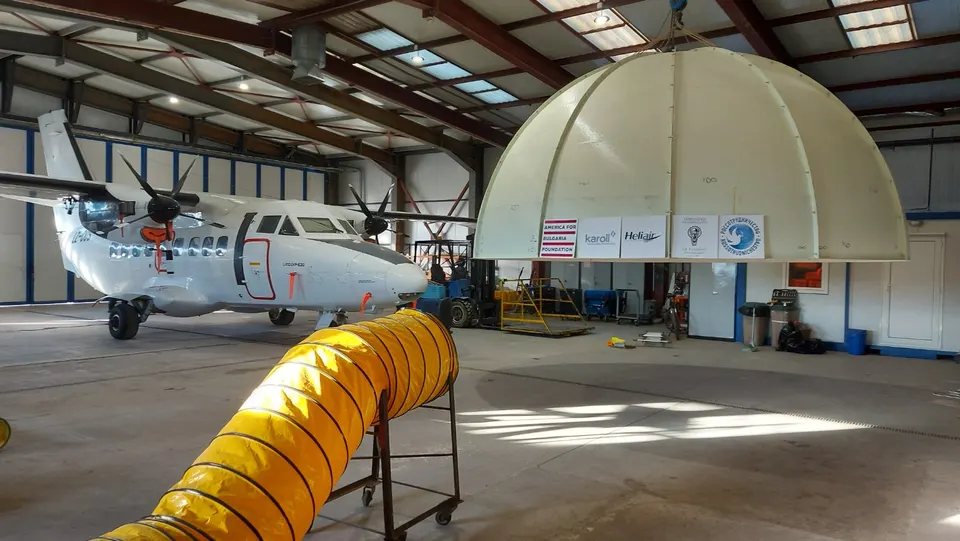
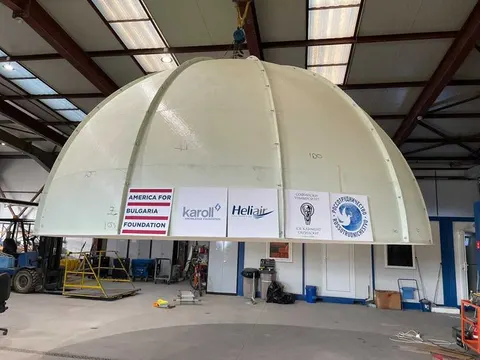
The most complex part—the dome itself—is already finished. “We managed to achieve an almost perfect sphere, which is really impressive, given that this is a pilot project,” says Apostol. He gives the example of an Italian planetarium manufacturer whose domes have a deviation of 2 cm, compared with just 2 mm achieved by the Bulgarian builders.
A Whole Constellation
The base is being built right now. In the summer the projection system will arrive, and it has to be installed and integrated into the structure.
The projection system itself is the most innovative one on the market. The Photonika team decided they definitely wouldn't skimp on this crucial component, on which the entire experience of the planetarium's future guests depends.
What really matters is how fully the hemispherical lens spreads the image across the spherical dome. Clearly, this is a very different task from that of a traditional movie theater. To make the best choice, they got in touch with Professor Brook from Australia, who is regarded as a true luminary in his field and has helped them a great deal with advice.
The system will use four separate projectors. Special software will “even out” the image so that there are no brighter or darker spots.
The dome is tilted at 30 degrees so that people can see more of the show in front of them, comfortably settled in seats specially designed for the planetarium.
Five Stars
It is not yet clear exactly where the pilot planetarium will be located; the team is choosing among several offers. What is certain is that it will be somewhere convenient to visit in the center of Sofia.
The adventure is only beginning. Five Bulgarian municipalities have already contacted the team, interested in future planetariums; they just want to see the quality of the pilot prototype for themselves. After that, schools will probably follow, since they could apply for European funding to acquire the facility.
And once the orders multiply, production will move to the next level. The team believes that a new unit could leave their hands in just a month or a month and a half.
“We try not to get ahead of ourselves, but we already have plenty of ideas for what comes next,” Apostol says. “Once we have more funding, we'll move on to building much larger planetariums—the technology is practically the same, it just takes a more serious investment.”
For now, though, they see the modest size as an advantage. The pilot model is 5 meters in diameter and 3.6 meters high. “What's convenient is that it's compact, so it can be fitted into schools, indoor spaces, parks. That gives much more flexibility—these days it's harder to fill big halls. And with the new technology, the experience inside is still incredible,” says Apostol.
Under a Lucky Star
There aren't all that many companies in the world that specialize in making planetariums—some focus on prefabricated models, others offer only planetariums as entire buildings, like the ones in Smolyan and Varna here in Bulgaria. “At first we're focusing on the Bulgarian market. If things work out, we'll try to go into Europe too. We'll take advantage of the experience we gain and the lack of many competitors in this particular segment. But we want to find our footing first and only then move on,” Apostol adds.
They will also have the technology needed to process and produce the films that will be screened in the planetariums. The goal is to have a rich enough variety of productions in Bulgarian from the very start, adding at least two more every month. They already have the first two films for the pioneering screenings and are working on the next ones. At first these will be about space, but later ones will send planetarium visitors on journeys through the human body, into the brain. And then into the distant prehistoric past…
And after that? As people who love to gaze at the stars, the Photonika builders have another intriguing idea to take on. They plan to build only the second marsiarium in the world. It is an installation similar to the escape rooms that have become popular in recent years, only much larger, interactive and realistic.
The Martian Chronicles
“The concept is that when you walk in, you find yourself in a spaceship that takes you to Mars,” Apostol explains. “And there you'll find a space station based on the Red Planet itself, plus an outdoor area. Everyone will go in wearing a special suit that resembles an astronaut's gear as closely as possible, so that the experience is as realistic as it can be. According to our research, there is currently only one sufficiently well-made marsiarium—in the Nevada desert. But while that one presents only the station, for us that's just the beginning: you'll be able to step outside, onto a place that resembles the surface of Mars as closely as possible. There will be rovers, craters… But let's get there first, we're taking it step by step,” Apostol concludes.
We know about one small step for a man and the steps of mankind, and yet it seems we have forgotten them. A planetarium, however, is a wonderful place to remind us where we are and who we are. It's long past time for humanity to take a step forward, or rather upward, toward the stars we abandoned for the sake of the everyday. The technologies that took us far from Earth deserve more of our attention than the ones that let and encourage us to photograph our breakfast.
Isn't that so?