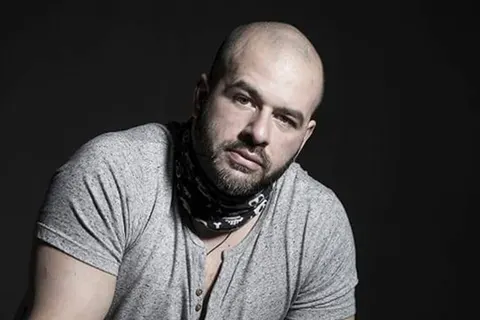
It is 2005, and Stefan Ivanov is just 18, bursting with energy, a national track-and-field champion. He finishes his training for the day, climbs onto the back of a friend's motorcycle for a ride… and wakes up 17 days later in intensive care.
The days have simply vanished; what's more, the hard fight is only just beginning. One of those fights no one would ever imagine having to wage, or wish to. The kind where you have to face yourself even more than the pain. Yes, we humans are weak and we need help, especially when we find ourselves before an unknown enemy, and without being sure even of ourselves.
Sometimes that helper turns out to be the act of making something: creativity, art… Which one day artificial intelligence may create even better than we do. Except that without us it has no meaning at all. Without the stories that line up behind every stroke on the blank page, the way it happens in the story of Stefan from Dryanovo, a small town in central Bulgaria.
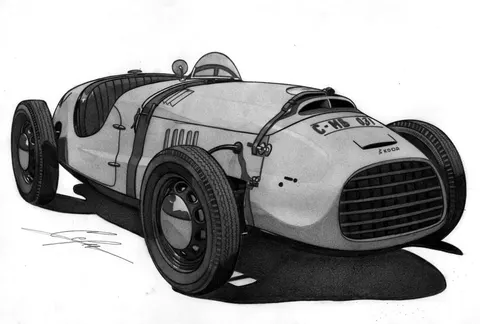
The White Room
He wakes up… and yet everything still feels like a dream. In the intervals when he has more strength, his parents tell him he was badly hurt in a serious motorcycle crash. He has severe head injuries, and because of them he spent a long time walking the razor's edge, beyond which lies the other side. The young man spent two weeks in a coma, from which he finally woke, but to this day he does not remember exactly what happened.
Two severe traumatic brain injuries, fractures of the facial and occipital bones, fractures of cervical and lumbar vertebrae, and many other injuries.
The athlete, once full of strength, suddenly wakes up shattered by grave injuries. Everything is forbidden to him: watching television, taking a cold or hot shower—he has to spare himself. For years to come he must not put even a light strain on his muscles; a long recovery lies ahead.
“I couldn't do anything. I lay at home and felt like I was in prison. I was used to training, to meeting friends. The first few months were sheer hell,” Stefan recalls.
His dream of a career in professional sport flies away, and in its place comes the fight for a normal life. But what helps him at that moment, and what is this Škoda in the headline?
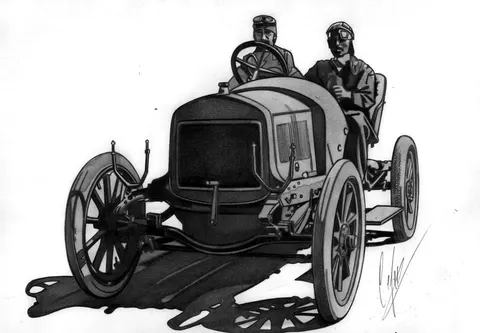
Drive On, Sir!
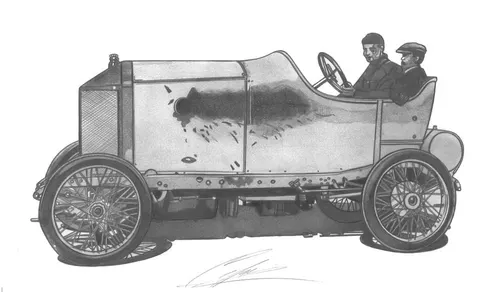
An unexpectedly awakened hobby: the urge to draw, and only one particular subject at that, which later becomes his trademark and an area of deep expertise.
Stefan last held a pencil as a little kid, drawing some adventure scenes. Then sport took him far away from art. But in the long hours after the crash, when the pain won't stop, he feels an inner need to create, to make things.
He has loved cars since he was small. His father always chose cars of one particular make, and he carries on the tradition. And almost without noticing, pencil in hand, he begins to draw exactly that—cars. Various Škoda models he had seen and imagined. He draws and draws… and keeps at it to this day, 16 years later.
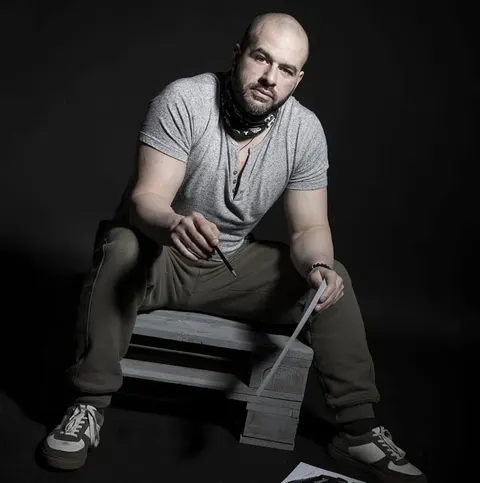
At the Prošek Brothers'
Czechs hold a special place in Bulgarian history. We all know the Prošek brothers, Mrkvička, Jaroslav Věšín, Rudolf Vitlačil—Czech builders, painters and architects who helped shape modern Bulgaria after its liberation in 1878. So perhaps it is time, in some peculiar way, to return the gesture?
Sixteen years after this story began, Stefan has become a living encyclopedia of Škoda, and above all of the make that preceded it—Laurin & Klement. Never heard of it? Neither had I, I confess, even though I drive a Škoda too.
Stefan dives deep into the models of the Czech make, reads every scrap of information with interest, piecing together an enormous puzzle. As a result, today he has more than 2,000 illustrations of over 200 different Škoda and Laurin & Klement models. Complemented by serious technical information, with all sorts of details, pieces of the big picture. He also looks after two old cars of the make, which he and his father have worked hard to make shine in their full original glory.
“No one would spend so much of their time drawing the history of a car company. But this volume of drawings, this knowledge I've built up about Škoda, the correspondence I organized with all those places around the world that have something to do with the subject, made things completely different,” Stefan says.
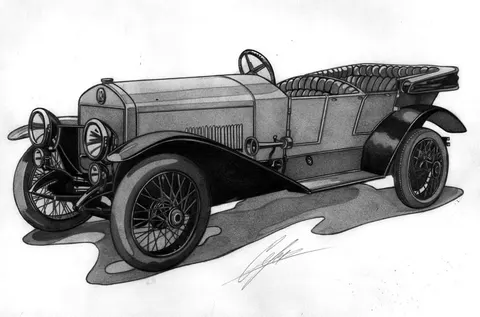
Back in the Game
Drawing is what, in his own words, brought him back and helped him fight after the terrible crash and the days in a coma. And for so many years now he hasn't stopped developing in this direction, learning new details about the cars of the Czech makes, drawing them again and again.
In 2019 he published his first collected body of knowledge about Czech cars, and today a much fuller version is ready. Only the pandemic kept him from showing them exactly where the legendary car was born—in the Czech town of Mladá Boleslav. He had an invitation from the Bulgarian community there to hold an exhibition, but the lockdowns changed the plans.
Long before that he had made contacts and corresponded with enthusiasts of the subject from all over the world. Stefan keeps hoping that he will soon get a new chance to go to the place where this story was born.
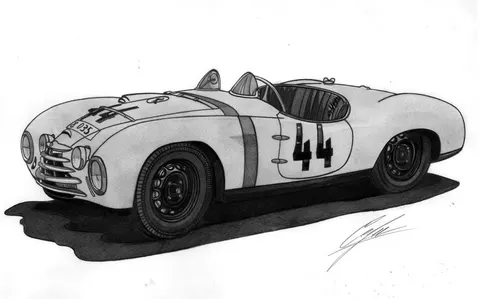
Drivers Are Like a Flock
“A story like this is a spiral. Once you start reading, it sucks you in and draws you into a magic of personalities, events, races, achievements and innovations,” Stefan says.
The Laurin & Klement car factory existed for about 30 years, and its founders were among the true pioneers of automaking, Stefan explains. They turned their small country into a world center exporting cars to the farthest corners of the planet.
Even to Bulgaria! Shortly before World War I, the Ministry of Defense ordered ambulances from this make.
At the end of the twentieth century, many Czech emigrants took their cars to the United States, so the make reached there too. Another little-known fact is that Laurin & Klement were the first Western cars to arrive in Japan, and for a long time afterward at that. Since Europe had no regulations yet at the time, these cars were right-hand drive, and it is precisely because of them that this became the standard in the Land of the Rising Sun.
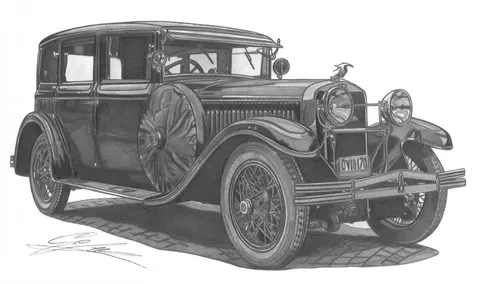
“Václav Laurin and Václav Klement were poor boys, farmhands, but they had a dream—not to be what fate had decreed for them,” Stefan says. “They had the enormous strength to break out of the stereotype, and it's worth learning more from exactly these kinds of stories.”
The company's history is bound up with that of the whole country, he goes on. There is no figure who contributed significantly to Czechoslovakia in any field over the following decades who did not interact with Laurin & Klement—politicians, soldiers on the battlefields of World War I, inventors, racers.
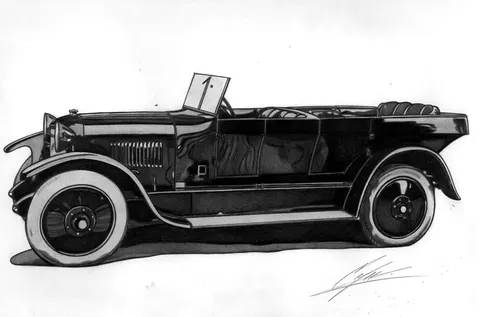
Czech Beer
“As I gathered the history, I began piling up more and more valuable individual facts. I could feel light being shed on popular claims in the automotive world that turn out to be false. The first people's car was not the Volkswagen, nor was it the first with a beetle design. The first 8-cylinder engine was not in Mercedes airplanes from World War I, but a Laurin & Klement from 1908. These are all facts unknown even to people in the industry, to automotive historians,” the amateur artist adds.
Another interesting and little-known story comes from the years before World War I. In 1907 the Kingdom of Montenegro needed a car specially built for the narrow, hard-to-reach roads linking the routes in Dalmatia with the heart of the country. Two companies competed for the project—Fiat, an enormous empire at the time, and, of course, Laurin & Klement.
Austria-Hungary, however, had interests in the Balkans, financed the production at several times the announced value, and so the Czechs won the tender. These 9 cars of the Montenegro model, made in a unique series especially for the occasion, carried people, luggage and mail. Meanwhile, the empire gathered important information about the region 8 years before the war began.
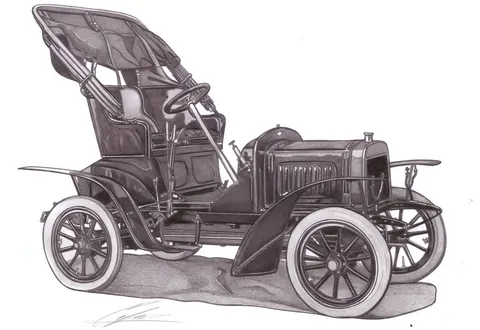
At 100 Kilometers an Hour
Today Stefan has long since left behind what the crash did to him. He even does extreme sports—bungee jumping, rafting. With every passing year he is more determined to draw better and to gather new facts on the subject that has found its way so deep into his heart.
He collects his illustrations on Facebook, keeps looking for chances to show them in exhibitions, and is preparing his next book, full of even more fascinating information about Czech cars.
In his view, we in Bulgaria owe a great deal to art in its many forms, and that is one of the reasons he seeks more attention for his project. He also believes that more attention should be paid to the people who study the history of cars, since our vehicles have long been carrying not only us, but history too.
I wish every one of you to find for yourself what the Czech cars, with their colorful stories and images, are for Stefan. Arriving just in time to bring him back, to this side of life…