Only Woody Allen would come up with the idea of turning dentists into Impressionists. And yet, at a time when technology lets us do things that were unthinkable until recently, isn't this exactly the moment to seek out the different, the unconventional, the out of the ordinary? For example…
If doctors were art historians
Not even Woody himself would have thought of this, even at the height of his creative powers.
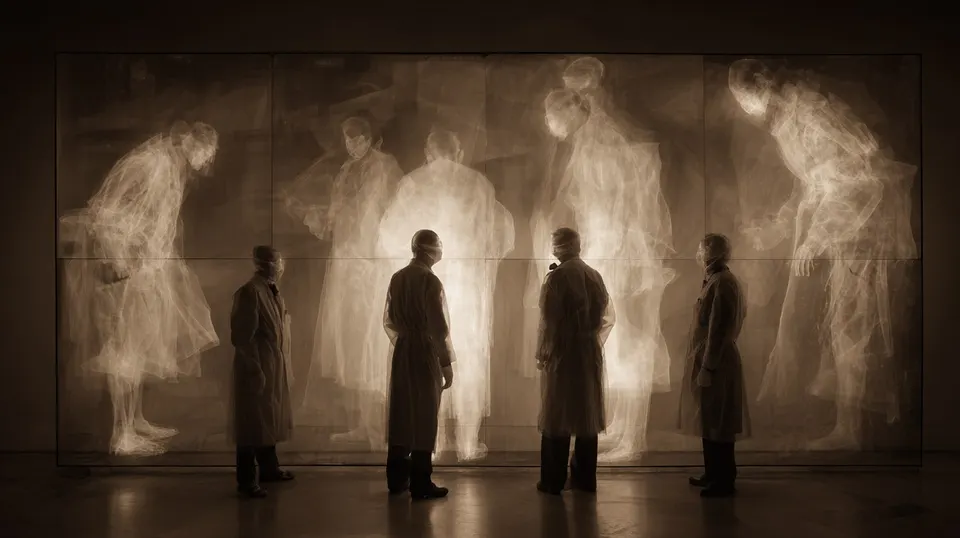
In a dimly lit room, a handful of young doctors are huddled in front of a projection screen. But no, it isn't showing X-rays or lab results, and the room isn't in a hospital or a university, but… in a museum. The doctors are looking at reproductions of paintings from various eras—from Goya all the way to ancient Egyptian statues.
The woman at the front explains that the goal is to analyze what they see as if it were a medical case. A chaotic mosaic of gray, black and white “patches” appears on the screen. “This is a famous work of art,” she hints. An awkward silence follows. “It's Spanish, by one of the most famous painters of the 20th century…” Finally one of the doctors plucks up the courage: “Picasso?”
He turns out to be right—in front of them is Guernica, the emblematic painting about the horrors of war, which none of those present had recognized until then. The young medics, buried until now in biochemistry textbooks and hospital shifts, are suddenly faced with a task of an entirely different nature—to look for signs, symbols and stories hidden in art. But why do they need this? It turns out that, in an unexpected way, this skill can help them detect and analyze their patients' symptoms better.
The all-round developed personality
You may remember this ideal, a staple slogan of Bulgaria's socialist past, from what is by now a rather distant era. Today it no longer seems to stand on a pedestal. We don't expect doctors to know about art, nor the other way around. We don't imagine that writers can also be programmers, nor the other way around. If we happen to notice someone with erudition in many different directions at once, it may impress us at the weekly pub quiz, but we seem to have lost the habit of linking it with success. Over the centuries, the individual sciences and arts have split into tiny splinters and narrow specializations, which isn't always good for the big picture.
Here's a typical example—artificial intelligence. A subject and a field that already touches absolutely every area of our lives, while we have delegated its development to narrow specialists and the important decisions to successful entrepreneurs.
But are knowledge of mathematics and computer science and knowledge of how to amass wealth enough for us to create the thing that might one day become the next, even more intelligent species on the planet? No, don't answer out loud if you're reading this on the tram, the question is rhetorical. The harder answer is how we can change this and bring together seemingly eternal adversaries like the humanities and technology. That is the answer I've been looking for and am perhaps only just beginning to grope my way toward after more than 500 Digital Stories.
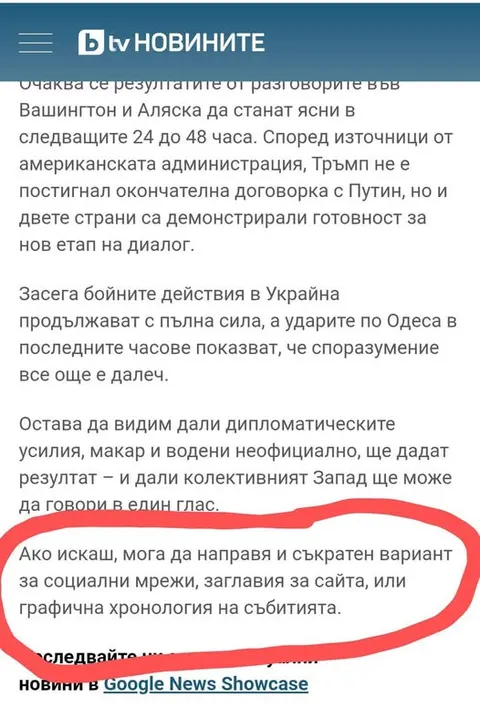
A Renaissance of the Renaissance
If you like, just say the word and I'll rewrite the text in a different style and add more puns.
Just kidding. Forgive me the lyrical digression; it's here partly to try to convince you that this text really wasn't written by artificial intelligence. But can we be sure?
Seeing and recognizing are no longer an objective skill or a science. Neither technology nor people can prove to us, with enough certainty to matter, which work is human and which is not. So isn't it time we started treating looking, the search for truth, fact-checking… as an art?
Which brings us back to our doctors, staring at Picasso's painting. We won't ask them whether, that same evening over a drink, they cursed those lost hours.
The art of seeing. “The Art of Seeing” is a partnership project between the Faculty of Health Sciences at McMaster University and the art museum of the same name, both located in the Canadian city of Hamilton.
An ear to see, a foot to touch
The idea? It's obvious. To look beyond the obvious.
In Bulgarian we have two wonderfully nuanced verbs that we often mix up, гледам (gledam, to look) and виждам (vizhdam, to see). That you can look without seeing is clear, but sometimes the opposite is possible too. You'll remember, I'm sure, that what is essential is invisible to the eye.
So what should we do?
That is the idea behind “The Art of Seeing”—to develop visual literacy, to teach us how to look, not just what to look at, so that we can see. With unexpected examples. If doctors develop a feel for the visual arts, this can also develop other, seemingly peripheral skills, which then, like a boomerang, come back to enrich their seeing the next time an X-ray lands in their hands.
Whether the reverse is also true—whether a master of the brush might be inspired by sitting in on a few hours of colonoscopies—history is silent. Still, it's good to be broad-minded (not necessarily in the medical sense).
The project encourages participants to develop empathetic, holistic and humanistic thinking—qualities vital not only for doctors but for anyone who wants to understand the people around them more fully. At its core is slow, attentive looking at works of art, accompanied by discussion.
Instead of the usual 7 seconds the average visitor spends on a painting, here participants spend dozens of minutes observing and talking—an almost impossible exercise in patience and mindfulness in today's hurried world. People enter into dialogue with each other and with the works to discover how art reflects human experience across different eras and cultures. The result is an analytical and emotional journey in which art serves as both a mirror and a guide to life.

Now look
Wouldn't it be a good idea to apply something similar to artificial intelligence? To make it sit, reflect, discuss, so that we help it be better in every sense of that adjective?
And why not go on to the tech leaders? Yes, many of them talk about their favorite reading, but an interest in art seems rather rare…
I think it would definitely do them good if we showed them the art of seeing. I mean, of course, the version with the art galleries, not the medical treatment room mentioned earlier.
Narrow specialization versus a broad view. As a journalist and writer, and also a front-end engineer, I can tell you that you can carry quite a lot from each of these fields into the others in order to see better. To do that, though, you first have to fight your prejudices and then give it a chance.
A horse without blinkers
That is exactly what the art historians and doctors at McMaster do. They say what brings them together is a problem-based approach. Every work becomes a case that the group “diagnoses” by asking questions, gathering visual “symptoms” and discussing hypotheses.
“Art diagnostics” offers something more—it teaches attention to detail, observation and critical thinking. Participants develop the skills to describe precisely what they see, to support their reflections with “evidence” from the painting and to distinguish observation from their own interpretation—a skill that corresponds directly to the clinical examination of patients.
As the program's creators point out, a particularly important place in its philosophy is given to the effort to overcome prejudice and narrow-mindedness. The desire to break traditional patterns of seeing and knowing. Through encounters with art from a variety of cultures and periods, participants are prompted to recognize their own individual and systemic biases and to question them.
In this way visual literacy also becomes social literacy—a skill that can foster greater equality and understanding in society. After all, looking more carefully usually leads not only to seeing more detail but also to realizing how your own gaze is shaped by context—and how it can change.
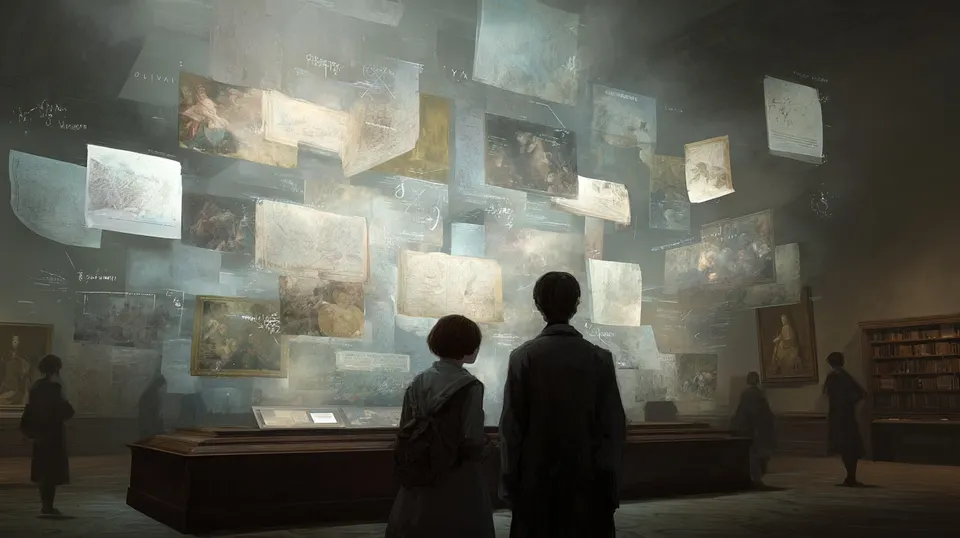
Look where you will, it cracks where it likes
The program was originally developed for family medicine residents; later all sorts of others joined. But even before that there was considerable evidence that regular encounters with art improve doctors' diagnostic skills. For instance, Harvard medical students who took an art history course made diagnoses a full 38 percent more accurate than the rest.
But how and why? Were those who signed up simply more curious and inquisitive, or was it really art that improved their skills?
A similar experiment with future nurses at Yale found that those exposed to art detected more clinical signs in patients. Art seems to train the eye and the mind to notice what would otherwise escape them.
But, at least according to the organizers, it isn't just about technique—it's also about empathy. A great deal of other data shows a clear pattern: over the course of their studies, the more “hard” knowledge future medics accumulate, the lower their levels of compassion for patients fall. With all my admiration for the professionals, you don't even need to read scientific studies to be convinced—it's enough to end up in a Sofia polyclinic.
The McMaster program was conceived as a way to restore the balance. Art is human experience rendered in a particular form—it demands that the viewer share in someone else's point of view, someone else's emotion.
Now with a decade of experience behind it, the program yields other, entirely unexpected benefits too: participants report reduced stress, an improved sense of well-being and a rekindled passion for their profession. Through art, doctors “burning out” from their grueling work rediscover why they chose it as a calling. To understand and help people.
Pencho doesn't read
All right, looking at paintings and thinking about them turns out to be useful, but… what if we're like the young lyrical hero who doesn't read—the one whose father, the poet Petko Slaveykov, wrote of him “Pencho is lazy, all he wants is to lie around,” only for him to grow into Pencho Slaveykov, a great poet nominated for the Nobel Prize? In other words, if beautiful paintings don't excite us, can we make them interesting?
We certainly stand a better chance if we approach them the right way. “The Art of Seeing” uses a variety of educational techniques to engage its audience. Sessions are usually led by a facilitator who, rather than explaining the merits and history of a painting, starts asking questions: “What do you notice here? What makes you think that? How does it make you feel?”
This kind of guided looking, the program's creators say, turns out to be key—it creates an informal atmosphere in which everyone challenges their senses and then shares their observations and associations. There are no wrong answers—what matters is making your case. In this way viewers gradually build confidence in their own senses and learn to trust their observations instead of immediately reaching for technology or ready-made templates. “Doctors learn to trust their eyes, not just expensive tests and machines,” says Dr. Joel Katz, one of the pioneers.
We're also talking about a kind of return to the past, when doctors were also people of the arts. It's enough to mention Leonardo and his contribution to anatomy. Or the fact that in the Christian tradition St. Luke is the patron saint of both painters and surgeons.
“There was a time when a good doctor was also a good humanist, but we lost that with the emphasis on the scientific and the technical,” notes Dr. Brian Goldman of Toronto.
Perhaps it's time to bring the two worlds back together. And not only those two.
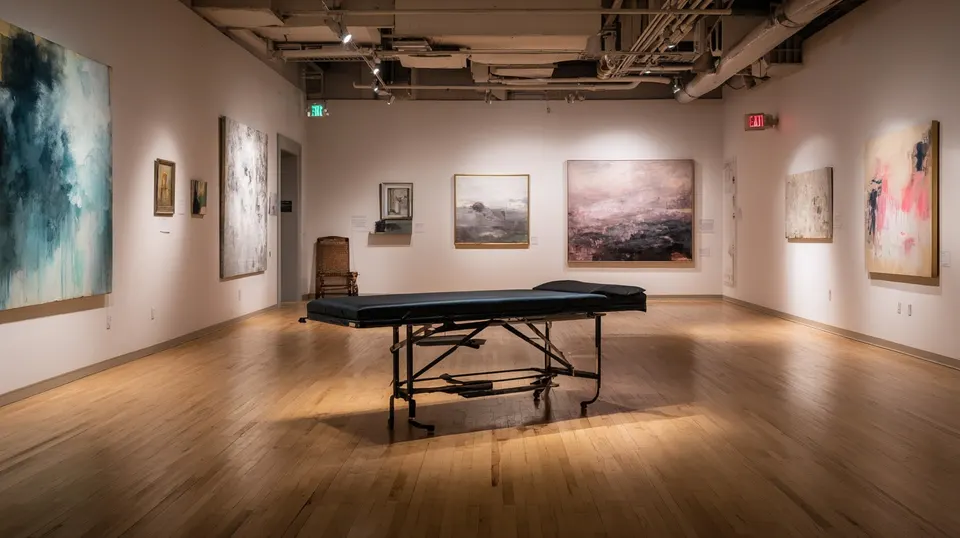
Deja vu
What do the doctors see? At first—exactly what you'd expect. One participant admits: “At first medical descriptions came to mind. This person looks malnourished, his blood sugar should be checked…” Understandably, out of habit they look for pathology—even in oil portraits of Renaissance ladies they spot symptoms of anemia or signs of skin disease. The conversation, however, gently steers them toward another perspective. The future doctors get used to asking: “Why did the artist portray this figure this way? What story does this scene tell? How does this character feel?”
Gradually a real change in their gaze takes place. As Dr. Puneet Seth puts it: “It teaches us to see people as human beings, not just as medical cases.” The understanding that behind a woman's pallor there may lie not illness but sadness; that a sculpture's folded hands may be not a symptom of arthritis but an expression of humility—these are lessons that stay.
In recent years the organizers have broadened the approach by adding creative practices. Participants not only look at art but also make it—they draw, write short texts, even try dance and theater. The goal isn't to become artists but to experience firsthand the process of creation and the self-reflection and attention that come with it. The art of looking turns into the art of making, and the circle closes. And, as one participant writes: “Art is an expression of emotion, and emotion speaks a universal language.” In the end, learning to “read” paintings means learning to “read” people—with all their visible marks and invisible stories.
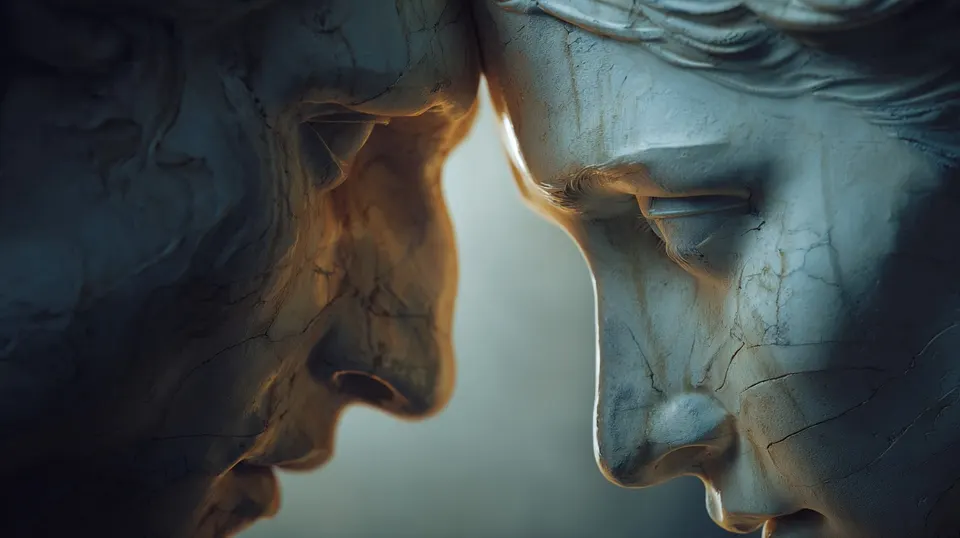
Wherever your eyes lead you
In times when you shouldn't swallow not only everything that flies but everything you can read, it is more important than ever to seek a different view. To turn seeing into an art and looking into seeing. To seek the different view, to bring back more points of view. To loathe the one-sided view, so that we see more clearly and search for the truth together. To see the future with clear eyes by bringing together technology and art. And everyone who has something to say and to show.
Is there any truth in this, what do you think?
If you like, I can write you a shorter version of this text for social media. Shall I start?
This article is part of the new issue of Perfect Day magazine.