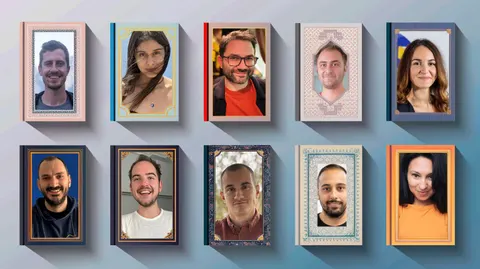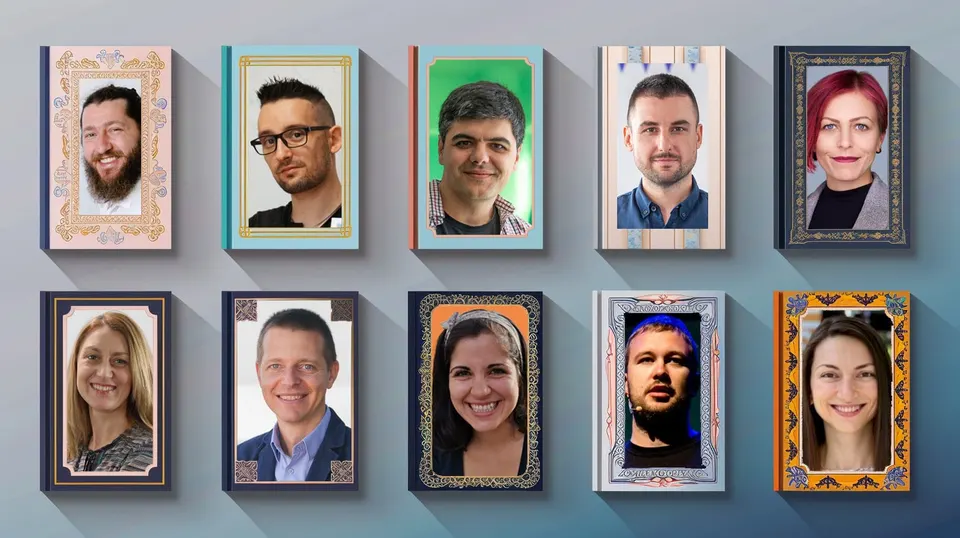
Would you have guessed that Bulgarian IT leaders read Harry Potter, or even Dostoevsky? I wouldn't have, at least until a week ago, when I asked them and it turned out that's exactly the case.
I will never tire of repeating that you are what you read. On the eve of the Day of the Buditeli—November 1, when Bulgaria honors the National Revival enlighteners who kept its language and learning alive—I sent a short invitation to 30 people I consider remarkable: to recommend three of their favorite books to the readers of Digital Stories. I tried to make the palette of guests as colorful as possible—from people in leadership positions to those known as speakers; from people working across the ocean to foreigners whom the sector has brought to Bulgaria; representatives of the most varied technologies and of different generations.
I received no fewer than 20 answers, and today I have the pleasure of presenting the second half of them (the first is here)! Once again I'll note that they aren't grouped by any particular logic, because they turned out to be far too colorful and unexpected for that to be possible; I offer them to you in the order in which I received them.
Happy reading!

1. Pain and the Fifth Rakia
Nedko Hristov is an experienced DevOps specialist and a memorable speaker; before that, his path also ran through the QA profession.
(More about him and from him—here.)

- Za petata rakia. Dyado (For the Fifth Rakia. Grandpa) by Georgi Bardarov
“For the Fifth Rakia” is perhaps my most beloved short story. Outside the frame of society, of stigmas, outside religion. A magnificent testament from Bardarov about what is human, about not one but five glasses of rakia, the Bulgarian fruit brandy; stories told on a broken chair in the middle of a road where cars no longer pass; about a telephone that has gone silent.
Call your grandparents more often.
- The Gardener and Death by Georgi Gospodinov
This is one of the most delicate, magnificent and most difficult books I've read in recent years. To sum up the novel in one sentence, it is a monument of words from G.G. to his father. It is G.G.'s open rib cage, and inside, on two handfuls of soil, flowers sprout, a cherry tree and many roses. G.G. gets better and better with the years, and if I could compare him to anyone, it would be Leonard Cohen (with reference to his last album—You Want It Darker).
The father-son bond is very often neglected, and cruelly so—we rarely stop to think that a father is a monument we can always lean on; a big part of us that we have and often forget about.
Call your parents.
- Hronika na bolkata (Chronicle of Pain) by Ivo Ivanov
The year is 2024, and in 64 hours I rode 700 km on my bike in the epic Danube Ultra challenge. And while I rode, I listened to Chronicle of Pain in one go. Because I was hurting after so many kilometers on the bike, and because I had already read Ivo Ivanov. Ivo tells the heartbreaking stories of Jessica Long, of Niki Bozhikov from Kalofer, of Ivan. What do they have in common? All of them (and others in the book) are Paralympians whom society sees as “second-class” people. All of them show that a person is as strong as their spirit is strong. The body simply follows.
Told with incredible simplicity and humanity, these stories carry a raw charge of the will to live, of the incredible strength of a human being, and of the fact that anyone who wants something truly badly can achieve it.
Recommendations of favorite Bulgarian authors arrive precisely with the 11th answer, as if I had wished for them! And not random ones—Ivo Ivanov and Georgi Bardarov have also been guests on Digital Stories. And if every book is a powerful story, Nedko reminds us that reading every book can be a powerful story too.
2. Trial, Error and Forgiveness in the IT World
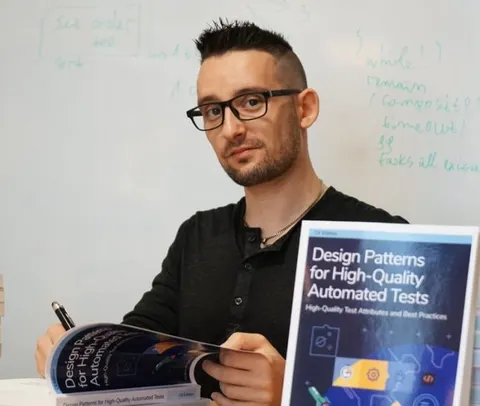
Anton Angelov is managing director and co-founder of Automate The Planet, an undisputed authority, author and speaker in the world of software testing.
(More about him and from him—here.)
- Being Wrong by Kathryn Schulz
This book is like a mirror in which you see your own cognitive bugs. Schulz doesn't just analyze why we get things wrong; she shows why it is precisely our mistakes that move us forward. For anyone who works with hypotheses, experiments and uncertainty. It teaches you to respect error rather than fear it.
- Sapiens: A Brief History of Humankind by Yuval Noah Harari
This is a book that rearranges the context in which we think about people, technology and society. After it, you no longer see history as the past, but as a set of systemic experiments with successes, bugs and updates. What I like most is how it plays with the term “fiction,” and how a very large part of the foundation of our society today rests on it. Money is just one example—a fiction we have all agreed to believe in so that it makes sense.
- The Hitchhiker's Guide to the Galaxy by Douglas Adams
Brilliant order hidden in absurdity. Adams is a philosopher disguised as a comedian, and he shows how often meaning is simply a matter of point of view (and of not forgetting your towel). A blend of entertaining absurdity that breaks up your thinking and pulls you out of the everyday.
- On Being Human and Escape from Freedom by Erich Fromm
Fromm is perhaps my favorite philosopher; I have around 15 of his books. He asks the hardest questions about meaning, choice and freedom, and he makes you stop for a moment and think not about what you are doing, but why. These books were written 70 years ago, yet it's as if they describe the present moment 1:1.
Anton even invited us into his personal library:
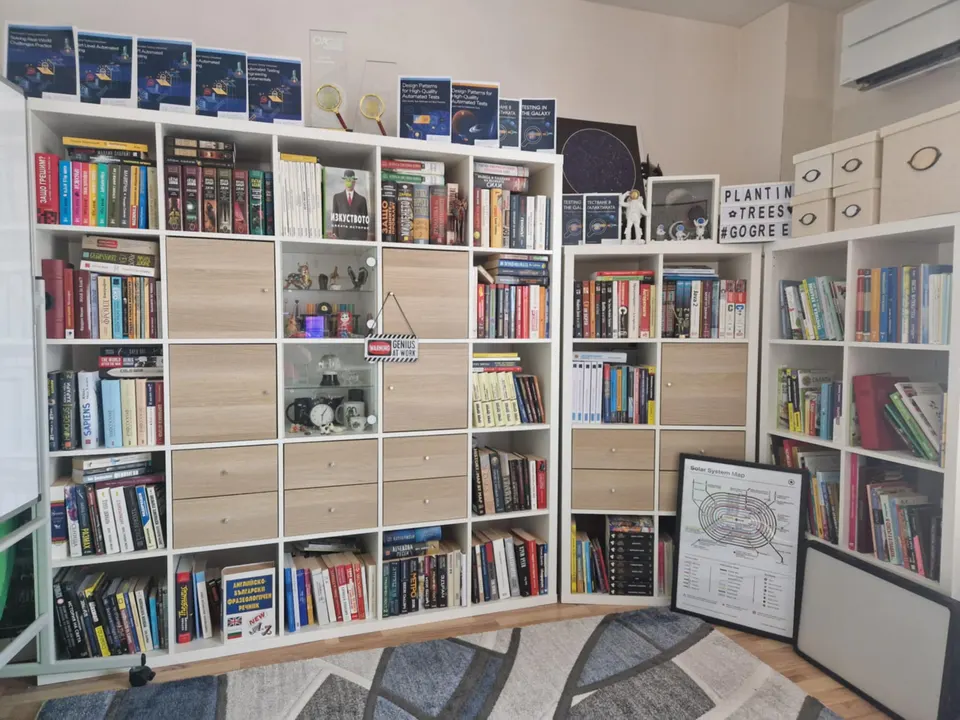
And Mr. Harari now appears for the third time, and with one and the same book at that. Perhaps it's time for a required reading list for tomorrow, like the ones we had back in school? Of course, the only truly required thing is never to go out without a towel, just in case—ask Douglas Adams.
3. The Great Game
Ivaylo Yosifov is co-founder and chief technology officer of FindMeCure; his professional work is tied to technology in the field of healthcare.
(More about him and from him—here.)
- CivCEO (never published in Bulgarian) by Andrew Karevik
The uniqueness of the series comes from the combination of strategic game mechanics (as in the old game Civilization) and real business principles—the protagonist resolves most conflicts through negotiation, economic strategy and deals rather than violence. In short, “the art of the deal” in a fantasy world.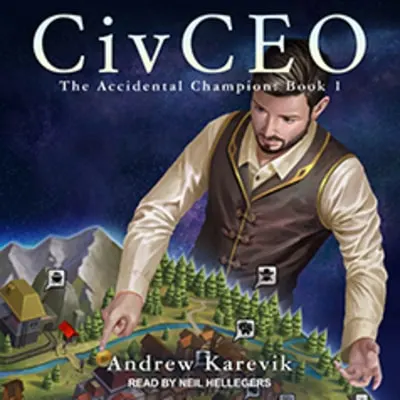
- Radical Candor (never published in Bulgarian) by Kim Scott
I think this was my third time reading it. Required, absolutely required reading.
- Balgarite mezhdu dve katastrofi – 1396–1944 (The Bulgarians Between Two Catastrophes, 1396–1944) by Alexander Stoyanov
The author describes it as a book that every Bulgarian family should own and read. I completely agree with him.
And if anyone still doubts that together we are reading an incredibly colorful list of books, let them look again at how, right next to a recommendation about our modern history, stands a book by an author with enormous experience in the tech world. I am certainly extremely curious how she earned that description from Ivaylo, and I will read it.

4. Never Split the Difference
Veli Pehlivanov is co-founder of Resolute Software—a consulting company that works with clients on four continents.
(More about him and from him—here.)
- Never Split the Difference by Chris Voss
A former federal agent and crisis hostage negotiator takes us through psychology, human behavior and the extremely effective negotiation methods used and refined by the CIA. Shared through personal experience and distilled into a simple but extremely effective communication framework, Chris Voss passes on the subtleties of negotiating under critical conditions, where failure or even compromise can cost human lives. Extremely useful knowledge, a downright daily handbook for anyone who wants to sharpen their communication skills in business, in teamwork and in dealing with people in general…, even if they don't rescue hostages every day.

- The Richest Man in the World by Rafael Vidac
A book about success, personal struggle and the motivation that a true mentor can inspire even in a moment of failure and personal crisis. For me, one of the best books on personal development, told through the exciting story of a protagonist who stumbles upon an unusual opportunity, preparation for a job and a thrilling journey with a charismatic billionaire. A book you read in one breath, with excitement, and then return to again and again for its simple but brilliant practical system for strengthening body and spirit, for finding the path to inner wealth.
- Wizard's First Rule by Terry Goodkind
An epic fantasy saga about power that corrupts, secrets that must be uncovered, truth that is frightening and causes pain, and love that no dark force can defeat. Full of riddles, mysteries and epic twists, it is a novel about all-consuming, often contradictory human feelings—love, hatred, greed and self-sacrifice—told in a captivating plot set in a vast fairy-tale world of magic and mythical creatures.
Self-knowledge, fantasy and the skills of negotiating with kidnappers… An unexpectedly good combination for the road to success in the IT world.

5. Radical Candor
Tushka Dermendzhieva holds a lead position in the world of backend technologies at one of the largest tech companies in Bulgaria—ScaleFocus.
(More about her and from her—here.)
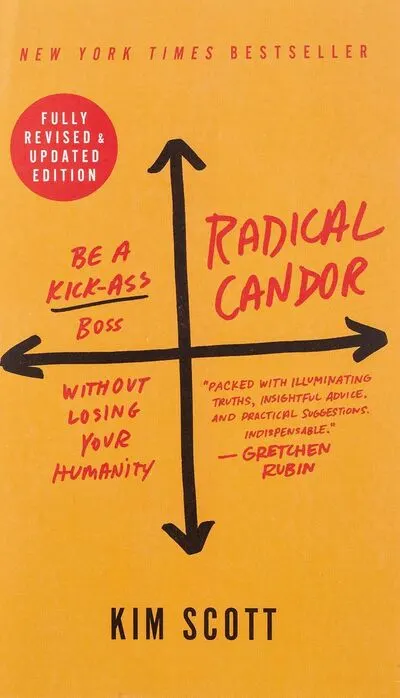
- Radical Candor (never published in Bulgarian) by Kim Scott
This is one of the books that have helped me most in my work. Giving feedback has always been one of the hardest things for me—especially when you want to be both honest and supportive. This book shows how to strike that balance—to tell the truth directly, but with care for the person across from you.
- The 6 Types of Working Genius by Patrick Lencioni
It helped me not only to understand my own strengths better, but also to see more clearly what motivates the people around me. Since then I've looked at teamwork differently—I try to build teams in which everyone contributes where they are strongest, and the work flows more naturally and efficiently.
- From Third World to First by Lee Kuan Yew
I love to travel, and this book gave me a deep perspective on the world and on why some countries succeed while others fall behind. Singapore's story is impressive—not only as a model of development, but also as a source of lessons in vision, leadership and managing large teams.
A book is a window onto the world. The cliché is entirely true, even in the age of technology and artificial intelligence. Having read this far, you will most likely agree with that judgment too.

6. Humans and AI, Up Close
Zornitsa Nikolova is a senior product manager at Payhawk—the first Bulgarian unicorn. You can also find her on Goodreads, with a series of recommendations specifically for product managers.
- Life 3.0 (never published in Bulgarian) by Max Tegmark
Published in 2017, the book forecasts the development of artificial intelligence. Back then it still sounded like science fiction to me, and now some of the things it describes are already reality. But even more valuable, and what I think keeps it relevant today, is its more philosophical outlook and the ethical questions around AI, as well as its attempt to look even beyond the dimensions of our planet.

- The Expanse by James S. A. Corey
The author's name is actually a pen name behind which stand two co-authors. There's also a TV series based on the books, with the same name (it didn't manage to grab me). Besides being truly gripping science fiction, this series interests me because, in a fictional context, it reflects much of the world around us, including geopolitically. It's not even hard to recognize the real countries used as prototypes for the fictional ones.
- The Mom Test (never published in Bulgarian) by Rob Fitzpatrick
I'm sure this little book has crossed the path of over 90 percent of readers, especially if they are product people or startup founders. It's usually recommended in the context of how to build meaningful products. I mention it here, though, because at its core it offers very practical and accessible guidance, reminds us how to stay curious about the things around us, how to ask (ourselves) the right questions in order to find the best answers—and that is a very valuable skill, not only for product people.
I find myself thinking about how large a share of the book recommendations from Bulgarian IT leaders have never been published in Bulgarian. I also think it would be wonderful if this list reached people in the publishing industry; sometimes they need good ideas too.

7. Foundations
Svetoslav Dimov is a marketing specialist, co-founder of the DEV.BG platform and of a series of events and ventures meant to help Bulgarian IT (and not only IT) leaders grow.
- The 7 Habits of Highly Effective People by Stephen Covey
The year is 2003. I'm on a summer work-and-travel program in the U.S., and I walk into the office of the HR manager at the company where I'm working and say: “Could you recommend some books on management or leadership?” She smiles, picks up two books lying on her desk and replies: “I have a suggestion just for you!”
She gave me two books—The Power Principle by Blaine Lee (never published in Bulgarian), which I never did read, and The 7 Habits of Highly Effective People, which I had heard praised in AIESEC (a student organization I was a member of). I fell in love with the book! At one point in my life I was giving it to so many people that they started teasing me. I think it's valuable for several reasons:
- There is very extensive research behind the book;
- It gives you rules and an algorithm you can apply in different situations and areas of your life;
- In the era of “I'll reveal the secret of…” and dopamine, the book doesn't offer quick fixes; it lays foundations.
And so Mr. Covey turns out to be yet another author beloved by more than one of the special guests I invited.

8. Greetings to Anxious People, Too!
Vasi Gosheva is co-founder of the Soft Skills Pills platform, which helps companies develop their employees' soft skills. She hosts the podcast Radiotochka 2.
- Anxious People by Fredrik Backman
A novel I read either through tears or with a smile stuck on my face and quiet giggling (sometimes both at once). Through his unique sense of humor, Backman creates a zany comedy that is in fact a masterful dissection of the people we are today. I recommend reading it absolutely seriously.

- Pozdravi ot sinyata palatka (Greetings from the Blue Tent) by Petya Kokudeva
A travelogue of Petya's journeys across five continents—no clichés, no drawn-out descriptions. Just short, tender stories of encounters with people and cultures. You read it and it's as if you're looking through a camera that has captured emotions rather than landscapes.
- Very Good Copy (never published in Bulgarian) by Eddie Shleyner
A book I would recommend to anyone who wants to write better—not just copywriters. Eddie is one of my writing teachers, and in this book he has gathered the best of himself: how to make words breathe and live. While reading it, I had the feeling he was right there beside me. For me, that is where the meaning of good writing lies.
I won't brag, but I will note that of the Bulgarian authors recommended, nearly all who are still with us have already been guests on Digital Stories. That goes for Petya Kokudeva's wonderful interview too.
9. Pregnancy for Engineers
Nikolay Stoitsev is a senior engineering manager at StorPool Storage.
(More about him and from him—here.)
- Cribsheet (never published in Bulgarian) by Emily Oster
This one and the next are the two books that have helped me most in life. When I became a father, I was quite anxious. Cribsheet gave me confidence because it doesn't dictate the “right” way; instead, it presents a synthesis of the scientific data on the first years of a child's life—what we know, how certain it is and what trade-offs we make. It's also an excellent introduction to how the social sciences work (types of studies, limitations, how to read results). It explains well that there is no universal “right or wrong” in raising children, only informed choices and risk management.
- Expecting Better (never published in Bulgarian) by Emily Oster
I read it during my wife's second pregnancy, and it feels to me like the pregnancy book written for engineers. Instead of ready-made recipes, it gathers and analyzes current research on pregnancy and offers a framework for making decisions through the lens of probabilities and risks. It helped me support my wife better and have an informed opinion when she needed one.
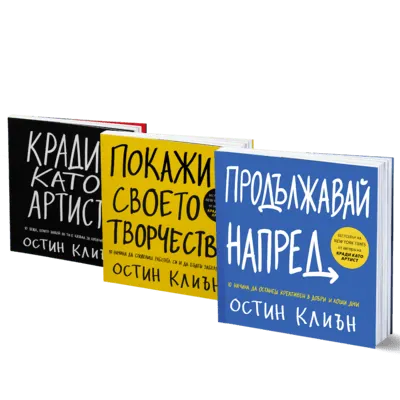
- Show Your Work! by Austin Kleon
A small book with a big effect on me. It was this book that convinced me to start keeping a work journal and documenting the process. Keeping a professional journal turned out to be extremely useful for clarity, for feedback and for turning the daily flow into a more lasting capital of ideas. It encourages us to learn in public, to share generously and in that way to build a meaningful community around our work.
Parenting and children's relationship with technology are a big theme of a whole series of Digital Stories. And any meaningful reading recommendations in that direction are more than welcome.

10. Thread by Thread
Irina Lilova is responsible for talent development at Telerik Academy and has wide-ranging experience in human resources management.
(More about her and from her—here.)
- Atlas of the Heart by Brené Brown
Our inner world is complex and many-layered, but it becomes more accessible when we have a map of it. Brené Brown opens a safe space for us to name and understand 87 of the deepest human emotions and experiences. Backed by more than 20 years of research.
- Nishka (Thread) by Viktoria Beshliyska
A novel that weaves together the stories of seven women in an unexpected and gripping way. The author of the blog Po dirite na dumite (On the Trail of Words), Viktoria Beshliyska handles our language with skill, which lends the story additional beauty and power. Thread is a literary experience that both connects you with your roots and gives you room to breathe.
- Shoe Dog by Phil Knight
Every year, each of us on the team receives a book chosen by our CEO. That's how the memoir of Phil Knight, the creator of Nike, came to me. More than a business book, it lets you live through the philosophy behind building and growing the brand. Full of turning points and the ever-present connection with Japan, the book won't leave you indifferent.
Irina also offers a bonus idea: “In recent years, every summer I give myself the gift of time with a book from my childhood. It has brought me more than I expected. Try it—you too might discover something interesting about yourself.”

A wonderful idea!
Let's not break this Thread (and not only because Viktoria Beshliyska's novel is a favorite of mine and she has been a guest on Digital Stories twice), but keep going. Let's talk more about favorite books! Whom do you think I should ask for recommendations?
I'll say it again. In the information age, more than ever, you are what you read.
(You'll find the first part of the book recommendations here.)