You can hardly have missed this modern debate, and you probably have your own opinion on it:
Now that artificial intelligence produces results indistinguishable from human creativity, will we go on creating?
Is the great hero of our day taking over the human role of author, or is it just another link in history's long chain, the new tool that will give birth to the next arts, genres and forms?
A tool that will help people express themselves and make sense of the world in a new way and with new means…
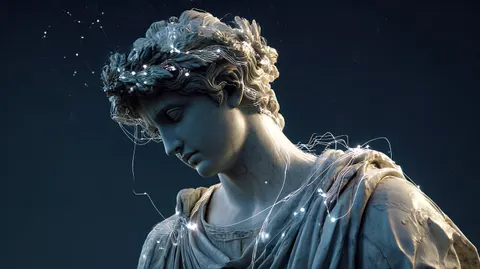
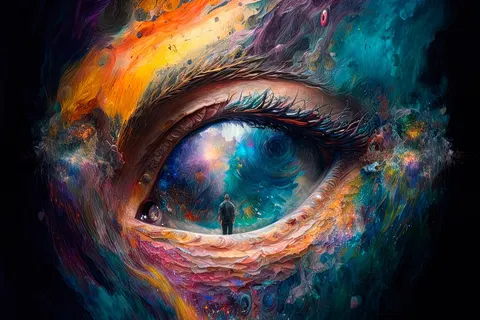
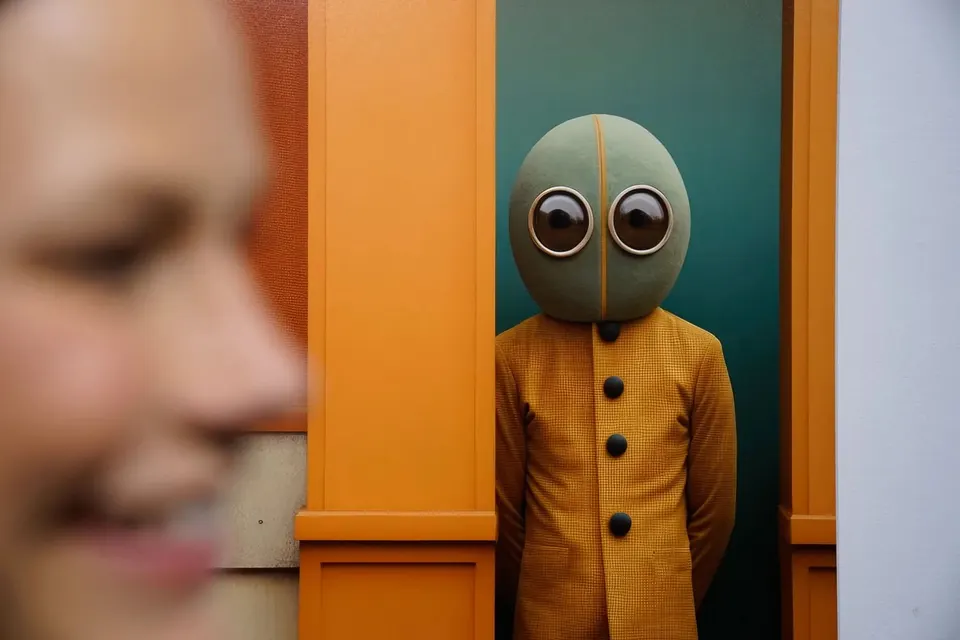
Well, the striking pictures you see here are, for me at least, one more strong argument in favor of the optimistic theory. Their creator shows that there need not always be a border between technology and art, between mathematics and art, between the humanities and technology.
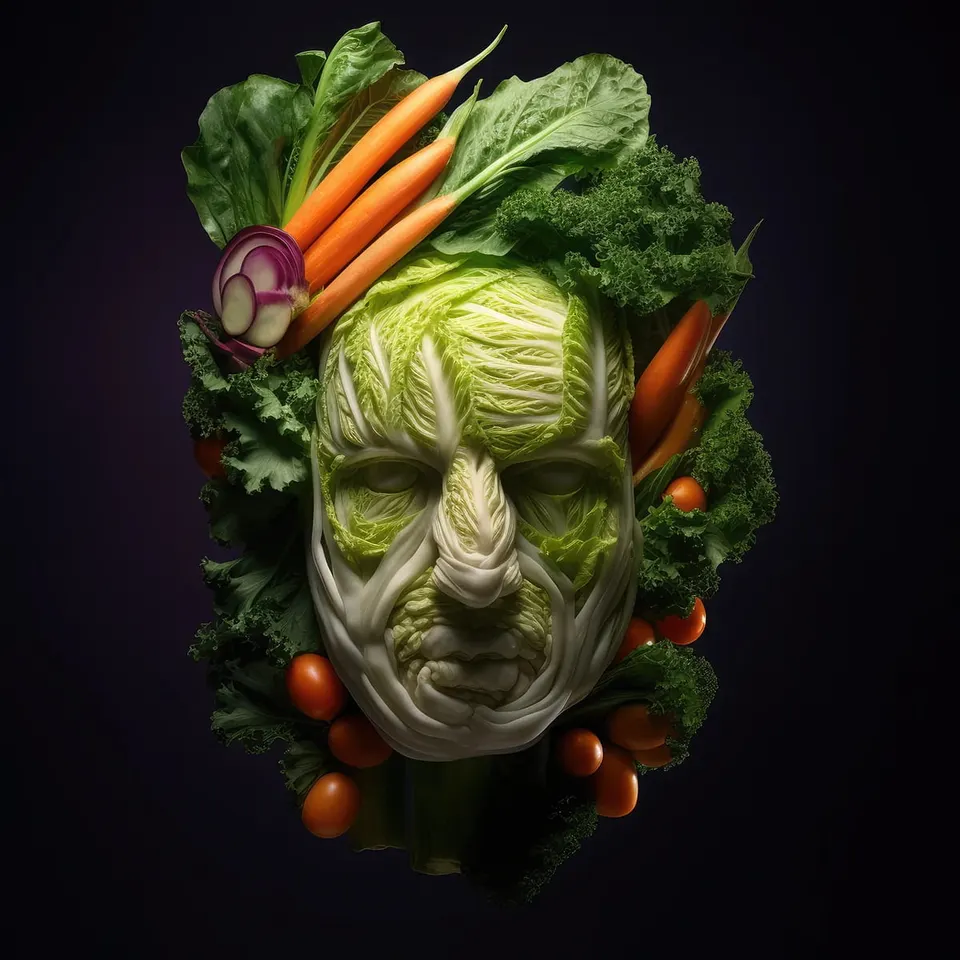
Sauron
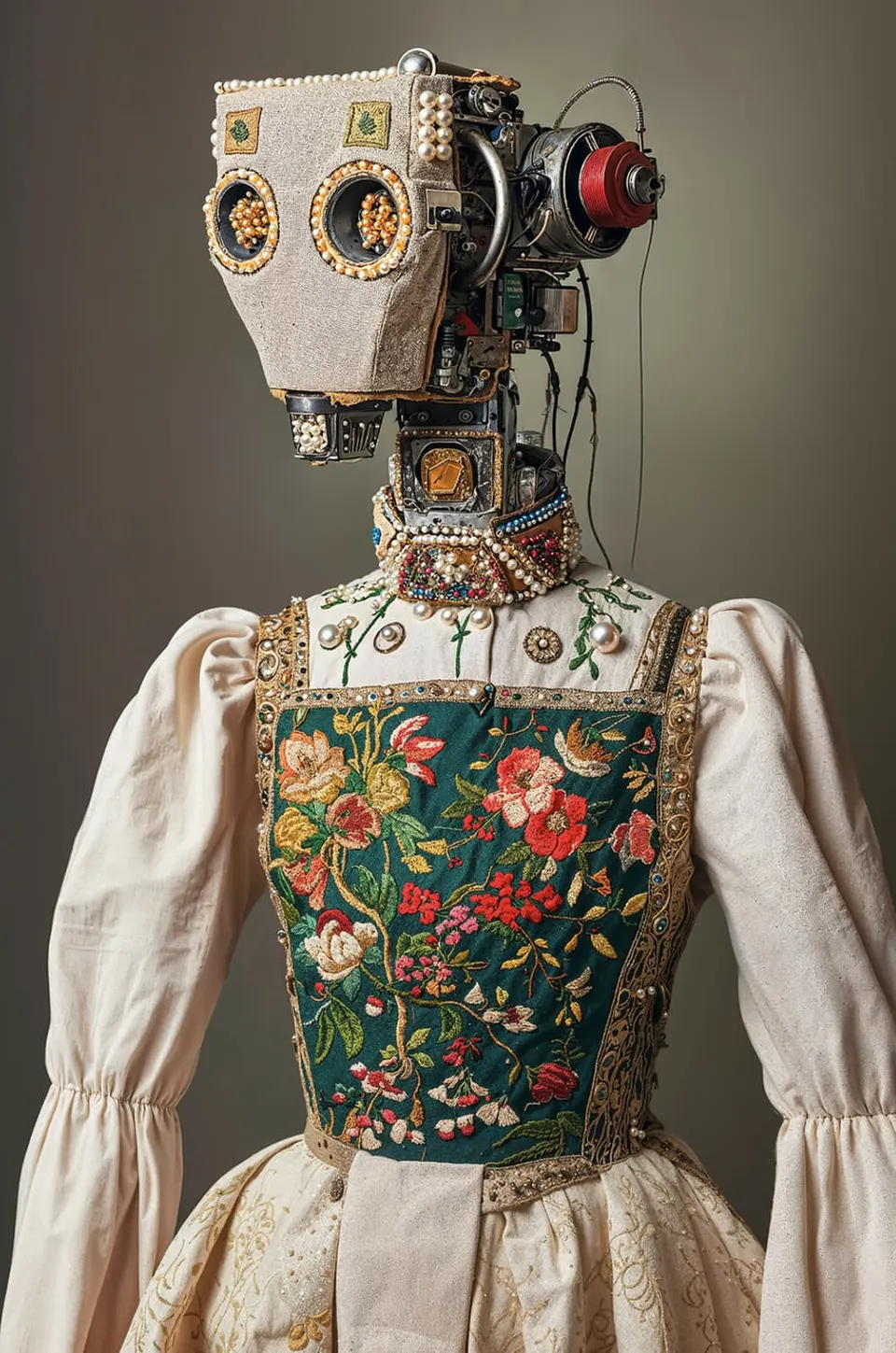
At first glance, a retro photograph from long-gone times, but the faces are blurred, deformed, as in a strange dream. An elegant lady from the 1920s poses for a portrait while a fantastical creature peeks out from behind her shoulder. A charming robot is dressed up in shevitsi, traditional Bulgarian embroidery, and looks ready to stamp out a lively horo, the Bulgarian chain dance.
Welcome to the world of David Szauder. For the Hungarian multimedia artist, reality is only a starting point—life unfolds in the boundless space of the imagination, where technology is the artist's new brush and the absurd and the beautiful meet and complete each other.
Born in Hungary in 1976, Szauder divides his life between two passions: art and technology. Drawn to computers since childhood, as a student he turned to art history. He brought together his love for these supposedly so mutually repellent pursuits in the new Intermedia program at the Academy of Fine Arts in Budapest—a place where digital art was not merely allowed but welcomed, “like heaven on earth,” as he himself puts it. A year in Helsinki followed, where he honed his programming skills.
From 2009 to 2014, Szauder worked as a curator at the Hungarian Cultural Institute in Berlin, then returned to his homeland, and recently he has been teaching courses on artificial intelligence in art at the Moholy-Nagy University of Art and Design in Budapest. A university that bears the name of one of the remarkable artists who created the Bauhaus—the very movement that first showed how successfully technology and art can come together. Nothing is accidental, wouldn't you say?
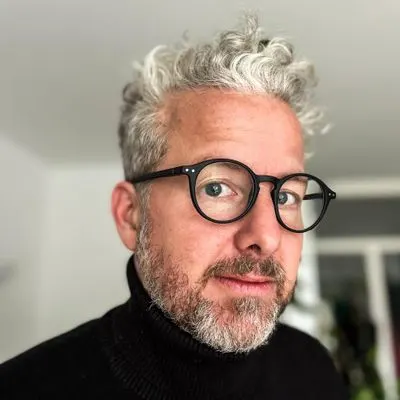
A Bug in Memory
Szauder gradually turned toward surrealism. And I can't help wondering—what mischief would that mustachioed Spanish hidalgo, famous for his anteater, which he loved to walk around as nonchalantly as he walked his imagination, have gotten up to? Well, Salvador Dalí never made it to AI, but the man with his initials reversed seems to me a fitting candidate to be his heir.
And if we are used to thinking that to err is human and that machines are infallible… right at the start of his creative path, the Hungarian turned that perspective around. Szauder found his voice in an unexpected place: in the error. In the bug, the “glitch”—for him, digital visual distortions and defects became a doorway into human stories.
In his early series Failed Memories, he took old family photographs and deliberately “damaged” them with algorithmic interference, as if digital memory were failing just as human memory does. The concept came to show the similarities he sees between the way our brain stores images and the way a computer does. In both cases, when a memory is “opened” again, fragments are often missing, and “bugs” appear that our mind fills in with invented pieces of its own.
David. Dalí?
An interesting nuance for times in which we have given machines the duty of remembering for us, wouldn't you say?
To each damaged portrait he added a short invented backstory—imaginary tales to explain the surreal distortions. A believer, a regular churchgoer, begins to doubt himself; a group of friends sinks too deep into metaphysical arguments; a glamorous lady falls into paranoia over the bubbles in her champagne…
Szauder connects digital errors and human emotions, but he also shows how the imagination can patch up what time has destroyed.
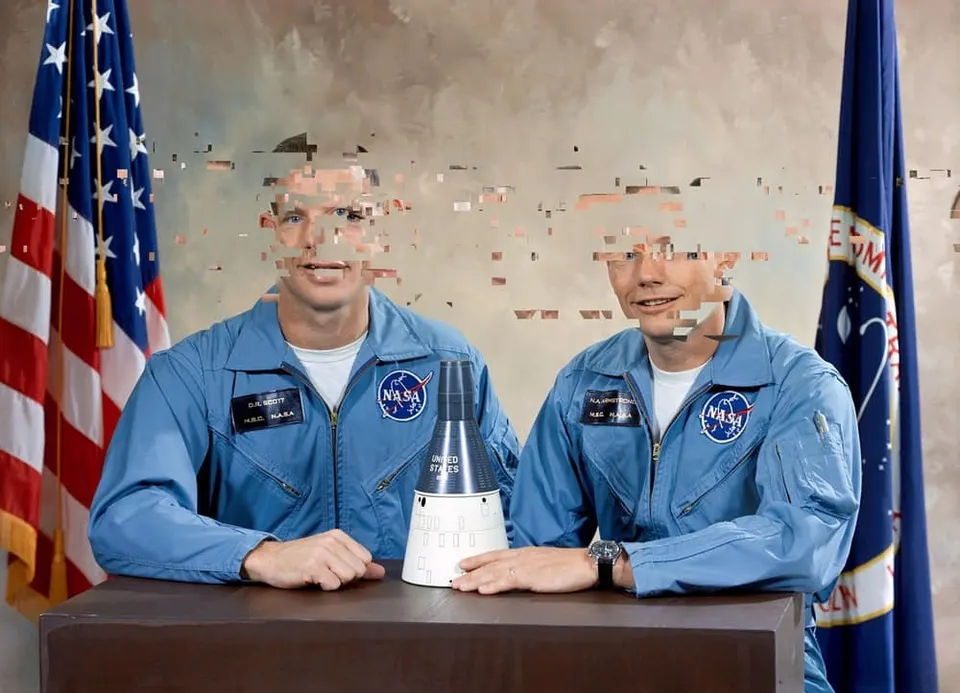
Beyond the Screen
The next step was to break down the barrier between the digital and physical worlds. One telling example came when the artist decided to breathe life into a bug in three-dimensional form. He was playing with a model of a bird on his computer when an unexpected error covered the image with odd lines. Instead of deleting the “broken” bird, Szauder embraced it as an idea and decided to “pull” it out of the digital world and materialize it as a sculpture shaped by his own hands.
“It's important for viewers to see how the work comes out of the screen,” Szauder explains, once again emphasizing the idea—let's blur the border between the virtual and the real, since that border is as old-fashioned as it is arbitrary.
Then he created 1:1 scale installations you could walk through to immerse yourself in the First World War—a web of threads tracing the events across 200 square meters. He also works with augmented reality and built an installation for the Leonardo da Vinci museum in Milan.
David Super
For a long time, Szauder was skeptical of the much-hyped artificial intelligence, because he couldn't find a way to use it. AI-generated visuals seemed somehow alien to him, not what he wanted to create.
Everything changed when he came across a visual collage created by algorithms that both puzzled and charmed him. “AI and I have work to do together,” he decided, and dove boldly into research.
“For the past year and a half, it's not AI learning from me, it's me learning from it,” Szauder admits. He approaches algorithms as a mysterious new world to explore: he experiments, tweaks parameters and watches what happens in the “electronic brain” when it receives certain instructions. The process, in his words, devours time and energy, but it also opens up the possibility of creating things that were unthinkable until recently.
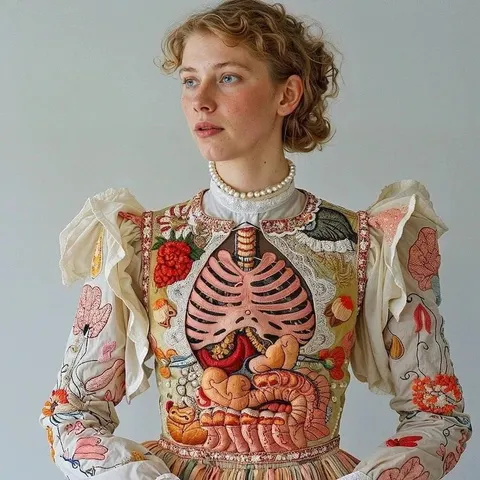
A series of colorful projects began—from creating anatomical sweaters, something he never thought he'd be able to do, to turning himself into the hero of a series of surreal images with unexpected plots.
Szauder very quickly discovered that AI could help him unleash a creative direction he hadn't thought was within his reach. “With AI, we have the opportunity to create absurd, surreal things we were never capable of before,” the artist-programmer says in one of his few interviews.
The Palette Is Empty
Not long ago, I challenged visitors to the Digital Stories website to tell children's drawings apart from ones generated by AI (or created with its help—I still wonder which is more precise).
More than 3,800 people took part, and the result showed that here, too, we no longer stand a chance. Yes, our primal, fundamental, innate creativity can now be flawlessly imitated by algorithms!
But how many possibilities they give us! If you don't believe me, ask today's hero.
Yes, according to David Szauder, AI is not a threat to the creator but a tool—one that can greatly expand the palette of the true maker. Just as photography or Photoshop did not kill painting but offered new means of expression, artificial intelligence puts a new brush in the hand of the digital artist.
“We have to look at AI as a tool,” Szauder insists—“something that, used properly, can perform brilliantly and amplify human creativity.”
Yes, it's one thing to say it, another to show it, and a third and fourth thing to convince people, as the virtual Haytov—an AI incarnation of the Bulgarian storyteller Nikolay Haytov—would put it. And yet… all these pictures, these works you see, suggest there may be something to it, wouldn't you say?
This article is part of the new issue of Perfect Day magazine.