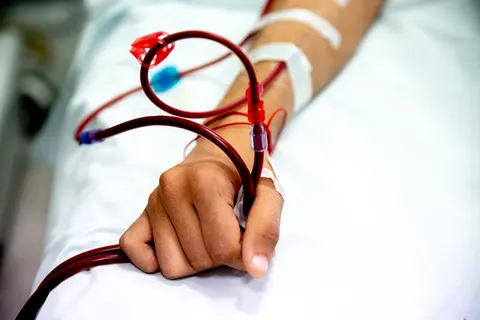
In a matter of hours, the Facebook feed will turn into a string of sarmi—stuffed cabbage rolls, a Bulgarian holiday staple—and Christmas cards, and then it will fall silent like never before. We'll put our phones down for a while. Because we'll all be with our families on one of the few remaining evenings when tradition brings us together, even from the farthest corners of the world. With the people we don't choose ourselves, yet who matter most to us, whose happiness is our happiness too.
Christmas is no time for uncomfortable subjects, you'll say. This is the season when we should be talking about nice things, smiles and Home Alone. I, on the other hand, think uncomfortable subjects are often the most meaningful. And in this one, alongside the dark colors, there is also the finest, the greatest thing that can happen. The giving of life.
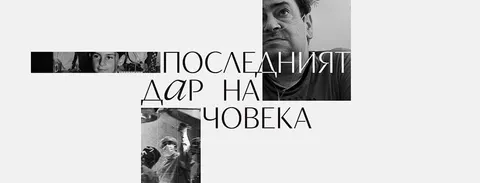
In this case, that is Posledniyat dar na choveka (The Last Gift of Man).
The multimedia project by Dimitar Panayotov and Alexander Nikolov is a deep, personal and exceptionally professionally told story. One worth hearing, reading and feeling right now… So that we stop and think: might today be the moment to have a heavy but important conversation, one that could save lives?
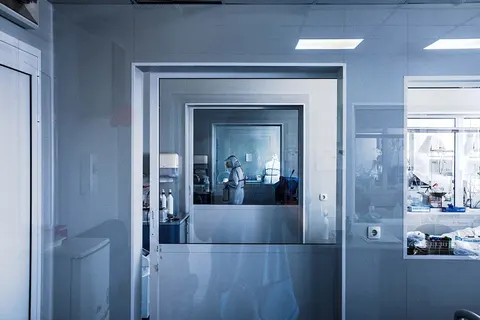
A Heart of Chestnuts
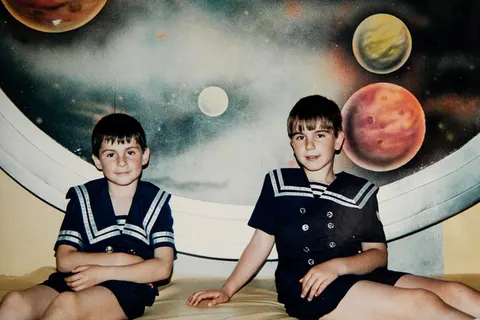
September 18, 2015. Almost as on Christmas, a family that hasn't gathered in a long time will be together at home that evening for the first time in ages. It's Friday, and the parents of 21-year-old Georgi are heading to work. That same day his older brother is due back from England, where the two of them study and live together.
Suddenly, Georgi feels ill. With his last strength, he manages to call his father. Then come the ambulance, a quick examination and a fatal diagnosis. A brain aneurysm, a hopeless situation that leaves the family facing a fait accompli. The young man is brain-dead. His parents and brother must quickly make a decision—whether they consent to his organs being transplanted.
The story is heavy, powerful and true, told brilliantly by Dimitar Panayotov's fine pen in the first chapter of The Last Gift of Man.
“As I listen to the recording of the interview with Nikolay, Georgi's father, I'm amazed at how calm and normal his tone is as he tells me about what happened. Suddenly, his voice stops. A silence falls, in which all you can hear is the background noise captured by the recorder and the whole family's attempts to hold back their tears. The gap in the recording lasts barely 20 seconds. Yet that silence, broken only by faintly audible sobs, is the most deafening thing I have ever heard,” Dimitar writes.
From the Heart
A story like this, sadly, happens less rarely than we'd like to imagine. This one, however, doesn't end there. Because, thanks to his relatives' wise decision, Georgi really does manage to save human lives. But we'll come back to that in a moment.
This sorrowful story has another outcome as well. Georgi's brother is brought face to face with the subject of transplants. He is studying photojournalism and sees in it a meaningful project, one that could change something real.
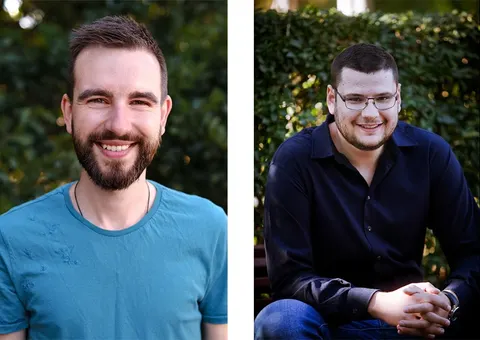
Georgi's brother is the photographer Alexander Nikolov, who at the time, in 2015, has just returned to Bulgaria. Dimitar Panayotov, a longtime friend, suggests they enroll together in the E-Europe media master's program at the Faculty of Philosophy of Sofia University. Dimitar has already gained quite serious experience in journalism. Almost as a joke, with fellow students, he has founded the outlet Pod Mosta (Under the Bridge), which slowly but surely grows into a widely read platform, one of the most meaningful spaces for culture on the Bulgarian internet.
The two decide to take on the project together, encouraged by their professor and mentor in the master's program, Prof. Neli Ognyanova. It takes a full six years to create The Last Gift of Man, until we arrive at today, when it is winning (entirely deservedly) one award after another. It moves anyone with a heart who opens the website. It impresses anyone who understands even a little about journalism and media.
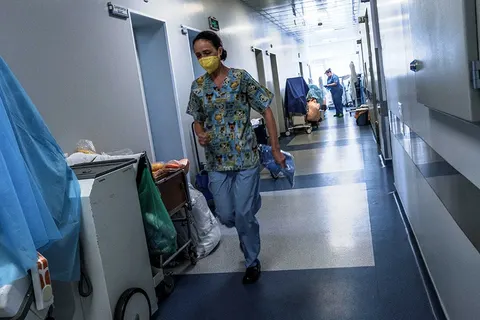
A Transplant vs. a Sentence
As a journalist, I have written about transplants countless times, starting more than 15 years ago. One of the first sparks of hope that the profession still had real meaning flickered for me with precisely this subject. In the pages of the daily 24 Chasa (24 Hours), I had told the story of a boy raising money for a kidney transplant abroad, who, while he waited, consoled himself by following every bit of news about his favorite team, Levski, one of Sofia's big football clubs. A small detail, but it touched the club's fans, who organized a large-scale campaign and raised the money needed for the transplant.
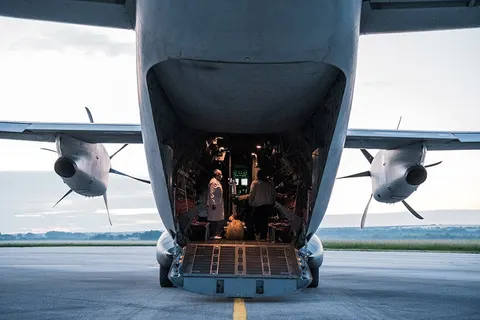
Every small victory is a big one, every life is the most precious thing. And although technology is flying in every direction, in Bulgaria the number of people on the transplant waiting list hovers almost constantly around 1,000, and has done so for several decades. Operations have also dropped drastically in recent years because of the pandemic.
The number stays the same, but the list changes every day. Few get the chance at a new life; most people leave the list through the exit that awaits us all one day.
How can this change? Often someone gets the chance to raise money through a campaign and receive a new organ abroad. At home, however, things seem frozen. The state never takes concrete measures, and the country sits firmly in last place for the number of transplants. Only if the subject is talked about can something change. If more people come into contact with it.
What's more, very often, because of prejudice, the relatives of potential donors refuse. And so lives that could be saved simply come to an end.
Truth and Journalism
The two young men grow up, emotionally and professionally, as they walk the path of the last gift.
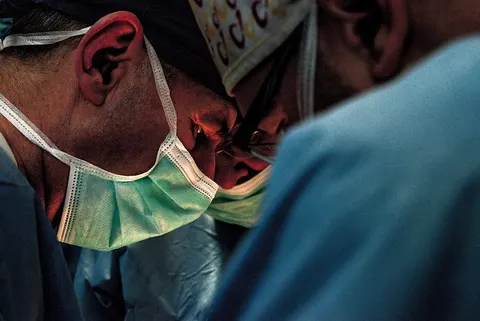
When they take on the project, Dimitar and Alexander are 23 and 24; they say that today they would hardly take on something so heavy. Over six years, they hold hundreds of meetings with people waiting for transplants, with doctors, with families. They shoot in eight hospitals, attend three transplants and “capture” one donor situation. They amass a huge volume of information and powerful stories. Their original idea is to make a multimedia project.
But they decide it's too early. They don't have enough experience in the field, and this kind of multimedia journalism was terra incognita for Bulgarian journalism in 2015 and remains so today. So the two decide to put together a book, which is a good deal easier.
But gradually the years go by, and they gain experience in the profession and in technology. “We said to ourselves: fine, we'll find funding, we'll print 500 books, half of them will be bought by our friends. And that way we won't change a thing,” Alexander recalls. So they return to the idea of a multimedia website.
They manage to win funding from Sofia Municipality's Culture program and find the right web designer in Ivan Ginev. And soon the first chapters are online.
Hearts and Chapters
The two put enormous effort into making everything look as good as possible, sound in meaning, aesthetics and technology. They have to make compromises—although they themselves have not taken and will not take a single lev from the project, technology has its price. And still, the website is remarkable.
I won't take up much more of your time before I finally invite you to go and explore it; you'll see for yourselves that it was worth it.
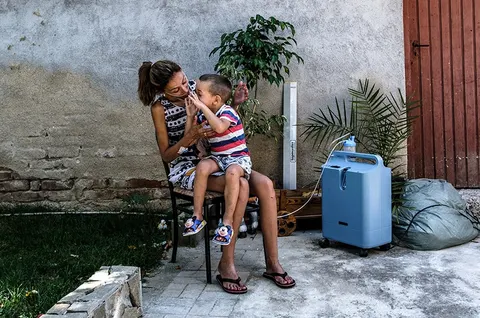
So far, four of the eight chapters have been published, and the rest will appear one by one soon. They examine the subject of transplants from every angle. Over these years, they have followed many stories. They meet people who know they won't see much more, because there is no hope for them. And others, sadly a minority, who receive the longed-for new chance at life.
Alexander and Dimitar are boldly moving forward. They have set up a foundation, Dokumentalistite (The Documentarians), to help them carry the project on with dignity. And then to take on the next huge subjects they have set their sights on. Personally, I can't wait to see the results; their ambitions are truly bold. Soon the journalists themselves will tell us about them, as I've invited them for an interview about the future of our shared profession and whether it still has the power to change things. About the challenges of their ambitious project.
Silent Night, Holy Night
Meanwhile… the main idea is for more eyes to see The Last Gift of Man. For people to learn about the subject and to have this so important and meaningful conversation with their loved ones.
And the end of the story of Georgi, Alexander's brother? It's a typical example of how things happen in Bulgaria. The man who receives his heart dies two years after the transplant; his body rejects the organ. The woman who received the liver dies on the operating table. The people who received the kidneys are alive today. Alexander is especially moved by one of the recipients, from a small town, who is completely healthy today, and it is her warm story, full of surprises, that will close the series.
In Bulgaria, there is no way for a person to leave a document stating that they wish their organs to be transplanted if they become brain-dead. The decision is made by their loved ones. All the major religions also support organ donation, provided it happens with the wishes of the donor themselves.
I myself had this conversation with my loved ones long ago, because I have seen both the will to live and the doom in the eyes of many people waiting for an organ. This conversation may not exactly make for a merry Christmas, but it will certainly make it a meaningful one. If you're wondering whether to have it too, or you're still gathering your courage… everything on the subject has been said in the best possible way here.