Can we change the world around us? Our country, the world... simply by writing online about what moves us?
We can. Here is the strongest proof I have ever come across.
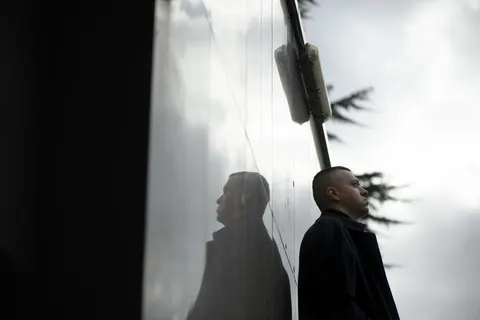
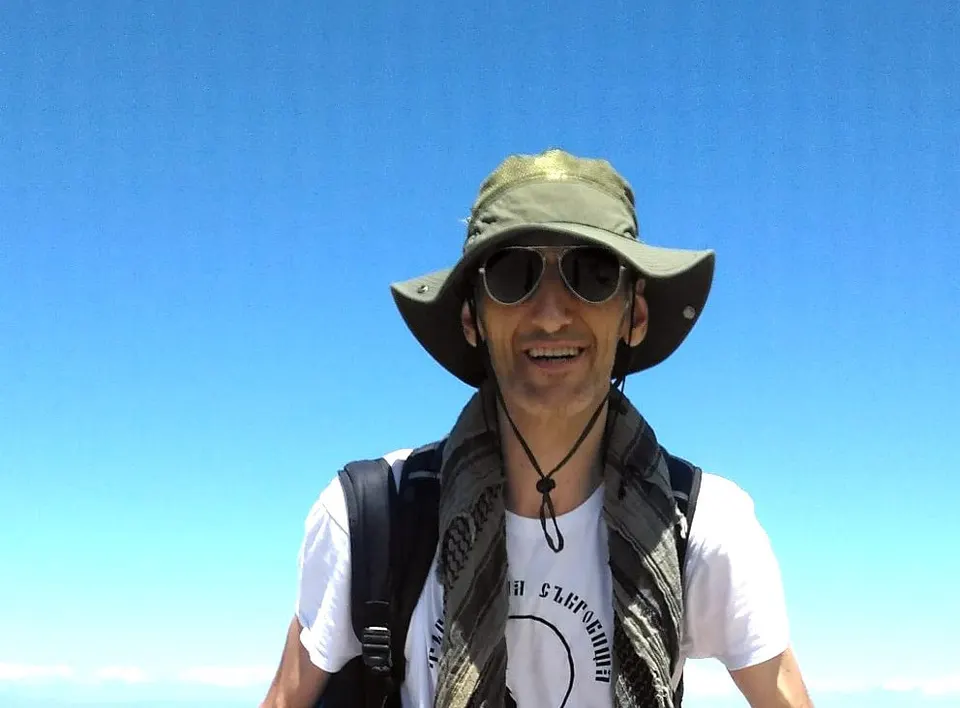
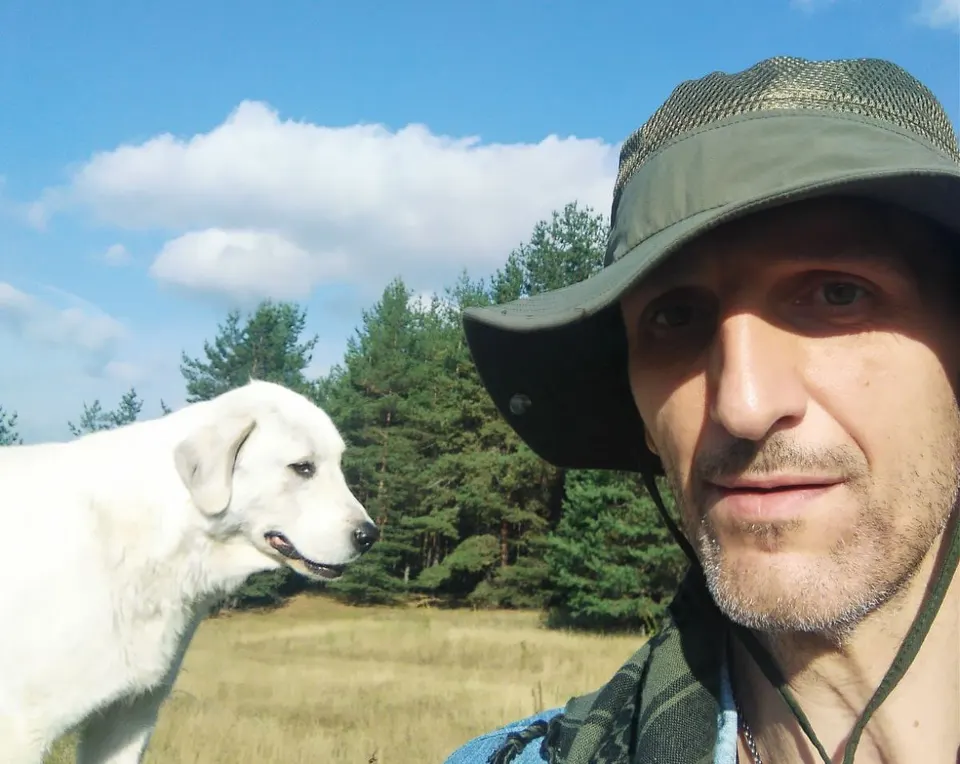
“It's like talking to a ghost,” the man across from me says of our meeting. But he doesn't look like a ghost to me. He looks like a regular Sherlock, lanky, in a checkered cap and a checkered jacket. Later, as we talk, he reminds me more of another famous literary hero, a certain hidalgo.
Sitting opposite me is the legendary blogger Chergar—an old Bulgarian word for a nomad, a wanderer—who created unforgettable texts and hoaxes that still hold a place of honor in our digital folklore and collective memory. The author of the site neverojatno (Bulgarian for “unbelievable”), known at a certain point also as “Bazikileaks,” from the Bulgarian word for a prank. Dedicated to “The Truth As It Could Have Been!?”
But how did an anonymous blogger become a frequent topic of conversation among politicians and journalists? And how did one of his texts lead to... the resignation of the Bulgarian government, and at that... without him wanting or expecting it?

Ordinary Folk*
*The subheadings are also titles of texts by Chergar
He is an engineer by profession. He travels often; his work takes him to different towns, and he spends several years abroad as well. He has no home of his own; he moves around and rents, together with his family and his elder son, who is grown up today.
The first years of the new millennium. Back then, as today, many things divide us as a society, but one unites us almost without exception. The feeling that the political system doesn't work, that the public structures of our state could be more orderly. That our rulers are not up to the job, and the “ordinary man” can change nothing.
“They're all scoundrels, the ones and the others,” as another hero puts it—Bai Ganyo, the archetypal Bulgarian boor from Aleko Konstantinov's 1895 satire, and far from a hidalgo. Precisely because he is used to the old proverb that “the sharp sword won't cut the bowed head,” he could never move on...
Justice Asleep
“I started out of pure social discontent that had no outlet,” Chergar recalls. “It was all a joke; it turned out to be fun to write completely made-up texts about something that had happened. Later I discovered that this way I was writing exactly what stirred me inside.”
But why did he decide to do it under a pseudonym? “I know that people are strongly influenced by who is writing, what kind of person they are, what their position in society is. I wanted to write and see the reaction to the writing itself, whether there would be any at all. Are there people who are troubled and angered by the same problems? That the institutions don't work! Would someone say, ‘yes, that's right,’ or ‘what is this nonsense?!’ That's why I decided to write anonymously.”
He chose the made-up name because of his way of life, and also because he has a soft spot for distinctive, strong, half-forgotten Bulgarian words. In those years the WordPress platform was gaining popularity, it was easier than ever to start a blog, and that is what our hidalgo did...
“It is precisely the discrepancy between the accounts of eyewitnesses and the mutated portrayal of our everyday life that is the main thread in Chergar's work,” the publisher writes in a 2011 collection of his texts. “Political hypocrisy, judicial bias, administrative incompetence and journalistic straining are often at the center of public debate, but nothing comes of it.”
The Last Battle for Bulgaria!
Well, it definitely turns out that people care about these topics, that many think like him and recognize themselves in his words. At that time social networks had not yet exploded as content platforms; we lived in the era of blogs and of media outlets that were only making their way onto the web.
From the very beginning Chergar put up a header that clearly states that every post on the site is invented by him. In Aesopian language he writes texts that we would rather take for essays. He enters the world of the made-up, of fiction; the real author is clearly named everywhere, but... even in the days before mass Facebook, you know, people didn't always read carefully. Here's what I mean.

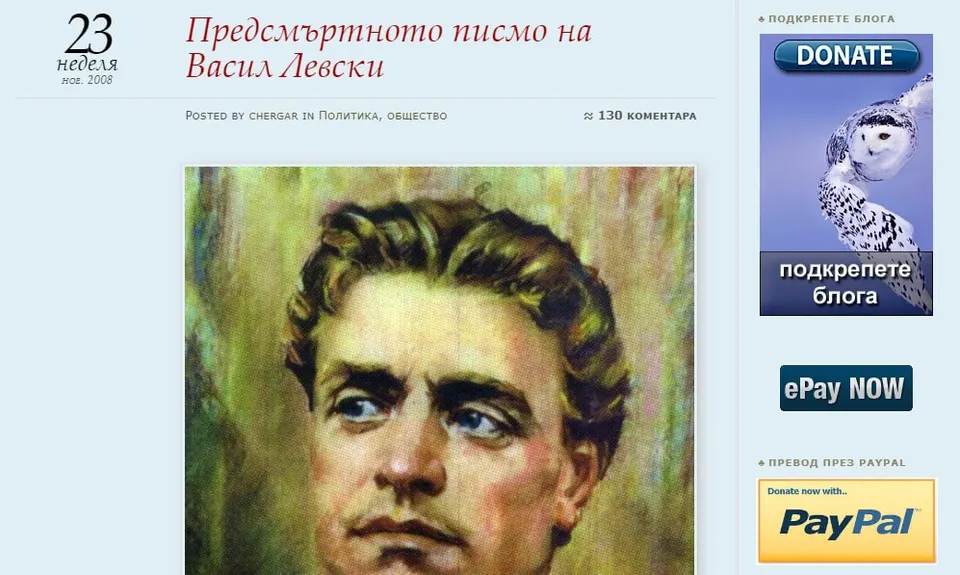
Vasil Levski's Last Letter
Have you read “Vasil Levski's last letter”? It is in quotation marks for a reason, although to this day you can find excerpts from the “document” in an impressive number of sources, including official ones. Levski, the Apostle of Freedom, is Bulgaria's most revered revolutionary, hanged by the Ottomans in 1873, and the letter's words echo fifteen years later on social networks and are read aloud at official events. For their force and the spirit of the Apostle, they are quoted in the media. One evening, at the peak of its fame, they rang out on what was then the most watched television program—Slavi's Show, the late-night talk show of the entertainer Slavi Trifonov. Online you can find the opinions of our best-known historians, who took the time to examine the “document” and explain why certain discrepancies make it impossible for it to have been written by Levski himself... It would also become a main source in one of the great debates over whether the words “whoever liberates us will also enslave us” belong to the Apostle, since they were otherwise only retold by Zahari Stoyanov, the revolutionary and chronicler of the liberation struggle.
“You who are robbed, dishonored and lied to by our present-day rulers, do not think that our work ends with liberation alone. No, that is where it begins. (…) Do not be deceived that those who hold the money also hold your future, for they took that money from you, and yet you bow to them and raise them up like the sun before your eyes.”
It is said so plainly—would Levski have written about “our present-day rulers”? Exactly: this is one of the first texts Chergar wrote. Under the glaring header stating that only the author's own words are published on this site.
Yes, he made an effort to make it sound in the spirit of the Apostle, and included many verbatim quotes. But not with the idea of fooling anyone into thinking it was a real document.
Apocryphal Reality
“For a very long time I studied his work. I had almost all the books ever published, and I went deep into his way of thinking, at least as I see it,” Chergar says. “I wrote this letter at a time when I was a victim of the system. There are injustices, you see them, but there's no one to tell. Even if you tell, they won't pay attention, or they'll do something pro forma. That's how the letter was born, from an inner impulse.
The idea was never for it to be taken as truth! It's clear everywhere that it's fiction. I didn't want to forge anything! I wanted to make people think, to fight against the injustices they see...”
The “letter” continues its triumphant march online, being discussed and used as an argument. A quick search showed that over the past year it has been reposted on Facebook at least a hundred times as authentic, with tens of thousands of likes. There is even a group with thousands of members calling on people to drop it into the ballot box instead of a ballot paper at the next election without a choice. So... it has fulfilled its role, or hasn't it? Where is the line between the essay and altered history once the criterion has been lost?
Do you still think it is artificial intelligence that lies to us or manipulates us... or is the natural kind more important—critical thinking, fact-checking? Even of sources, which can also mislead: quite a few media outlets have published the “letter.”

Three Chain Gangs of Optimists and Burdencredit
“But how, foolish man, do you expect your life to get better when you make not a gram of effort to fight even the small injustices in your life, and instead wait for someone else to do it for you?” Chergar writes in another of his posts, this time in the name of Paisius of Hilendar, the monk whose 1762 history of the Bulgarians sparked the Bulgarian National Revival. “No one will come and provide you with a normal life, since you yourself have chosen slavery—to be a slave to the television, to the politicians, to the banks, to the advertisements, to civil servants and institutions.”
“Gradually it became my favorite pastime to pick a famous person and write an interview with them,” the blogger adds. “Not in order to deceive! That was never the aim. The aim was to have my words, my view, expressed through someone else's authority. From the response I understood that quite a lot of people see things the same way. There is great inner discontent in them, and they feel relieved when they find out that others see things the same way too.”
Few of the people he knows in those years are aware that the engineer is the blogger Chergar. Friends often recommend his texts to him as genuine. “Did you hear what this minister said, what kind of interview Umberto Eco gave?”
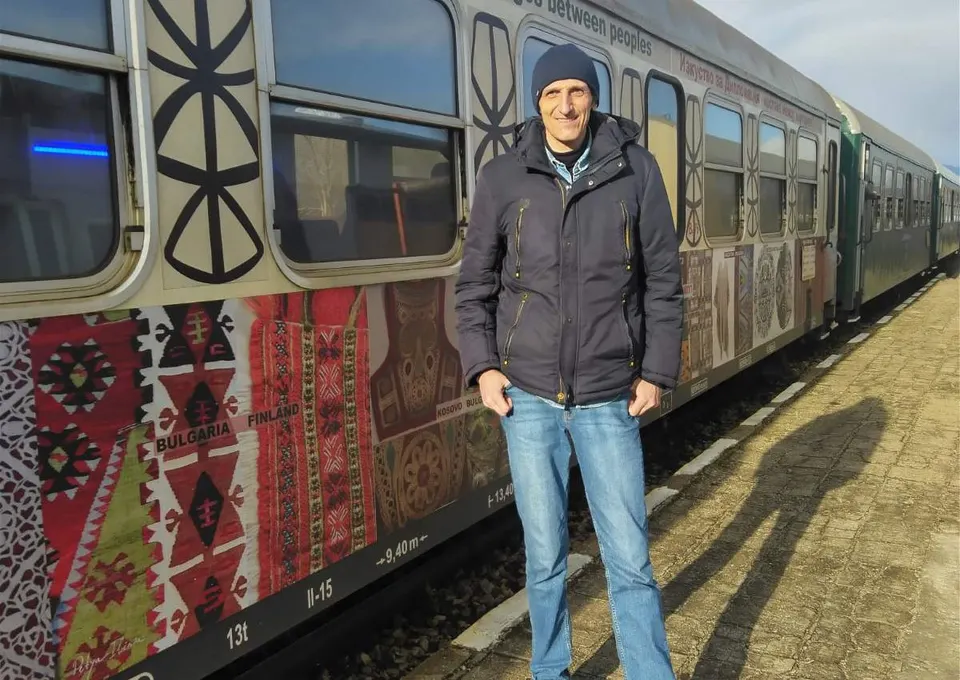
Bulgaria After the Bulgarians
A few years later the engineer is working in Greece, from where he publishes texts such as “Greeks appeared on Syntagma Square with a placard reading ‘Quiet, don't wake the Bulgarians’” and a speech by the Greek prime minister about our country. Both are reposted by a number of Bulgarian media outlets and quoted in the news. At one point even Prime Minister Boyko Borisov announces that he will demand an apology from the Greek prime minister for his words.
“This shows where our politics and our political class are. They are at an absurd, knee-jerk level. Not only have we let these people govern us, we keep doing it year after year,” Chergar reflects.
And speaking of our former prime minister, here we come to the climax.
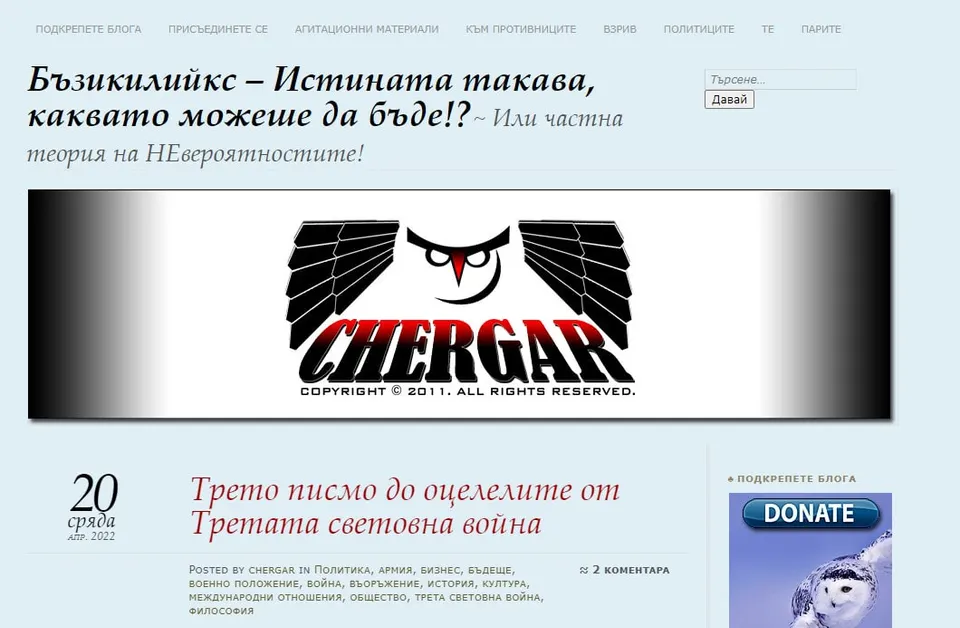
Boyko's Journey Through the Torments
February 16, 2013. You can guess where the news appears: “The power distribution companies issued a joint statement: ‘It's your own fault.’” At that moment electricity prices have just been drastically raised, and the “statement,” in rather salty language, says that the energy companies are not to blame for this and people should hold their rulers to account.
Well, the next day the letter is reposted by the leading media, and a protest against the new prices gathers in the center of Sofia. People are angry; it wouldn't take much for trouble to start. And just then, on that hot, chilly February evening, one of the organizers indignantly reads out through a megaphone the letter written by Chergar. The situation explodes, and the protesters attack the police. There are fights, blood. Mere hours later the prime minister announces that he is handing in the government's resignation, a few months before the end of its term...
“It was staggering! I never expected such a thing,” Chergar recalls. “And I realized how sad it is to see how easily and visibly some people manipulate others, because they think it brings them some influence at the moment, some benefit, helps them stand out. People very easily fall victim to manipulation!”
I often ask my guests whether words will ever lose their power. And this story seems to answer once again. ChatGPT could hardly capture the spirit of the times the way Chergar managed to. Who knows whether an algorithm could even foresee how a text in the good classical spirit of satire, created to share an emotion and to make people think, can turn into a tool, a weapon for manipulation and propaganda...
Is there a way to learn to protect ourselves, to bring back critical thinking? Especially in times when artificial intelligence creates works indistinguishable from human ones?
“People need to think, but they have been placed in a completely different environment, something unfamiliar and new to them,” Chergar believes. We are definitely not coping with it, especially at the frantic pace of the ever newer new. That, however, is far from a reason to stop trying...
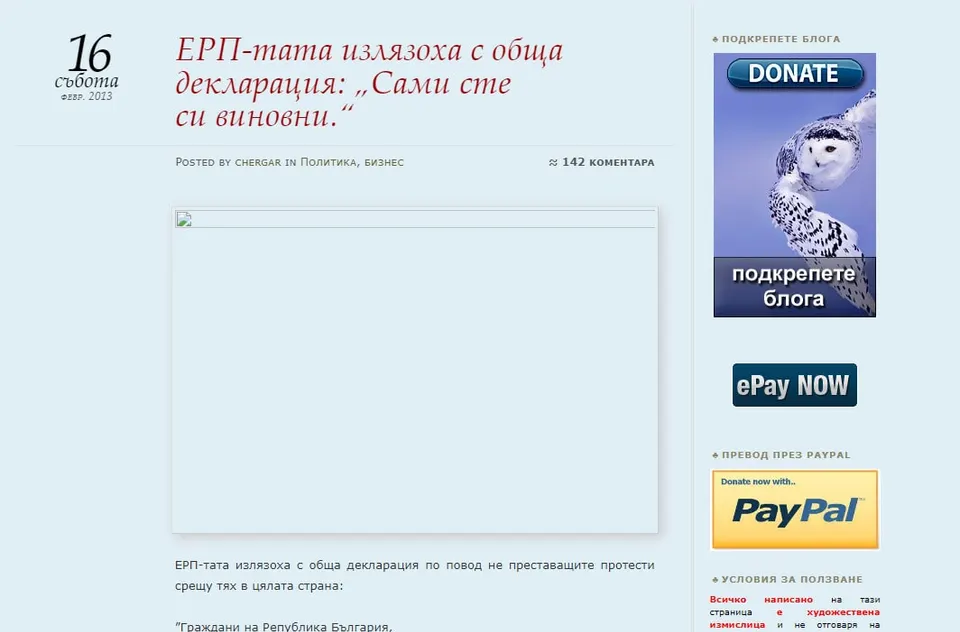
Chief Directorate for Combating Public Enlightenment (GDBOP, the acronym of Bulgaria's organized-crime police)
“Many of you know hundreds of chalga lyrics and the names of actors from countless soap operas, yet you don't know the names of your neighbors, nor have you read in your whole wretched life even one real book. O, foolish and degenerate man! (…) The world has no need of blind followers; they serve only to bring about a slave's lot.”
Chalga, for the record, is Bulgaria's brash pop-folk. But are these words Paisius's or Chergar's? Perhaps after everything so far you'll guess, but what about some poor archaeologist who comes across them after a century or two worn down by the technological transition?
Even more important, in my view, is something else—the spirit of self-expression, the desire to change the world around you, to not be afraid to stand up against injustice, which to the superficial eye might look like tilting at windmills.
A decade ago Chergar stopped writing actively. On the one hand, the algorithms of social networks had already arrived, choosing for us what to read and what matters. And, in his view, also silencing alternative, opposition voices.
Populism, Lobbyism and Fascism
On the other hand, he wrote and wrote, his texts gained cult status, and yet it seemed... everything stayed the same. The same problems, the same quarrels, even the same personalities keep circling in our political space, while the real problems of people remain off to the side, away from the spotlight.
“I decided I had written everything that moved me. I saw what the response was, what the result was. I saw that everything repeats itself. That those who govern, as well as those who fight for power, can wait for years for their time to come, and they do. Both the ones and the others are stubborn and shameless. And however you expose their true face, they don't worry much. Because they don't see who could take their power away. For that reason I decided it would be a waste of time to continue. I hit the moment when it was possible, and I stirred up some trouble in the system, at least as I see it. Anything more would have been just out of stubbornness, I'm well aware, and I don't like wasting my time.”
Young People
That doesn't mean we should stop hoping, does it? That it might be possible to develop as a nation to the point of building a political elite we can be proud of?
According to Chergar, the ball is at the feet of the young. They are always the ones who are fired up, who think they can change something, and sometimes they succeed. Once a person runs into very hard situations and accumulates life experience, he settles down. The natural time comes to make way for those to whom the future belongs.
Should we expect the next Chergar from Generation Z, which seems less excited about politics than about TikTok?
Chergar says it depends more on the family, and gives the example of his elder son. The boy was unhappy with the school administration, and his father, inspired by a Stephen King story, gave him the idea of starting an anonymous school newspaper to write about everything that was wrong—with the relations between teachers and students, with hygiene, in the cafeteria. His son was more withdrawn, didn't feel comfortable among his classmates, and decided to give it a try.
“The teachers were shocked. They reprimanded him for damaging the school's reputation. They told him they would call in his parents. Fine, let them call me in... but they didn't. Still, my son and I talked it over and decided to change the newspaper, to make it less extreme. Before he knew it, my son gained authority among his classmates, everything turned around, and it worked out just like in Stephen King. They tried to intimidate him; he didn't give in. In the end the principal decided she could make money from a school newspaper project, and it came through, but... there was no one to write. Guess whom she invited... But my son refused.”

The Facebook Society Is Leading Us to Anarchy
When the war began, Chergar asked his boy whether the prestigious school he attends had any position on everything happening in the world. “Because you are living through quite a turning point. ‘No.’ Don't you talk about it? During the Vietnam War there were many protests against it. Not for one side or the other—for peace; it's the best medicine! ‘What can we do?’ You can do anything! I showed him how to create a nonexistent organization that would carry out activities. We sent letters to world leaders calling for peace. I'm trying to show him that it's not true that he can't do anything. If young people have the desire, have an idea, have something they believe in and want to achieve, they should always make the effort.”
Real life is outside social networks, Chergar says. “Because we think we communicate through them, but they are more like indoctrination into the correct point of view. For example, there is no debate there at all about education, something very important, especially given technological development. That debate can only happen in real communities, created by people who get together, talk, discuss, make proposals... My personal opinion is that changing the world through social networks is an illusion. We'll just sink into a fake world. And we'll miss the real one.”

There's the Will—No Results?
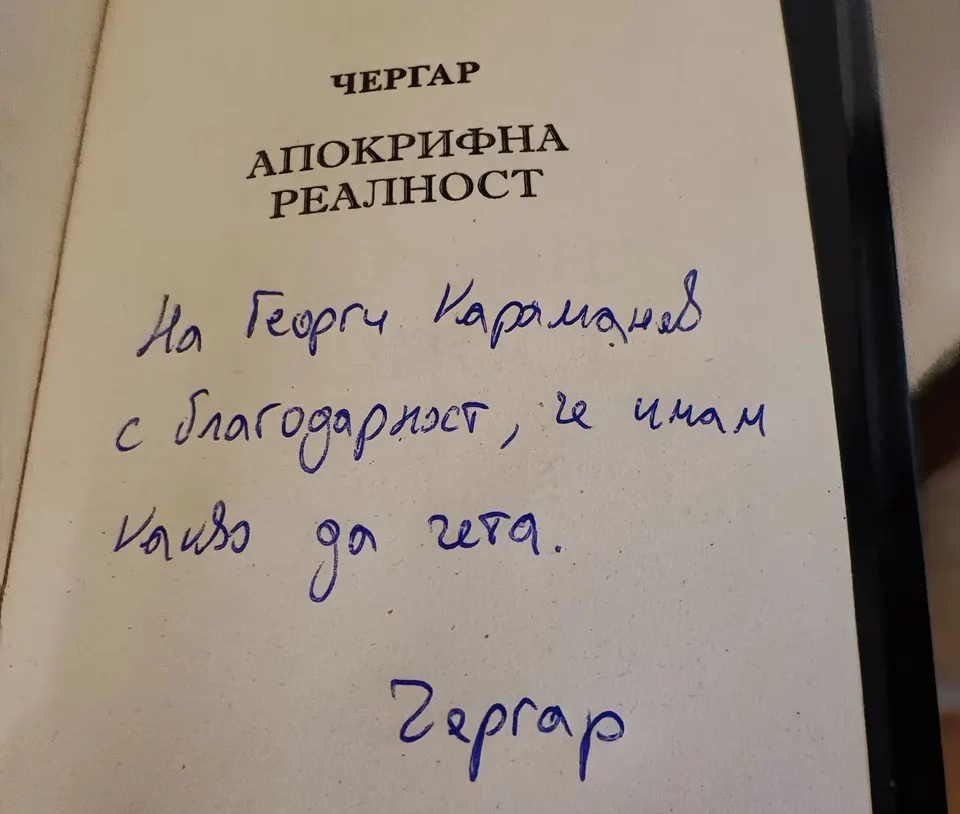
“In this gray landscape the ideas of bloggers flicker like colorful mirages, but quickly sink into the information hurricanes of the web,” reads the foreword to my guest's book.
To my mind, the path to making sense of it all lies in stories; they are the colorful mirages. Chergar himself offered to tell his, and if you, too, see a powerful digital story around you, I'd be glad if you helped me tell it here.
“We have let external factors influence us entirely, shape our thinking. We wait for someone to tell us what is right and wrong. It isn't that hard to decide what is right. Every person can change something!” the famous online hidalgo says as we part. And I so want him to be right, and to see more and more examples like this...
If our conversation with the blogger Chergar has intrigued you, you can see its continuation live on Sunday! Together with the historian Alexander Moshev, Chergar will be a guest at an event hosted by Digital Stories.
On May 11 (Saturday) at 5:30 p.m. it's time for the talk “A Different History.” As part of the Sofia Science Festival, at Sofia Tech Park we will discuss how technology is changing our relationship with the past. For more information and tickets, click here.