You love computers, and to be able to use them… you buy magazines!?
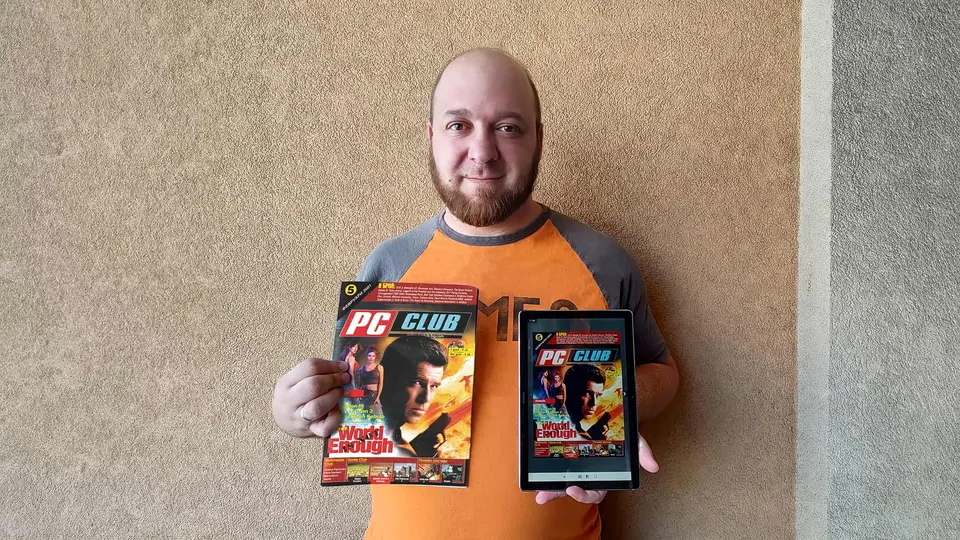
Isn't that strange? Isn't everything online? It is today, but this digital story was born in a computer past that feels both recent and very far away. A kid dreams of getting an unfamiliar magazine with James Bond's face on it, which has caught his eye. He gives up his pocket money to buy it, but just a few hours later the “big guys” take it from him. That, however, is how his interest awakens in the cult computer magazines of the end of the last century, the favorite reading of an entire generation.
Decades later the boy “meets” the same Bond again, and the magazine sets the rest of the story in motion. Thousands of stubborn hours go by until, today, Project Lazarus is complete, and anyone can browse the full collection of the legendary computer magazines of the 1990s and the first years of the 21st century. A peculiar Bulgarian cultural phenomenon that is hard to explain to the young people who came after…
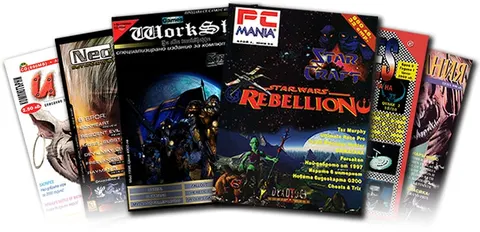
Which magazine did you love? PC Mania, Gamers Workshop, or another one from the long list?
Game On
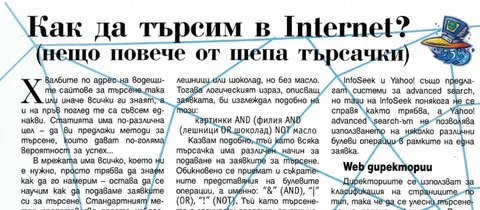
This remarkable phenomenon reminds me of the story of gamebooks. It begins in the late 1990s, when the internet became more accessible and computers began to appear in homes en masse. Its speed, however, was far from today's, and so for quite a few years computers lived side by side with paper. We bought books to learn how to use the net. And, even more often, the computer magazines we'll be talking about today. Most were devoted to games, and they often came with a gift—a disc of game demos and programs. Plenty of readers bought them for the discs; the net was still in its early stages, and downloading even a picture was slow and expensive.
Little by little, computer game magazines grew into a culture of their own. Different schools took shape, and each publication had its own profile (more on that soon). Some of them gradually managed to gather their readers into a community that talked actively about the topics it cared about.
Then the speed went up, and with it came the end of the magazines. Some turned into websites, others quietly slipped into history. The very place from which they are now returning…
The Game of Toys
And here this cultural phenomenon is again, thanks to our hero today. Diyan Karolev is a journalist with serious experience who in recent years has been working in computer game development. And after 8 years and 5,000 hours of stubborn volunteer work, anyone can now read, on the Project Lazarus site, every single one of the 440 issues of computer game magazines ever published in Bulgaria! Together with the games section of the magazine Computer, Diyan's enormous labor covers no fewer than 659 issues.
Try it, leaf through them virtually—it's such fun. A time machine that, for me at least, filled me with nostalgia for my school days…

But how did our guest decide to take on such a massive task for the common good? As you've already gathered, the story begins more than two decades ago, and it involves none other than Agent 007.
The odyssey (it may not be in space, but still) begins in 2001. Diyan, born on the first day of the watershed year 1989, is only 12 and often goes to the bus station in his hometown of Pleven, where there's a toy shop. “After school I'd stand there with my nose pressed to the window, staring at a Batman I finally bought many years later. At some point I also started looking at the newsstand, where I noticed some colorful magazines with titles that meant something to me—PC Mania, Master Games,” Diyan recalls.
Tomorrow Never Dies
At the time he doesn't even have a computer at home, but he often spends hours at the computer club next to the school—back then these were favorite haunts for kids. But… “My eyes stayed glued to those covers, but they also stayed glued to the price. I'm in sixth grade, I get 50 stotinki a day for school”—stotinki being the Bulgarian cents, a hundred to the lev—“and the magazines cost 2 leva (about $1.10) without a disc and 4 leva with one.”
Those 50 stotinki are for a sandwich during the long break, and that's also what an hour at the computer club costs, but our hero has already developed an obsession—to buy a magazine, and one specific issue at that. A little earlier he has seen the latest James Bond film, and it's the cover with his favorite hero that becomes his dream…
Except that a cavalcade of unpleasant surprises awaits him—by the time he has saved up the money, that issue has sold out, so he buys another magazine instead: a PC Mania with a purple cover featuring the game Oni. And to top it all off, before he has even read it, the “big guys” from the upper grades take it from him that same afternoon.
Just a few months later, though, the dream comes true in the most unexpected way. The boy is sent to his older cousins for the summer holidays, and since they can't be bothered with the little one, they hand him a whole pile of computer magazines to keep him entertained. He devours them cover to cover, even though… he doesn't understand much.
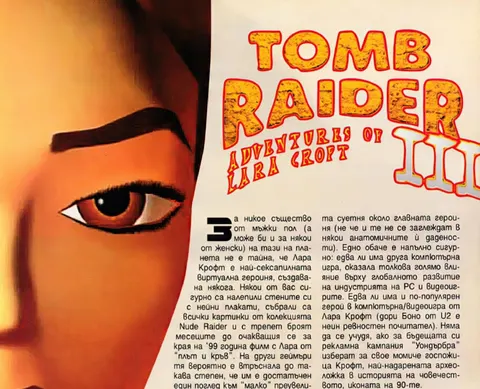
We Played Well…
“I had no idea what I was reading—first the foreign words, second the specialized terminology I was discovering for the first time. But once I got used to it, I got really hooked. I was hugely impressed that there were people who wrote about games, and were probably even paid for it.”
So his next, much bigger childhood dream is born—since he loves to write, he starts thinking how wonderful it would be one day to earn his living by writing about computer games.
That is exactly why he later turns to journalism, graduates in the field and starts working at Bulgarian National Television (BNT). And although by then the computer magazines no longer exist on paper, he also fulfills his dream of writing about games, on the PC Mania website, which is still running today.
The Love of Words
And so all these fulfilled childhood dreams lead up to the last one, the one that has brought us here.
We move to 2013—the magazines are long gone—when our story proper begins. Diyan is already working as a journalist and stumbles online upon something that takes him back in time.
He remembers one of his favorite childhood books, The Cucumber King by Christine Nöstlinger, and decides to find it online. It turns out to cost just one lev. “That seemed terribly insulting to me—the courier would cost more than the book—so I decided to look at what else the same shop was offering… And at that moment I see the purple cover of the first magazine I had ever bought and had stolen from me, a precious childhood memory,” Diyan recalls.
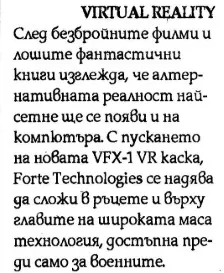
He spots a few more magazines, buys them all, and as he leafs through them he travels back to the phenomenon. That's when the next idea comes to him—to make a documentary about the history of computer magazines, because it's so interesting that it simply has to be told. He starts meeting his favorite writers from back in the day, collecting… And he notices how hard it is to find the old magazines today: some carry unjustifiably high prices, and others can't be found at all.
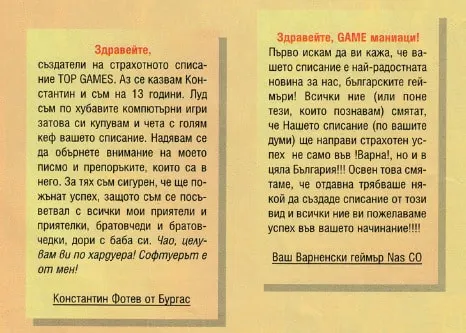
With Dragons in the Heart
“Because I love collecting things, I ended up hoarding them like Smaug the dragon and gloating over them. I met writers, did interviews, and then I thought—these magazines, I'm literally sitting on them like the dragon and they're gathering dust. Why not share them with people?”
First he decides to check whether there are any legal restrictions, and it turns out that PC Mania and Gamers Workshop are the only trademarks still registered. He manages to get their blessing and rolls up his sleeves…
He chooses to call the project Lazarus, after the biblical Lazarus. That way the magazines rise again from their paper death.
And so, 8 years and about 5,000 hours of scanning later, all the magazines can now be browsed on his site.
In his work he is careful and precise; each magazine takes him about 3 hours. He “takes apart” the issues, processes the images, straightens them. We joke with him about how useful the sharp eye he's developing will be if the software industry falls victim to artificial intelligence and we all have to move into construction.
Game On
Diyan is so meticulous that when an image has a hole in the middle because of a prepress error, he hunts down a replacement, swaps it in and adjusts it. Why, when he could always leave the hole and it would be authentic? Because he wouldn't be able to sleep if he did. Lately, generative artificial intelligence has helped him quite a lot.
And why does he put in all this enormous work?
“I've always imagined the project as a library devoted specially and only to game magazines. It costs me out of my own pocket, but I don't see a problem with that. I want to be able to share with other people the thing that inspired me to write in the first place. It seems only fair to me that there should be free and open access to these texts, because otherwise they'll be lost.”
Magazine Makers
“The magazines had a huge influence on all of us; they're a cultural phenomenon,” Diyan says today. “1998, around the release of StarCraft, is the moment when suddenly everyone decides to make gaming magazines. That's when the cult titles Gamers Workshop, PC Mania and Top Games appear—the last of which is renamed Master Games after two issues. Each has an extremely distinctive style and way of covering games and everything related to them.”
At the time, as we said, the internet is slow, expensive and runs over the phone line. Most kids don't have computers; others don't have internet. So, according to Diyan, the magazines on the one hand become a rescue from having to search for information in English, and on the other they provide programs and game demos that can't be found anywhere else. And then all of this turns into a community, which is more of an unexpected side effect. Many of the early magazines organize tournaments; others open their own clubs.
The magazines come out actively until about 2010; the last survivor is Gameplay. From one of his interviews Diyan learns that their usual print run was between 10,000 and 15,000 copies, higher in winter, when more games were released.

Still Not Played Out
Plenty of people thank him for his stubborn work. Writers who wrote for the magazines and never kept copies. “There were several emails like that: ‘I saw the site, found my articles and cried with emotion.’ Others write just to congratulate me. ‘Hey, well done, man!’ Very often, especially on social media, I see the sentence ‘Thank you for your work.’ To be honest, that confuses me a little. I'd never heard or seen it before, and I've never thanked anyone for their work either,” Diyan admits. “But maybe I should.”
How valuable it is sometimes simply to say thank you. And how important it is to keep the strong moments of childhood, to treasure them and bring them back to life. Surely many people will return to them thanks to the enormous work Diyan has put in. Few things are more precious to us than childhood memories…

Which Were the Cult Magazines?
Diyan's quick take on his favorites
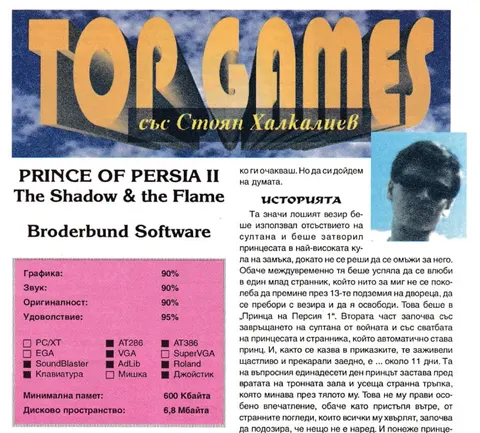
Top Games isn't a separate magazine but the games section of the magazine Computer. Yet that's where it all started, back in 1992! Gathering the complete collection was a real adventure—it took a year of going around libraries.
PC Mania were very precise and clear; they're like BNT. Always there, you know what you'll get. It may not be the most original journalism, but they'll cover everything that's important, everything you're interested in, and you'll get the discs. From a certain point on it was written by young people, which, for me at least, added a lot of extra value.
Gamers Workshop—if you follow them from beginning to end, you could write a whole book about a group of friends who get together every week, talk things over, do things together, and you share it all with them. They were very natural; you could tell when someone was joining or leaving, when someone was sad, when something had happened in their life. They were also extremely honest in their opinions, regardless of whether they were objective—that was never their goal anyway; the goal was to be sincere.

In Master Games I like the abstract art—there you can see a complete chaos of words, visuals, colors. The magazine itself isn't consistent at all and at the same time covers an awful lot, jumping from topic to topic. Not just games—sometimes reportage, articles about aliens, about conspiracy theories—you never know what you're going to get. I remember an article about a game with the subtitle “Monologue to a Cat Close at Hand.” I have no idea what that means, and I'm convinced it has nothing to do with the game being written about, but it makes an impression. The whole magazine was written in that contrarian style, and it's also famous for the comic about Doctor Gas.
Computer Games is also an impressive magazine. I found it incredibly interesting how, back in 1993–94, they managed to dig up information about the development of Myst, about how Roberta Williams's Phantasmagoria was made—topics on which, even today, it's hard to find lesser-known facts, yet they managed it.
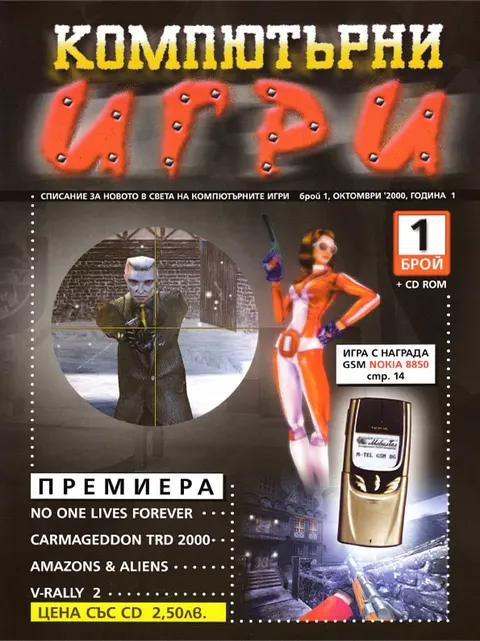
Kompyutarni igri (Computer Games) is a magazine published by Softpress that was never announced, and even the publisher itself didn't know it had existed. Only 6 issues came out, but it's the only one that came out every two weeks. It was written in an interesting, somehow more Western style and came with free stickers—very unusual.
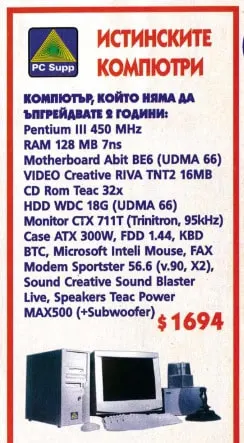
In PC Club I like Boyan Spasov's section “Format C,” with its humorous articles and parodies—for example, what would happen if The Matrix came to life in Bulgaria. For me this is a much more sterile publication, designed to be more profitable and to pull in advertising. At first it was a partnership with the newspaper Monitor, and it took writers from PC Mania and Computer.
At some point PC Club became Gameplay because of a trademark dispute. It started being published by Haykom, which assembled a team that had previously worked at Workshop. Some kind of coup took place there in 2006, and the writers who left moved to Gameplay. The result was a serious publication, professionally executed, with the most modern design.