As soon as autumn arrives, Sofia starts gasping under the traffic of hundreds of thousands of cars it was never built to handle. And all of us start asking the almost rhetorical question: is there really no way to change this? To get more people onto public transport, onto their bikes… We know the benefits very well.
Public transport, alas, is often inconvenient. Even though it is supposedly connected to the most modern online platforms, that doesn't help us enough. I say this in the first person, as someone who gets around by bike and by bus, and climbs into a car only when there is no way around it.
Platforms like Google Maps are invaluable for planning your route, but… they almost always give inaccurate information about when the next bus will come. They don't tell you whether it will be crammed to bursting, whether it will be dirty and neglected, whether the driver will cheerfully wait for you or turn out to be a sourpuss ready to slam the door in your face.
This can change, though, and once again technology comes to the rescue. The idea of open data may prove invaluable in helping Sofia (and not only Sofia) to “unclog” and start breathing. How? You'll find out from the fascinating story of my fellow programmers at the company Codexio.

Always Full, Never Empty
Less than a month ago a piece of news appeared that could hardly mean much to the general public, but it certainly thrilled the IT community. For the first time, Sofia Municipality published the data it holds on the city's public transport system. Around the world it is common practice for municipal and national administrations to freely share information from their databases in all sorts of areas.
Because in the world of information technology and artificial intelligence, data is everything! With every step we take, we leave behind a trail of information that lets us live in the comfortable world we inhabit today. Yes, this creates problems, such as the potential for manipulation, but it also opens up enormous possibilities—like, in this case, making public transport as convenient as it can be.
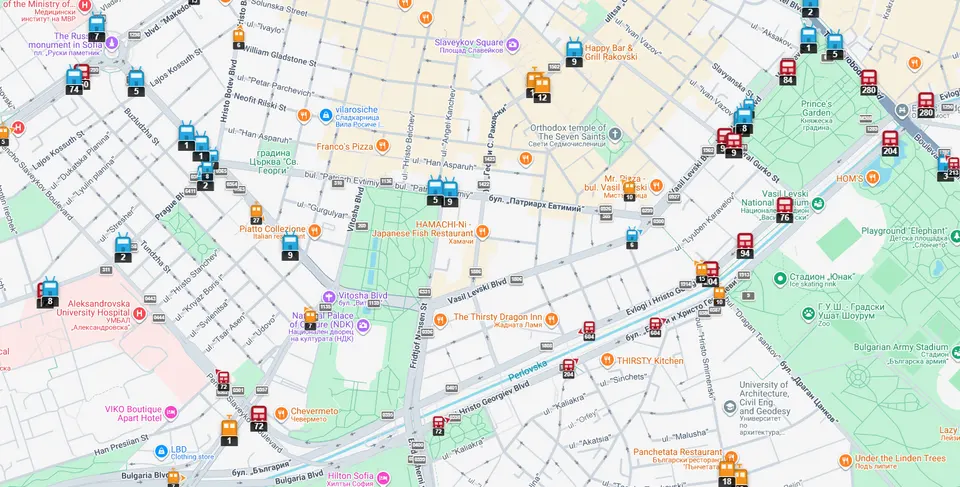
So what happened here? A convenient form appeared through which anyone interested can gain access to information. On the one hand, about the timetables at the stops; on the other, about where every bus, tram and trolleybus is in real time. What's more, it uses a standardized format called GTFS, created by Google, which makes the data convenient, understandable and easy to work with for any software engineer who wants to use it.
Quite a few IT specialists reacted at lightning speed, and within a matter of days several applications using this information appeared. Some took the form of mobile apps, others of websites that can be opened on both a computer and a phone.
Trains Leaving in Every Direction
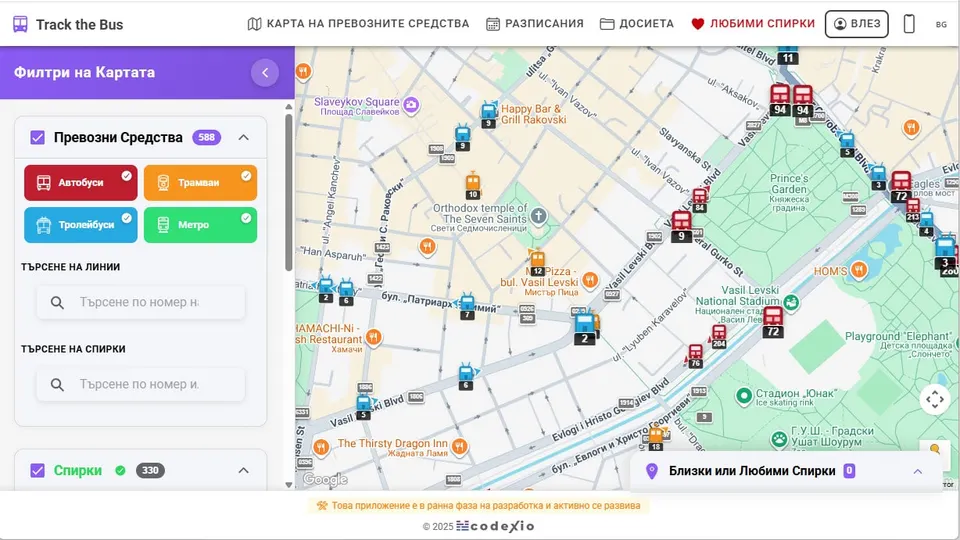
TrackTheBus. “Follow the bus.” That's the name of the page created by our three protagonists—Ivan Yonkov, Yoana Borisova and Mihaylo Oleshchuk from Codexio.
Ivan, who is now the company's CEO, arrived in Sofia 14 years ago, and one of the first things he became a fan of was… public transport. “I used it to learn the city. I'd get on a random bus just to look around, to see where it was going. To this day I'm super curious about the little hidden streets it will turn into.”
So the moment he learned that the data on public transport vehicles was becoming public, he found kindred spirits in his colleagues Yoana and Mihaylo and got to work.
It's clear that we live in the age of artificial intelligence, but not everyone yet realizes what that means. If you don't work in IT or have no direct contact with it, you may not have heard of the trend called “vibe coding.” Sometimes, without writing a single line of code, a person can now create a website that works surprisingly well. Yes, imperfections are inevitable. Yes, the more complex capabilities are (still) in the hands of programmers, but the road from an idea to something that can be shown and tested is drastically shorter. In vibe coding, projects are built almost entirely through instructions to an AI, which writes the vast majority of the project.
And so, in just a few days, Ivan, Yoana and Mihaylo (who doesn't even have a programmer's background) managed together to create TrackTheBus. The platform not only conveniently shows you the stops and vehicles near you, but also promises to grow into a kind of social network that would make using public transport considerably more convenient and rewarding.

Everything on the Map
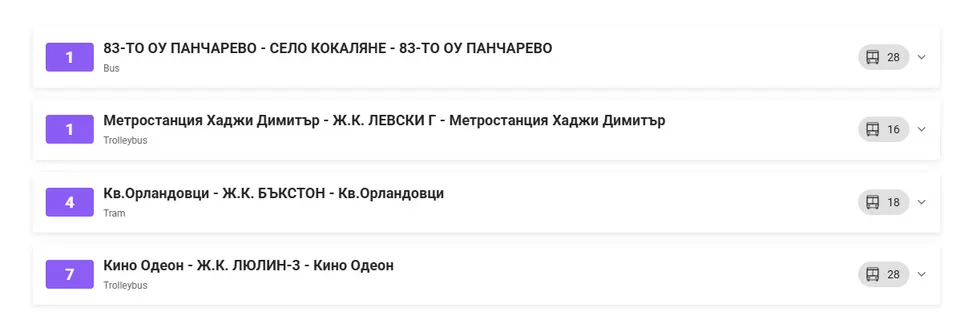
“The potential for a social platform is something useful that can go far beyond Google Maps,” says Yoana. Since every vehicle in the data coming from the Urban Mobility Center has a unique number, every user can add information about it. That way you'll easily find out whether a given bus is packed, or whether a tram “smells” in a way that definitely suggests you'd better not get on. Whether the driver has put up fresh signs, or whether one of the still few but eye-catching double-decker buses in the capital's fleet is on its way.
And this, as Ivan points out, can go much further. The municipality's complaints platform is soon expected to open up to external apps as well, so that any more serious problem can be addressed quickly.
“This gives far more room for civic initiative and for raising the quality of the service. Anyone can follow how a given problem has developed. A bus isn't clean, then it is, which means those complaints have made a difference,” says Ivan.
Dear Passenger
Of course, the venture is at an early stage, as the notes left on the page itself make clear. But its goal is to grow, to add features and to build a community of people who care about topics like public transport and, more broadly, how to make getting around Sofia easier and more convenient.
And not just in the capital. Since, as mentioned, standardized data is being used here, any other municipality that decides it's a good idea to give free access to its public transport information can be added without much effort.
But why would a team at the head of a company take on a venture like this… purely out of goodwill?
“That's the whole point of civic initiative,” says Ivan. “First, we want to use it ourselves, because there's no convenient app that offers these possibilities. We want something better. We want different aspects of life in Bulgaria to develop, and to make it clear that opening up data makes sense. Sofia Municipality has shown initiative, and if we citizens don't seize it and start using the data, there will be no reason for it to continue. With more data opened up, remarkable ventures can appear!” the programmer adds.
One example in this direction is the schedule of the traffic lights. If it became public, apps would appear that could determine far more accurately the fastest way to reach any destination in the capital.
Pull Up Next to Me
Or take another painful topic: parking in Sofia. If data on free spaces in the green and blue zones—the city's paid parking areas—were public, it would make planning any trip considerably easier.
And if information on road markings appeared in open form, IT specialists could analyze it and propose concrete ideas about what could be improved, where and how, so that the city's big boulevards could finally unclog.
Then there are the trains—public data is missing there too, and yet the rail network here is designed to complement the urban one. Despite the not exactly glittering image of Bulgarian railways in recent years, they certainly can, and deserve to, become a convenient way to get out of the capital, an alternative to the nightmarish traffic jams on the highways.
Which brings us to my favorite mode of transport—bicycles. Our capital is one of the few in Europe for which even Google Maps gives no specific information on the best way to reach a given point by bike. If open data were embraced, we could see serious progress here too.

On the Road
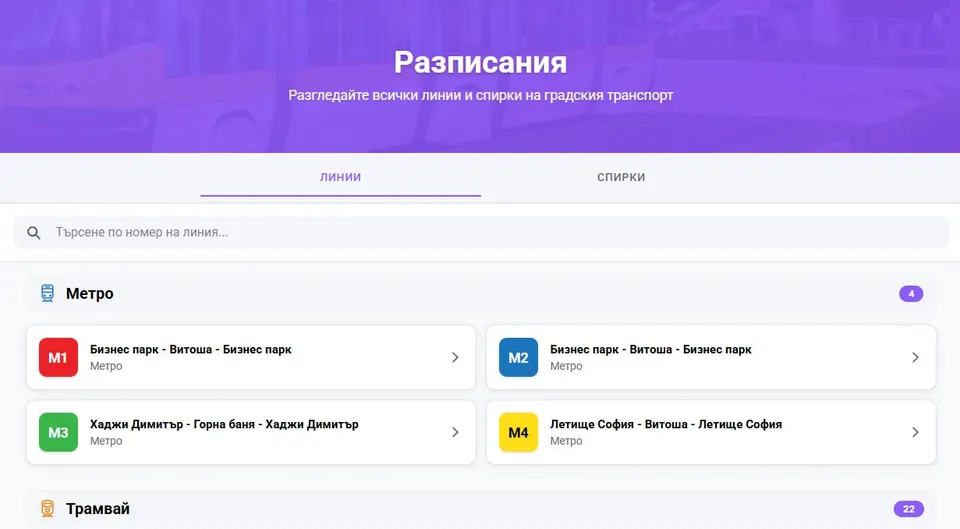
“Our idea is to integrate all the static and live data that the municipalities will ever open up. To bring it together seamlessly, in a single platform that's useful for everyone. Not separate pages, but a place where you can see how everything connects,” Ivan adds.
“The big topic is open data,” Mihaylo adds. “It makes it possible to build up statistics, to build up knowledge. To use mathematical models to solve everyday problems that affect all of us. The idea is to improve people's quality of life.”
It's worth reminding ourselves more often that this is exactly why we create technology. To make our lives better. And when open data and open-minded people join hands, good examples are bound to follow.