Did you know that the mains voltage in Bulgaria wasn’t always 220 volts? Or that a fascinating Bulgarian computer game from the early ’80s turned into… a prophecy with its very title? What did the first Bulgarian electric scooters look like? And could the “hipsters of the ’60s” who rode them also get themselves a radio-TV-gramophone… provided they could carry 120 kilograms on their shoulder?
Once again we set off through the colorful history of Bulgarian technology with the most precise and captivating guide. For 15 years now, Anton Orush has been gathering a sea of information (and exhibits) about its past and present. His incredible life, worthy of a novel, was one of the first digital stories.
His new book, Proizvedeno v Bulgaria (Made in Bulgaria), came out recently, and you can buy it here.
So here we go, boarding the time machine for 5 stops back in history: 5 fascinating stories from the past of technology in our lands.
1. Kill the Power!
We start with… the wall socket. Did you know that until not so long ago, the voltage in Bulgaria’s grid was far from the values we know today?
Before the early 1960s, in Sofia it was 150 volts! That was simply the standard introduced by the Belgian Electric Company for Sofia and Bulgaria, which in 1908 bought the rights from the previous electrification concessionaire and took on the job of continuing what had been started. That is why electrical appliances made in the 1950s were designed to run on this voltage. And,
if you wanted to use your stove or washing machine on a 220-volt grid, you had to get yourself a step-down transformer like this one:
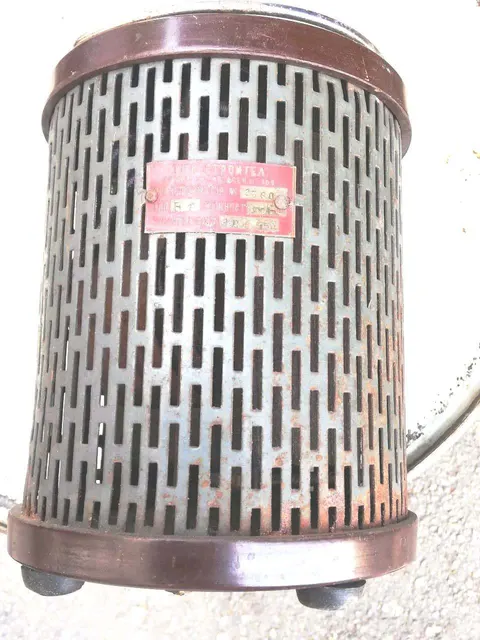
This device was put into production by the Stroitel workers’ production cooperative in Sofia, designed specifically to make older appliances backward compatible with the new standard. It’s very simple! You plug the device’s cable into the mains, and the other free socket, labeled “150,” is for the cord of your beloved old “thing”—a toaster, for example (or rather a “rusk maker,” as people called it back then). And that’s it! It can power appliances of up to 600 watts.
2. The Radiogramophonotelevision
After our close encounter with electricity, it’s time for some entertainment!
This story begins in the mid-1960s, in the Samples and Exhibits laboratory of the Chief Designer’s Department at the Light-Current Plant in Sofia. All sorts of new products were created here before going into production.
In those years Bulgaria took part in dozens of trade fairs on several continents—in Leipzig, Hanover, Thessaloniki, Algiers, Barcelona, Cuba, Izmir, Harare and who knows where else. Samples and Exhibits built all the prototype television sets, to see whether a trial batch was worth making.
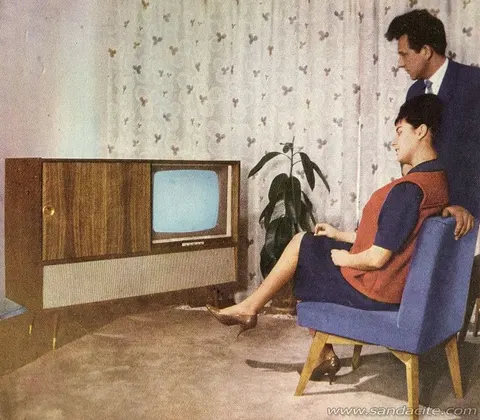
In 1964 the designers decided on something truly big! For the Plovdiv International Fair, they built the first radio-television cabinet in Bulgarian history. It contained not only a Simfonia radio receiver and an automatic record player, but also a widescreen Kristal 59 television set! And
the record player could be loaded with several records and would play them one after another.
The radio-television cabinet with record player was given the working name Balkan. It weighed over 120 kilograms! It was approved and ended up at the Plovdiv Fair in 1964, on the second floor of the pavilion of Elektroimpeks, the state electrical export company. “They put on a Tchaikovsky symphony, and it turned out wonderfully pleasant, with fantastic sound—it poured through the whole pavilion,” Anton says.
Two of the photos show the cabinet. The radio and record player sit one above the other on the left, the TV is on the right, and between them runs a sliding door, like on a wall unit. Only 5 or 6 of these sets were ever made, and we’re lucky that our guide to the past can show us one!
3. A Joystick for Connoisseurs
A Bulgarian PlayStation from the ’80s? Wow!
Next up is the first Bulgarian game controller for the Pravets—the Bulgarian-made personal computer of the socialist era—from 1982/83. It was intended mainly for games on the 8-bit Pravets 8M, 8S, 8A and so on. In English, this kind of gaming device is called a paddle.
We see a plastic case with a potentiometer on top and a small button on the side; the player holds the gadget between both hands. They came in sets of two, the idea being one for each player.
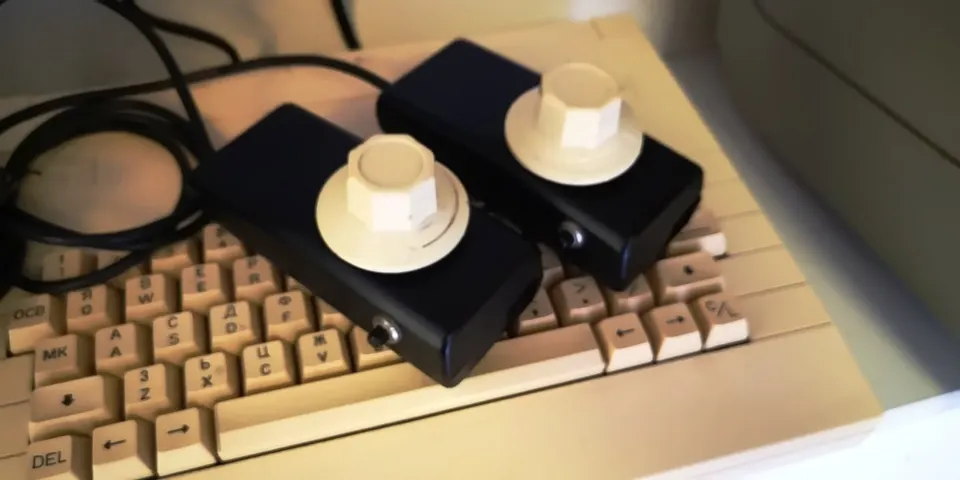
Can you imagine playing a game by turning a potentiometer—the little wheel like the volume knob on a tape recorder or the brightness and contrast knobs on the TVs of the day?
Turning left or right is the equivalent of pressing an arrow key. If the two players are opponents in a tennis match, the racket moves left or right to meet the ball. In the game Neptun, the spaceship moves horizontally, and turning the potentiometer steers it left or right.
The “Bulgarian joystick” was also used to play Tetris!
With this potentiometer, though, the choice of games was limited, because the player couldn’t move the hero or the ship along the other axis—up and down.
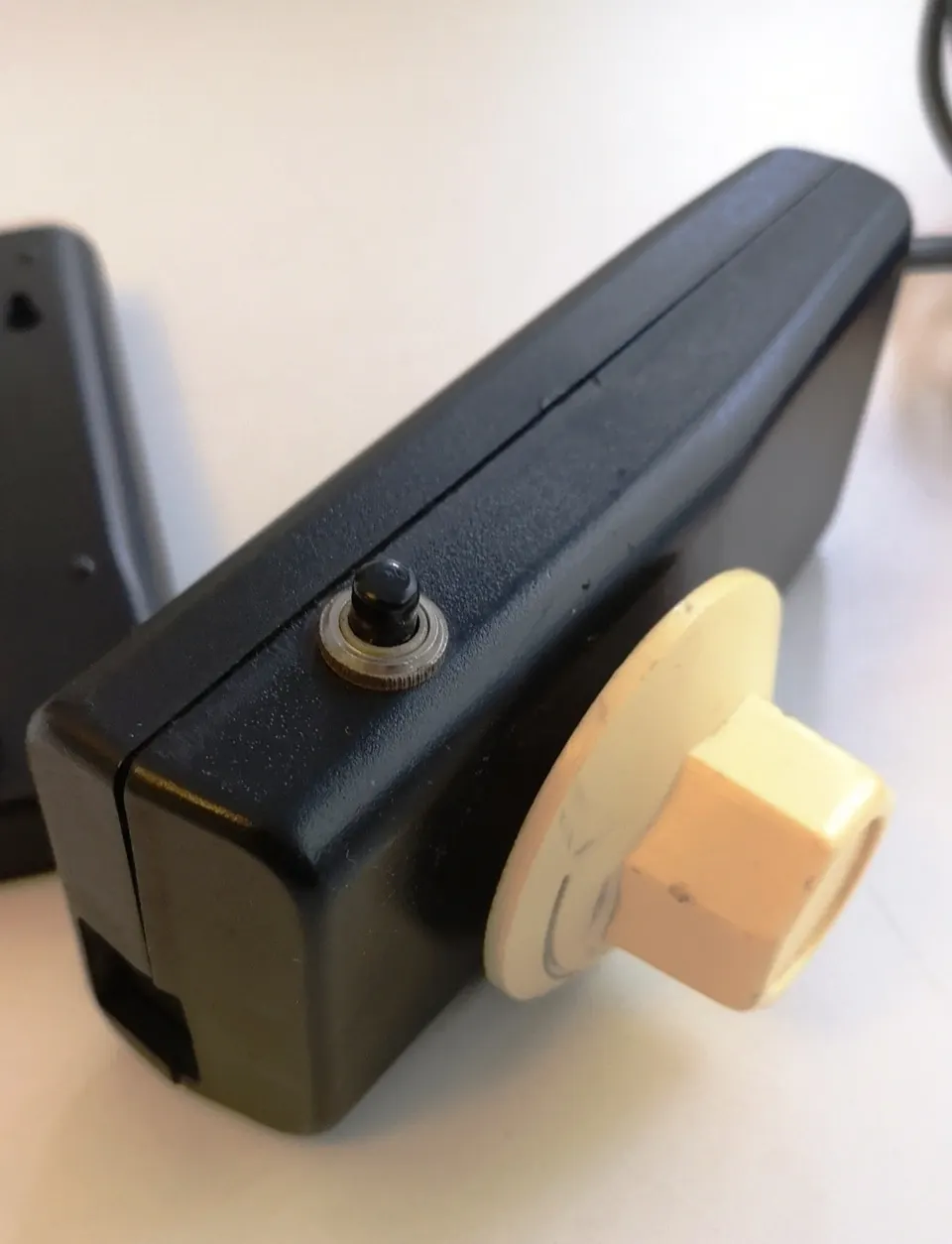
On the left side you can see a small button—it’s for “shooting,” and in Tetris it drops the block into the chosen spot.
4. Mr. Gorbachev…
“Tear down the wall”… Yes, these are Reagan’s words shortly before “the Wall” fell, but they are also the almost prophetic name of a Bulgarian 8-bit computer game from 1982.
The floppy disk with the game came as a gift with a book—a guide to working with a computer.
Tear Down the Wall could be launched from a floppy disk or a cassette by typing the command RUN. When we do that, the following meaningful words appear on the screen:
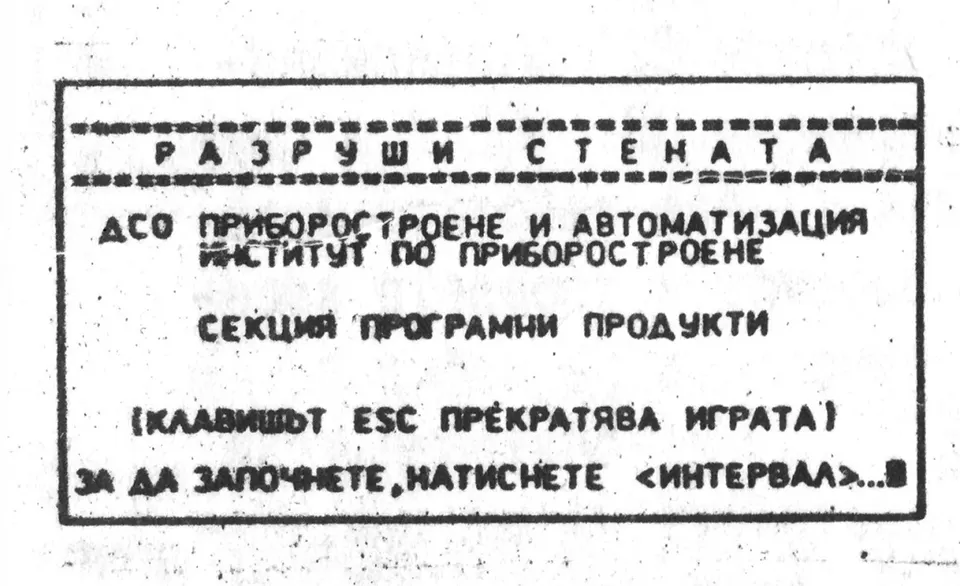
The character holds a tennis racket, and you have one ball. Your task is to knock down a brick wall with it; you control the racket with a controller like the one above.
Before you start playing, the computer asks you to type your character’s name. You press RETURN and see the playing field on the screen, along with the words:
TO START THE GAME, PRESS THE BUTTON ON THE GAME DEVICE.
At the bottom of the screen appear the points you earn whenever you manage to hit a brick with the ball and knock it out of the wall. The deeper you get, the more points you earn per brick.
5. Scooter.bg
Today electric scooters are an undeniable fashion… even a marker of social divides. But did you know that half a century ago there were already Bulgarian prototypes?
In 1972, at the Research Institute for Engines and Automobiles (NIPKIDA), engineers built the first Bulgarian two-wheeled, single-seat electric vehicle—the ElRo 72 (from “electric roller”), meant for trips around town.
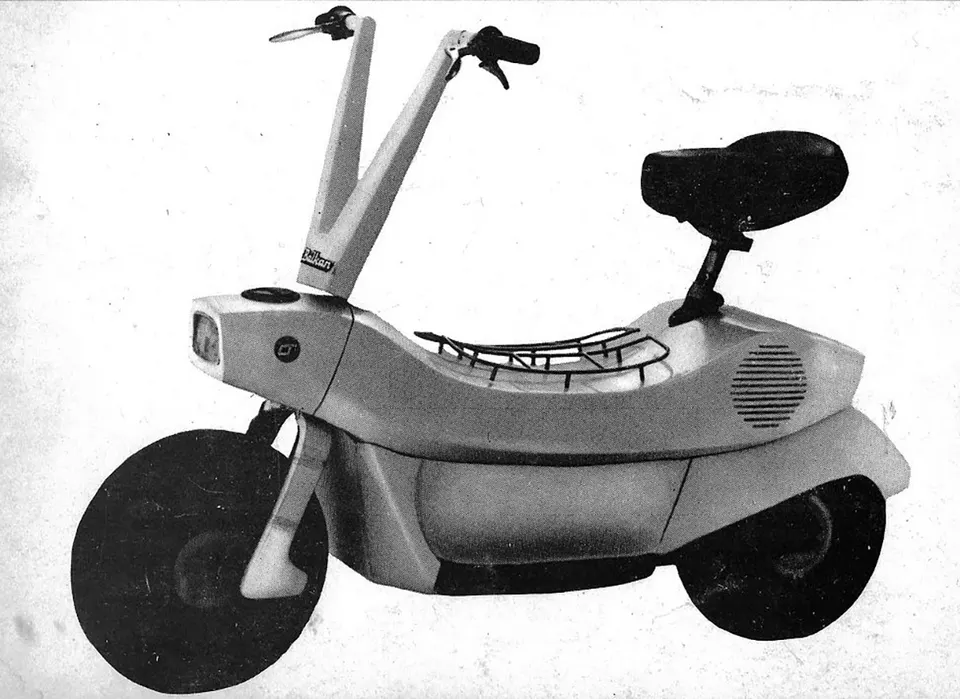
The first photo shows us what this very prototype looked like—it is also from 1972, and the two-wheeler in it is called an “electroped.” This is the original mock-up. The resemblance to a bicycle is obvious—the rider reaches the brakes through levers on the handlebar grips.
The ElRo 72 was powered by two 12-volt lead-acid batteries with a total capacity of 150 Ah. Its electric motor had a rated power of 0.6 kW and ran at 4,000 rpm.
The scooter weighed 52 kilograms, and up to 167 kilograms with both batteries and the rider.
For the scooter to travel at different speeds with the same torque, the motor has to run at different revolutions. That’s why the batteries were connected in parallel and in series through contactors. So at a supply voltage of 24 volts, the motor drew a current of about 30 A.
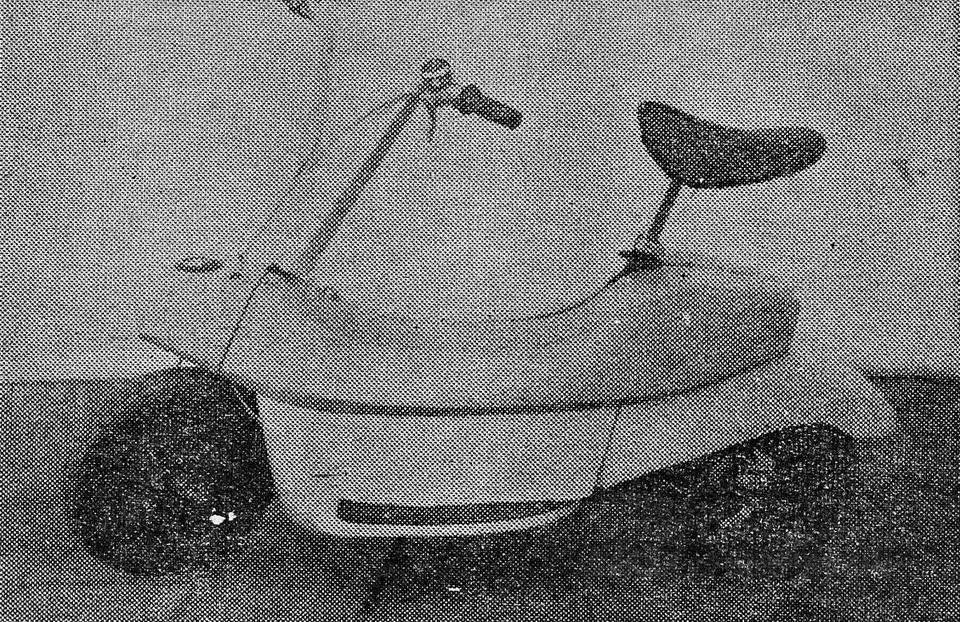
Let’s ride! First we insert and turn the key behind the handlebar. Then we twist the right handlebar grip, which acts as the controller. Once we’re moving, we can change speed with it (like the throttle on a motorcycle).
The top speed of the first Bulgarian electric scooter was 30 km/h, and its range was about 70 km.
We have a headlight! And a bell… The ElRo 72 had 3.5 x 8″ pneumatic tires (you pump them up). The rear suspension was rigid and the front one hinged. To keep the scooter light, the side panels were made of fiberglass. This speaks of an effort to make the design up to date for its time.
Did you enjoy the trip? It’s worth carrying on! For the biggest floppy disk, the history of Bulgarian electronic chess and the “Copying Device”—six more forgotten treasures of Bulgarian technology—read here.
And for true connoisseurs there’s the new book by our guide, Anton Orush—Made in Bulgaria. You’ll find it here.