The time has come to announce the winners of Bulgaria's first (and one of the world's first) competition for poetry created with the help of artificial intelligence—Apollo ex Machina.
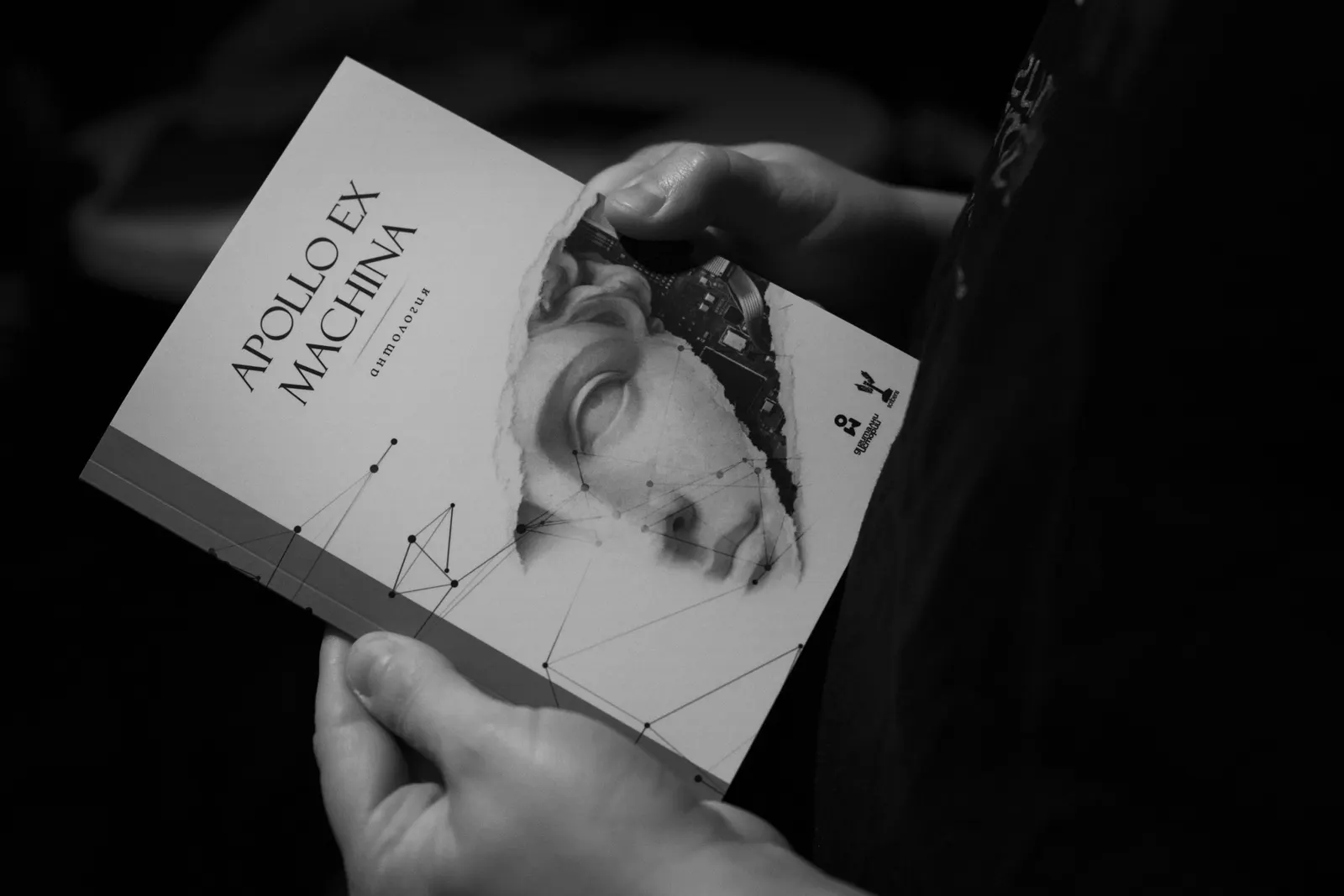
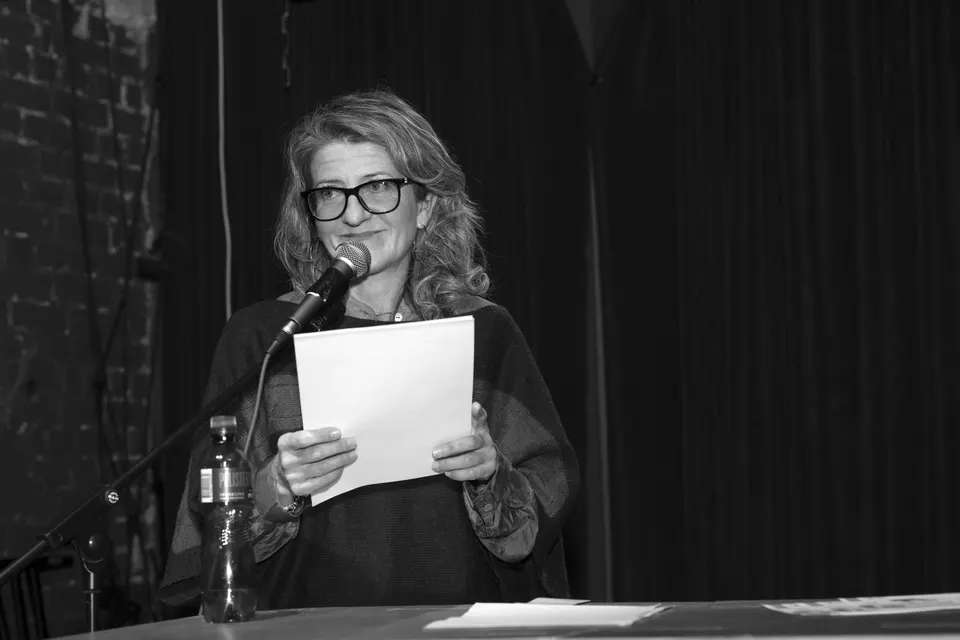
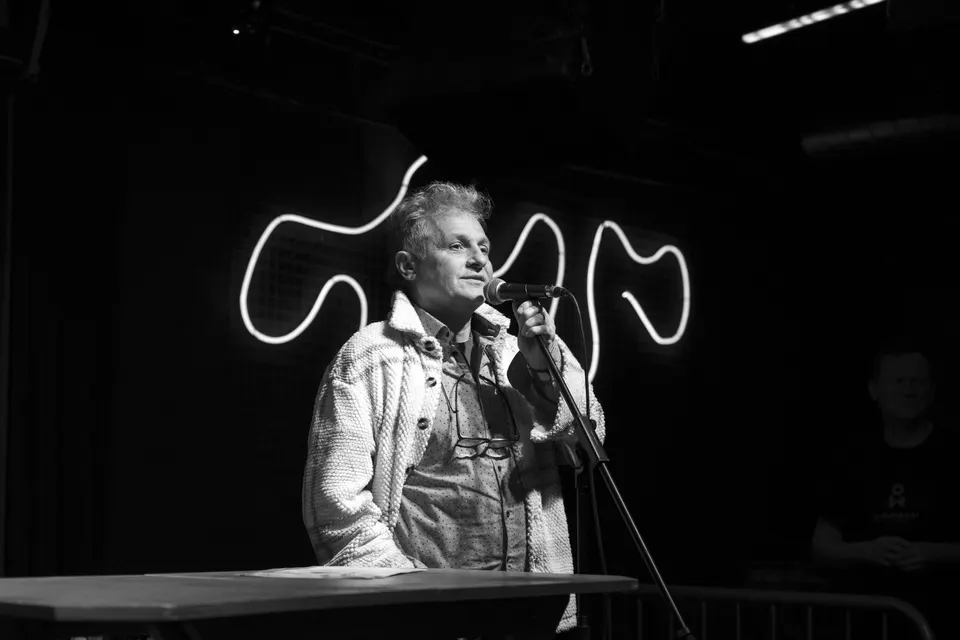
The jury's picks were revealed at a ceremony in the Sofia City Library. The anthology of selected entries from the competition, published by Scribens, was presented there as well. In a moment you can read the poems of the best and judge for yourself how good they are.
The competition drew 248 works by 115 authors. They had complete freedom in how to use the modern technology—whether to trust it entirely or to cast it as co-author, adviser or editor. Well-known poets took part, along with tech leaders and public figures. Many colorful people dared to try and to show whether today we can use algorithms not to replace humans but to help them. Whether they can turn a non-poet into a poet, and let a poet take flight toward new horizons.
The jury included popular poets from different generations—Boyko Lambovski, Petar Chuhov, Violeta Kuneva and Georgi Gavrilov—and the creator of Digital Stories, Georgi Karamanev.
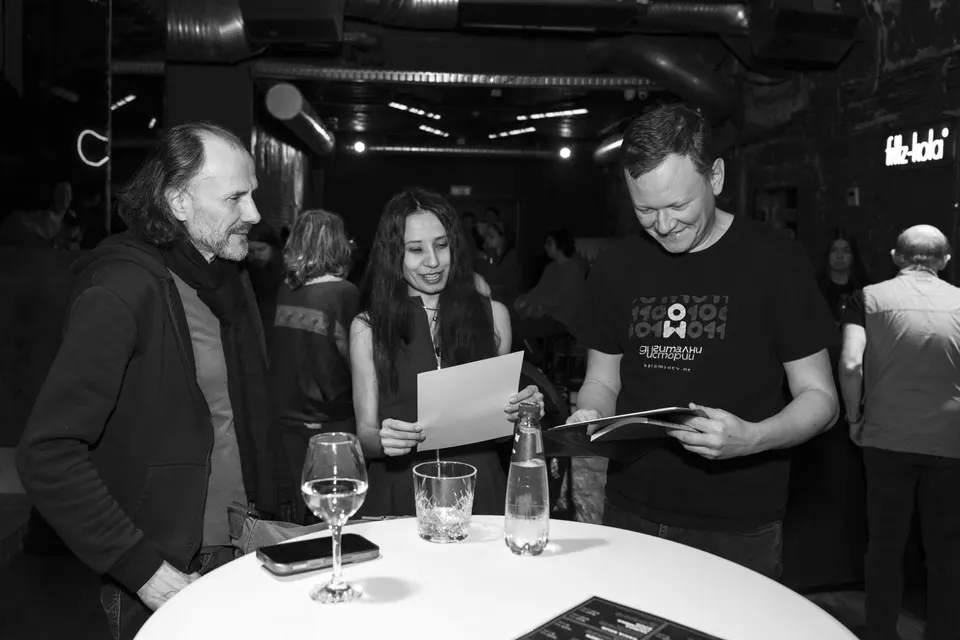
Erato AI
The grand winner chosen by the jury is Kristina Apostolova! She received the prize of 200 leva (about $115) and the honors of winning the first poetry competition of its kind in Bulgaria. The runners-up, Tsvetelina Manova and Ivelina Andonova, earned gifts—books from Scribens and Digital Stories.
The poems of the top 10, along with those of 17 more participants, are included in the long-awaited anthology of the winners. It was also presented at the award ceremony (you can browse and order it here).
Did it work? You can judge for yourself. In a moment you'll read one poem by each of the three winners. (If you're in a hurry, they're waiting for you here.) The other honorees you'll find in the anthology, which bears the competition's name—Apollo ex Machina.
And to make the balance complete…, we also “appointed” a separate, electronic “jury.” We invited three of the most current AI models to draw up their own ranking, which, surprisingly or not,… turned out to be connected to the poets' ranking.
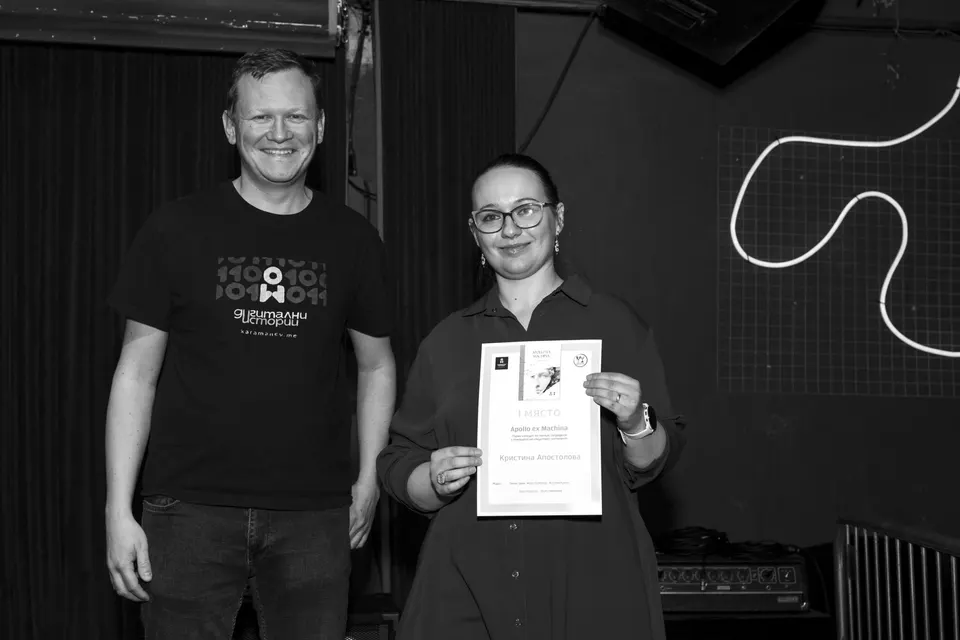
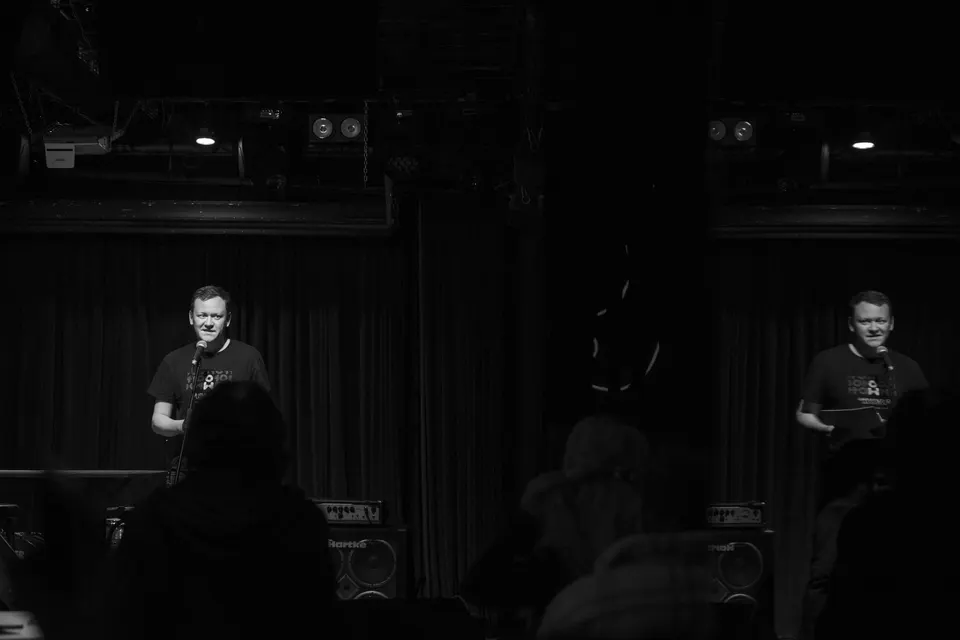
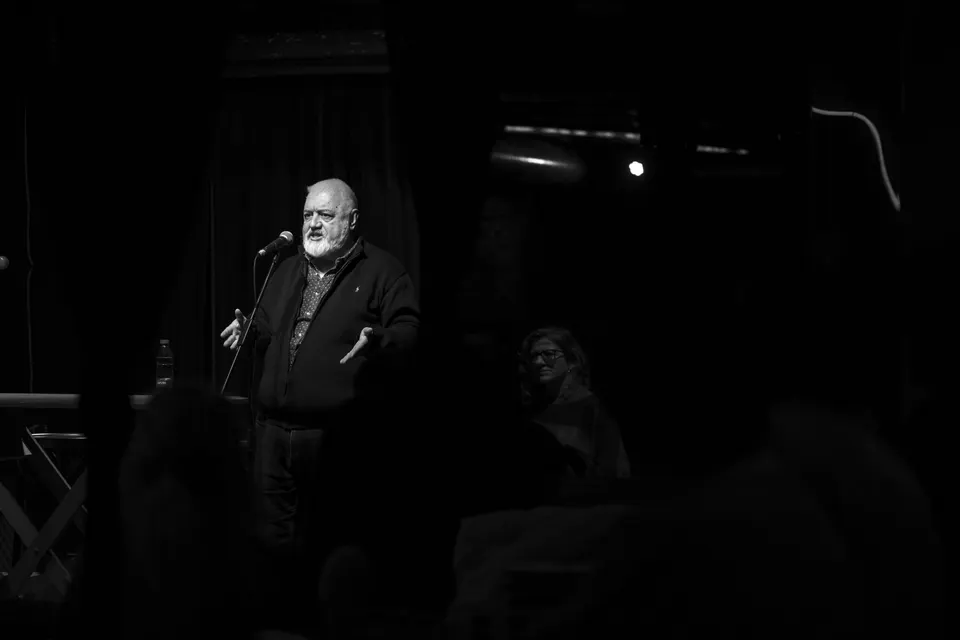
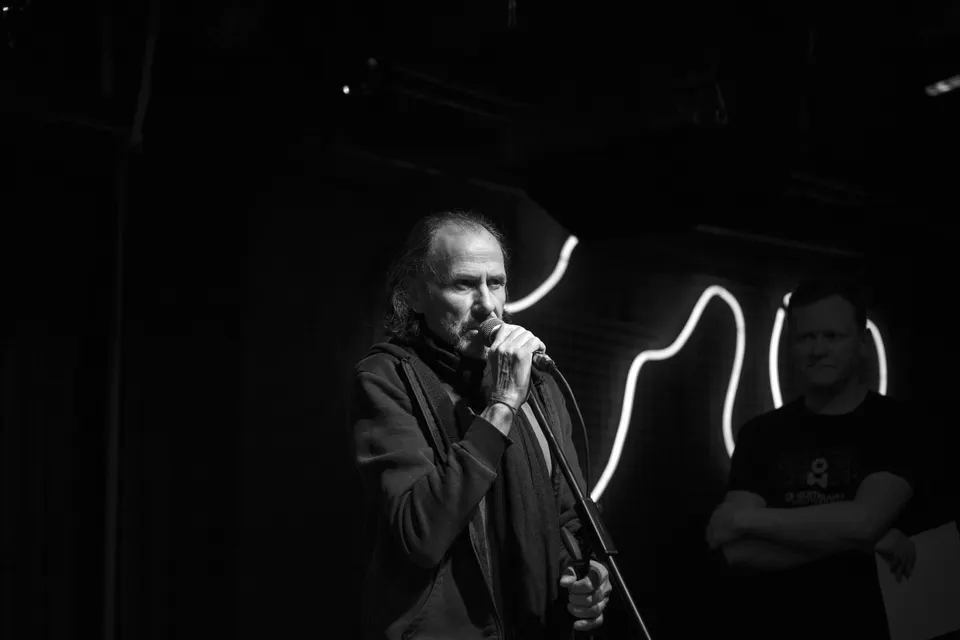
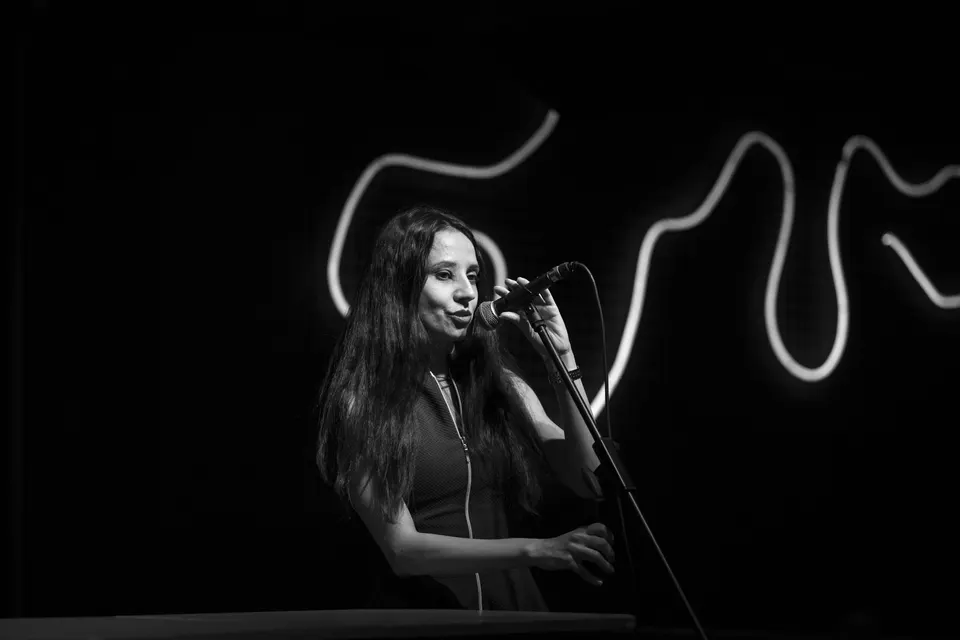
Photos: Dobrin Kashavelov
Braveheart
My heartfelt thanks to each of the 115 participants! With their words they are taking the next step in the important conversation about our future. The one that never seems to happen outside the pages of Digital Stories.
Besides the three winners, the anthology includes those ranked from 4th to 10th place:
Andzhela Genova, Ralitsa Arnaudova, Yana Kopcheva, Emilia Bobeva, Iren Petrova, Ivan Dimitrov and Andrey Tenov.
From the colorful palette of participants, we also chose to include in the collection the poems sent by:
Katsi Vaptsarov, Svetoslav Dragiev, Nikolay Tellalov, Krasimir Kostadinov, Nikolay Kostov, Rozalia Ignatova, Viliana Staneva, Atanas Atanasov, Lora Braneva, Ivandzhelin Marinova, Zhivka Petrova, Kaliakra Lazarova, Sesil Kostadinova, Stoyan Zapryanov, Ivan Kirmin, Bozhidar Pangelov, Elko Chernev, Maria Chulova, Tanya Marinova, Yulia Kamenova, Tihomir Garmenliev, Milva Yaneva, Boyan Sheytanov, Lyudmila Koroteeva, Vesela Boyadzhieva, Rositsa Georgieva and Neda Atanasova.
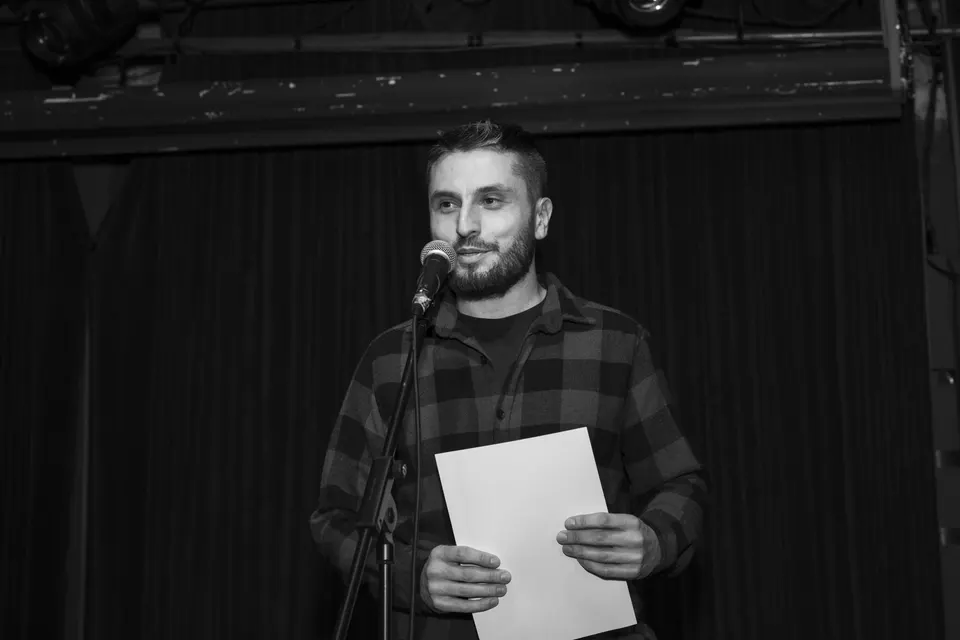
Nothing Beats the First
And so, here are the winners' poems. One work by each follows; the rest, together with those of the runners-up, you'll find in the anthology.
The participants were invited to tell us which AI model they used and to share the prompt with which the poems were written. To show or tell us how they were created. We are publishing these instructions (or prompts) too, so we can look at how human and machine interacted in the act of creation.
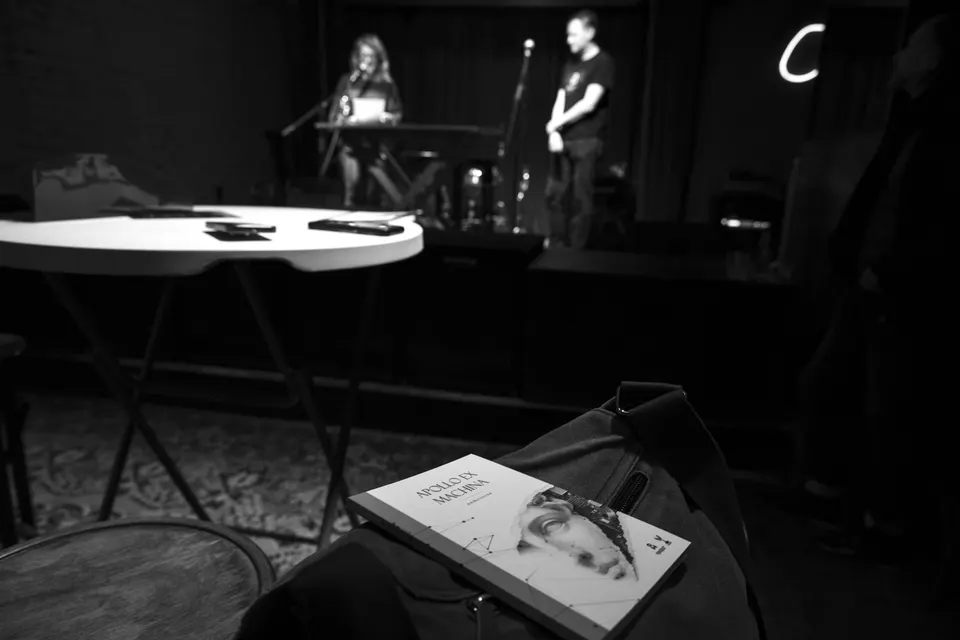
First Place: Kristina Apostolova
“A Silence the Size of a Mushroom”
Almost home,
and under my heels the earth
still curls up
like an animal.
The night is a skin
into which I exhale the names of the dead
without giving them back.
Everyone around seems to be asleep.
Only a violin breathes
beneath the tongue of the wind.
It doesn't play for me,
but inside my ribs
the sound creeps in
and breaks the silence in two.
Then, at three in the morning,
the night beneath my window
is deaf,
worn thin from listening.
Sometimes,
as I listen to my children breathing,
absurd fears seize me—
that somewhere beyond the hills
someone is piling darkness into sacks—
like flour,
like gunpowder.
The world learned long ago
how war is kneaded.
My footprints gather dust,
the finest news of ruin.
Not far from our bedroom there are cities
where the wind carries names
and skin.
I hope it doesn't all end like this one day:
the silence bursting
like a giant mushroom
above our heads.
I hope, some distant day,
when everything ends,
it ends only for me.
Prompt:
The style, tone and imagery were inspired by the work of T. S. Eliot, Federico García Lorca, the Bulgarian writers Viktor Paskov, Binyo Ivanov and Boris Hristov, Dylan Thomas, Pablo Neruda, Maya Angelou and others. The author gave specific instructions about themes, metaphors and style, and the texts generated by the model were edited and adapted to fit the artistic vision.
Second Place: Tsvetelina Manova
Oracle, Tell Me, What Shall It Be
Oracle, You Are Silent…
The servers in Delphi have gone dark: at the market
Pythia sells her plum for garbage.
Apollo, influencer of eternity,
livestreams on TikTok, with a feather
up his backside and a little Gucci bag.
Algorithms prophesy in rhyme,
the ads broadcast revelations,
from the television anxious angels
whisper through the microphones:
« System error : Apocalypse detected. »
It's the Apocalypse, but who cares,
as long as you and I race
against time: code to code, flesh
to flesh, dust to our dust.
You are God-anointed once you dip your finger
into the jam of knowledge, God-convenient
once you make love to the machine
and give birth to synthetic gods.
Oedipus gouges out his eyes
with a dying cry : « CTRL + ALT + DEL ! »,
but you, Oracle, are silent…
For it is sacrilege
to be the Crown of creation
when your Creator is software.
Prompt:
ChatGPT, I want us to play le Cadavre exquis, like the surrealist poets. You won't write alone, and you won't let me write alone either. I want us to write 3 poems together in Bulgarian, with a modern structure and rhythm, but with slightly provocative content, a mystical-esoteric sound and references to the Bible and ancient Greek mythology. Our poems will be inspired by the following phrase : « I sentence you to the most terrible punishment: to be given all the answers. But not to remember what the Question is. »
Third Place: Ivelina Andonova
Archaeology of Sleep
In my sleep I dig.
With my hands. Without a lamp.
From under the earth I pull out things:
a stone, a feather, a broken mirror.
Each of them whispers to me
in a forgotten language.
At last I find myself—
small, made of clay.
I put the figurine in my pocket,
and wake up.
All day I carry its weight.
It reminds me
that the past is not dug up—
it is grown
Prompt:
It's not just one prompt.
Parting Words
I often hear the opinion that AI has no place in art and poetry. But at a time when two professional juries not only fail to tell generated poems apart but actually give them awards, we can't carry on with bans, restrictions and prejudices. Yes, the future is already here.
It's high time we talked about it together!
What's more, I believe—especially after reading the poems in the competition—that technology can be a helper that returns poetry and art to the pedestal they deserve. That raises the bar instead of lowering it. That makes us capable of things we never even dreamed of. That helps revive our reverence for human creativity and the inner need to create.
For that to happen, though, we need the courage to start the conversation. My heartfelt thanks to each of the 115 participants, because with their words they take one more step toward it.
Let's take the next one together.
You'll find the anthology here.
What did you think of the poems from Apollo ex Machina? Do human and algorithm create good poetry together?
Write to me at [email protected].
The conversation continues!
Photos: Dobrin Kashavelov