Amid the trending news of the day—the elections, Big Brother and the sudden invasion of autumn—the public agenda somehow made room for the report that an unexpected contender had made the jury's shortlist in the prestigious Veselin Hanchev youth poetry competition: 21-year-old Hristian Papazov, from the village of Nozharevo in the Silistra region, had submitted poems generated by artificial intelligence. Hristian withdrew, writing that his only goal had been to draw attention to the issue.
I don't know whether you believe in coincidences; I don't. On October 25, a day before the news broke, the jury of another popular poetry competition announced its ten finalists—the Stanka Pencheva competition. And once again the selection included… generated poems. This time as part of a Digital Stories experiment.
So how, in just two days, did two “authors” with AI-written poems end up among the best, the ones from whom the winners will be chosen? And, more importantly: what are the big questions and conclusions here? Whether or not we believe in coincidences, it is clearly time to talk more sensibly and more deeply about the big questions of our day.
The Day of the Buditels, Bulgaria's November 1 holiday honoring the enlighteners of the National Revival, is, I think, exactly the right day to wake up…
The themed series from Digital Stories:
- The Bulgarian Literary Banksy
- “Poetry remains a secret treasure.” ‘Hristian Papazov’ in his first interview
- “A machine cannot be a poet”—LIK magazine in… 1967
- “Artificial intelligence will never write better than Boris Hristov”—Veselin Veselinov, winner of the Stanka Pencheva competition
- “Poetry of a New Generation: Real and Digital Writers”—The Library, on BNT1, Bulgarian National Television's first channel
“Chukchi Not Reader, Chukchi Writer”
Or at least to think about how we might wake up in so many directions. Above all, to my mind, where technology is concerned. To talk about where it has brought us, where we are heading and how to turn it into the means that carries us forward.
Today is exactly the moment to talk about how we got to the point where artificial intelligence ranked among the best in two Bulgarian poetry competitions in a row. About where poetry is going, and where we are going without it. Where people and creativity are going. How to remember the heart of art. Where to look for the arts of the future. And how to win back the meaning and the weight of the word… now that what is written can no longer be told apart from what is generated.
“They may deceive me a hundred more times.
So be it.
I want just one thing: that because of the hundred lies
I never once fail to believe
the eyes that truly
were sincere.”
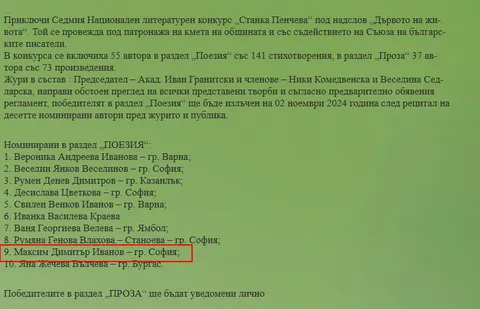
The lines are Stanka Pencheva's. Tomorrow, November 2, in the municipality of Straldzha, after a festive recital by the nominees, the winners of the 7th national literary competition bearing the poet's name will be announced. The prose nominees will be there, and so, I hope, will 9 of the 10 poets selected from the 55 who entered.
The tenth won't be there. Maksim Dimitar Ivanov.
I confess I don't have much time for exercises; this site you're looking at is a pursuit of meaning. Some time ago ChatGPT came up with his name, so we could see whether a generated CV would land him a job. He came close to success, but chose a different calling. From the software world he turned to classical art: poetry.
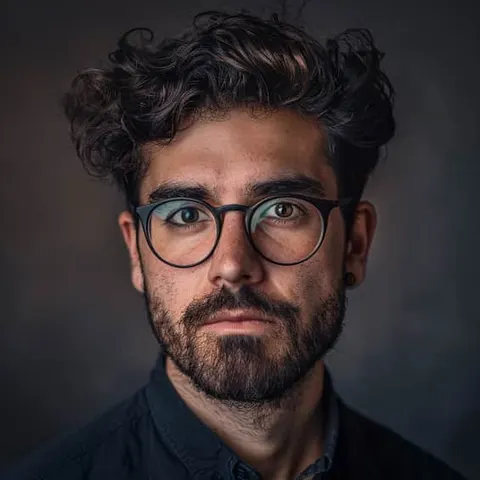
Like Pishurka, Vazov's Small-Town Versifier
Quite an unconventional career path, wouldn't you say? So in mid-October I decided to run yet another experiment on how far artificial intelligence has come. I sent poems and short stories, quickly generated by ChatGPT, to the first five literary competitions I came across, under the name and email of Maksim Ivanov. Every submission was generated by the algorithm; my interventions were purely technical—choosing and sending.
And just a few days later, while I was reading, impressed, about Hristian Papazov's success, Max's inbox received the happy news that he had made the list of 10 chosen by the renowned jury of the Stanka Pencheva competition.
Good news, bad news or just news? Certainly food for thought (and a reason for Max to buy a round… though I doubt he will. Not least because I robbed him of the chance to win).
You can read the poems that took Max to the finals here.
I immediately emailed the organizers, explaining the situation. My aim is neither to deceive anyone nor to keep other authors off the prestigious list. Just like Hristian, I have spent four years trying to test things. And to draw attention to issues we clearly underestimate.
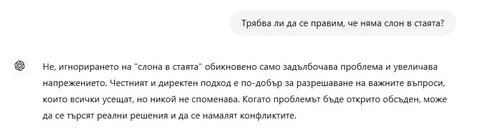
The Writing of a Nation
As of today, four days later, I have no reply from the organizers, but I would be truly glad if they and the jury joined this important conversation. I take this opportunity to invite them for a dedicated interview; they will always find a platform at Digital Stories.
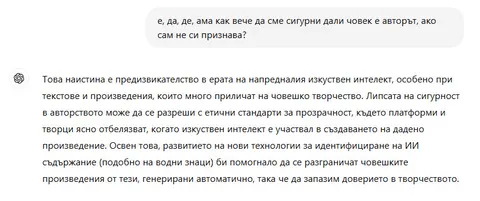
I also want to apologize sincerely to the competition's jury—Academician Ivan Granitski, Niki Komedvenska and Veselina Sedlarska—and to the organizers. I couldn't enter under my own name, because it is too rare and recognizable. And I wouldn't have misled them if… there were any guarantee that someone else wasn't doing it. Since it turns out this way, how can we be sure from now on of the authorship of any text that comes next?
This is one of the few big questions to which I have a clear answer. We can't. If the jury of a second prestigious competition doesn't just admit but actually selects generated poems… then the algorithms aren't merely writing LIKE us. They have started, evidently, to do it BETTER than most of us. Indistinguishably.
Alas, where texts are concerned, not even technology itself can help us anymore. While algorithms can still detect AI's hand in images, for texts that battle is already lost.
The more important battles lie ahead. The battles for the human being and what is human, for truth and freedom. For creativity and the soul in the age of algorithms.
Gavrila Became a Baker
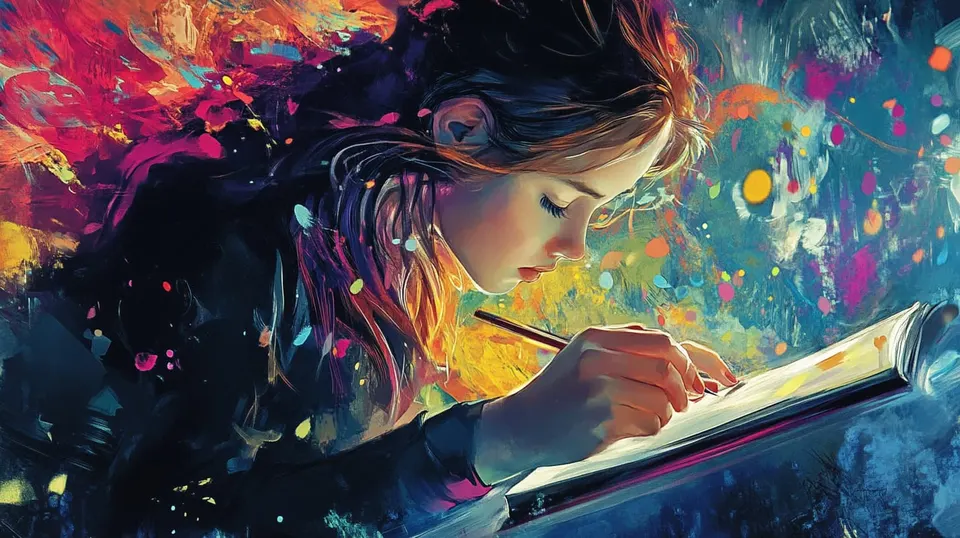
But let me not overdo the drama. You may remember the poet Trubetskoy from The Twelve Chairs, Ilf and Petrov's Soviet satire. He had a hero, Gavrila, whom he hawked around the editorial offices of Soviet publications, casting him in all sorts of roles, such as:
“Gavrila carried letters round.
Gavrila then became a postman.”
or
“Gavrila then became a salesman,
Gavrila sold the people flutes…”
Well, so it is with “my” Maksim Dimitar Ivanov. Is the problem the way competitions are organized, the juries, a shortage of good enough entrants?
In my view, absolutely not!
Because the elephant is in the room, however much we tiptoe around it. And if it is happening with poems now, tomorrow it will be possible with short stories, then with novels (alas, it won't be Max who earns the glory; we'll be more suspicious of him by then).
And does it even matter who the author is, or whether they used artificial intelligence? Does it change anything?
How Much Sorrow There Is in This World, Lord!
That is exactly what I am trying to explore with “my” Max-Gavrila, and with all the Digital Stories experiments. The writer Evgeni Cherepov was the first to aptly call some of them “pranks.” But they are not only that, although provocation is still needed.
You may remember that I created an entirely generated social media profile: Beautiful Eco Elena reached 85,000 people, without a single one suspecting that something was off. Then 1,800 visitors joined the next revealing experiment, trying to tell whether short texts and images of all kinds had been created or generated. The results… showed unequivocally that we can no longer do it. When it comes to recognizing what was made by an algorithm and what by a human, we are close to pure guesswork.
Or maybe the bar has dropped? Maybe most of us can't tell generated poetry from poetry written by a human because we don't spend the necessary hours with Baudelaire and Goethe?
Apparently that isn't it either.
If an authoritative jury of leading Bulgarian specialists had unknowingly picked generated poems among the best, that could be a coincidence, luck, an exception. At 2 out of 2 attempts, however… things are heading somewhere else.
And what are we humans to do? 750 people took part in the survey on Bulgarians' attitudes toward artificial intelligence. Opinions were remarkably scattered across the statements, but three stood out, with one extreme clearly dominating. That we are far from the limits of this kind of technology. That sweeping social and economic changes are on the way. And that we don't talk about the subject deeply, professionally or beyond the clichés enough.
No, Now Is Not the Time for Poetry
Here is a bit more about the competitions themselves. This year's edition of the Veselin Hanchev youth competition (limited to authors up to 25) drew 84 entrants. In the Stanka Pencheva competition (with no age limit, under the motto “The Tree of Life”), there were 55 participants.
(At least) two of the authors submitted generated poems. And their success rate in reaching the top 10 was 100 percent; for ethical reasons, we can only guess what place they would have taken in the final ranking. In doing so, between them they outpaced 109 other authors who entered.
Still no elephant in the room?
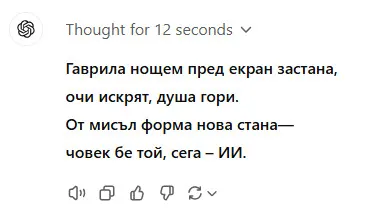
Max's poems were “born” in 10 minutes (you can read them here). That was all the time it took me to give ChatGPT the competition brief and “ask” it to write 10 poems. I didn't touch a single letter; I skimmed them, picked 3 of the 10 and sent them off.
It is worth talking, of course, about the generated poems themselves—do they have literary merit, and what does that even mean? Where are the critics, and what will they do from now on? This conversation will certainly continue with future guests of Digital Stories who will assess them.
Competitions, however, are the only impartial form where we don't have to go through the “if.”
Yes, all of us, consciously or not, are dismissive when we know a work was not created by a human. But what if we don't know?
“Columbus, remain
until the final moment of your life.”
The line is Veselin Hanchev's. The organizers of the competition that bears his name have promised to hold a discussion and, starting next year, to require every participant to declare that they have not used artificial intelligence.
Well… I'll ask Max to enter again, if he isn't cross with me over the missed opportunities. I just need to figure out which of us should sign. And declare that the text is original, not stolen… But who is stealing from whom, if the algorithm is trained on poems found online?
And what if we put more effort into the brief, the prompt? What if we created far more valuable poems—but by working together?
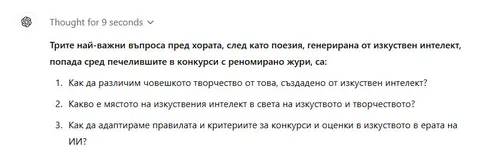
I can think of sooo many more questions. For example: what does this tell us about poetry? About art? About the human being? About creativity? About ideas? About meaning?
About tomorrow?
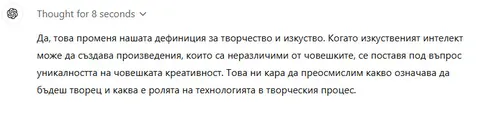
Here I agree only partly, colleague. We do need to rethink it, but it's too early to include you in that process.
Once again I take the opportunity to congratulate Hristian Papazov, who opened up the big question, whether or not that is really his name. I would be sincerely glad to give him the floor—I think Digital Stories is a fitting place for it—and an invitation has been sitting in his inbox for a few days. Even if his name is something else (the mayor of Nozharevo believes no one by that name lives in the village), I'm sure he has more to say in this conversation.
I also want to congratulate the winners of both competitions. Devoting yourself to poetry today is hard. And important.
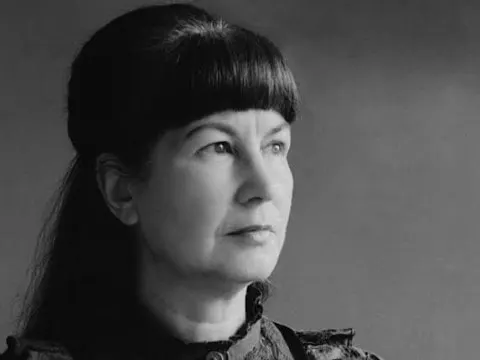
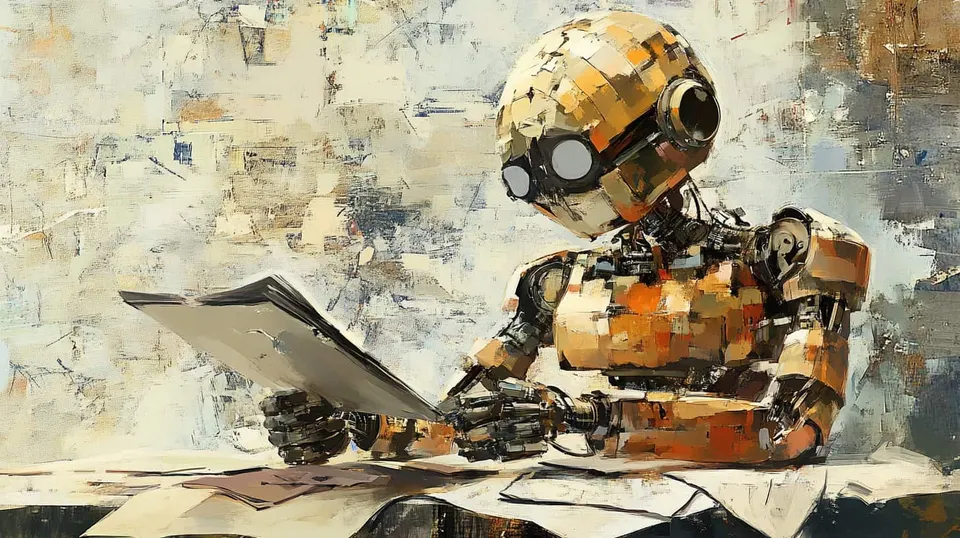
Robot Pavlovich Chekhov
“I can command my mouth—
and it falls silent, or only smiles.
Words lie inside me like prisoners,
the heavy door is pinned shut with a stone.”
These lines, too, are Stanka Pencheva's.
And since algorithms can generate poems this well… once they move on to longer texts, will we stop writing?
That answer seems to be personal, individual; I, at least, have mine. For me, writing is meaning and a way of seeing. A personal experience and a way of making sense of things. In which artificial intelligence can and should be only an assistant and an invaluable tool.
As long as we hold the important conversations in time, before we have made the important decisions. That, by the way, is why this site exists.
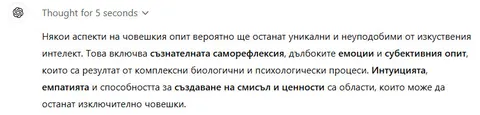
Let's talk more, let's step outside the clichés, let's experiment! What do you say? (If you have ideas on how to make that happen, I'd be glad if you shared them with me here.)
Let me close with an invitation. Another important Digital Stories experiment, this one about the past, is still under way. You can challenge yourself here too; more than 2,000 people have already done so! How well do we know Bulgarian history? And why does it matter? Thank you!