Digital Minimalism: How to Break Free from Information Addiction
Imperceptibly, gradually and seemingly irreversibly, we have become dependent on technology. Or more precisely, on the information it floods us with, much of which we don't need and which is toxic and draining. The system known as “digital minimalism” offers a way to rein in this creeping dependence. But is it the universal solution?
 02
“The Digital Can Wait. Childhood Can’t”
How do we lead children who are already too absorbed by the internet back out of it? That is the great cause of Alexandrina Georgieva, a programmer with serious experience who now heads the Offline Kids foundation, which helps parents find the balance. A fascinating personal story and countless valuable tips for every digital parent who believes children should, from time to time, find themselves offline.
 03
Slipping Out of the Net
The internet keeps connecting us, and the internet keeps dividing us. But how many parts of our lives have we handed over to technology? This Christmas Digital Story follows a woman who found love online, built a family in England, and then decided to escape a society where everything happens on a screen.
 04
Going “Out of Range”
When did you last spend an entire day away from social media? Switch off your phones—we’re going “Out of Range.” Out of range not only of mobile internet but of technology as a whole, which has taken over so much of our lives. To look for where the human being has been hiding behind it all. That is the title of Evgeni Cherepov’s new novel, which makes us think precisely about the need for digital hygiene. About slow conversation, about deep stories and themes that cannot be told in TikTok format. Today’s guest has worked as a security guard and studied civil engineering before finding his calling as a teacher of Bulgarian language and literature. After long wanderings, he has returned to teach in his hometown of Stara Zagora. When does technology become too much for us, and why is it important to think about it? How do we learn to tear ourselves away from the feed and find a balance? “People have always needed pauses… Just like that, to stop for a moment, to take a step off the highway of their supposedly purposeful lives.”
 05
What's the Rush?
“Our hectic daily lives” is a cliché we repeat every day. Perhaps because it is unconditionally true. There is never enough time; they've started making the days far too short. The minutes slip away, leaving no time for quiet moments with family and friends, for a book, simply for reflection or complete relaxation… How could it be otherwise? Today, in a single day, we can take in more information than people only a few generations ago absorbed in months, even in a lifetime. Where does this constant feeling come from? Are the generations different, is there more work? Or is there simply something that keeps us under pressure? Something that keeps scaring us that we're missing the moment, even when there is no reason at all…
 06
Tristan Harris: The Knight of Honest Technology
“The closest thing Silicon Valley has to a conscience”—that is how Tristan Harris is known. His name made headlines with the notorious film The Social Dilemma, which drew plenty of attention but never led to much real change. His work embodies everything that is “broken” in today’s online life: the manipulative practices that have become a threat to our future as a species. Tristan Harris is not only the most recognizable champion of a free and democratic internet. Not only a thorough researcher who draws attention to the ways we are manipulated. He is also the man who warned a decade ago that the path technology was taking would lead us into a world of mammoth companies more powerful than the largest states. Into a time when we can no longer hold our attention while reading. Into filter bubbles that grotesquely distort the way we get our information. Does he think we can reverse these trends? Can the internet become a free place without monopolies, where information is delivered democratically, with respect for the personal data and views of every user… What are his ideas for the future of the web?
 07
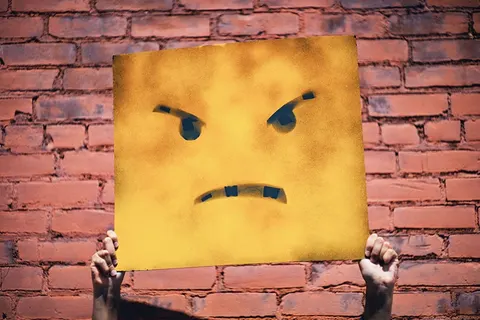
Where Did All the Hate Come From? Is There a Way Out?
I've read the headline, and I already hold an extreme opinion. Time for a nasty comment—let the hating begin! But where did all this aggression come from, why must we answer rudely even when we merely disagree with the person behind the other profile, and is there any way to save ourselves from the exhausting hate of online conversation?
 08
Alone Among Facebook Friends
We surround ourselves with “friends” on more and more social networks. And, all too often, we stay alone. When does the supposedly so social online world make us feel lonely? Are we really raising generations that will lose normal human contact? When does loneliness become a problem?
 09
“I Want to Tell Today’s Mothers to Ease Up”
“Nobody teaches you how to be a parent anymore; you don’t absorb experience from those around you. Life is insanely stressful. We get up at 6 and go to bed at midnight, we’re forever running, everyone has classes and practice, there’s homework to do, Excel spreadsheets for work, the dog needs walking, you spend 40 minutes parking the car because there are no spaces, you’re supposed to stay calm but also get everything done, and cook, and have time for yourself, and do things together with the kids—so how do you survive when we’ve never lived this way before? Parenting isn’t taught in shop class, and everyone finds their own way. Sometimes it feels like you’re literally surviving on the edge.” How has technology changed the job of parents? Why has motherhood become such a big topic online? How do we turn the internet into a real helper for dads and moms? When and why does the creator of Maiko Mila say to herself… “Maiko mila!”? Krasimira Hadzhiivanova is a journalist, blogger, and founder of the parenting platform Maiko Mila and the Ole Male foundation. She is the editor and a contributor of the three-volume book series Da otseleesh kato roditel (Surviving as a Parent). She also takes part in large stand-up projects as one of the Three Women at the Mic.
 10
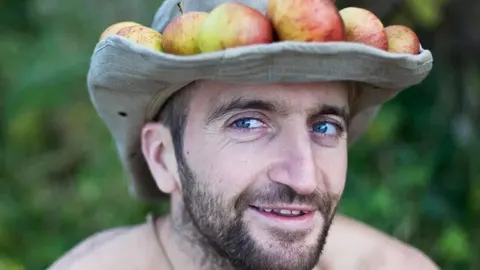
Fifteen Years Without Money: Is Mark Boyle Happy?
Just imagine living a whole week without money. None at all—no cards, no banknotes! Now picture a month, a year. Today's hero has managed it for 15 whole summers, and seven years ago he gave up modern technology too; he says he has never been happier. Could you imagine tomorrow without money and without technology? What else does Mark Boyle have to tell us?