Digital loneliness…
Everyone stands alone at the heart of the earth,
pierced by a single ray of sunlight.
And suddenly… gets a like.
Perhaps that is how Salvatore Quasimodo’s timeless lines sound more relevant today. In the original, “suddenly it’s evening,” but we have gathered here to discuss whether social networks really saved us from loneliness once and for all. Or whether they surrounded us with people we call friends, let us see instantly when a friend has had a baby and “like” it. While at the same time we “like” an influencer’s sexy photo and a hater’s comment against “those people who ruined the country”…
We surround ourselves with “friends” on more and more social networks. And, all too often, we stay alone.
When does the supposedly so social online world make us feel lonely? Are we really raising generations that will lose normal human contact? When does loneliness become a problem?
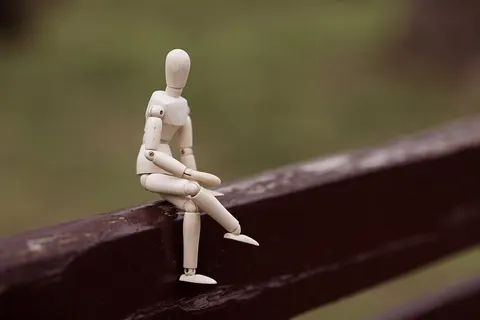
Even a Warrior Alone Is Alone
You may remember early Facebook, so absurdly innocent and full of pointless nonsense (and games like FarmVille). You’d fill out a quiz and compare how your second-grade deskmate, whom you hadn’t seen since, would have answered it… Yes, back then we mostly added people we knew offline; the first social network built on everyday contact and let us communicate quickly… It was so convenient to connect with our friends that the very idea of looking for new ones seemed strange. We didn’t even accept requests from people we didn’t know.
Today we have thousands of “friends,” most of whom we have never met in person, yet we know the color of their underwear, what they had for breakfast and where, and what their motivational quote of the day is. Facebook still calls them friends; for Instagram and TikTok they are “followers,” for LinkedIn “connections.” The idea, either way, is the same. You connect with lots of people, you talk, and you grow closer in some sense. Isn’t that what social networks are?
In practice, of course, nothing of the sort happens. Social networks today are far from social, and we all know it. They are much more networks. They strive to catch us for as long as possible, and that is where their profit comes from: our attention. They are something entirely different and entirely new, with all its pluses and minuses. A way to get informed or to pick fights. To show off or to have a crude laugh at someone’s expense with a well-chosen meme.
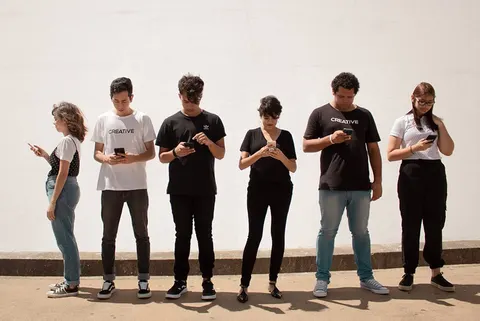
Facebook and the Void
Their history is already quite long and still unpredictable; we all walk along it, but we have no time to stop and make sense of it. In a way, social networks pulled off the masks of the Internet 1.0 era. First there were forums; then, on early Facebook, people showed up with their real names and the photos from their child’s christening. In the first years, surrounded by their truly close friends; then, imperceptibly, things began to change.
Social networks multiplied and perfected the art of grabbing our attention. They soon realized that their strength did not lie simply in bringing friends together and helping them talk; that would quickly get boring. They turned into content factories. It would be more accurate to call it “retention content”: something that intrigues, draws the eye, provokes, that makes you scroll on and on.
We were swallowed by filter bubbles, supposedly created to make our lives easier. Celebrities arrived, also supposedly so close to us. And then came the pandemic. For two years now, countless people whose jobs allow it have been working from home. Now, besides Facebook “friends,” we also have Slack “colleagues.”
And where along the way did our real friends go? Every person needs contact and support. Kindred spirits, people to share a meaningful beer with, to have an honest conversation with. Does the network today alienate us, or bring us together as it promises?
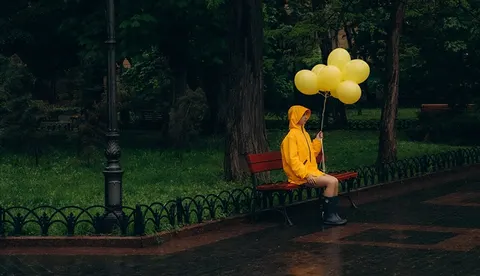
Alone Among Strangers
It turns out society believes the former is happening. In 2019, The New York Times reported that 86 percent of Americans and Britons believe technological progress is increasing social isolation.
Perhaps the emotional examples so far have led you to think that the rest of these lines will tell you more about how dangerous social networks are, how loneliness has become a pandemic more dangerous than the one that locked us in our homes. But the world is far from black and white. Social networks really cannot be our friends, but they can often be a useful tool. When we don’t expect miracles from them and look at them pragmatically, thoughtfully. When we know the risks.
Loneliness is one of humanity’s great problems, especially since the technological world came along. Being “alone” and being “lonely” are related words, yet utterly at odds in meaning. In fact, as one of the many scientific studies on the subject, by the psychologist Edward Brennan, aptly puts it, the feeling of loneliness is like hunger. When they are not chronic, both remind the brain that it is time to act and change something to make up for the shortage. In one case with food, in the other with human contact.
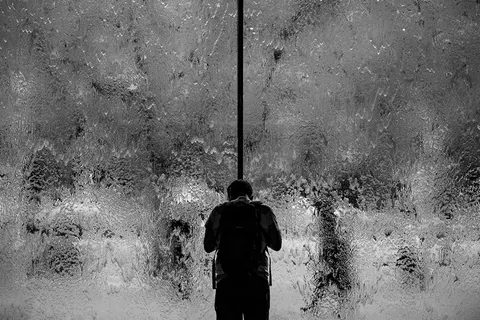
The Plain Truth
When loneliness becomes chronic, however, it wears us down. And not only in spirit; it wears down our bodies too. It has been proven to weaken the immune system. A 2015 meta-analysis of the health data of 3 million people, for example, shows that loneliness raises the risk of early death by a full 26 percent.
It is a fact that today’s developed societies, on the whole, offer far more preconditions for people to suffer from chronic loneliness. We no longer have to live in huge shared spaces. Very often a person ends up far from home, in places where they know no one. Chasing a career and countless introverted pastimes often leave us with no time to spend with those close to us.
According to Eurostat, between 2010 and 2019 the share of adults living alone increased by 18.7 percent.
And then, of course, comes the internet as a factor, and social networks in particular.
I Have Only Myself to Blame
If we dig deeper, we can find scientific data showing a radically different effect of all this. Of course, the dominant view is that online communication today deepens the problem more and more. But there is the other side too: according to some specialists, online contact allows shyer people, and those who don’t meet suitable friends in their everyday circle, to find new ones.
That surely happens too, and it is also a fact that in recent years the number of people who find their life partner online has grown substantially.
A 2016 University of Michigan study shows that communication methods including email, Facebook, and Skype lower levels of loneliness and depressive symptoms. No wonder: in their early years, well-working video calling services were certainly a priceless chance to talk much more easily with relatives on the other side of the world. For grandmothers in the Rhodope Mountains to see their grandchildren in the United States for the first time.
Uncle Sam Alone
And yet the opposite happens far more often. With 1,000 more friends on Facebook, you don’t feel less lonely; quite the reverse.
According to a 2019 survey of 20,000 Americans sponsored by the health insurer Cigna, loneliness has now reached epidemic levels. 46 percent of people say they feel lonely often or always. Just a year earlier, the figure was 37 percent.
There is still little data from the time since the pandemic began, but there is no reason to think it could improve anything in this respect. In Australia, where anti-virus measures were especially strict, the share of people who feel lonelier since COVID began exceeds 50 percent, although that is psychologists’ estimate, without serious statistical data behind it.
My Friend the Elephant
A curious detail: in 2017, the United Kingdom became the first of the more developed countries to appoint a dedicated minister to fight loneliness. Yes, this was mainly about measures to help older people, who often spend their last decades alone and without friends.
The data released at the time were frightening. Half of Britons over 65 admit that their company most often consists of the television or a pet. More than 200,000 people had not spoken to a single person for over a month. Around 85 percent of young people with various disabilities feel lonely.
As for the way we relate to social networks: according to Global Web Index, the number of people who log in to communicate with other people fell from 42 percent to 33 percent between 2017 and 2020 alone. The rest open them to consume content.
Just One More Game
First comes the obvious reason that none of us… is our online profile. Just think of Instagram: we would certainly find it hard to recognize most influencers if we saw them in person. Online we strive to look successful, presentable, polished. We very rarely admit to difficulties and problems.
Let’s turn to the stars again. Yes, wonderful, you may feel especially happy that you have friended or followed your favorite musician, actor, or politician. You may comment under their photos often, and one of your comments might even get liked by the account, but… So what? Does that really make you a friend? Does the star in question even suspect you exist?
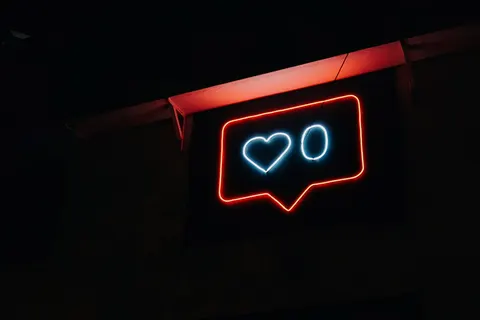
And speaking of likes, here comes their sad side. What, really, is the point of putting a little like on something? None at all. The system simply aims to hold our attention. To give us some subjective, completely made-up reward, say, for telling a funny joke or looking good in a photo. We sit and count the likes, then the photo sinks out of sight, and we have received a little of the hormonal pleasure of a meaningless reward. Then we wake up at night to check how many likes there are…
And all of that is time that would be more meaningfully turned into real contact. Time that pushes us toward loneliness, especially if we don’t get the likes we expected.
Samsara
Then comes the aggression. Again because of the filter bubble, and because of the natural course of communication online, we very quickly surround ourselves with people we are supposedly friends with simply because our opinions coincide on some issue. You can hardly be someone’s friend just because they support the same team or vote for the same party. And yet online you often start “liking” each other and, conversely, pouring out aggression at the opponent or anyone who thinks differently.
All this comes against the backdrop of the new way our brains process information. Because of the overabundance of sources fighting fiercely for our attention, we are always in a hurry. We scroll and scroll. We don’t read, we skim. If we have something to discuss with acquaintances, we are brief, terse. Always rushing and rushing, only so we can rush some more, a bit like a hamster on its wheel.
So it turns out that our friendships today are exactly what we imagine relationships between robots would be like, says Sarah Pessin, a professor of philosophy at the University of Denver. “The false intimacy of online communication destroys the possibility of real intimacy and erodes the real friendships in our lives,” she writes. “Reprogrammed by social media down to the deepest neuro-emotional levels, we are true cyborgs, shifting toward superficial, peripheral communication tied to specific, pragmatic tasks. In a world with no such thing as an inside joke, as empathy, as sharing, as personal information, deep friendship cannot exist.”
Hello, How Are You, My Friend?
As Aristotle writes, friendship based on pleasure or utility forms easily but also falls apart easily, because such bonds are fragile. At the other pole is deep friendship, when you care about someone for their own sake, without gaining anything from it. You can have only a few such friends in your life, because such relationships require time, effort, and work from both sides.
How does this relate to the digital sphere? We can easily answer that ourselves. Aristotle would not have made a particularly successful influencer.
Ever since the days of that same Aristotle, every aging generation has left the stage grumbling about how degenerate the young are, how they will ruin everything and how very bad days await humanity. Should we, too, pass sentence on the young people coming up, who will grow up in the looming metaverse? Who will communicate more and more virtually?
Generation Z, those born after 1997, have grown up entirely in the world of the internet. We often get indignant that they never take their eyes off their phones. That just as their parents played soldiers in the yard, so did they, only in front of screens.
Nice to Meet You!
It is a fact that quite a few studies from different corners of the world show these generations suffer more often from depression and loneliness. In the United States, the share of young people who meet their friends every day fell by 40 percent over the first 15 years of the century.
In Japan, people have long talked about the phenomenon of hikikomori: mostly young people who refuse to leave their homes at all. Even before COVID, there were at least half a million of them.
We may not have many reasons for optimism in this regard, but it depends on us too. On whether we manage to preserve, and show the coming generations, the beauty of offline contact and meaningful friendship. Of emotion, of face-to-face conversation.
It is a fact that online communication has many peculiarities, the main one being that it can never be complete. However far virtualization advances, the medium can never fully imitate natural human contact.
Eye to Eye
This, of course, has both pluses and minuses. You have probably had some of the most meaningful conversations of your life in a chat, too. Sometimes it is much easier to express yourself in writing, to formulate your thoughts carefully. Even to “hide” from face-to-face contact.
And yet most online communication is badly incomplete. If we turn to today’s fashion for endless online work calls… it is very depressing that so many people never turn on their cameras. Think about how different a conversation is when you have at least the talking face of the other person in front of you, with all its emotions, compared with just hearing their voice.
Yes, the first thing online communication is crippled by is precisely emotion. But even with the camera on, you cannot “read” the other person’s body language. And our communication as human beings is much, much more than just speaking words. Everything is part of it. Not least, pure physical touch. The handshake, the pat on the shoulder. The clink of glasses in a toast, if you like. Deep inside us, touch and physical contact unleash storms of emotion and biochemistry. And we must by no means forget even smell: hormones, like it or not, still influence us, at least as long as we remain fully biological beings.
Phone a Friend!
Social networks undeniably make many people around the world lonely. One of the solutions we can adopt today is the practice of digital minimalism. What would happen if we briefly stopped all those countless stimuli of likes and messages by deleting the apps from our phones? After a month we can consider which ones we really missed for some practical reason, and bring back only those. Believe me, the buzz in your pocket telling you someone else has liked your photo brings you nothing meaningful. Only anxiety and, sometimes, loneliness.
Social networks are not to blame; they are just doing their job. It is up to us to use them wisely. And not to forget the beautiful, purely human side of contact. To sometimes replace an hour of pointless scrolling on Instagram with a meeting, or at least an online call with a friend. Because, as the Bulgarian saying goes, even alone a warrior is a warrior, but alone, without friends, a person cannot be happy. And by “friends” I definitely don’t mean the term Facebook uses.
This piece was published in InGlobo magazine
Last updated: January 18, 2022