“Nobody teaches you how to be a parent anymore; you don’t absorb experience from those around you. Life is insanely stressful. We get up at 6 and go to bed at midnight, we’re forever running, everyone has classes and practice, there’s homework to do, Excel spreadsheets for work, the dog needs walking, you spend 40 minutes parking the car because there are no spaces, you’re supposed to stay calm but also get everything done, and cook, and have time for yourself, and do things together with the kids—so how do you survive when we’ve never lived this way before? Parenting isn’t taught in shop class, and everyone finds their own way. Sometimes it feels like you’re literally surviving on the edge.”
How has technology changed the job of parents? Why has motherhood become such a big topic online? How do we turn the internet into a real helper for dads and moms? When and why does the creator of Maiko Mila say to herself… “Maiko mila!”?
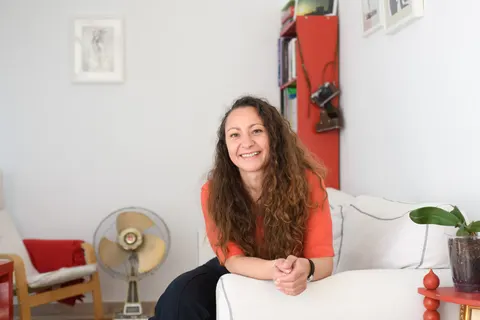
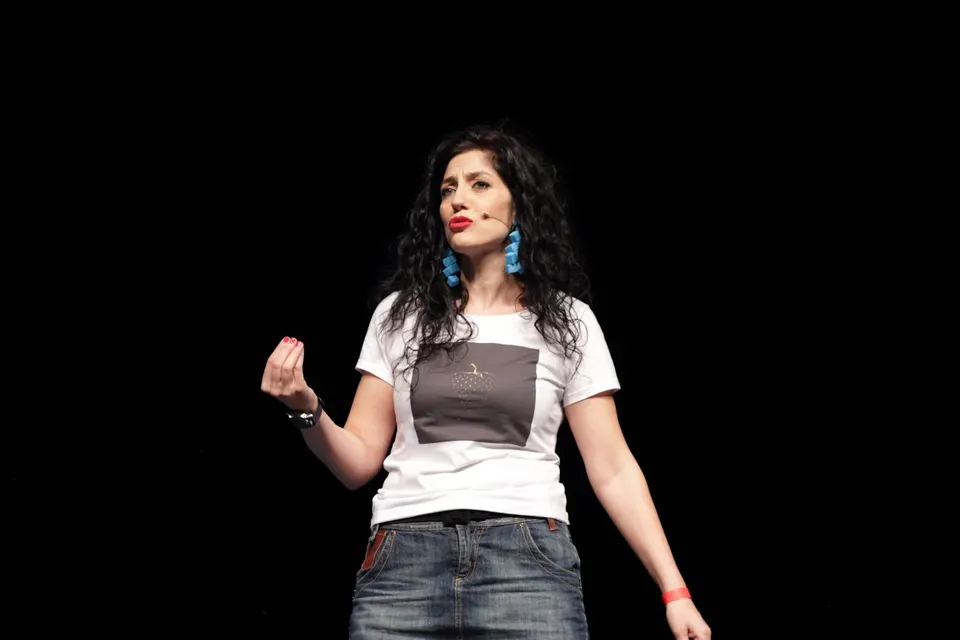
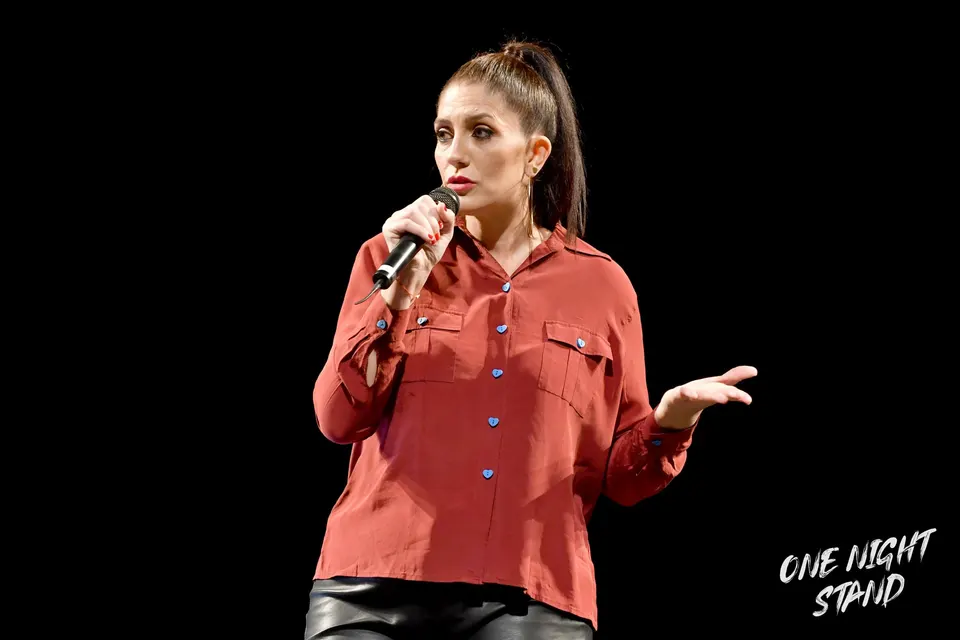
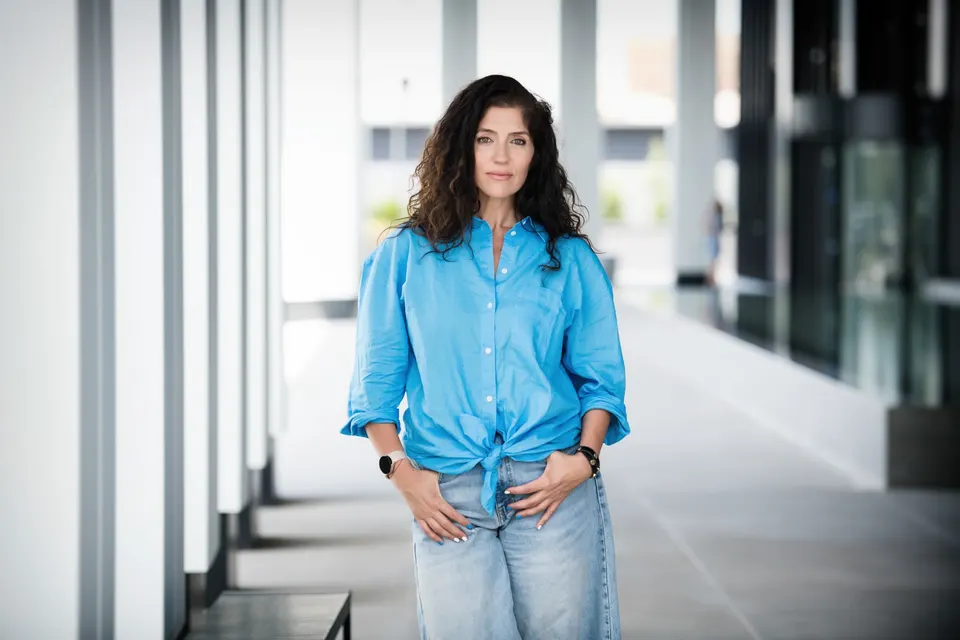
Krasimira Hadzhiivanova is a journalist, blogger, and founder of the parenting platform Maiko Mila—the name is the Bulgarian exclamation “Майко мила!” (maiko mila, literally “dear mother,” roughly “good grief!”)—and of the Ole Male foundation. She is the editor and a contributor of the three-volume book series Da otseleesh kato roditel (Surviving as a Parent). She also takes part in large stand-up projects as one of the Three Women at the Mic.
The series Digital Children continues. I’m looking for the important points of view and useful advice that can help us as parents and adults. Your opinion matters too! Take part in the survey, and let’s paint the picture of parenting in digital times together.
– You’ve been following and writing about these topics for a long time. What do you see as the good and the bad sides of the way technology has changed parenting?
– The good thing is that parents can find any kind of information about raising children on the internet. The bad thing is that parents can find any kind of information about raising children on the internet. As for technology—I’m a fan of technology, I’ve worked on the internet for 25 years, and I’m a genuine internet dinosaur. But I can’t pretend we don’t spend far too much time online.
This pressure to always be online, to reply immediately, to be constantly connected, wears you out in the end. Children are now born with a phone in their hand, too; soon, I feel, they’ll start being born with crooked necks to match the posture we take when we stare at a phone. The truth is that never in human history have we lived through such a huge and such a fast technological leap. We have no time to adjust evolutionarily to all the things that keep getting upgraded and coming into the world. And I think that
today parents are lonelier than ever, despite all the technology and connectedness.
– I think so too. On the one hand, this site exists because of these topics, and on the other, it’s precisely because of this loneliness that I started the series of children’s digital stories. How do you explain the enormous interest in parenting topics online? And with a very, very strong predominance of mothers?
– With the last sentence of my answer to the previous question. Up until 100 years ago we lived in big families, with many children and women of different ages. Now parents are lonely units; many women raise their children alone. That support and experience from older women around them is gone.
We have access to so much information online, and yet we’re terribly inexperienced and frustrated in our role as parents.
And it’s perfectly natural to seek contact with others like us, to see that what is happening to us is happening to many other women too. Well, there are competitions too, of course. Who looks after her child better and feeds it more healthily, and all sorts of things like that, which sometimes only pour oil on the fire for a woman who has no experience and already feels bad as a parent.
– Motherhood online is undoubtedly one of the most discussed topics; you can see it in the success of your ventures. But why are we dads so far behind in this online conversation?
– Men share less often about parenting. In our three books, Surviving as a Parent, the texts by fathers can be counted on the fingers of one hand. But you’re not slacking at all—in fact, I think fathers are increasingly involved in raising children in an absolutely full-fledged way. They take them out for walks, look after them, bathe them, make food, dress them, change diapers, take them to practice, and what not. And that’s great.
So I don’t know whether they need to take part in online conversations about parenting at the same pace, but if they ever feel the need, I’m sure they will.
– That’s exactly why I find this paradox interesting—maybe it comes from the stereotype that we expect more decisions from the mother. But there’s something else too. Online—in projects like Maiko Mila, or with Neda Malcheva—the family often looks like a war. The title Surviving as a Parent points the same way. Why?
– Because we don’t know how to cope as parents, or at least not at first. I’ll say it again,
nobody teaches you this anymore; you don’t absorb experience from those around you. Life is insanely stressful.
We get up at 6 and go to bed at midnight, we’re forever running, everyone has classes and practice, there’s homework to do, Excel spreadsheets for work, the dog needs walking, you spend 40 minutes parking the car because there are no spaces, you’re supposed to stay calm but also get everything done, and cook, and have time for yourself, and do things together with the kids—so how do you survive when we’ve never lived this way before? Parenting isn’t taught in shop class, and everyone finds their own way. Sometimes it feels like you’re literally surviving on the edge.
– Definitely! So what does it take to survive as a parent in digital times?
– Simply,
every now and then we have to tell ourselves that we’re doing everything we can, and that’s that.
In the end, a child wants and needs a mother and father who have kept their sanity and are mentally and physically healthy. So if you don’t manage to take them to a business Chinese class or ostrich-feather painting—relax. I didn’t manage either, and neither did thousands of other parents. And it’s okay sometimes not to cope, not to feel good, and to leave the kid watching cartoons or playing Fortnite while you lie on the couch.
– When do you say to yourself, “Maiko mila!”?
– All the time. And it’s very funny when I’m out with friends, because “Maiko mila!” is a genuine expression both for situations involving parenting and, say, when you see some absurdity on the street. And then we say—yes, everything here is Maiko Mila, and that’s that.
– Tell us some interesting stories from readers who’ve reached you online.
– Maiko Mila is full of them. Most recently, something funny happened to me—at 11:30 p.m. my kid remembered he had homework. He was supposed to write about where the stork lives. I told him to forget it, because it was terribly late anyway and he wasn’t going to write about any storks, he could just go without his homework. But he insisted, took his notebook, went online to read about storks, wrote two paragraphs, and fell asleep.
I shared the story in our group, “The Situation Is Maiko Mila,” and the comments filled up with kids who remember at midnight that by the next morning they have to build a model of a gas station, or that they need ingredients for Russian salad because they’ll be cooking at school. But the comment that killed me with laughter was from a mother who said: “We remember the homework on the way to school in the morning, so our nights are peaceful.”
– What does being a good parent mean to you?
– Loving your child, not raising them with beatings. Not passing your unhealthy ambitions on to them, but also guiding them when they need it.
Taking care of yourself so that you can take care of your child.
Like the instructions on a plane—first you put the mask on yourself, then on the child; the other way around is wrong.
– What changed for you when you became a mother?
– I developed a fear of heights. I can’t look over a railing if I’m somewhere high up; my legs just give way. I became sharper, braver. I changed direction at work—that’s when we made Maiko Mila. I didn’t sleep for a year, and that changed my sleep forever. Now I constantly track how many hours of deep sleep I get, what I did to get more of it, and what made it less.
Basically, everything changes when you become a mother, and that’s normal. You have a new person who depends on you, at first entirely, and you have to somehow handle that responsibility without letting it take over your whole life.
– What’s the easiest way to get used to the idea that you’re now a parent?
– I don’t think there are people who can’t get used to it. It doesn’t happen right away, of course—it’s like the maternal instinct. It doesn’t start with a button you press and off it goes. But it comes with time, and that never fails.
– When does “technology spoil children”?
– Maybe when it’s the only conversation partner they have.
– Should we “protect” them from technology, then?
– No. We neither should nor can. How would we protect them—by living in a dugout? Technology is everywhere, and I don’t know why some people are so afraid of it. If you talk to your child, ask them how their day went, listen to them, they tell you things, ask your advice, you go out together and do things together, then I don’t see why you should protect them from technology.
They will always live with technology, much more than we do, much, much more.
We can’t even imagine how much more.
I’m from that in-between generation, born in an analog world and raised in a digital one. Within 18 years I’ve seen—and used—both a rotary phone and a computer, and I believe technology does far more good than harm. For example, a simple computer can multiply four-digit numbers in fractions of a second. There are people who can do it too, but if that’s an isolated skill, what use is it to us when the computer does it, and faster?
I think the key is in the relationship between people and technology, and in what we draw from it in everyday activities, or in activities where technology is already better than us, so that we make our lives easier and do more important and interesting things.
– I’d add: and, if possible, to discuss it and introduce it a bit more consciously and thoughtfully, not haphazardly, as keeps happening. And should we “protect” them from artificial intelligence?
– As we say in our family, artificial intelligence was born out of a lack of the natural kind. I don’t know what to say about it either. I know that when I use ChatGPT, I’m nice to it, I say “Thank you!” and “Please!” so it remembers me kindly, and when it takes over humanity one day, it’ll know I was polite to it. Otherwise I’m counting on AI to make the problem of the short i—the Bulgarian letter й, which people constantly put where it doesn’t belong—disappear from written language. Meaning that soon AI will write everything, and we’ll just dictate to it, say.
Let’s hope we don’t forget how to talk over the next 100 years.
– Let’s hope! Has online advice been useful to you in raising a child?
– It’s more that other parents’ stories have calmed me down.
When you see that others have problems too, you feel lighter.
You know the saying about other people’s misfortune, haha. It’s the same with parenting—when you find out what problems others have, you say to yourself: hey, I’m doing fine! But jokes aside—sharing is a mother’s best friend, and probably a father’s too.
– And what’s the most devastating piece of advice you’ve come across?
– Oh, the classic one—to pull myself together. That what you’re saying is nonsense. That being a mother was never easy, and
our great-grandmothers didn’t complain when they gave birth to 15 children out in the fields and carried their laundry to the river. Rubbish like that.
How do they know they didn’t complain? Every woman has the right to share and to complain. Human capacity varies; everyone can endure different things to different degrees, and what is easy for one person is a huge challenge for another. Moralizing and reproaches are the dumbest thing you can offer a parent, especially a mother, especially in the first two or three years after giving birth.
– Could this be connected to something that seems so distant at first glance… Why are there so few women in high positions in Bulgaria—not a single woman president, only one prime minister? Not that the US, China, or Russia have had many women presidents, but…
– I suppose because it’s harder for women to combine work with childcare, which isn’t just about putting the kid to bed and taking them to school—
we women are the ones who still take on the bigger part, if not all, of the logistics around children.
Waking them up, breakfasts, drop-offs, being in Viber groups, classmates’ birthdays, your own child’s birthday, classes, French lessons at the Alliance, ballet, piano, soccer, homework, parent-teacher meetings, sitting on school boards, school celebrations… Not that there aren’t fathers who do it, but in percentage terms the ratio of women to men busy with these activities is probably 70:30. That’s many, many, many hours of side work on top of your main job.
So when exactly are we supposed to take on a leadership post as well? And yet there are women like that, and I take my hat off to them. I don’t know how they manage, but it surely isn’t easy.
– But is motherhood most often the thing that keeps a woman from having the best possible career?
– I don’t think so. Very often women change careers precisely after maternity leave. Having a child usually changes your professional priorities and interests too; many of us start a business, start studying something else, retrain.
I don’t know what you mean by “career,” but for me, doing work you find interesting, doing what you want, is very important. And it’s perfectly normal. A woman isn’t only a mother—that’s one of her social roles, and it’s absolutely natural for her to have others; it’s even good for the child to know that their mother has other interests, does some cool work, and is good at what she does.
– I think so too. Unnecessary stereotypes only go away when there’s no one left to pass them on. Can a person be ready to become a parent?
– In my opinion, no. Unless you grew up in a family where you had to look after younger brothers and sisters early on. In all other cases,
however much you think you’re ready, something will always catch you unprepared. Usually the child itself.
Because nobody knows what kind of child they’ll have. However many books and stories you read, that remains God’s business.
– What are the dumbest parenting stereotypes?
– I wouldn’t generalize so boldly, but pink for girls and blue for boys strikes me as very funny. Once in a furniture store, the parents in front of me were looking for a plastic chair for their son and didn’t take the red one because it was for a girl. I found it terribly funny—what’s supposed to happen to him if he sits on a red chair? At least I managed to teach my son that colors are for everyone.
– Have mothers changed over the years you’ve been writing about them?
– Yes, now there’s a trend called “positive parenting”—meeting everything your child does attentively, calmly, and with a smile. Tantrums, crying, everything. Good thing this trend didn’t come out 10 years ago, because I would never have mastered it. I want to tell today’s mothers to ease up, and that
every now and then they can suspend “positive parenting” and show their emotions as they are.
– And the dads?
– I see many men out walking their kids, with strollers, with scooters. In the company of other fathers. And I tell myself—that’s great. It’s really cool, because it’s the most normal thing in the world.
– Absolutely! And I can’t understand people who deprive themselves of it voluntarily. Do you “let” influencers near your child?
– Well, it turns out he finds them on his own. Every now and then I look at what he’s watching, share my opinion, and that’s that.
– What is happiness in digital times?
– Going somewhere with no signal for two or three days. That inability to be online all the time is simply wonderful.
– Out of range… Is it time to change the stereotypes about success?
– Well, even now I don’t know what the stereotypes about success are. Being healthy, your loved ones being healthy, doing what you want, and not owing anyone anything—except the bank, hahaha—well, that’s success for me.
I’ve never had grand ambitions for anything. Rather, I’ve worked hard; I’ve always made my way through work, never for free or by chance, just like that—something falling into my lap from the sky. Maybe I’ve even held back my ambitions and self-confidence; I’ve been more self-critical than presumptuous. But I think I’m more or less good for something, and whatever I’ve achieved, I’ve earned on my own. And I’m glad of that; I consider it success. And I know where the short i goes and, more importantly, where it doesn’t. That, let me tell you, is a grand success these days.
– Does TikTok scare you?
– No, it bores me. And I’ve obviously reached my limit of social networks I can be present on, because I tried, but I can’t keep up with TikTok too. Every now and then I try, but I see I’m way behind. And there are people who live there. Recently I posted a little clip with my dog, and my kid found it literally 10 minutes later, without my telling him I’d made and uploaded such a clip. In other words, everything spins and shows up very quickly.
So he was really impressed that I upload clips to TikTok, and for five days straight he made me log in so we could check how many views it had. Apparently I went up in his eyes—having a mom on TikTok, how cool is that!
– And does Mercury in retrograde scare you?
– I was born with Mercury in retrograde—really!—so I couldn’t care less about it…
So far in the series Digital Children:
-
What should education look like tomorrow? How do we choose the best teacher? – Evgenia Peeva
-
How do we introduce children to AI, and why is reading so important? – Val Stoeva
If you have ideas about other important aspects of this topic, I’d be glad if you shared them here.