Apollo ex machina is the name of Bulgaria’s first competition for poetry created with the help of artificial intelligence. Now is the moment to join in! The venture’s name is special, and its author is today’s guest. Besides sitting on the competition jury, he is also the head of the publishing house Scribens, which will publish the best poems from it in a collection.
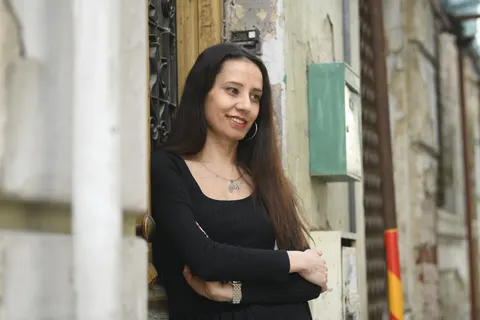
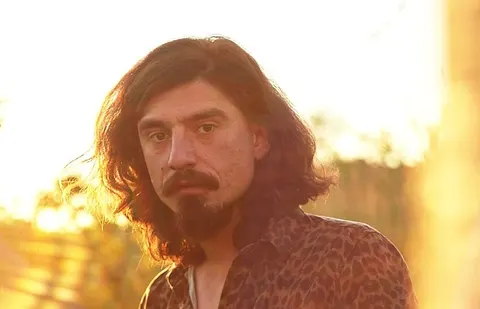
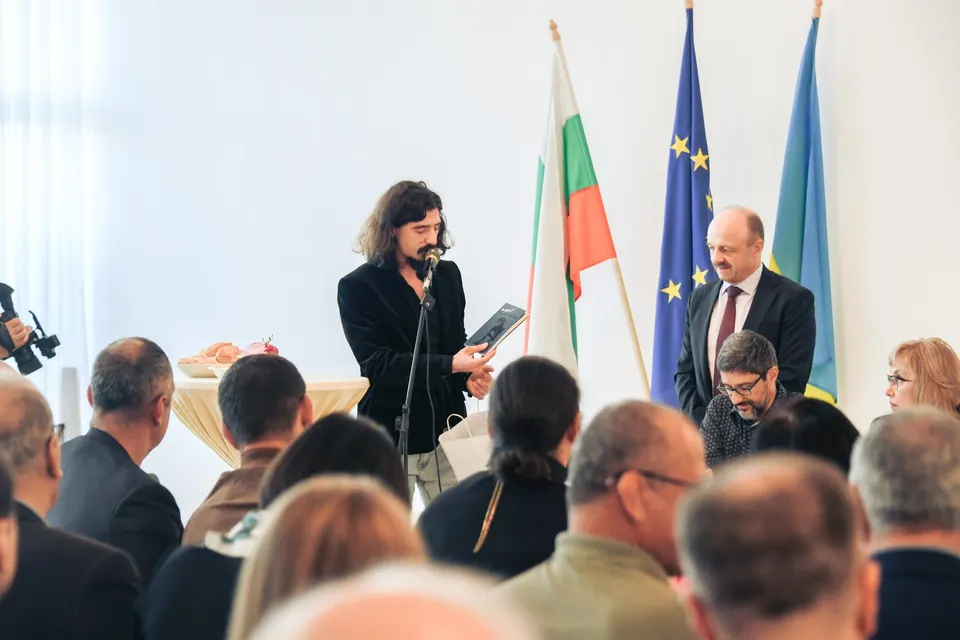
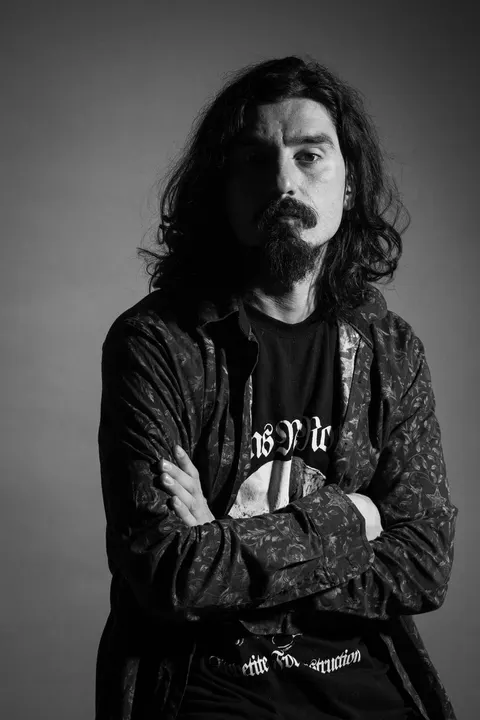
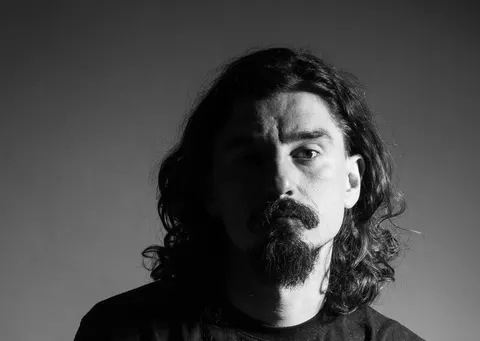
Georgi Gavrilov is a poet and… a physicist. He founded the publishing house Scribens to give young Bulgarian authors a chance to reach their readers.
More about the guest
Georgi Gavrilov was born on June 15, 1991, in Sofia. He studied English, French and Hungarian. He read physics at Sofia University St. Kliment Ohridski, followed by a master’s degree in Nuclear and Elementary Particle Physics.
He is the author of four poetry collections, one book and numerous publications in the e-magazine for literature Krastopat, Literaturen Vestnik, the newspapers Evolyutsia and 24 Chasa, and the magazines More, Stranitsa, Zhenata Dnes, Ah, Maria, Lik and others. He compiled the anthology Poeziya sreshtu voynata (Poetry Against the War) (Scribens, 2022), a charity initiative bringing together texts by 101 authors from Bulgaria and abroad in aid of refugees from Ukraine.
Georgi Gavrilov’s poems have been translated into Turkish, Arabic, Bengali, Spanish, French, German, English, Romanian, Croatian, Vietnamese, Belarusian and Montenegrin.
Georgi is one of the founders of the literature and culture spaces Hralupata (“The Hollow”; Sofia, 22 Stefan Karadzha St.) and Svetofar (“Traffic Light”; Sofia, 7 P. R. Slaveykov Square). Head of Scribens Publishing.
Books:
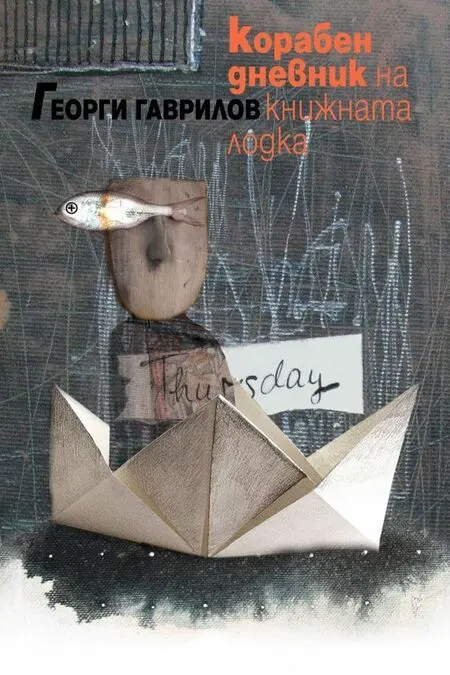
- Koraben dnevnik na knizhnata lodka (The Logbook of the Book Boat) (Znatsi Publishing, 2015)
- Pieta (Pietà) (Znatsi Publishing, 2016)
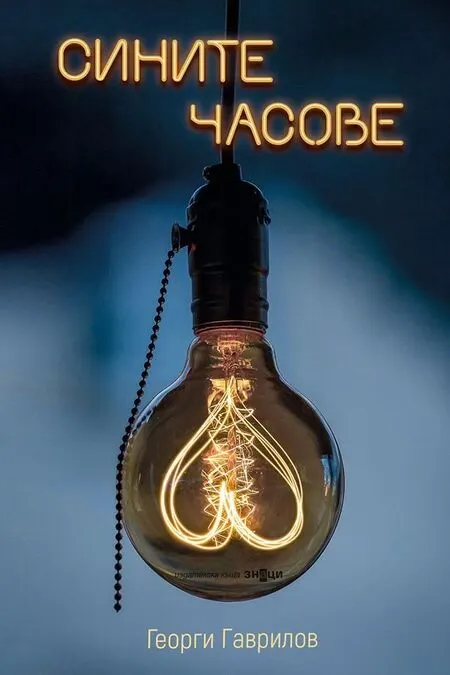
- Sinite chasove (The Blue Hours) (Znatsi Publishing, 2019)
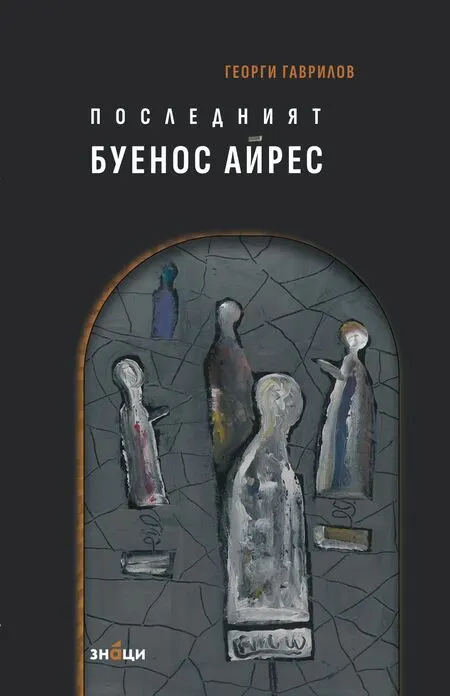
- Posledniyat Buenos Ayres (The Last Buenos Aires) (Znatsi Publishing, 2023)
Awards:
- More National Poetry Competition 2014 (Burgas): Grand Prize, publication of a poetry collection (The Logbook of the Book Boat);
- Veselin Hanchev National Youth Poetry Competition 2014 (Stara Zagora): second place;
- Boyan Penev National Student Literary Competition (Shumen) 2015: second place;
- Georgi Chernyakov National Literary Competition for Student Writing 2015: second place;
- The Bronze Pegasus (grand prize) of the Yuzhna Prolet (Southern Spring) competition for debut literature, 2016 (for The Logbook of the Book Boat);
- Special award of the Union of Bulgarian Writers at the Hristo Fotev National Poetry Competition, 2016 (for The Logbook of the Book Boat);
- Dobromir Tonev National Poetry Competition, 2016: second place;
- The Academy Liber annual award for a poetry book for 2015, in the category “Conceptual Poetic Debut” (2016).
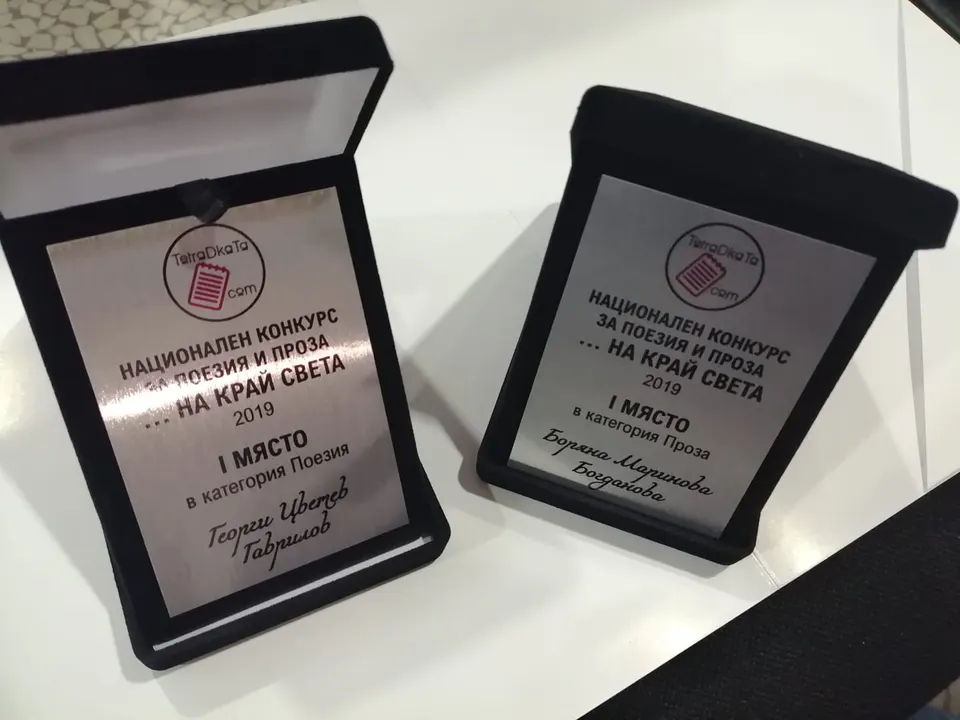
- The “…Nakray sveta” (“…At the End of the World”) National Literary Competition for Poetry and Prose 2019: first place.
Is there room for poetry in the age of TikTok and artificial intelligence? How do we return this art to the pedestal it deserves? Can today’s poets be influencers, and should they? Is the time when artificial intelligence can no longer be separated from poetry frightening, or a dream come true?
– When the idea of a competition for poetry created with the help of AI was born, I looked for a big publishing house as a partner, and it turned me down on the grounds that this would be in “deep dissonance” with its views. But when I called you and asked, you agreed at once. Why?
– Because it’s a bold idea and a topic I think matters. Later I boiled it down like this: if we keep silent about something and pretend it doesn’t exist, all we do is give it the freedom to develop unchecked.
At some point, unchecked becomes uncontrollable.
And all that will come of it is a complete lack of regulation, of traceability, and total chaos.
A competition like this, one that openly declares and requires the use of artificial intelligence, will, I believe, have a sobering effect on people who are inclined to use it without officially owning up to it.
Of course, I also agreed because, both as a publisher and in my personal life, I’m not much for comfort; I like challenges. This is a challenge with a social meaning.
– Besides, poetry, in my view, should be the bold art that helps us grasp what is happening, and many people run away from that.
– Absolutely! And it must always be in tune with its time, connected to every kind of social event, geopolitical and technological alike.
For people whose idea of poetry ends with the authors in the school textbooks, this will never make sense. It often happens to me at readings, or when someone opens one of my books or one written by one of our authors, that they say: “This is the first time I’ve seen a text without punctuation or capital letters.” We know very well that we didn’t invent this in the last 10 years, and that it’s hardly shocking for art. But for some people it is.
– Yet it turns out that having a competition like this is striking for a lot of people, judging by the comments online. It isn’t just a “bad joke” but an “outrage,” an “orgy.”
– Many people live with a mistakenly idealistic notion of poetry and of art in general.
Poetry may well be the art closest to us Bulgarians.
We’ve always had terrific poets. We still have them now, no matter what times we’ve lived through, whether there was repression or hardship. Quite the opposite: the harder the times, the better the poetry that was written.
– Is that still true now?
– Why not?
– I don’t know. I’d expect it to be; our times aren’t easy, though in a very, very different way. Honestly, I don’t know our contemporary poetry. It feels distant to me, perhaps mainly because it doesn’t fulfill its social function. I can’t find the authors who do that.
– Who rebel?
– Not only that. Who also change things with what they write. Most of our national heroes are poets. Even in the early ’90s there were poets who resonated, who were public figures, politicians even. Now, at least, I don’t see them, apart from the departing generation.
– Yes, on influence I completely agree. It’s very hard for poetry to keep that weight. And to be uncomfortable for those in power, at the very least. That is happening right now too, but in other countries.
Here, in that sense, art is cut off from life.
But even so, more muted, without the force of any mass behind them, we have poets, living, contemporary, writing poets, who are on a par with the best authors in the world.
– What has to happen for them to become more popular?
– Oh… I’m telling you this and we’re doing it. I don’t know. Maybe one has to get into politics. Maybe that’s the most direct route.
– In the past you could take part in politics without taking part. The first example that comes to mind is Radoy Ralin, the satirical poet whose epigrams needled the communist regime. He was never a politician, but he was always an influential voice that got heard.
– Back then it was possible. But who are the famous people today? How does someone become famous? Through embarrassment, stupidity, scandal. Maybe music offers a better chance of influence.
Over the last few months we’ve held two big events, at the Kabana cinema and at Stroezha, aimed at drawing a bigger and more mixed audience, because
we need to burst the bubbles of all the little separate spheres.
We put on combined music-and-poetry events. People come, hear a band they haven’t listened to before, and the band’s fans hear poetry they never imagined existed. It’s a gradual, slower process, but one I intend to develop. To try to fill bigger and bigger venues. In a way, this will make poetry, and poets, more popular. Maybe not to the degree we want, but it’s a contribution.
And what’s your answer to that question?
– I don’t know. I’ve wondered too what would make me buy a poetry collection. And I keep coming back to stories; it’s no accident that I named my site the way I did. Maybe we should make poets more “sexy,” forgive the crude banality. I can’t find their stories either. Poetry is an intimate art, and I’m not sure that today Peyo Yavorov, the modernist poet whose doomed loves and suicide became legend, would be what he is without everything beyond the poems themselves. I don’t like that “profession” either, but I believe the road to more people, especially young people, runs through meaningful poets who are also influencers.
– Yes, but in my view it has to be done in a very clever and deft way, because by nature that isn’t built into a poet. If anything, he runs from influencing in the form it takes today.
But yes. Can we have poetry on TikTok?
– Why not? In the East, for instance, in TikTok’s homeland, its content is largely educational.
What would surprise you to read in the generated poems we’ll receive in the competition? And what would you be glad to read?
– I’ll be glad to read good texts.
I’ll be glad if they astonish me, if they surprise me.
Yesterday a major Bulgarian critic, Georgi Tsankov, posted a poem he had generated with ChatGPT by telling it: “Write me a poem.” And it wrote him one. Very generic, “the leaves, autumn, the Sun”… I remarked to Georgi that he probably hadn’t given it a good enough prompt. The chatbot did its job with minimal effort because of the minimal guidance. The result really is a poem; it may not be the greatest one you’ll read today, but it follows all the rules of poetry, if such rules exist at all. If you put some effort into preparing the prompt, as you mentioned too, artificial intelligence can write better poems than a huge share of the people who claim to create poetry.
At the publishing house we’re constantly buried in manuscripts from people of every age, some with books behind them, some without, some self-published. Among them are plenty of fine texts, but the sheer volume is enormous.
And here, if we go back to the earlier question,
since so many people write, this art must still have some influence after all. Perhaps in a quieter way, even a more egocentric one.
Wanting to be a poet: not so much reading and elevating others, but wanting to be a poet yourself. Maybe that’s what we should use.
– The motivation to write is interesting too. When I wrote poems as a schoolboy, I hoped it would help me with girls, but… it didn’t. Not at all.
– Well… poetry helped me a lot precisely there.
– Then the problem must have been my poetry. But isn’t this avalanche of poetry writing online part of the whole change in the way we communicate? On the internet we suddenly found ourselves on an equal footing: poets, journalists, influencers, readers. Everyone wants to express themselves, which on the one hand is a great wealth. But very often you’re convinced you write well, you get 20 or 200 likes and you keep going. In that situation you have no yardstick, and there’s nowhere for one to come from.
– There are insanely many Facebook groups along the lines of “the magic of words,” “the magic of the word,” some even with semi-literate names, each with 100,000 or 200,000 members.
And even the most banal poem, with fifth-grade philosophy between the lines, enjoys enormous adulation there.
That’s an interesting phenomenon too. “Don’t be like the others, be yourself,” “seek yourself, find yourself,” nonsense like that. People clearly need that language.
In the end, one of the tasks of art, and of poetry in particular, has always been to save and to help. Some need a more banal kind of salvation.
Here we turn to the human question. If it works, you’ve done your job.
– Haven’t we lost our yardstick a bit? I once had an extraordinarily interesting character as a guest, the Bulgarian literary Banksy. He knows literature professionally and tests what happens if he deliberately writes pointless nonsense. He succeeds: he gets published by two of the big “schools,” supposedly at odds with each other today. Do we really have criteria today for what counts as “good poetry”?
– If a person has enough professional confidence, ethics and self-assurance, there’s no way he’ll award a prize to something he doesn’t understand and doesn’t believe in.
In other words, if such phenomena happen, they stem from some insecurity among the jurors, from a feeling that this lies beyond their limits.
– AI adds to the question of the yardstick. You know that at two important competitions in a row, the Veselin Hanchev and the Stanka Pencheva, two different juries made up of recognized authorities picked generated poems for the top 10, poems created without much effort at all.
– The yardstick… some of us may well have lost it.
– If you read poems that struck you as so beautiful you could never have written them, and then learned they were generated, would that make you stop writing?
– No! Quite the opposite. That poem will exist; poetry will have been born. In what way? By surrogate, naturally, or how? In the end,
if we have access to it and it really is that magnificent, do we care that AI wrote it?
And if AI wrote it, we have to ask ourselves: can we compete? What kind of competition could we hold? That would be very interesting.
I don’t think it would be discouraging. On the contrary, it would be motivating. Man versus machine.
– Exactly! And yet we seem to be surrendering before we’ve even set the rules. So what if it has been beating us at chess since the last century? Chess still exists; there are famous players, strong personalities who excite us.
– Exactly! That’s a very good example; I love playing chess. I prefer playing with people, and not because the computer will beat me. Somehow… even when it’s online and I can’t see the person, I can sense the human game. You can recognize it; it’s fascinating. But you train against the computer, because it’s always available.
These ideas aren’t new at all. We’re simply now reaching the things science fiction writers described back in the second half of the last century.
– Even so, we’re far from deciding what to do. In those two competitions the organizers chose not to respond; they only announced that at the next edition authors will have to declare they haven’t used AI. So what, when that can no longer be proven in any way?
– This calls for much bigger external regulations that won’t apply only to competitions like these. But regulation itself, administrative, bureaucratic, can’t currently keep pace with technological progress and the development of artificial intelligence.
We find ourselves in absolute chaos.
Stepping away from poetry, I saw a statistic that we’ve already reached a 50-50 split between online news generated by artificial intelligence and news written by people. Before ChatGPT came out, the former made up 2 to 3 percent.
– There’s a bright side too! Lots of people now write far more correctly online. Over the last year or two something happened, and even the full definite article, a notorious stumbling block of Bulgarian grammar, shows up where it’s supposed to. Who knows why.
But look, it can democratize, make poetry more accessible. Until now, to enter a poetry competition you needed at the very least the confidence that you write well. In our contest even that isn’t necessary. You may have no feel for rhythm or no rich command of language. In exchange, you gain a big advantage if you have a taste for poetry and know how to experiment. Isn’t that a good thing?
– It is, and in my view humanity generally should move toward transforming artificial intelligence. It should be a personal assistant that, on the one hand, has a huge database, but at the same time, when you use it to create some creative or intellectual product, it has to be personalized for you to hold the copyright to it. That’s a big question that can’t stay unresolved. It can’t, because sooner or later something like this will happen. Say you have your own ChatGPT called Ivan; he’s your personal assistant, and as a writer of prose or articles you’ll be able to use him with your own style.
I have friends who are graphic designers, and they were very scared at the start of the boom that they’d be out of work. Guess what happened! Now they save tens of percent of their time using AI.
This horror that it will devour the work of creators is, I think, completely groundless.
We should take advantage of it. It’s like saying the camera devoured the painter’s work. It becomes a new art, but it doesn’t negate the old one.
– I think the conversation is bigger, because the paradigm has already shifted too much, given that we have no way of proving anything. Whatever regulations we introduce, they can’t work effectively for a number of reasons. They have to be of some completely new kind, and that runs through the conversation about where we’re heading.
– You’re probably right that they have to be of an entirely new kind, and they’ll appear out of necessity. At least that’s how I see it; things can’t stay this way. Not because I’m against it, but because it will be more valuable.
Anyway, with those two competitions we know these assistants were used.
How many more don’t we know about? How many books that are written and published don’t we know about?
Bulgaria has more than 2,000 registered publishing houses, churning out titles nonstop.
– You keep seeing covers now that are obviously generated. And how many more go unnoticed…
– A graphic designer has to work for a month to make a good cover, and has to be paid accordingly. With AI it’s almost free.
A few years ago I predicted that
by 2030–2035 a major international literary prize will be awarded to an artificial intelligence.
Maybe it will happen sooner. But that would be cool: an AI that picks its own themes, writes, and becomes the author.
– Another problem is that the world of technology can’t talk to the world of the humanities, because neither side wants to. You’re a physicist and a poet; you manage to combine science and art. Are these worlds really so different?
– For me they aren’t separate. Quite the opposite.
Physics in particular is a terribly poetic science.
And poetry we can contemplate with the same reverence with which we contemplate the starry night sky. For me the two are connected in meaning. But for the people I’ve dealt with from one sphere and the other, that gap yawns wide. More often they choose to stay isolated within their own field.
– Which I think is a mistake, judging by my own experience. You can hear from a writer extremely important reflections on technology, and vice versa, if your senses are open.
– If we look back, much of technological progress was first told by writers. People began working toward that technological progress through science fiction novels. The word “robot” was coined by Karel Čapek’s brother for one of his works. It literally means “worker.” Something that works. If this word, which has spread absolutely everywhere in the world of technology, was invented by a writer, then the two things aren’t separate.
– And they might have been called силодеи (silodei, roughly “force-doers”)… But can we somehow restore that connection today?
– We can, but writers have to push themselves harder. The times I mentioned weren’t static, but they look that way compared with the last two or three decades. Perhaps that’s another reason art has ceded ground: today people dream through the world of technology, while literature wearily turns its gaze backward in search of some consolation. We need to change that; I, at least, plan to try.
– Before we part, you mentioned there are wonderful contemporary Bulgarian poets. Which three would you recommend to me, and why?
– Since I don’t like rankings, they’re always temporary, and I could list dozens of names, I’ll simply settle on our newest authors: Lora Mladenova, Kaloyan Ivanov and Todor Stoyanov. All three made their debuts with us this year, and I’m proud of that.
– Thank you, I’ll read them with interest! And I can’t wait for us to read together the poems that will be entered in the competition. I hope there are more people with imagination; everyone is welcome until December 1…