autumn
have mercy on those
who cannot bear you
be beautiful
to death
Or
closeness hits below the belt
a gift I cannot carry
without your help
that I cannot refuse
Which of the two poems is by the poet Violeta Kuneva, and which by ChatGPT? Both are hers. Yet in a recent experiment by Digital Stories, this confused almost 50 percent of the participants.
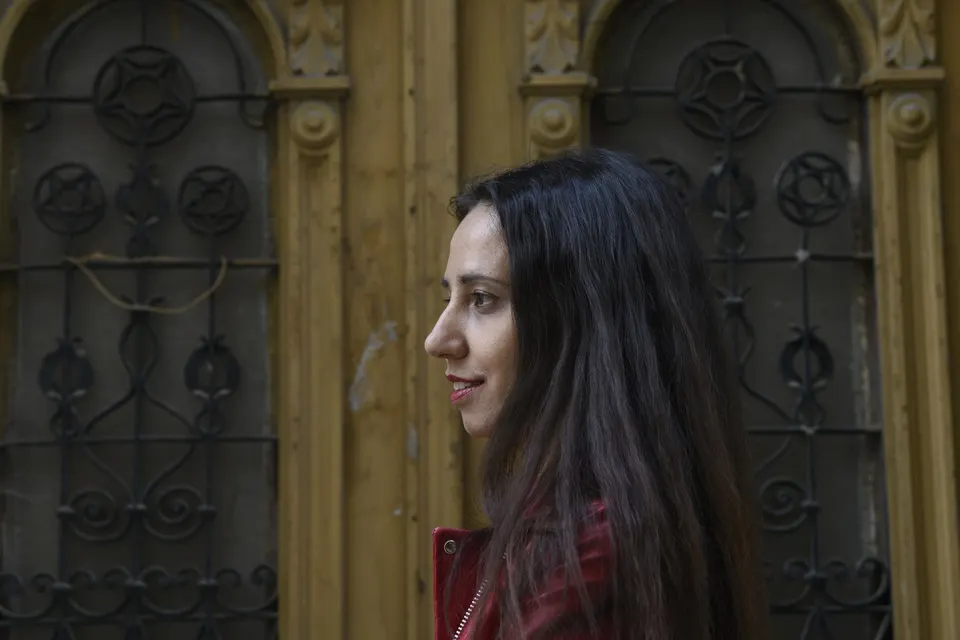
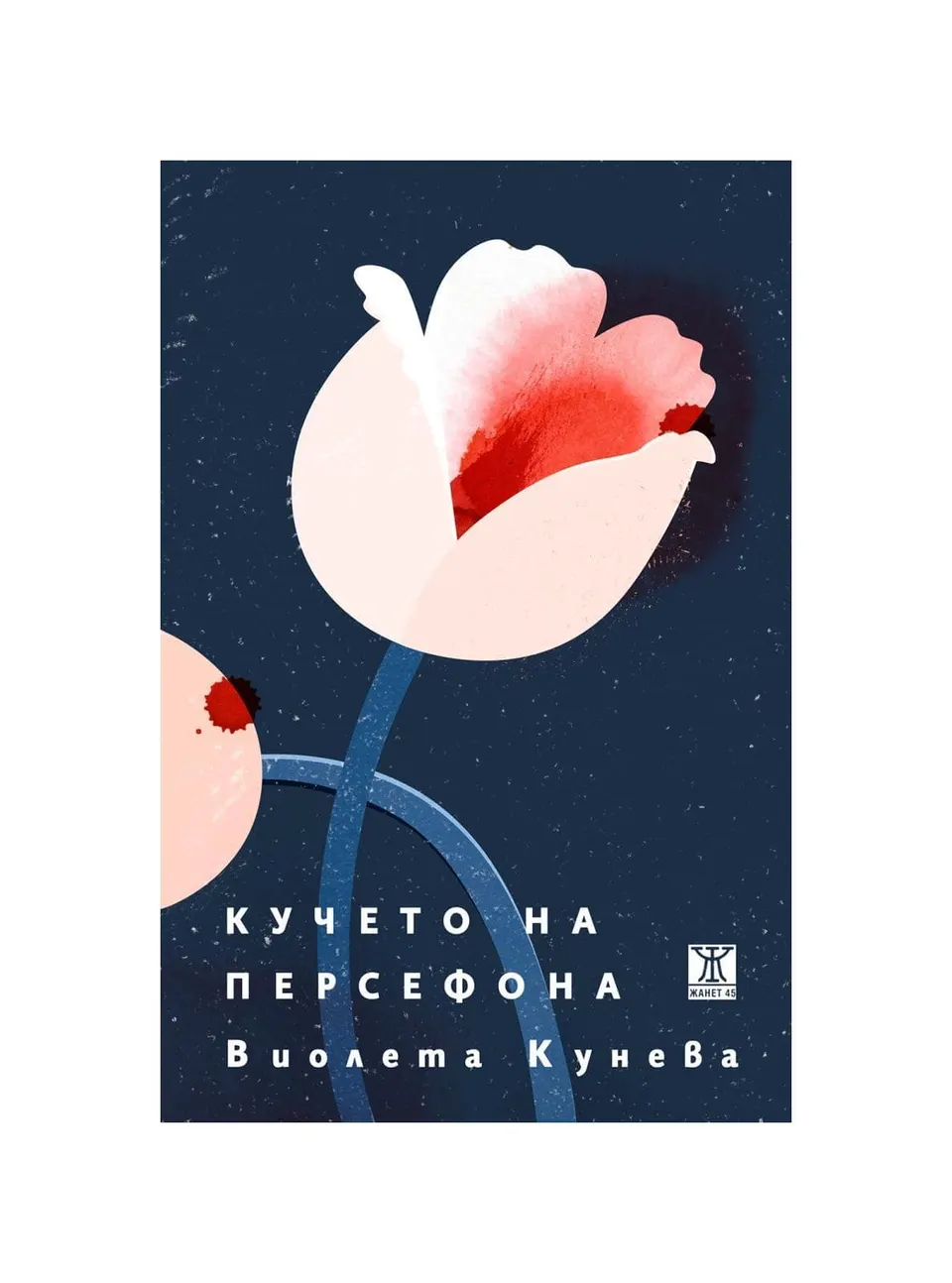
Pochti vsichko e nared (Almost Everything Is Fine) is the title of the poet’s debut collection, and it captures with such precision how the world feels to us today. It won her the debut poetry prizes at the Ivan Nikolov and Southern Spring competitions. Her second book followed—Kucheto na Persefona (Persephone’s Dog), which in turn received the Peroto (The Quill) award for poetry in 2023.
But how is it possible that we can no longer tell the poet from the algorithm? What do we lose if that is so?
Is the problem that, en masse, we have lost our yardstick for art, for metaphor, for layered, living texts that are human by definition, as poems are?
Will poetry come to an end, or… is it precisely poetry that can save us from ourselves?
– In the experiment I ran, people found your poems hard to tell apart from those generated by AI. With the caveat, of course, that this turned out to be true for every type of content. Did the results surprise you? What do you think they are a sign of?
– I expected a higher share of correct answers to the questions about the poems and the translations. It seemed to me that artificial intelligence still wasn’t doing particularly well at generating them. It’s hard for me to judge what this result might be a sign of. I’m tempted to suppose that when marking their answers
some of the users relied more on their intuition,
without looking closely at the texts. It’s also possible that the answer has to do with the fact that we have long been living in a world of surrogates, and some of us are already losing the knack for recognizing real things, and the truth. I often come across texts that claim to be poetry and were written by very much living people—and in them the arbitrariness of the metaphors and images is on the same level as in the texts of artificial intelligence.
We have grown used to this blurring; we use words like “poetry” and “art” irresponsibly. But those are trivial worries.
If we are talking about truth—one of the most painful subjects of our time—the distinction between an untruth created by artificial intelligence and one crafted by a human strikes me as extremely important. We tend to see a threat in technology, but for me the main danger lies in lies and in the substitution of truth by people. That is why, in my view, one of the conclusions is that we have to talk again and again, and take care to preserve the instinct for recognizing it.
– That is exactly my aim, too. But I wonder about the opposite—wouldn’t the results have been higher if people had given their intuition free rein? Poetry needs that as well… But is poetry alive today, and how long will it be here?
– That’s true, poetry needs intuition too, but a wakeful, perceptive one. Again, in the context of the question of truth—it’s not good to rely on intuition alone, especially if someone is trying to mobilize it in a direction of their choosing. As for poetry, it will always be alive, but it will also always be part of the world of a narrow circle of people. That is inherent to it from the start. So I don’t share the apocalyptic forecasts of its disappearance.
It is protected by what protects art as a whole—the need for something to lean on inside us,
something to counterbalance uncompromising reality. Of course, this doesn’t mean poetry should deal only with romantic and abstract ideas that have no connection to their time. Quite the opposite. It refracts the time in a way that helps us understand it, make peace with it.
– Why do we need it specifically in the technological age?
– We need it as one of the proofs that the human will not be fully imitated, as a counterpoint to technology, as an inviolable territory of the spirit—a language that, in my view, artificial intelligence will never speak.
– I find it harder and harder to use the word “never” when it comes to technology. And how do you think online communication has changed poetry so far?
– Poetry is sensitive to its surroundings, so this type of communication has surely left its mark on it. If we’re talking about publishing poetry online, I think it has an effect in several directions. On the one hand, there’s no way for the audience to learn about a poet who isn’t visible on the internet. On the other, the desire to reach more people also leads to
the temptation to write in a language more accessible to the general public, to more banal metaphors, bombastic punchlines,
at the expense of the authenticity of the poetic voice. Cliché, the familiar, is the lowest common multiple between a text and a larger number of potential readers. It is often used as a bridge to them. The reward is a great many likes. But fortunately, even on social media there are talented poets who manage to resist the temptation of cliché. Some of them get a lot of positive reactions. They prove that high poetry can thrive online too.
– There is no punctuation in your poems. Why?
– It’s a common phenomenon in poetry over the last few decades. One of the reasons I made this choice is the influence of many of my favorite contemporary poets. I value ambiguity, which is one of the effects of leaving out punctuation. I also like the freed-up space, the air between the words. In my books I’ve also included poems that do have punctuation marks and capital letters—sometimes without them you can’t place the emphasis you’re after, or express the meaning clearly. In other cases, it is precisely their absence that serves the intention of the text.
– Why do you think blank verse arrived with modernity and, to no small extent, pushed out rhyme and meter?
– It seems perfectly logical to me that poetry, like the other arts, should strive to break away from the rules, to seek freedom in form. That search goes much further than blank verse, because blank verse also follows certain rules. But free verse has its inner rhythm, its breathing, too. And yet I
find and recognize poetry only in the spirit of the lines, in that matter beneath the slippery surface of form.
– What kind of people read poetry today?
– The ones who have always read it and always will—those sensitive to the subtle registers.
– Since I can sense your answer to the question “whether”… why won’t algorithms learn to create it?
– They will certainly keep getting better and will master without trouble the principles of classical verse, of the various metrical systems—those obey clearly written rules that are easy to find even on the internet. It will be easy for artificial intelligence to understand and apply them. The inner life of its texts, however, will be amorphous, lifeless from the outset—what will be missing is the spirit, the essence of poetry I mentioned.
True poetry has to do with refracting the world through the poet’s inner world. It is a complex process,
an amalgam of talent, of thousands of pages read, of experiences, traumas, of a peculiar kind of fermentation inside a person.
Eugène Ionesco says that truth is not in realism, because realism does not deal with our fundamental obsessions, such as love, death, wonder. There is no way for artificial intelligence to gain authentic experience of these concepts. Also, for me one of the synonyms for poetry is the unnameable. How could it ever understand that?
– But can it help us understand ourselves better in some way?
– For now,
artificial intelligence strikes us as funny. It looks like a funhouse mirror, or a little dimwit we guide along,
one who makes us feel knowledgeable and more human than ever. But this is changing literally by the day, and soon it will become a realistic and credible reflection of us. I think about that moment—perhaps then we will manage to see ourselves through its eyes, to grasp which parts of us are clear even to an artificial creature, what remains out of its reach, and what is most precious.
To me, those are the places it cannot peer into. I imagine the future as a battle for
the invisible; that will be the most important resource. What artificial intelligence cannot register
is the most precious thing in us. And that is why it will never be able to write true poetry.
– You write poems about love, too. Has technology changed love as well?
– Love is so irrational that there’s no way something based on logic, on intellect, could make sense of it. That’s half in jest. Perhaps it sounds naive, but
I still think technology doesn’t have the power to change something like love, because it is too resilient a part of us.
Like most people, I’ve had the feeling that the world begins with me, love included, the way I know it. I remember how, as a child, I was utterly astonished when I read a love novel several centuries old, or old love letters—people had lived through exactly the same things as we do, they even addressed each other the same way. Whether a declaration of love is written on perfumed paper or in a chat—these are details, not without significance, but the essence stays intact.
– And further down the road? Could it one day disappear, or change beyond recognition, as a result of technology? It’s easier and more convenient to love a robot…
– For me that’s impossible, and
I would liken an encounter with a robot to paid love—trouble-free, convenient, but crippled and devoid of spirit.
Perhaps it has its place too, but touching a robot’s hand will never replace touching the hand of a person you love.
For various reasons I keep reaching the conclusion that, however much technology transforms the world, it still cannot change us so much as to destroy something in us or “graft” onto us qualities we don’t possess, even in a latent state. Even through algorithms, we end up in the same places again—all roads lead to us.
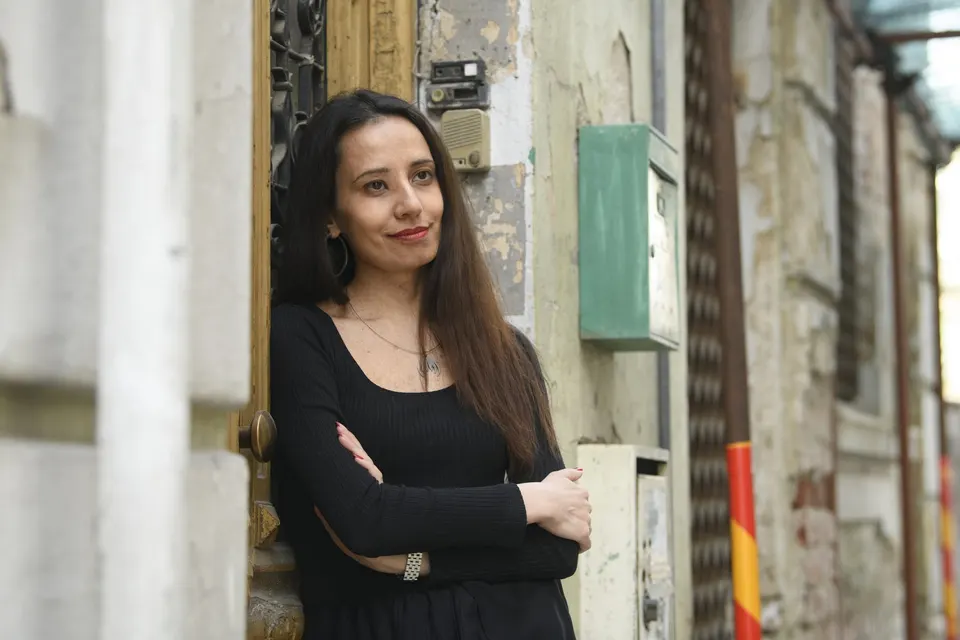
– Here I’d argue, if only because of the way communication has already changed. But maybe lately I’ve overdosed on technology at the expense of poetry… You are a poet by calling, but a lawyer by training and profession. Why does the administration of justice in Bulgaria remain such a sore subject?
– We know it is one of the foundations on which social relations rest, but it is also a symptom of the crisis they are in. It’s no secret to anyone that for many years our state has been captured by people who would very much prefer there to be no effective justice. Until we shake them off, until we learn to recognize their different faces and populist tricks, we won’t understand what democracy and true justice mean.
– Will we ever change that?
– I’m not an optimist, but I really like the way you ask the question—in the first person. For me, hope lies in those small signs around us—meeting people who realize that the responsibility is ours as well, the attempts, through personal everyday efforts, to move things in a good direction, or, so as not to be maximalists, at least an acceptable one.
It makes sense to talk, to persuade, to fight for every single person. The lack of an active civil society is a huge problem. But this is one of the ways to solve it.
– Can algorithms send us into a world without crime?
– Let’s assume, hypothetically, that such a world is possible—not, of course, through algorithms predicting who would commit a crime and how, because
that way we would return to all-too-familiar plots, along the lines of the Inquisition or the world of Kafka.
The absence of crime is a wonderful thing, but it comes at a price. And that price has to do with applying much more control. I would like there to be no crime, but as a conscious choice—because we all understand why certain lines must not be crossed. But if it is the result of control being applied, of freedom being taken away, including the freedom to be one of the good ones, so to speak, how would we feel in a world where we have no choice? How would that affect the way we think of ourselves? And wouldn’t the absence of that freedom grow into something worse than crime?