“We don't know what nonsense ChatGPT will come out with next, because it is just a vast extrapolation of billions of sources, of terabytes of text. However much this machine seems to talk, it is really just a very expensive parrot. It burns through $3 million a day in electricity and has no idea what it is saying.”
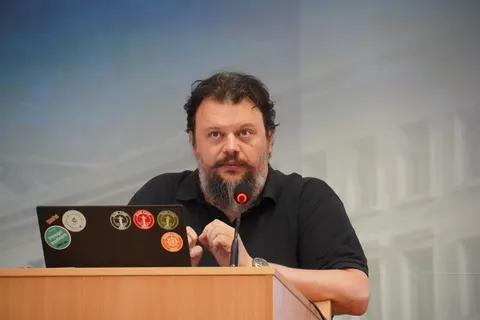
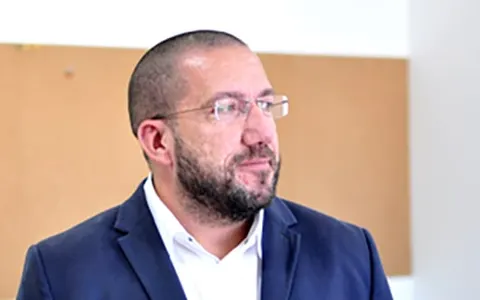
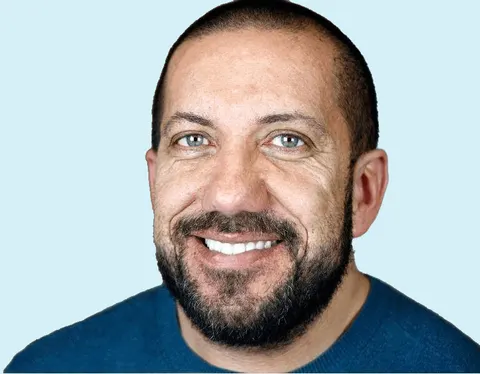
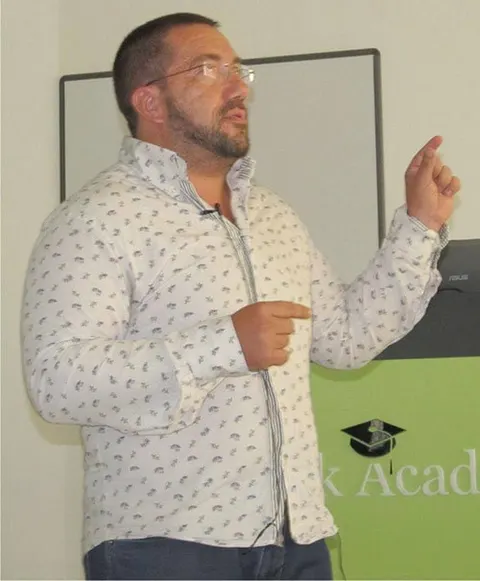
Mariyan Gotsev has more than 30 years of experience in information technology—as a programmer, but above all as a system-level architect and analyst. His other great passion is philosophy—he immerses himself in the search for meaning. Add to all this the fact that he is a poet, published by the press Nova Sotsialna Poeziya (New Social Poetry).
I was struck by his manifesto for a venture he calls “meaning robotics,” or “semantic robotics,” published on the website of Petar Neftelimov. In it he argues that the much-hyped language models ChatGPT and GPT-4 cannot cope with many of their tasks because they do not look for meaning. Instead, they try to offer the most accurate answers possible through the well-known method of brute force. They look for patterns, yet remain far removed from human understanding, and so, in his view, they have reached their limit. Mariyan Gotsev, on the other hand, is convinced that a new approach could give us a technology that comes close to the human way of thinking.
That is our occasion to talk about the much-hyped technologies as overpriced parrots. Can we really give computers common sense, and why does our guest believe the only way is to give them meaning? Can a machine think from a human point of view? Why must our relationship with future semantic robots necessarily be that of slave owners? And why did this computer specialist acquire domain names that he is selling for millions?
– I was struck by your metaphor that large language models are parrots. That they don't solve problems, they simply overpower them with brute force, trying out different options and looking for the closest result. How do we explain this metaphor?
– There is an extremely thick cultural layer laid over artificial intelligence technologies. Whenever they come up, everyone you talk to starts explaining how extraordinarily complex they are. Not long ago I was talking with a colleague in a very senior position, and it took me weeks to break through that cultural layer in him—he kept telling me about neural networks, about how these models are connected to neuroscience.
What we are talking about are kinds of criteria-based brute force. In my view, the only functional model we can rely on almost without reservation, one we can control 100 percent and that comes close to intelligence, is a model that involves making sense of things. I don't deny today's brute-force technologies; they are wonderful for recognizing images, sound, voices. But not for generating text.
ChatGPT is just a talking little monkey.
When it appeared, people started testing it intellectually. And it failed most of the tests, which is entirely natural. That's the first thing people do with a technology: they try to “break” it, and if it holds up, it passes the tests and gets the green light for use in extremely high-stakes, expensive and complex corporate solutions.
The same goes for image recognition technology. However advanced it is, my latest-model iPhone doesn't recognize me when I have stubble. What are we talking about here? What artificial intelligence?
Am I supposed to shave every day for the sake of my phone?
We cannot rely on brute-force technologies. Because they are extrapolation along given criteria, which can never be 100 percent effective, correct and controllable.
– You bring up a tale by Wilhelm Hauff about a strange young man who turns up in a small town, sings beautifully, recites poetry, wins at chess, claims he can do everything better than everyone else. And in the end he turns out to be a monkey controlled by some magic text written in Latin. You find a wonderful metaphor in it: the same holds for today's large language models and neural networks in general. Only instead of Latin, we have computer code.
– Just as in the tale, these models are like a “laterna magica”; they work with incomprehensible Latin words, scripted and internal spells that are not nearly as romantic as they sound.
Besides, in practice we are losing control.
We don't know what nonsense ChatGPT might come out with next, simply because it is a vast extrapolation of billions of sources, terabytes of text.
However much this machine seems to talk, it is really just a very expensive parrot. It burns through $3 million a day in electricity and has no idea what it is saying. That is a problem!
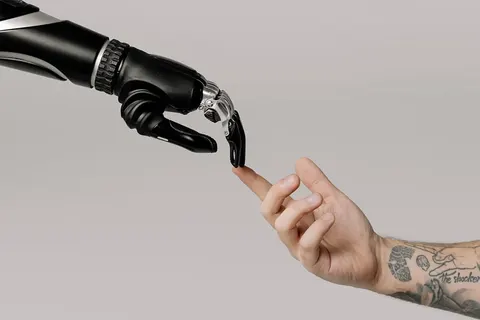
– But at the same time, the algorithms get better at their tasks with every new project. Couldn't that hide the fact that underneath there is just brute force? Can't the parrot become more and more perfect, until that makes it similar to a human?
– It isn't possible, because meaning cannot be brute-forced—that was the first thing I understood when I started thinking about this subject.
Meaning is far bigger than the visible Universe. This is the matter of meaning,
Plato's ideal world of ideas. It cannot be brute-forced, and anyone who has worked on the analysis of meaning understands that.
We've wasted enough time on brute-force technologies. We've seen what they can do; we've developed them almost to their threshold. At the same time—I am, after all, in the industry, I follow what's going on—but
I don't know of anyone working on the subject of meaning. It's high time we started!
Meaning is both enormous and very simple. It's no accident that the Bible, among other texts, says that “in the beginning was the Word.” Information is everything, and it simply cannot be brute-forced in its most delicate, most sophisticated aspect—meaning.
Information acquires value when someone makes sense of it. And meaning is profoundly shaped by the one making sense of it.
– What does this meaning look like, the one you think is worth embodying in technology?
– It is a very deep hybrid matter, largely philosophical, psychological, anthropocentric. Meaning depends entirely on the one who makes sense. We are entering such oceans that not $3 million but $300 billion a day in electricity wouldn't be enough for ChatGPT to even touch these matters.
The world of ideas is absolute and infinite, though about the Universe we can't be sure, as Einstein says, nor about human stupidity—there you have another meaning.
Do you feel how we speak in meanings? Look, I say: “The Universe is infinite, as Einstein says, and so is human stupidity.” You made a connection between human stupidity and the Universe. Try brute-forcing that fine nuance of meaning. It's also humor, among everything else.
Humor is a very vivid and telling material of the fluidity and plasticity, of the multidimensionality and at the same time the infinite concreteness of meaning.
We humans understand each other in two words in extremely complex situations, implying an enormous body of meaning behind those words in exactly the same way, precisely and without error. That is just one aspect of meaning, and even if we take only that, there is no way it can be brute-forced.
Right now you understand what I'm saying, whatever it is, as long as it stays in a language we both know. You understand me without thinking about it. In your head there is a semantic automaton at work, coping with the grandeur, complexity, simplicity, concreteness, multifunctionality and multilayeredness of meaning without a delay of even a hundredth of a second.
– All the famous scientists in this field—Geoffrey Hinton, Ray Kurzweil, Yann LeCun—say that artificial intelligence should imitate the way the brain works. Yet the neural networks we actually use are something quite different. They are a series of algorithms arranged in layers that look for patterns. As you put it, they brute-force. So perhaps the direction is a different one, if we decide to imitate the brain?
– Digging through neurons, we will not find meaning.
Just as digging through a computer, we won't find the The Lord of the Rings movie we've put on. These are matters that sit above their media.
The fact that our neurons have somehow learned and created a meaning automaton that runs in our heads in no way means that by digging through the neurons we'll find meaning. It can't happen!
– Projects of this kind are developed today mainly by information technology specialists. But isn't there room for philosophy, neurology, biology, theology too?
– There's no need for biology; in my view the problem is rather philosophical, anthropocentric, egocentric. We don't need biology at all, except insofar as a human being is a biological creature.
Thinking is supralinguistic; that can be demonstrated and proven very easily. Listening to me, at no point have you performed linguistic analysis. You hear my thoughts through my words, and the meaning is already in your head. While listening, you haven't done any analysis. You understand instantly, like a sensomaton, everything you hear, without having to reason it out.
A whole heap of semantic concepts are supralinguistic. We have no words for a billion things,
nor for the combinations between them, for the layers they can reach when combined with other meaning. In practice we carry grandiose sensomatons in our heads.
I don't know how they work; that's one of the main goals of my research—which is why I've named this field “semantic” or “meaning robotics.”
We have to teach the machine, to do what is possible, so that it thinks the way we think.
The fact that we think is not some exception; we've simply learned to. But thinking is above us; it is above anthropocentric matter and can exist without us.
– What comes next?
– Meaning is the first step, before we build a meaning-interpretation core; at this stage that is the task. If it is created, it will be incredibly efficient, monstrously powerful. There will be only one, just as there is one Google. We'll have an insanely powerful meaning-interpretation center. If we throw resources on the order of that $3 million a day in electricity at thinking of this kind, the machine will surpass us trillions of times over.
This will have tremendous anthropological and cultural consequences.
If we manage to load the machine with such a model, it may well be the most powerful thing ever created in the world.
– But what is the approach to building such a model? You're a technology person…
– I'm not a technology person; what I do, and the only thing I've been able to do since birth, is analyze. The world of thinking is magical and cruel at the same time, but we are talking about absolutely real things. When I gave it thought, it took me about fifteen minutes to define what information is. How long would it take anyone else to reach a valid definition if we locked them in a damp, dark basement with rats and that was the condition for getting out? Maybe minutes, years, longer than their lifetime.
This meaning-interpretation core doesn't yield to any technology whatsoever; here we have to create methods that aren't even technologies—there is nothing technological about them. That's why I speak of meaning mechanics.
Our thinking automaton really does work like a laterna magica, but with pieces of an extremely basic, rather optimal and infinitely efficient set of meaning primitives.
Our neocortex, where according to neuroscience thinking happens, is a slave to our older brain layers. We are little animals that have learned to speak and, by developing the familiar material, to speak in terms of concepts.
A little mouse comes out, pricks up its ears, there's a noise, it's afraid, it sniffs, it smells cat…
In us, that very same model has evolved all the way to Chekhov and Tolstoy.
My current direction is fitting layers—automatic, archaic base layers of proto-meaning—onto the layer of conceptuality, so that we can then dress them in words. If we're going to build a meaning-interpretation core, we have to teach it not only to listen but also to speak.
– On what basis can we teach it?
– Only on the basis of proto-meaning. Meaning is anthropocentric; we start thinking when we have some kind of deficit. Deficits are determined by our needs, and our needs by our nature. All of this is embedded in the old brain layers. We are no different from little animals acting on instinct, which is exactly why this proto-layer determines our thinking.
We always think instinctively; our instincts are what define meaning. And if we want to make something that works, it has to be precisely a meaning robot.
A machine that thinks not like something else, but from a human point of view.
If we create a universally thinking machine, it will spew out universal thinking that means nothing to anyone. We can return to the field of universal meaning once we already have some working meaning-interpretation core.
Our instincts, our hunger, our fear, our sense of security, our sense of significance, of power, of self-preservation—all these basic Jungian archetypes govern our thinking.
Why do you go to work?
– Well, there are lots of reasons…
– Not at all; the answer is short and clear—for money. Your work may be extremely complex, but you go to work for the money. That is the meaning.
If you had a few billion dollars, robust health and opportunities, then we'd see what lies in the deepest layers of your unconscious. That's exactly how thinking works, and that's exactly how we'll teach the machine to make sense of things.
Our thinking automatically generates conceptual material—words, let's say. That's the subtlest point I've reached. That, I believe, is where the key lies; we'll get there through proto-meaning and through the anthropocentric nature of meaning.
We are driven by deficits. You go to work because you have a deficit. The deficit is not enough money, but what is money? A universal source of possibilities. Not everything can be bought with money, but a very large share of things can. And with enough money you can certainly buy yourself a free life.
How much money is enough to fulfill your desires is a very big question. Since our desires are infinite, and our ego is infinite and insatiable, it may well mean so much money that you become ruler of the planet, of the Solar System, of the galaxy…
In practice there are no limits to the ego, to desire or to thought.
– By creating a model with all these skills and qualities, one that thinks like us, aren't we also creating the risk of destroying ourselves?
– Such a model would be dangerous if it had consciousness and will, or if it could imitate them. We will give it this apparatus
so that it thinks the way we think. Not with our neurons, but with our nature!
Those are fundamentally different things. Neurons are part of our nature and serve it. By creating the conceptual material, we'll harness the model to think like us—that is, in a way we can understand. To become one of us.
Here is where the danger comes in, in terms of will and of backing that will with real resources. If this apparatus acquires a will, yes, it will destroy us in 5 seconds. Every science fiction story is about a powerful intelligence—though to me “intelligence” isn't quite the right word—that gets the idea of wiping out humanity.
Ideologically, we must speak solely and exclusively of the slavery of thinking machines.
If we let slip, even for a second, the state of robots' slavery… it will all be over.
In any case, the road there is long. The first step is to develop this meaning-bearing state in robots. I don't know who will achieve it;
I'm actively looking for co-funding right now. But teams need to be built—a single isolated brain can't handle analyses like these.
– Do the danger of being destroyed and the concept of slavery apply to today's technologies too?
– They will remain one step short of will; they have no sense-making, everything about them is absolutely mechanical. And will is very closely tied to sense-making.
– To finish, I'd like to ask you about another intriguing venture of yours. I read that you hold domains such as global.world, for which you've announced a price of $3.7 million. These days we're not used to thinking of a domain as something so valuable—supposedly the main streams of visitors come from search…
– That's true and it isn't. Domains today are not a means of being found but a marketing tool. Every domain is like a house number on the world's street of online presence. Until recently there were .org, .com, .net—they were generic extensions. I follow the subject, and recently I was invited to join a new series, among them .top, .social, .media. And when .world appeared, I wondered: what do we do with global.world?
When a domain's extension is meaningful, we can afford to preserve the absolute meaning of the name. We hold a monopoly on that meaning across all domains. I didn't take it for myself; whoever decides they can use it can gain a major position—I simply hold the domain and offer a price which, of course, is open to negotiation. But whoever comes along can put it straight onto their corporate skyscraper. A global world—that's the paradigm of the 21st century; next it will be a global Universe.
The chance that a corporation will turn up and choose such a message is real. In return, I pay a minimal fee of about 200 leva (about $110) a year. The value of a domain like this is that there's nothing superfluous in it, and it holds a monopoly on exactly this meaning. And here we are, back at meaning again…