Updated on October 9, 2024
How did a computer scientist earn… the 2024 Nobel Prize in Physics?! Why did one of the people who made the great artificial intelligence boom of recent years possible… suddenly say that he regrets his life's work? He even left his cozy job at Google so that he could speak freely about the risks that come with artificial intelligence.
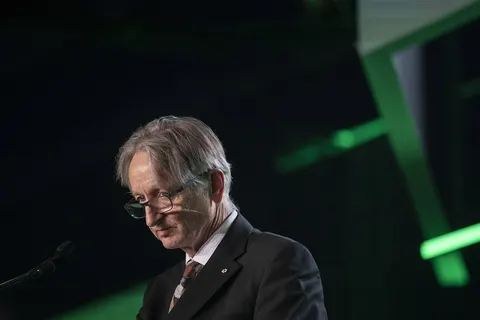
Geoffrey Hinton stands tall in the face of the big questions. Both metaphorically and literally, because, in his own words, a health problem has kept him from sitting down since 2005.
“It is hard to see how you can prevent the bad actors from using AI for bad things.” “It's not inconceivable that AI could wipe out humanity,” the great scientist says. And also: “We need to think much harder about how to control AI systems that are capable of improving themselves.”
A remarkable and deeply important digital story awaits us.
Caught in the Net
Neural networks, artificial intelligence… we repeat and hear these terms every day without stopping to think how closely they are tied to the idea of software that mimics the human brain.
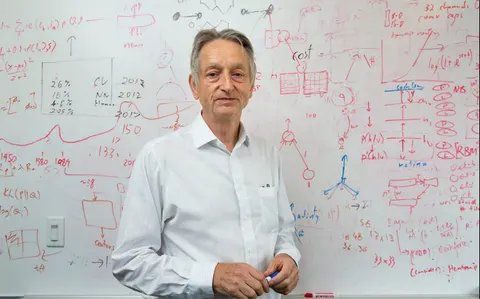
That is no accident; the association is logical. The first person not only to think of it but to put it into practice is today's hero, one of the greatest scientists of our time. We owe Geoffrey Hinton a huge share of the progress we see today in the ever-so-topical field of artificial intelligence.
He is often called “the Godfather” or “the Father of AI,” which he finds… rather amusing. Because, among everything else, he has that typically British sense of humor.
Artificial Intelligence, Sir
Back when Hinton proposed computer systems that work on the principle of the human brain, it sounded like (un)scientific fiction. But he was convinced of his concept, because he was one of the few people with deep enough knowledge in both directions: cognitive science and software engineering.
From an early age Geoffrey was interested in how our brain works, and once he got talking about it with a friend. Together they reached the conclusion that memories are stored in the brain in a multilayered network of neurons, much as the data for a three-dimensional hologram is kept on a computer's hard drive.
His curiosity was piqued and he dug into the subject. As a result, he concluded that modern science still could not answer many of the questions about how our most important organ, evolutionarily speaking, actually functions. Neither psychologists nor neuroscientists could say what physiological mechanisms intelligence depends on.
Elementary, Jeeves
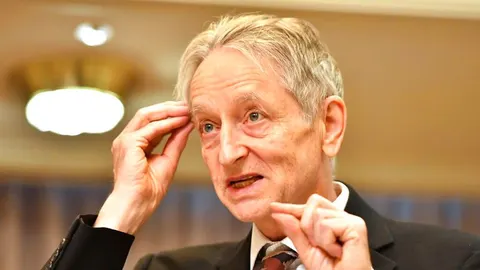
Over the following years Geoffrey specialized in this field—he earned a bachelor's degree in psychology at Cambridge and a PhD in artificial intelligence at Edinburgh. He also began teaching. His main research interests lay in software that imitates the workings of the brain, with the aim of studying the brain itself.
Then, however, Hinton arrived at the fundamental idea behind today's AI boom: if the right structures are used, computers can learn and develop an intelligence of their own, similar to human intelligence.
This is how the field was born that today gives us incredible possibilities in all kinds of directions: from self-driving cars to facial recognition. And… ChatGPT.
“In science, you can say things that seem crazy, but in the long run they can turn out to be right,” Hinton says.
Of course, the term “artificial intelligence” existed long before the Brit gave it its present meaning. Before deep neural networks came along, though, it meant far simpler algorithms. They had no way of detecting subtle patterns, and that is precisely the task we want artificial intelligence to perform.
Neural networks have been talked about since the dawn of the computer age. They are sequences of algorithms “arranged” in layers that can process information and look for patterns the way the human brain does.
Three AIs in a Boat (To Say Nothing of the Dog)
In the late 1950s, all eyes turned to the Cornell researcher Frank Rosenblatt, creator of the Perceptron. The program, built on the primitive computer platforms of the day, could supposedly recognize the image of an apple. It was also the first to bear the title “neural network.” Alas, rather unconvincingly.
In 1958 The New York Times ran a big story explaining how the Perceptron would become the first machine capable of working like the human brain. “Later Perceptrons will be able to recognize people and call out their names,” it continued, promising one day a machine that could “walk, talk, see, write, reproduce itself and be conscious of its existence.”
But the Perceptron couldn't even tell left from right. It failed at its main task, too. And while it was running, the primitive computer looked more like a parody of a sci-fi horror film. A conglomerate of randomly assembled refrigerator doors and computer cogs.
For the next 40 years nobody wanted to mention the idea of a neural network again. Hinton, too, ran into the skepticism of his professors, which would inevitably accompany him all the way. But he didn't give up.
Perhaps the secret of his stubbornness lies somewhere in his genes. His middle name is Everest: the man after whom the planet's highest peak is named is among his ancestors. His great-great-grandfather was George Boole, the father of Boolean algebra, whose foundations programmers use every day. They even say his name aloud, thanks to the type of variable named after him—the Boolean.
Mr. AI, I Presume?
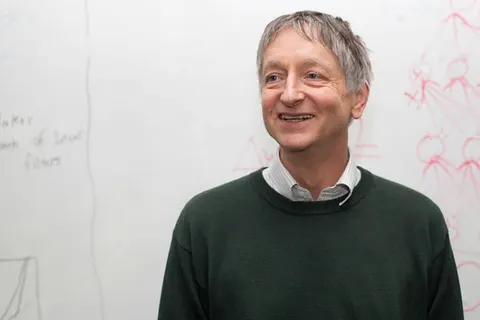
Two major breakthroughs are linked to Geoffrey Hinton's name. In 1986 he stepped into the spotlight after he and two co-authors published a paper that dusted the cobwebs off the concept of neural networks. It was enriched by the idea that the algorithms should process information in both directions. Once the information has passed through the sequence of layers, it must also be processed “in reverse,” to check how accurate the patterns found really are.
Even the biggest skeptics were persuaded that the proposed solution had enormous potential. Alas, computers at the time were still not ready for the next big steps; the ideas were far ahead of the technology.
So came the long period known as the “AI winter.” Progress stalled, and the few specialists in the field turned to other areas.
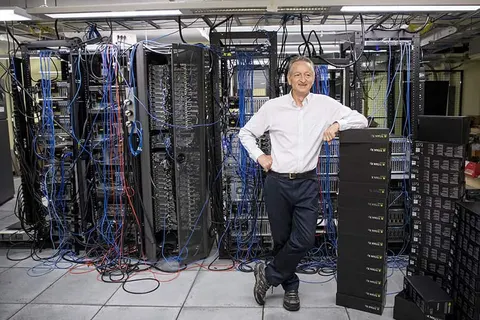
But then the moment arrived. In the new millennium, computers accumulated ever more impressive computing power. By 2004 Hinton was living in Canada and received the trust he needed to make the long-awaited breakthrough. The Canadian Institute for Advanced Research offered him serious funding to create a joint program bringing together computer scientists, neuroscientists, psychologists and people from other fields to work in this direction.
AI Save the King
Which brings us to 2012, when, again with colleagues, Hinton presented the first impressively well-performing model that could classify photographs with remarkable accuracy—recognizing what is shown in the image it is given. It did so considerably better than a human!
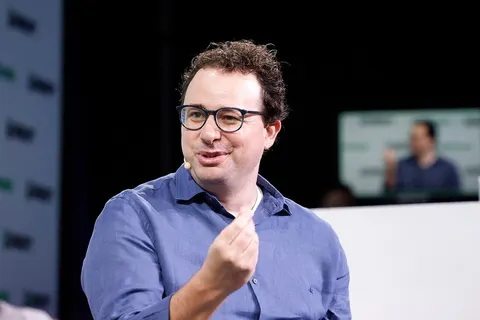
His co-authors in this venture were two other remarkable scientists of today's AI world. Ilya Sutskever—co-founder and, until recently, chief scientist at OpenAI—recalls with nostalgia the “AI winter,” when their profession seemed doomed. “We were complete outsiders, but at the same time we felt we knew something more about the world, and that made us feel special.”
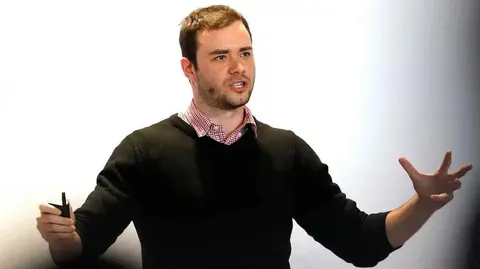
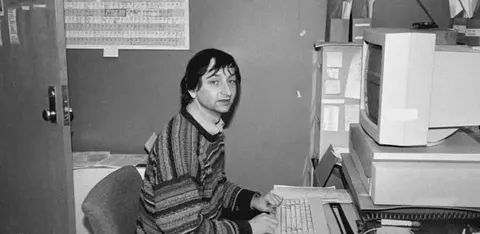
The trio was completed by Alex Krizhevsky. “AI is something like the ultimate goal of computer science,” he says today. “Its aim is to automate more things, and artificial intelligence aims to automate absolutely everything.”
And so Hinton and his colleagues entered an annual competition for systems that recognize the images in the popular ImageNet database. They won by a whopping 10 percent margin over their rivals. And, more importantly, they turned out to be more accurate even than the human eye.
“The reason I have influence in this field today is that I was one of the few who believed in neural networks. But I was so convinced of them that all the students spontaneously trusted me and came to work with me. I was lucky enough to be able to pick only the best,” Geoffrey Hinton recalls of those days.
After the competition, the team founded a company that was almost immediately acquired by Google for $400 million. After that, the names of the three became tied to various ventures of that very company.
Sir AI
Their algorithm proved a true revolution. Yes, to work well enough it relied on computing power unthinkable until recently, but it became the first indisputable application of deep neural networks.
The long-awaited future arrived like a wave. Some of today's biggest companies working on artificial intelligence appeared. Its applications are multiplying and the algorithms are getting better and better—we see it every day. And we can only guess whether we would have come this far if Mr. Geoffrey had not been so brave and so stubborn.
In 2018 came the first crowning achievement of his career. Together with fellow pioneers of the field—Yann LeCun and Yoshua Bengio—Geoffrey Hinton received the Turing Award, the equivalent of the Nobel Prize in computer science.
Until 2023 Hinton kept working actively, by then as part of Google's team. That is exactly why, just as artificial intelligence became the topic of the day, the scientist's words rang out with terrible force: he now regretted his life's work and was leaving the tech giant so that he could speak freely about the risks that come with artificial intelligence. But we will get there.
Keep Calm and Carry On
“I think neural networks have a lot in common with Freud,” Hinton explains. “The idea that there is a thin visible layer of consciousness and all that seething stuff underneath. It isn't conscious, deliberate reasoning, but something else—something that works by analogy. Just like deep neural networks do.”
According to Hinton, they are the natural next step in the development of technology. “Early AI was based on logic. You try to make computers that reason like people. The second approach came from biology: you try to make computers that can perceive, act and adapt, like animals.”
It Has Become a Brain
After the breakthrough Hinton and his colleagues made in the world of deep neural networks, things changed. The same algorithms proved capable of wonders in different fields, and it is no accident that a future in which we reach artificial general intelligence—a neural network able to solve a vast range of different tasks—looks ever more likely. And from there… the road leads us to the goal Hinton himself has long awaited: a computer “brain” indistinguishable from the human one.
We can only guess where all this will take us. What is interesting, though, is what today's hero thinks about it.
He firmly believes that the future lies in exactly this direction, but that we still have many steps to go. In one of his landmark interviews he was asked whether machines really can be taught every activity the human brain is capable of. Could emotions be reproduced? Could everything human be recreated in neural networks?
“I'm 99.9 percent sure,” Hinton replied. “The remaining 0.1 percent, for me, is the probability that we're living in a giant simulation.”
You know that typical British self-assurance and that distinctive sense of humor. Even so, his conviction gives us food for thought.
Until recently the professor used to say that we could reach human-level intelligence, but not for at least the next 40 years. Then something changed abruptly.
Gentlemen of Fortune
Geoffrey Hinton has shown that he knows how to fight for his ideas, even when they are unpopular. The same goes for his personal life. He and his first wife had just managed, after long tribulations, to adopt a boy and a girl when she was diagnosed with advanced cervical cancer. Within a few months Hinton was a single father, raising the kids in the very years of his greatest scientific successes. His son turned out to have attention deficit disorder.
He later married again, but decided to keep his private life secret, and little is known about his second marriage. At some point his second wife also heard the diagnosis “cancer,” but fortunately she recovered.
And Geoffrey Hinton remains a gentleman who rarely talks about such things. One more sign of his character: the scientist suffers from constant severe pain. At 19 he injured his back carrying a space heater to his mother's room. This set off a herniated disc that gradually got worse. And his solution to the problem? In his own words, he has not sat down once since 2005.
A Man in the Right Place
For many years Geoffrey and his family lived in the United States, where he believed the soil for his work was more fertile. But as a man of left-wing political views, he emigrated to Canada during the Reagan years because he felt stifled.
Although today he is considered Canadian, having lived in the northern country for several decades, he remains British at heart. “Irony is one of the hard things to teach algorithms,” he says. “First we have to make them masters of literature. But Americans don't get irony either. So computers will reach the level of Americans before they reach the level of the British.”
Until recently Geoffrey used to say that he counted on algorithms to help us in more and more areas. “I think artificial intelligence will make our lives easier. The potential dangers some people talk about have nothing to do with the technology itself; they have to do with how human society is organized. Being a socialist, I feel that when technology brings higher productivity, everyone should share in its benefits.”
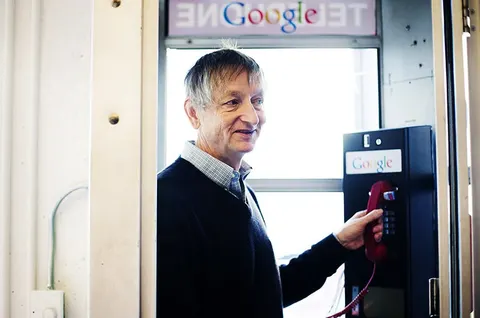
A Brit in King Reagan's Court
“We actually are machines!” believes the researcher who, as we have seen, definitely knows what he is talking about. “We're just produced biologically. Most people doing AI don't have any doubt that we're machines. We're just extremely fancy machines. And I shouldn't say ‘just.’ We're special, wonderful machines!”
So don't count on him for precise predictions about the future that awaits us. But do count on him for the technologies that will bring it about.
In 2021, at the height of the pandemic, Geoffrey Hinton appeared in the specialist media with striking news. Staying at home had helped him devise a whole new model of algorithms based on neural networks that could far outstrip today's!
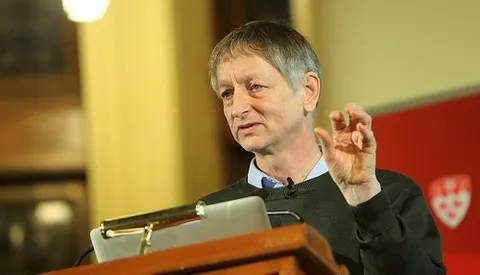
Glom, Glom
He calls his new principle GLOM and describes it as “the best I think brings the different directions together.” He admits that for now he is not offering a ready, working model, but rather a concept that the scientists who come next must develop further in order to take the next big step in artificial intelligence. Hinton explains that GLOM is a way to model human perception in a machine—it gives us a new way of processing visual information. It tackles two main problems facing this type of algorithm today. So far, they successfully identify the various elements in the picture they see, but cannot tell where those elements are in relation to one another. Nor can they shift their perspective on them. GLOM, however, promises wonders in this direction.
And that could help us a great deal in the areas where algorithms have not yet delivered the long-awaited results.
“The main goal of my life is to understand how the brain works. And all these technologies come as attempts to do that. They don't work like the brain, but they are quite useful side effects,” Hinton says.
Boom!
And just as we had grown used to thinking of Hinton as a man who dislikes media appearances, that changed abruptly once his “brainchild” stepped into the spotlight with the arrival of ChatGPT.
On May 1, 2023, he told The New York Times that he was resigning from Google so that he could “talk about the dangers of AI without considering how this impacts” his former employer. He added that “a part of him now regrets his life's work.” “Artificial general intelligence may be less than 20 years away and will bring changes comparable in scale to the Industrial Revolution or electricity,” he now warned. And when the Brit, until recently so conservative in his views, says something like that, I think his words deserve a closer look. We should talk about this more.
After years of speaking with moderate optimism about the future, at the end of 2023 Geoffrey gave another detailed interview in which he explained the risks that loom ahead. “AI technologies will in time upend the labor market and take away more than just the drudgery.” What's more, governments will very soon have to consider introducing a universal basic income. AI will sharply increase productivity, but if left unchecked, it will only make the rich richer and hurt the people who may lose their jobs. “That's going to be very bad for society,” he also warned.
“It's not inconceivable that AI could wipe out humanity.” “We need to think much harder about how to control AI systems that are capable of improving themselves.” Otherwise they may become power-hungry or decide to protect themselves from being switched off so they can carry out further tasks. And, without exaggeration, in his view they could become a risk to all of humanity.
And also: “It is hard to see how you can prevent the bad actors from using AI for bad things.”
Nobel? No way…
And so we come to the final touch. I couldn't find exact betting odds, but I read at least 20 lists in tech and science media predicting who would win the 2024 Nobel Prize in Physics. Not one of them included the name of today's hero. Hardly anyone outside the committee awarding the prizes imagined that it would go to Geoffrey Hinton, shared with the physicist John Hopfield, who was likewise honored for work underpinning deep neural networks.
“But that's not physics,” more than a few science popularizers exclaimed online.
Well, it's not my job to judge what is physics and what isn't. But the news of the prize is wonderful, because now what the great scientist has to tell us will be heard even more widely. The big questions he raises about the future will echo ever louder. So will the absence of conversations in search of the big answers, which it is high time we discussed more actively. It is precisely because of them, by the way, that the Digital Stories site exists.
The human brain remains a miracle. But technology, too, brings many miracles, thanks to people like today's hero. What might they have in store for our future?