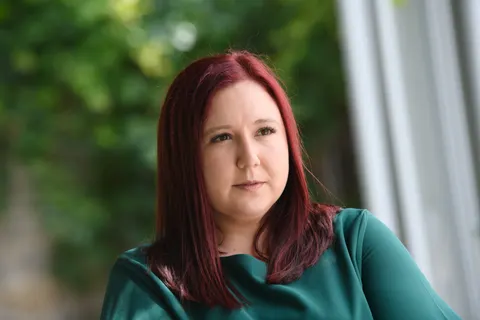
Lately we talk so much about intelligence, only the artificial kind, and the natural kind is definitely suffering for it… The time has come to take a look at this subject.
- How is it that over the past 30 years Bulgarians… have been getting smarter, according to the only organization that provably measures this?
- Are programmers the largest group among those who have passed the Mensa tests?
- Does intelligence matter in a time when technology handles more and more mental tasks?
- Can we evaluate the capabilities of AI with human measures in this field, and what does it signal if today ChatGPT reaches the average human IQ of 100?
- How do we change the environment that stifles intelligent children and keeps them from developing their potential?
- Why, in the days of the AI revolution, is it more important than ever to develop our minds?
Daniela Lecheva is the national psychologist of Mensa Bulgaria—the organization that brings together provably intelligent Bulgarians. A specialist in positive psychotherapy, in recent years she has also turned her professional interests toward working with high-IQ children.
– The definition keeps changing, but what types of intelligence exist according to today’s psychology? And which of them does the Mensa test actually measure?
– At the moment we have adopted the theory of the g factor, that is, general intelligence. It is one thing; it is not multifactorial—musical or linguistic. The view is that
if you get a high score on a test like ours, you should also score higher than most of the population in other areas.
Intelligence consists of two main functions—fluid and crystallized. We are born with the first; it is inherited. The second we develop thanks to our experience, which helps us build on it. The two always go hand in hand.
I’m often asked whether intelligence can be increased. Yes, it can, but within certain limits. If you’ve shown a low score, it will be very hard to ever achieve an extremely high one.
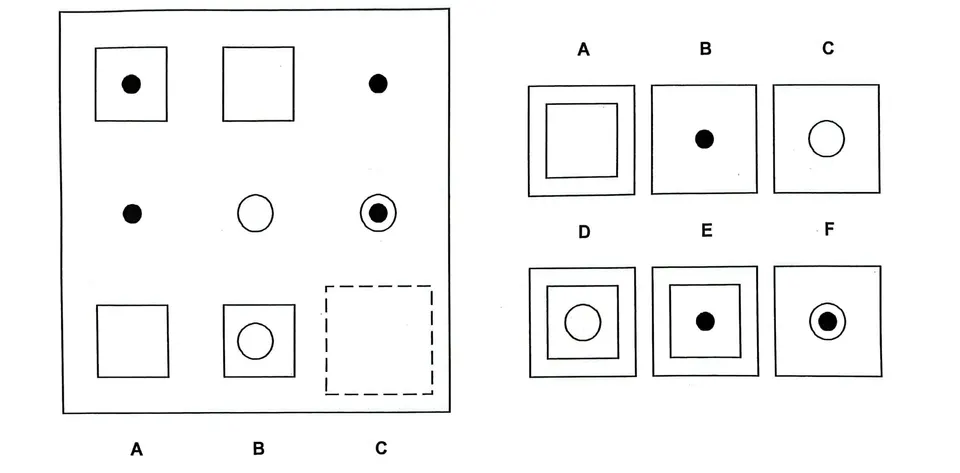
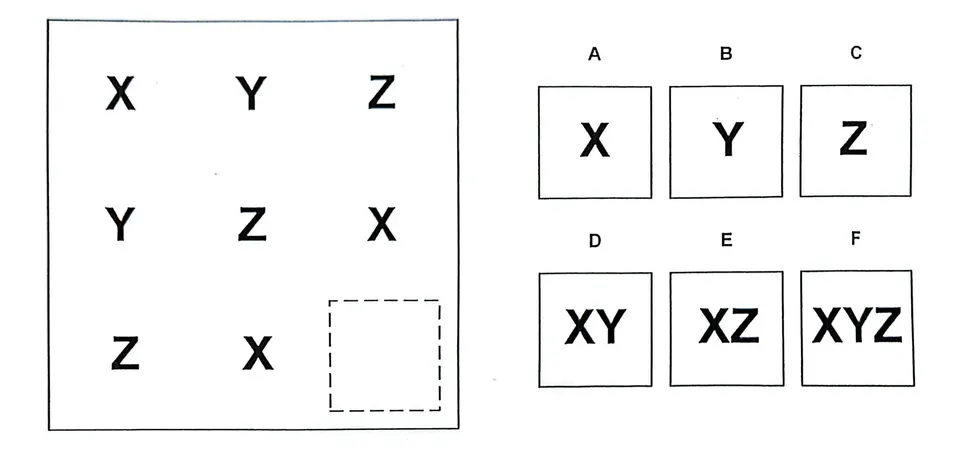
– But in the Mensa test you look for patterns and pick the last image in a sequence. Why does it measure exactly that and not, say, general knowledge?
– General knowledge doesn’t really fall within the domain of intelligence; it belongs more to “knowledge.” That’s why the test is the way it is.
We answer to Mensa International, we follow certain rules, and we have a list of tests we can use for admission to the organization. They have to be standardized. The current one, for example, for adults and children over 9, was standardized on an initial sample of 10,000 people.
So we have reliable results, a foundation on which we can stand and say: “Yes, we are confident this is exactly what the test measures, that the result is right and accurate.”
For it to contain, say, a verbal section, it would have to be created in Bulgaria or adapted for the Bulgarian population, which takes a fairly serious investment of time and effort. A single psychologist would struggle to manage it. But the test with which, starting in September, we begin admitting children aged 3 to 9 also has a language section; it isn’t only pictures.
– What are the conditions for taking it?
– You can take it twice in your life, with at least a year between attempts. That, again, is an international requirement—our colleague, the international psychologist, put it simply:
“There’s no point in measuring the same thing many times.”
Yes, as we said, intelligence can increase. Unfortunately, it can also decline with diseases such as Alzheimer’s, dementia, or traumatic brain injury.
The one-year gap between attempts is our decision; there are countries where you can take one version of the test in the morning, the second in the afternoon and… you’ve used up your chances for a lifetime.
I know very well that people with phenomenal memory, if they sit the same version after preparing during that year, can perform better, and the measured level of intelligence would be inaccurate. That’s why we keep a very strict eye on them taking both versions, so there is no learning the answers.
– Then I was lucky to pass it on my first try. I was also quite young, and back then that didn’t help at all, because the scale varied by age. As I understand it, what matters now is the number of correct answers, whether you’re 9, 19 or 99?
– Yes, we removed the age scale three years ago, but we cut the time. With 30 minutes to solve the test we were getting a ceiling effect—the success rate had gone up—so we made it 20.
Right now a very strong factor is “processing speed”—how fast your brain works and how quickly you can solve problems.
Processing speed is usually faster in younger people, but they lack the experience of crystallized intelligence
while older people have better-developed crystallized intelligence but slower processing speed, and so the result balances out.
– If someone takes the test and gets a high score, turns out to be more intelligent than the vast majority of other Bulgarians, what does that tell them? How can it be useful to them? Does it change anything?
– That depends on them. In my opinion, in Mensa you can make lasting friendships, build business contacts, but also end up disappointed… and it all depends on what you were looking for, what your expectations were. Personally, I’ve found extremely close friends among the organization’s members.
Many university applicants attach a high score on our test to their application documents. There are employers for whom it gives an advantage over other candidates for a given position. My fellow psychologists and I have an idea: once we start testing in schools in the new school year, we also want to hold seminars with parents to explain the differences between children at different levels of intelligence.
Like what I said, that
people with extremely high logical-mathematical intelligence often have lower emotional intelligence, and that is where the emphasis needs to go.
Or the reverse: a person with lower intelligence is much more aware of their emotions, much more expressive. They don’t suppress them and don’t wonder “what am I feeling now, and where is it coming from?” or “why do I have a headache?” without any idea that these are unexpressed emotions.
So what if you got a high score? I like self-knowledge at any age, self-development.
By taking a test you get to know yourself and, ideally, come to love yourself as you are.
Some people say: “Now I finally have an answer to why things happened the way they did at school.”
With ambitious parents of children with average results, I have conversations and tell them: “From now on, don’t expect and demand straight sixes from them”—a six being the top grade in Bulgarian schools—“be happy with fives.”
– That’s the other side. If someone gets a low score, how do we tell them? Can it be useful to them?
– Everyone receives their result. There is a threshold below which Mensa International doesn’t allow us to send specific data; people fall into “low intelligence” and that’s it.
What comes next? Some of them, honestly, don’t understand their result, they keep insisting on the exact points, or they start a fight with the messenger who tells them: “I’m sorry, that’s the rule, I can’t give you a percentile result.” I’ve had cases with three, four, five phone calls where the person doesn’t understand what comes next.
When they are adults, it’s harder. If they’re under 18, I try to contact the parents to explain that I advise them to see a fellow psychologist and do another test, because their child may have learning difficulties or an intellectual disability. It’s good for the child to be diagnosed and to get support while still in school, because after that there aren’t many options.
– After you take the test, you get a percentile—that is, the share of people you outperformed. It used to be said you had an IQ of, say, 100. Why did that change?
– The test changes periodically, and each creator decides the maximum IQ their test will measure. We have people who over the years have taken different tests. One whole family—three sisters and their mother—are members of Mensa, and they joke: “My sister is smarter because she has 168, and I have 155.”
Both reached the maximum of the respective test they took, but if we just look at the points, it seems one is more intelligent than the other.
The percentile is the only fair way to compare IQ tests, because it shows that, for example, with a result of 60 percent, if 1,000 people take this test, that person will do better than 600 of them. So it’s comparable on a 1:1,000 basis among people tested under the same conditions, i.e., the same tasks in the same time at the same age.
– But don’t we lose traceability that way? How can we compare whether intelligence changes over time, across generations?
– We have that in percentiles too. We can see how
IQ has periodically risen—this is the Flynn effect.
Gradually, people start getting higher and higher scores on the same intelligence test, so psychologists and psychometricians revise the scoring scales, and revisions and new tests are made.
Ever since Mensa was founded in Bulgaria in 1991, there has been a constant slight rise in the percentile, then a change in conditions, then another rise. Until at some point the test has to be replaced. So far there have been three different versions here. But it is essential to change the test from time to time or cut the time to solve it, to avoid that ceiling effect of extremely high success rates.
But yes, in recent years too
the intelligence of Bulgarians keeps rising. However skeptical many people are about it, it’s there.
– And it surprises me, because I don’t see it in real life, alas, and it’s at odds with the stereotype. I’m sure comments arguing the opposite will appear under this interview too, but data is data.
And based on that data—can we say we are more intelligent than other nations, or the reverse? Can we even make such a comparison?
– I don’t have full access to information on all countries, but comparing with my colleagues’ reports shows that
we are one of the countries with a very high success rate on the test.
One reason may be that the people who come to us really feel they must be highly intelligent and come to prove it to themselves, and through our advertising we manage to reach exactly them. Another possible factor, in my view, is our education and our genetic predispositions.
– Are there patterns within the country? For example, who does better on the test—men or women, young or older people, do certain professions or regions stand out?
– The sample is still small, but since 2022, when we began testing children from age 9, we’ve built partnerships with schools in different parts of Bulgaria, and we’re open to others. There we offer regular tests to students, and that way we accumulate data that will be more telling over time. But among those tested so far,
boys in Ruse and Plovdiv perform better than those in Varna, Sofia, Gotse Delchev and Pleven. Girls in Plovdiv, in turn, are followed by girls in Varna.
As for professions… When I became a member of Mensa in 2012, I went to a meeting in Plovdiv, and across the table from me sat five men, all graduates of the Technical University with engineering degrees. At that time there were a lot of engineers. Over time I learned we have quite a few lawyers. But
the most numerous today, of course, are programmers.
I explain it by the fact that this profession requires well-developed logical-mathematical thinking, so it’s natural to do better on this test.
We now have eight members with a background in psychology, which makes me happy. Over the years there were one or two psychologists; now there are more of us, but programmers definitely dominate.
– That’s probably no accident. I passed the test a full 15 years before I became a programmer.
– My high school specialization was also informatics with English. When 12th grade came, I sat down and realized that the boys—my classmates—were managing; it came naturally to them. They solved the problems we were given as assignments somehow from the inside. While I, based on knowledge, with more thinking, would sit down and manage it, but it didn’t give me the same satisfaction and pleasure.
I was interested in people, and that’s how I turned to psychology, but at moments when I’ve had difficulties as a psychotherapist, I’ve told myself: “That’s it, I’m switching, going back to programming—I won’t get so upset, and I’ll make more money.”
– Alas, who knows how long that will hold; psychology may turn out to be far more promising in the age of artificial intelligence.
We mentioned that each new generation shows higher scores on intelligence tests. But I’ve come across quite a few studies saying that the coming generations will be the first whose scores are lower, precisely because of technology, because we delegate too much to it. Could that happen?
– We’ll see. But even now there are undeniable phenomena—not in the domain of intelligence, but in attention, for example.
In my practice I use a test revised three years ago, whose scale has been updated, and the expectations for today’s generation’s attention have been lowered, because our brain adapts to the new environment.
Something is constantly happening, something changing, lighting up on the screen, quick movements, and our attention is no longer what it used to be.
Opening a book, sitting with it for three hours and being deeply immersed in what’s happening.
– I think, though, that this is directly connected to intelligence—to solve the more complex problems in any field, you have to immerse yourself in them.
– It’s possible; we’ll see. I’m curious too how things will change, but for now intelligence looks the way it did years ago; I don’t notice any drastic change. The same percentage of younger people keep doing just as well on the Mensa test.
Another thing that has changed, though again not related to intelligence but to memory, is that memory has become lazier. We no longer recall interesting facts; we remember that we read them somewhere, pull out our phone, find what we read and only then talk about them.
– I often point out this phenomenon myself. And it scares me—yes, supposedly it isn’t directly connected to intelligence, but in my view it gives meaning to creativity, because creativity lies in the ability to know things and combine that knowledge.
– I see children’s far-too-early introduction to technology as a big problem.
Attention deficit disorder, with or without hyperactivity, appears more often in children who were introduced to technology earlier and use it for longer stretches of the day.
I’m one of the psychologists who believe that, at least until age 3, a child should have zero minutes of screen time.
– Yes, I also think there should be at least some consensus on that. But it turns out there isn’t; not long ago I prepared a series of texts on this, including a survey, 350 parents took part, and it turned out that far from all of them share that view.
Coming back to the intelligence quotient, today computer science faces challenges similar to yours. It has to somehow measure the IQ of every new model. I tried it; today it’s around 100, but what would it tell you if an AI got a very high score on the Mensa test?
– I read the story where you tested ChatGPT, and I had higher expectations of it. These technologies are developing extremely fast. I won’t be surprised if in two or three years it gets a score that would entitle it to Mensa membership.
– But what do we do then? Why develop intelligence if we can delegate it too, just like knowledge?
– I think that
there will be people who would delegate it, but also those for whom thinking is a pleasure.
As there always have been. At least until the generation that knows what life was like before the internet and technology is gone.
Beyond that, honestly, I’m afraid to guess what it will be like. I don’t dare make predictions.
But you might find it interesting that
an artificial intelligence is already being developed to select the questions on the Mensa entrance test from a large database of questions.
What’s more, its standardization is already in the final stage.
Any moment now it will be handed over to our colleague, the international psychologist, to prepare an opinion on whether it goes into use immediately or will be refined further before we switch to it.
We don’t know whether we’ll take advantage of it in Bulgaria, because we don’t have the conditions to administer it, and the price is quite high. We’re also discussing buying a new test, which is on paper and takes 40 minutes.

– So… AI is starting to evaluate us, not we it? That’s a very interesting and telling reversal of the paradigm, don’t you think?
– Yes, it is, but this solves a long-standing problem for the organization worldwide—test questions leaking into the public domain. A big advantage is that the artificial intelligence will choose the next question based on correct answers. It will cut testing time considerably, because if, for example, it sees you haven’t answered 10 consecutive questions and they are the easiest ones, it will simply give you a result saying you can’t become a Mensa member, and that will be that.
– Then again, thanks to AI, we’ve started talking more about intelligence in public; the word has come back, even if as a contrast to the natural kind.
But whenever I talk about these topics, I always want to ask the question I haven’t been able to answer for so many years. Why aren’t the most intelligent people the leaders? Why aren’t there more Mensa members in politics, or among successful entrepreneurs?
– There are such people, in my view. But high intelligence comes with its own characteristics, which aren’t suited to such positions. It often leads to self-absorption, a reluctance to interact with many people.
These extremely intelligent people are often introverts, and to be a successful leader you can’t be one.
In entrepreneurship it seems to be extroverts who succeed—sociable, friendly people who know how to put everything into words, with very well-developed emotional intelligence, which, as we said, is less developed when logical-mathematical intelligence is strong.
As for politicians… I’m not sure exactly what qualities to attribute to them. In my mind they aren’t exceptionally positive.
– Exactly! And they should be. But, as Daniela Simidchieva told me, sometimes things just come easily to intelligent people, and that holds them back too…
For several years now, Mensa Bulgaria has also admitted children. Why did that change come about? What should we do if we see that our child stands out with impressive mental abilities?
– I was also a highly intelligent child, but the environment I grew up in pushed me rather to dull that intelligence. I heard classmates say things like “What, you think you’re so smart?” That’s why today I find a very high purpose in discovering highly intelligent children and giving them opportunities we didn’t have. That way we also develop society as a whole.
Each country decides how to approach it. We decided to identify their personal needs and personal motivation and to organize activities. We’re currently developing a unified program, but we’ll keep working as before, also according to the young people’s interests. The first 12 said they were interested in artificial intelligence and cryptocurrencies; we found members who are specialists in those fields and organized meetings. I also give them puzzles to challenge their minds. We hold meetings where each prepares a topic they find interesting, and by presenting it they begin to connect and go deeper into those interests.
From August 24 to 31, the first youth camp in Bulgaria in a decade took place, and they also get access to information from Mensa International. Recently a young man shared that he had an innovative discovery in the field of semiconductors and was looking for contacts with university laboratories.
But more generally, what should we do if we see a child stands out with such qualities? We need to know that when logical-mathematical intelligence is more strongly developed, we should put a little emphasis on the emotional side, on relationships with people, because it has been shown that in these cases it lags behind. At an earlier age—explaining emotions, when we feel them, why, naming them. But of course also focusing on what the particular child is interested in, developing it, helping them find their place. What could be better than loving your profession?
– Even when you have several, I say from personal experience. Otherwise, however worn out this play on words has become lately, only natural intelligence can save us in the age of the artificial kind. I’ll be glad if we come up with more interesting experiments in both directions. Thank you for this conversation!