Bulgaria will soon host the first International Olympiad in Artificial Intelligence! How did our country end up as a pioneer in such an important venture, and what opportunities does it open up for us?
“The olympiad is our contribution both to building elite human expertise for a shared future with artificial intelligence and to a broad public dialogue about the possibilities, limitations and ethical questions surrounding AI,” says today’s guest.
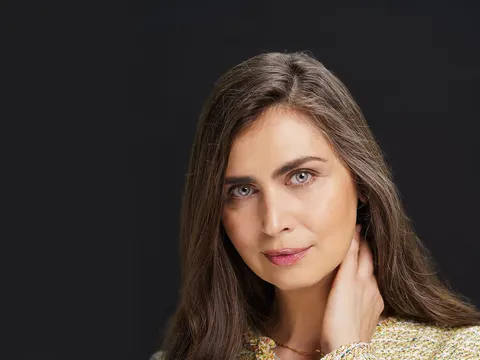
Elena Marinova is a co-founder and longtime president of Musala Soft, and today she sits on the advisory board of the IT company of KKCG, a group worth 6 billion. A leader with vast business experience, she also heads a number of initiatives devoted to innovation and education.
Elena is a co-founder of the first International Olympiad in Artificial Intelligence, which from August 9 to 15 will bring talented young people from at least 30 countries to Burgas, on Bulgaria’s Black Sea coast. (More about IOAI here.) Scientists from leading universities are taking part—they are already preparing the competitions and will also present their latest work.
How was the idea for such a competition born in Bulgaria of all places? How does a longtime leader in the IT sector see its future? What are the biggest changes that, according to our guest, the development of artificial intelligence promises, and why is the dialogue on these topics so important?
– What won you over to the idea of an international olympiad in artificial intelligence?
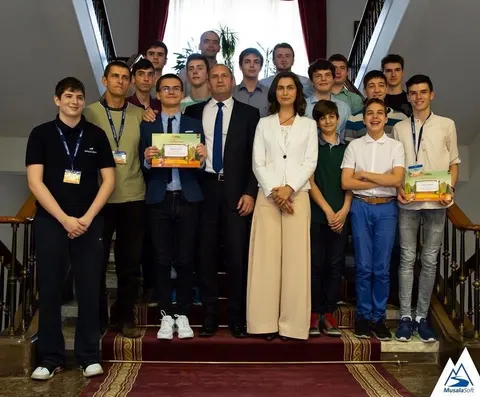
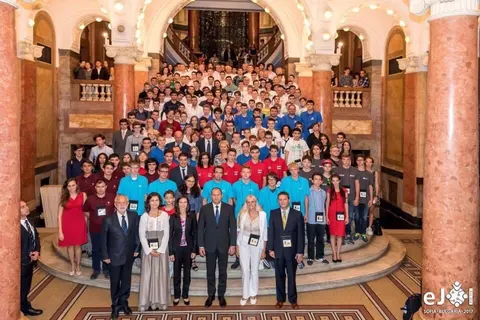
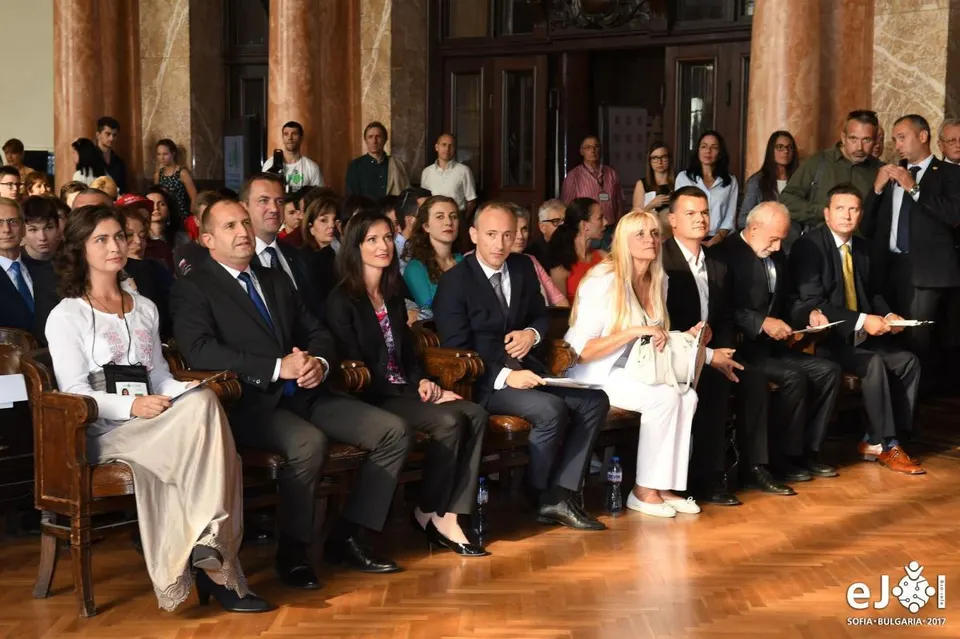
– My son jokes that I’m probably the person who has created the most international olympiads. I haven’t checked, but he may be right—I have three by now. In 2000, together with founding Musala Soft, we laid the foundations of CodeIT—today the oldest private programming competition. In 2017, with Krasi Manev, Biserka Yovcheva and Aleksey Hristov, we created eJOI—the European Junior Olympiad in Informatics.
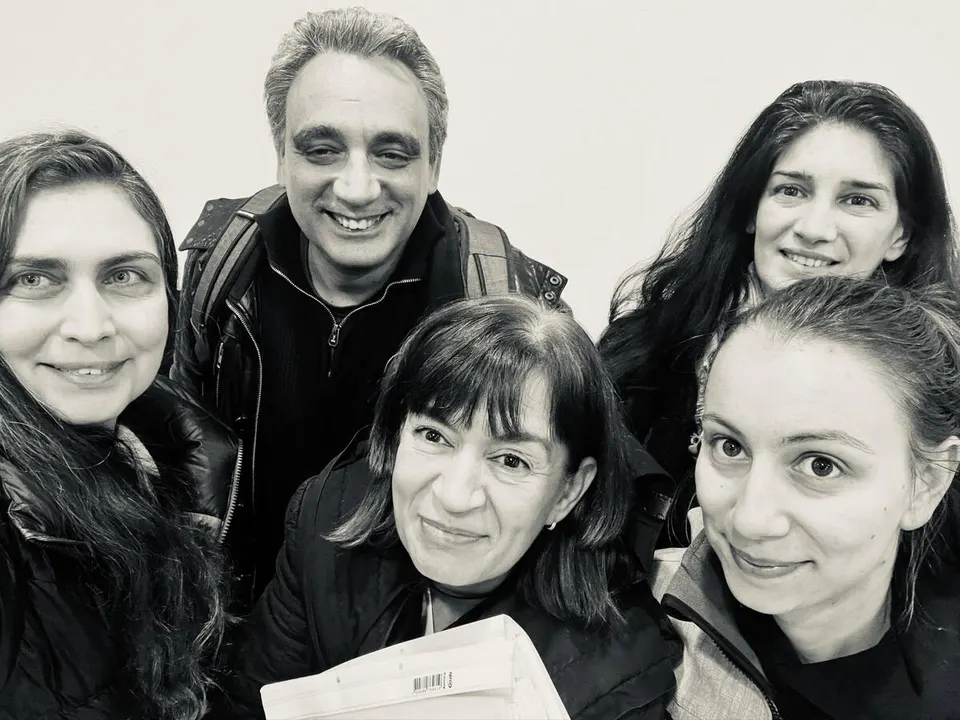
2024 will be the first year of the International Olympiad in Artificial Intelligence, IOAI, which we are launching with the LERAI foundation (named after its initiators—Lora, Elena, Rosi, Alex and Iva). But IOAI also has two strategic, I would even say visionary, goals—it
is our contribution both to building elite human expertise for a shared future with AI and to a broad public dialogue about the possibilities, limitations and ethical questions surrounding AI.
– The idea is extremely powerful! It’s precisely because of the important and long-overdue dialogue on these topics that this site exists. But what exactly will the competitions look like?
– We have two segments that reflect our two big goals—scientific and popular.
The scientific competition will be research-based and theoretical, shaping future scientists, innovators and engineers. It has two parts. First, problems are published, and each team works on them remotely for several weeks before IOAI. They are unsolved, they have no exact, clear-cut answer; they are a kind of research, and the aim is to judge which teams have “gone furthest,” come closest to the optimum. Every team gets the same resources, and the contestants have several weeks to shape their solution. During the competition itself, an additional part is added to the tasks—it builds on them, expands them or makes them more specific, and its purpose is to establish and guarantee that the contestants can work without outside help.
The practical round during the olympiad gives the teams tasks connected to AI applications that already exist. The aim is to show the limits science has reached so far, and in the future to let us trace its evolution. Here the goal is to produce something far more widely understandable—audio, video, images and so on. We will use the practical round precisely for
more publicity and conversations about the accessibility, mass application and moral questions around AI.
We are designing it in a creative, interesting way that tips its hat to Bulgaria and to the future hosts as well.
– Given all the noise around the subject over the past year, how is it that we were the first to think of an international olympiad in artificial intelligence?
– It just seems to work out for us. Bulgaria was the first host of the International Olympiad in Informatics, IOI, in 1989, of the International Linguistics Olympiad, IOL, in 2003, and of the European Junior Olympiad in Informatics, eJOI, in 2017. We also took part in the very first international olympiads in mathematics in 1959, physics in 1967, chemistry in 1968 and biology in 1989. With IOAI we are simply continuing the tradition.
How was the idea born? Last summer Alex Velinov, the longtime leader of our linguistics team, said something like: “Guys, what do you say we do an AI olympiad?” And we did…
– Alex was my guest with the incredible story of Bulgaria’s successes at the international linguistics olympiads; he is the driving force behind remarkable initiatives. You mentioned that the idea isn’t just a competition but a platform that popularizes and opens up important questions. What, in your view, matters most if we are to use the rise of AI so that Bulgaria becomes a real center for this kind of development?
– I recently took part in a large study by Meta and Visegrad Insight on AI in our region. One of its big conclusions is that
we have isolated good examples of AI development and adoption, but no ecosystem.
I think the future of “centers” lies in their ability to be part of micro, regional and international ecosystems, to plug into them flexibly, making the most of the available resources and constraints and complementing their surroundings. For that you need education—first and foremost!—state policy, entrepreneurs, a mix of small and large companies and, hardest of all, a society that looks to the future with confidence, sobriety and curiosity.
– Let’s hope we manage the hardest part! Unfortunately, the topic very often enters public discourse superficially and in clichés. And still, I find it strange that despite the enormous buzz around the field, I don’t see more AI-related job ads. Why is that?
– I haven’t heard of an unemployed AI specialist.
There are several trends. The overall global conservatism of business in recent years is affecting the IT sector too. Expectations ran far too high that there would be enormous demand for AI specialists, but the truth is that
business isn’t ready for large-scale AI projects right away.
This coincides with the realization that AI experts can’t spring up out of nowhere, and companies have started programs to train them—that will take some time. At the same time, AI is seeping in everywhere and will become something like the equivalent of the “computer literacy—working with word processors” of 20 or 30 years ago. In other words, the process is massive, turbulent, a little chaotic, but with a clear trajectory—AI is here to stay.
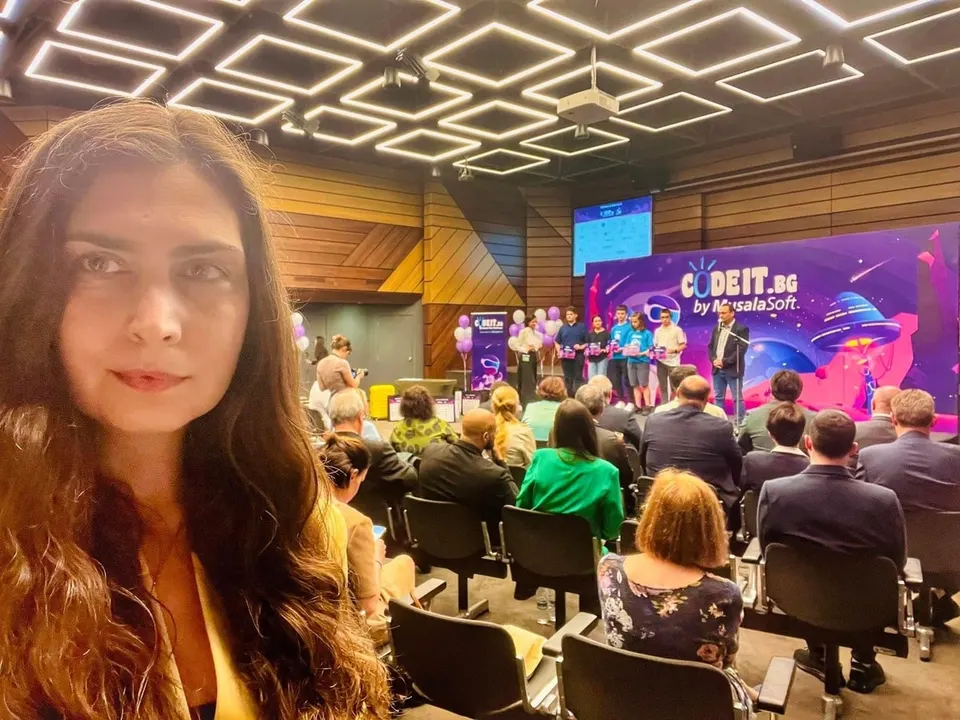
– I listened to your appearance on The Superhuman, Georgi Nenov’s podcast, where back in 2018 you said the future belongs to artificial intelligence. What has surprised you in the development of the technology over these years?
– I was surprised by how sharp the breakthrough was—
after decades of effort, one mass interface—ChatGPT—managed in literally weeks to reach practically every person on the planet
with internet access. It reminds me of the spread of COVID, only in a positive way.
– In the same interview you also said creativity would be the last thing to be replaced—but does it still look that way today? I ran an experiment with 1,800 participants, and people practically couldn’t tell generated content from human-made content. In another experiment I created an entirely generated online profile, and of the 85,000 people who saw it, nobody noticed. Can technology restore our ability to judge what is true?
– Both are good examples that take us back to 1950 and the Turing test—can a machine fool a person into thinking there is a person on the other side? Skipping centuries of philosophical debate, let’s assume that thinking is material, that to think we use our bodies, our brains and a certain number of chemical reactions. If thinking is a logical process based on facts, and intelligence is knowledge, then
today’s machines definitely know more than we do, they even “think independently,” and certainly with fewer mistakes than we make.
Increasingly, technology will fail the Turing test because it is faster and more knowledgeable than humans, not because it makes mistakes.
But technology is going further still, and I’ll add one more example to yours. A little over a year ago BMW presented its “Neue Klasse” Dee (Digital Emotional Experience)—a car that claims to be not only “smart” but also “emotional.”
The question is what “smart” and “emotional” mean—is that anything different from “knowing”?
If emotions can be measured and predicted on the basis of facts, then they boil down to “knowledge.” So, for example, if a “smart” home knows that its residents relax to jazz and starts playing jazz when they approach the front door, or a car changes its color to sky blue when it “sees” that your accessories are in that palette—is that magic, or an algorithm and data? And how will AI react to spontaneous emotions that are inexplicable even to ourselves?
In the coming years, technology will push back the boundaries of today’s “magic,” reducing more and more of it to facts, models, processes.
But it also works on the principle of “the more I know, the more I know that I don’t know.” The more we uncover, the more we see. This will reveal new possibilities, more “magic,” and will make our lives more comfortable, easier in their routine, more interesting. And, to answer your question,
all of this will reveal new levels of creativity we don’t even suspect at the moment.
– That’s exactly what I think! And I try to collect examples like that… What should we never delegate to algorithms?
– Anything we don’t feel ready for. Along those lines, I like the European approach to regulating AI on the basis of potential risk—the greater the risk, the tighter the regulations.
– And what in today’s technological development would you never have guessed when you started your career in this field?
– Perhaps what surprised me most was how quickly and widely technology entered education during COVID. Not because of the technology, but because of the people and the system. Overall, its development is currently outpacing that of society. That is:
there is more technology than we are ready to use on a mass scale.
– Where do we underestimate it, and where do we overestimate it?
– Sometimes we forget that technology is created by people. Even technology created by other technology was originally created by people, so
the core is the human being, with all their creativity and all their imperfections.
As Yordan Radichkov, one of Bulgaria’s most beloved twentieth-century writers, put it: “Man is a long sentence, written with love and inspiration, but full of spelling mistakes.” Technology, however perfect and free of “human errors” it may be, carries the human within it.
– Does it make sense to start learning programming today, or, as one of my readers commented, is it like buying a factory on September 8, 1944—the eve of the communist takeover that nationalized private property?
– That’s my favorite post-ChatGPT question. Programmers won’t disappear. Their profile will change. Half a century ago people programmed with zeros and ones, then with many lines of code, then visually, “low code,” then/now with the help of artificial intelligence.
There is evolution, but the need for a “translator” between humans and machines hasn’t disappeared yet.
If, however, you have learned to write in a particular programming language without developing the way of thinking, then you may drop out of the game, and those “coders” will disappear, because the machine will be able to replace them to a huge extent. For all thinking professionals, there will be new opportunities.
– Why, in your opinion, are job ads in the sector declining? Is it already artificial intelligence?
– It isn’t. We have yet to see its tangible effect and a reshuffling of the map depending on how much AI is used. Some businesses will shoot ahead, others will perish, but overall the industry will keep going up.
– What sets Bulgarian software specialists apart? Is there a trait, skill or technology in which we lead or stand out?
– On the whole, we Bulgarians are unruly and inventive;
we always know “another way” to tell a joke or get the job done.
That applies to software specialists too. On the negative side, they fit into strict discipline less easily than, say, the Germans, but they voice opinions and look for solutions far more than much of Asian culture, for instance. And, at the risk of being crucified by the PISA ultras, we have good traditions in mathematics—not everywhere, but in the country’s leading mathematics high schools—and that is the foundation on which almost any engineering specialty can be built.
Creating new technology schools like the IT High School in Burgas is a long-term investment that will very soon start paying off—its first class graduated in 2023. The immigration of software engineers from third countries also has a positive effect in terms of fitting into different cultures, building on the Bulgarian IT sector’s decades of export experience.
– Is there a recipe for having more product companies in Bulgaria?
– Product companies and service companies are different businesses; neither is better or worse than the other. At a very high level, product companies have a higher-risk, higher-return profile, and service companies the opposite, with everything that follows from that.
For Bulgaria, diversification is a good thing.
– Which technologies can’t you wait to see?
– The life-saving ones. Everything else is pleasant indulgence.
– What will the last programmer be doing?
– Rebranding. They’ll put a new name on their new profession.
– What do you dream about?
– The normal human things—health and happiness for me and my loved ones. Beyond that,
I dream, plan and act to leave behind something good that will keep growing after I’m gone.
IOAI is part of that good.